Abstract Painting: Best Books to Explore Color, Composition and Expression
This curriculum takes a beginner from the foundational language of art — color, form, and composition — through the physical craft of mark-making and texture, and finally into the deeply personal territory of developing an original abstract voice. Each stage builds on the last: you must first understand what the elements are, then learn to wield them, and only then can you synthesize them into a style that is authentically your own.
Foundations: Seeing & Thinking Abstractly
BeginnerUnderstand what abstraction actually is, build a working vocabulary for color and composition, and begin to see the world through an abstract lens before touching a brush.
▸ Study plan for this stage
Pace: 8–10 weeks, ~25–35 pages/day, with 2–3 days per week reserved for exercises and reflection
- Abstraction as a way of seeing and thinking, not just a visual style—learning to extract essence and emotional truth from observation
- The psychology and relativity of color: how colors interact, shift meaning based on context, and create optical effects independent of form
- Composition fundamentals: balance, rhythm, contrast, and spatial relationships as primary tools for organizing visual information
- The artist's inner vision and intuition as the source of abstraction—moving beyond literal representation to personal expression
- Color harmony, temperature, and symbolism as foundational languages for non-representational communication
- The role of constraint and limitation in developing visual thinking and discovering abstract principles
- Training perception: how to look at the world, nature, and existing art to develop an abstract sensibility
- What does Robert Henri mean by 'the art spirit,' and how does his philosophy of observation and personal vision relate to abstraction?
- How do colors interact with one another according to Albers, and why does context matter more than the color itself?
- What are the primary principles of composition that Itten identifies, and how do they function independently of representational subject matter?
- How can you use color relationships and temperature to create mood and meaning without depicting recognizable objects?
- What is the difference between seeing abstractly and creating abstract art—why does training perception come first?
- How do the three books complement each other: Henri on vision, Albers on color interaction, and Itten on color symbolism and composition?
- Daily observation sketches (10–15 min): Draw the essential lines, shapes, and proportions of objects around you without detail—focus on structure and gesture, not likeness
- Albers-inspired color studies: Create 5–10 small compositions using only 2–3 colors, experimenting with how the same color appears different depending on its neighbors
- Monochromatic value studies: Using one color, create a composition that explores light, shadow, and spatial depth through value alone—no line, no form
- Itten's color wheel exercises: Mix and arrange color harmonies (complementary, analogous, triadic) in simple geometric compositions to understand color relationships viscerally
- Perception walks: Spend 20–30 minutes observing a single location (park, street, room) and list the abstract qualities you notice—light patterns, rhythms, spatial relationships, emotional temperature
- Constraint-based composition: Create 3 compositions using only geometric shapes (circles, squares, triangles) and one color palette, exploring how limitation forces abstraction
- Reinterpretation exercise: Take a representational image and reduce it to its abstract essence—identify the core compositional structure, color relationships, and emotional intent
Next up: This stage equips you with the perceptual vocabulary and conceptual foundation to move into hands-on material exploration and actual painting technique, where you'll apply these principles of abstraction, color, and composition to create your first abstract works.
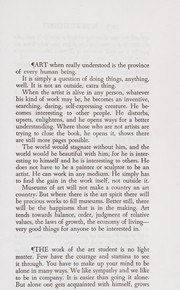
A timeless collection of teachings from a master painter that immediately reframes art as personal expression over technical correctness — the essential mindset shift every abstract beginner needs first.
The single most important book on color perception and color relationships; reading it before anything else ensures you understand color as a living, relational force rather than a fixed property — foundational for all abstract work.

Itten's systematic breakdown of color theory (hue, value, saturation, contrast) gives practical structure to complement Albers' perceptual approach, completing your color foundation.
Composition & Visual Language
BeginnerLearn how to organize a picture plane — balance, tension, rhythm, and space — so that your abstract paintings hold together visually and communicate with intention.
▸ Study plan for this stage
Pace: 4–5 weeks, ~25–30 pages/day. Start with Genn's seminar (shorter, foundational), then move to Payne's more technical composition guide. Allocate 2 weeks for Genn, 2–3 weeks for Payne, with overlap for practice.
- Visual balance and asymmetrical composition as alternatives to rigid symmetry
- The role of tension and contrast in creating dynamic, engaging picture planes
- Rhythm and repetition as tools to guide the viewer's eye and unify the composition
- Spatial depth and atmospheric perspective in creating dimensional abstract work
- The relationship between color, value, and compositional structure
- Intentional placement of focal points and visual weight distribution
- How negative space functions as an active compositional element, not empty filler
- The painter's decision-making process: moving from intuition to deliberate visual control
- How does asymmetrical balance differ from symmetrical balance, and why might it be more effective in abstract painting?
- What is the relationship between visual tension and viewer engagement in a composition?
- How can rhythm and repetition be used to create unity across a diverse abstract composition?
- Explain how atmospheric perspective and spatial depth can be suggested in abstract work without representational imagery.
- What role does negative space play in the overall success of a composition?
- How do you intentionally place focal points and visual weight to guide the viewer's eye through a painting?
- Create 5 small thumbnail sketches (3×3 inches) exploring different balance strategies: one symmetrical, two asymmetrical, one radially balanced, one with deliberate imbalance. Annotate which feels most dynamic.
- Paint or collage a 12×16 inch composition using only three values (light, medium, dark) to practice spatial depth and atmospheric perspective without color distraction.
- Design a composition with a clear rhythm pattern (e.g., repeating shapes, lines, or color intervals). Create two versions—one with consistent rhythm, one with a deliberate break—and compare their visual impact.
- Analyze one abstract painting from your preferred artist using the compositional principles from both books: identify balance strategy, tension points, rhythm patterns, and focal areas. Write a 1-page breakdown.
- Paint a 16×20 inch abstract work that deliberately uses negative space as an active element. Spend equal visual attention on empty areas as on painted areas.
- Create a series of 4 quick studies (8×10 inches each) experimenting with different focal point placements in the same compositional structure. Notice how viewer attention shifts.
Next up: This stage establishes the foundational grammar of visual organization—how to structure a picture plane so it holds together and communicates intentionally—preparing you to layer in color theory, emotional expression, and personal style in subsequent stages.
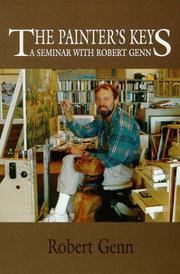
A practical, studio-focused guide to compositional thinking and artistic decision-making that bridges theory and the actual act of painting — ideal at this transition point.
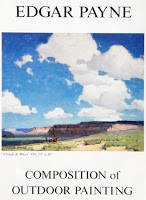
Though rooted in landscape, Payne's analysis of compositional types (steelyard, tunnel, O-shape, etc.) is one of the clearest and most applicable frameworks for abstract composition available in print.
Learning from the Masters of Abstraction
IntermediateStudy how the great abstract painters thought, worked, and solved problems — absorbing their philosophies to inform and challenge your own emerging practice.
▸ Study plan for this stage
Pace: 8–10 weeks, ~20–25 pages/day (alternating between Kandinsky and Klee notebooks; allow time for reflection and re-reading dense passages)
- Kandinsky's theory of color as emotional and spiritual force — how specific hues and combinations trigger inner resonance independent of representation
- The concept of 'inner necessity' as the guiding principle for abstract composition — creating from authentic inner impulse rather than external rules
- Abstraction as a path to spiritual truth — how non-objective form can communicate meaning more directly than figuration
- Klee's systematic exploration of line, form, and compositional structure as foundational elements that can be studied, practiced, and mastered
- The relationship between intuition and rational analysis in creative work — balancing spontaneous impulse with deliberate investigation
- How both artists use notebooks and sketches as laboratories for testing ideas, not just documentation of finished work
- The role of musical and poetic thinking in abstract visual language — synesthesia and cross-sensory correspondence
- Formal problem-solving strategies: how to build visual complexity from simple geometric and linear principles
- According to Kandinsky, what is 'inner necessity' and why does he consider it essential to abstract art? How does this concept challenge conventional ideas about artistic rules?
- How does Kandinsky use color theory to create emotional and spiritual effects? Can you identify and explain his associations between specific colors and inner states?
- What does Klee mean by 'taking a line for a walk,' and how does this exercise reveal his approach to understanding form and composition?
- Compare Kandinsky's and Klee's approaches to abstraction: where do they align philosophically, and where do they diverge in their methods?
- How do both artists use their notebooks as creative tools? What can you learn from their process of sketching, annotating, and iterating?
- How might you apply Kandinsky's concept of inner necessity and Klee's systematic exploration of line to your own abstract work?
- Create a color study inspired by Kandinsky's emotional associations: select 3–4 colors from 'Concerning the Spiritual in Art,' research his reasoning for their spiritual properties, then compose a small abstract work using only those colors and observe what emotional responses they generate
- Conduct a 'line for a walk' series (Klee's method): spend 15–20 minutes daily for one week drawing continuous lines without lifting your pencil, varying speed, pressure, and direction; annotate observations about how line quality affects visual tension and movement
- Analyze one reproduction each from Kandinsky and Klee: map out the underlying geometric and linear structures, identify the 'inner necessity' driving the composition, and write a brief artist's statement explaining the work's spiritual or conceptual intent
- Create a personal color-emotion chart: test Kandinsky's color theories against your own sensory experience by mixing and applying colors while noting which combinations feel harmonious, discordant, warm, cool, advancing, or receding
- Sketch a series of 5–10 small abstract compositions, each exploring one formal principle from Klee's notebooks (e.g., balance, rhythm, weight distribution, spatial depth); annotate your thinking process for each
- Write a comparative reflection (2–3 pages): identify one key insight from Kandinsky and one from Klee that challenge or expand your current understanding of abstraction, then propose how you might synthesize these ideas in a new work
Next up: This stage grounds you in the philosophical and methodological foundations of abstraction through two master practitioners, preparing you to move forward into either historical movements (Constructivism, Suprematism, Abstract Expressionism) or into developing your own sustained abstract practice with informed conviction.
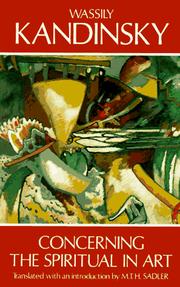
The foundational theoretical text of abstract art; Kandinsky's ideas about color, form, and inner necessity are essential reading for any serious abstract painter and feel far more meaningful once you have studio experience behind you.

Klee's rigorous yet poetic analysis of line, form, movement, and pictorial space is one of the deepest explorations of visual language ever written — best absorbed after you have your own marks to compare against his ideas.
Developing Your Own Abstract Style
ExpertSynthesize everything learned into a coherent, personal artistic identity — understanding how to edit, series-build, and sustain a body of work that is distinctly your own.
▸ Study plan for this stage
Pace: 4–5 weeks, ~40–50 pages/day. Week 1: "Art & Fear" (complete ~200 pages). Weeks 2–3: "The Creative Habit" (complete ~300 pages). Week 4: Review and synthesis across both texts. Week 5: Intensive studio application and body-of-work planning.
- The gap between taste and execution: understanding why your work may not match your vision, and how to close that gap through practice and iteration
- Fear as a predictable, manageable obstacle in the creative process—not a sign of failure but a signal that you're attempting something meaningful
- The creative habit as a daily practice: establishing ritual, routine, and discipline as the foundation for sustained artistic output
- Series-building and coherence: how to develop a body of work with intentional connections, themes, and evolution rather than isolated pieces
- Editing and curation: the critical role of selection, rejection, and refinement in defining your personal style
- Authenticity through constraint: how limitations (material, conceptual, temporal) paradoxically enable rather than restrict personal voice
- Sustaining momentum: strategies for maintaining creative energy, managing self-doubt, and building resilience across a long-term artistic practice
- What is 'the gap' described in 'Art & Fear,' and what are the practical strategies Bayles and Orland suggest for narrowing it in your own work?
- How does Twyla Tharp define the creative habit, and what are the specific daily rituals she recommends to establish and maintain it?
- How can you intentionally build a series or body of work that feels cohesive and distinctly yours, rather than a collection of unrelated pieces?
- What role does editing and curation play in developing your personal abstract style, and how do you decide what to keep versus discard?
- How can you use constraints—whether material, conceptual, or temporal—to deepen rather than limit your artistic voice?
- What strategies from both books can you apply when you encounter creative fear, self-doubt, or a plateau in your practice?
- Complete the 'taste vs. execution' inventory from 'Art & Fear': list 5 abstract pieces you admire and 5 of your own recent works. Analyze the specific gaps (color, composition, gesture, scale, etc.) and identify one concrete technical or conceptual change to address each gap.
- Establish a daily creative ritual based on Tharp's framework: commit to a specific time, place, and warm-up activity for 4 weeks. Document your ritual in writing and track how consistency affects your output and mindset.
- Create a 'fear audit': identify your top 3 creative fears (e.g., 'my work is derivative,' 'I'll never improve,' 'no one will understand it'). For each, write a response grounded in Bayles and Orland's argument that fear is inevitable and not disqualifying.
- Curate a 'working series' of 8–12 abstract pieces (existing or newly made) that share a conceptual or formal thread. Write a 1–2 page statement explaining the intentional connections and how the series evolves from piece to piece.
- Conduct a 'constraint experiment': choose one formal or material limitation (e.g., only three colors, only geometric forms, only 30 minutes per session) and create 5–10 pieces within that constraint. Reflect on how the limitation shaped your voice and what you discovered.
- Interview yourself using Tharp's 'scratching' technique: answer 10 open-ended questions about your artistic identity (e.g., 'What abstract elements feel most essential to my work?' 'What do I want viewers to feel?' 'What am I avoiding?'). Use the answers to refine your artistic statement.
Next up: This stage equips you with the psychological resilience, daily discipline, and curatorial vision to sustain a coherent body of work; the next stage will likely deepen your engagement with exhibition, critique, and the public/professional dimensions of sharing and evolving your abstract practice.
Addresses the psychological and creative obstacles that prevent artists from committing to a personal vision — essential reading precisely at the moment when you are ready to stop learning techniques and start making your own work.
A master choreographer's blueprint for building the sustained creative practice and personal rituals needed to develop and maintain an original style over a lifetime — the perfect capstone for this curriculum.
Discussion
Keep reading
Paths that share books, cover the same subject, or open a related topic.