Concept art and character design: an ordered reading path for beginners
This curriculum takes a beginner from core drawing and design fundamentals all the way through professional concept art workflows, character storytelling, and world-building. Each stage builds directly on the last — you'll develop visual vocabulary first, then shape and design language, then narrative depth, and finally the industry-level thinking that ties it all together.
Foundations: Seeing & Drawing
BeginnerBuild the core observational and drawing skills — form, light, perspective, and proportion — that every concept artist depends on before touching character or world design.
▸ Study plan for this stage
Pace: 8–10 weeks, ~20–25 pages/day, with 3–4 dedicated drawing practice sessions per week (60–90 minutes each)
- Right-brain vs. left-brain drawing modes: how to shift from symbolic thinking to direct visual perception (Edwards)
- Basic form construction: cylinders, spheres, boxes, and cones as the building blocks for all organic and mechanical shapes (Loomis)
- Contour and gesture drawing: capturing the essence of form and movement through line quality and economy of stroke (Edwards & Loomis)
- Light, shadow, and value: how light reveals form through highlights, midtones, and shadows (Loomis)
- Proportion and anatomy: understanding ideal proportions for the human figure and how to measure relationships between features (Loomis)
- Linear and atmospheric perspective: creating depth and spatial relationships on a 2D surface (Norling)
- Observation as a discipline: training the eye to see accurately rather than drawing from memory or symbols (Edwards)
- What is the difference between left-brain symbolic drawing and right-brain perceptual drawing, and how do you deliberately shift into the right-brain mode?
- How would you construct a human head or figure using basic geometric forms (cylinders, spheres, boxes) as a foundation?
- Explain how light direction affects the placement of highlights, midtones, and shadows on a simple form like a sphere or cylinder.
- What are the key proportional relationships in the human head and figure, and how do you use measurement techniques to maintain accuracy?
- How do linear perspective and atmospheric perspective work together to create convincing depth in a drawing?
- What is the purpose of gesture and contour drawing, and how do these exercises improve your observational skills?
- Complete Edwards' 'vase/faces' exercise and other right-brain perception drills (weeks 1–2) to train yourself out of symbolic thinking.
- Draw 50+ contour drawings from life or reference photos, focusing on line quality and the outer edge of forms without looking at your paper (Loomis approach, ongoing).
- Construct 20+ simple objects (cups, boxes, spheres, cylinders) using basic geometric forms, then add light and shadow to reveal dimension (weeks 2–4).
- Practice 10 gesture drawings per session for 2–3 weeks, capturing movement and proportion in 30–60 second sketches (Loomis).
- Draw the human head from multiple angles using Loomis' proportional grid system; create at least 15 head studies with accurate feature placement (weeks 4–6).
- Set up a still life with 3–5 objects under controlled lighting; draw it 5 times, focusing on accurate value relationships and how light reveals form (weeks 5–7).
- Create 10 perspective studies using Norling's linear perspective principles: simple rooms, streets, and landscapes with 1-point, 2-point, and 3-point perspective (weeks 7–9).
- Combine all skills: draw a full figure in a simple interior space with correct perspective, proportions, and lighting (final capstone, week 9–10).
Next up: By mastering observation, form construction, light, and spatial relationships, you now have the visual language and hand control needed to move into character design, where you'll apply these foundations to create believable, expressive human (and non-human) characters with personality and purpose.
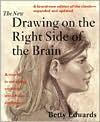
The classic entry point for learning to truly see and translate observation into line. It rewires how beginners perceive form, which is the bedrock skill for all concept work.
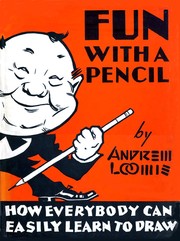
Loomis introduces head construction and basic figure proportions in an approachable, playful way — the perfect first step toward drawing believable characters.

A concise, beginner-friendly guide to perspective that gives you the spatial reasoning needed to place characters convincingly inside environments and worlds.
Shape Language & Design Fundamentals
BeginnerUnderstand how shapes, silhouettes, and visual contrast communicate personality and mood — the core grammar of character and creature design.
▸ Study plan for this stage
Pace: 4–5 weeks, ~25–30 pages/day (alternating between both books; start with Williams' shape/silhouette chapters, then Hampton's structural foundation)
- Silhouette as the primary tool for communicating character identity and personality — how a shape reads instantly even at thumbnail size
- Contrast and variation in shapes (round vs. angular, organic vs. geometric) to create visual interest and establish hierarchy in design
- The relationship between underlying structure and surface form — how anatomical understanding informs believable character proportions
- Line of action and pose as shape-language tools that convey emotion, weight, and narrative intent
- Negative space and composition — how the spaces around and within a character contribute to overall visual impact
- Geometric foundation of complex forms — breaking down the human figure and creatures into basic volumes (cylinders, spheres, boxes) before refinement
- Visual contrast through scale, density, and detail placement to guide the viewer's eye and establish focal points
- How would you redesign a character's silhouette to read as 'heroic' vs. 'timid' without changing any facial features? What shapes would you use?
- Explain how Michael Hampton's approach to breaking the figure into basic volumes helps you make faster, more confident design decisions.
- What is the relationship between line of action (as discussed in Williams) and overall character silhouette? How do they work together?
- Choose a character from media you know. Analyze its shape language — what shapes dominate, and what personality or role do those shapes communicate?
- How would you use positive and negative space to make a 'heavy' character feel grounded versus a 'light' character feel ethereal?
- What are the key differences between designing a character with primarily angular shapes versus primarily curved shapes, and when would you use each?
- Silhouette studies: Draw 10 character silhouettes (solid black shapes, no interior detail) that each convey a different personality or archetype (hero, villain, sage, trickster, etc.). Test them at thumbnail size.
- Shape inventory: Analyze 5 characters from films, games, or animation you admire. For each, identify the dominant shapes (circles, triangles, rectangles, organic curves) and explain how those shapes support the character's role or personality.
- Gesture-to-silhouette progression: Using Williams' line-of-action principles, sketch 8 quick gesture poses, then refine each into a clean silhouette that reads the emotion and weight of the pose.
- Volume breakdown studies: Using Hampton's method, take 3 human figures in different poses and break them down into basic cylinders, spheres, and boxes. Then overlay a refined character design on top to see how the underlying structure supports the final form.
- Contrast exploration: Design two versions of the same character — one using mostly curved, organic shapes and one using angular, geometric shapes. Write 2–3 sentences on how the shape language changes the character's perceived personality.
- Negative space composition: Create 5 character designs where the negative space (the area around the character) is as intentional and interesting as the positive space (the character itself). Consider how this affects visual balance and focus.
Next up: This stage establishes the visual grammar you'll use to communicate character intent; the next stage will layer on color, texture, and stylistic refinement to deepen that communication and develop a cohesive design aesthetic.
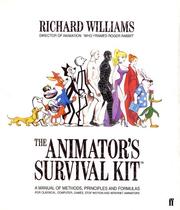
Though rooted in animation, this book teaches how posture, weight, and silhouette convey character — essential design intuition for any concept artist.

Hampton bridges anatomy and design thinking, showing how the human figure can be simplified into rhythmic, expressive shapes — directly applicable to character concepting.
Character Design & Visual Storytelling
IntermediateLearn to design characters with clear personality, readable silhouettes, and narrative purpose, and understand how visual storytelling elevates concept art beyond illustration.
▸ Study plan for this stage
Pace: 8–10 weeks, ~40–50 pages/day (accounting for visual study and sketching time alongside reading)
- Silhouette design: creating instantly recognizable character shapes that communicate personality and role without detail
- Personality through proportion and feature placement: how anatomy choices (head size, limb length, feature positioning) convey character archetype and emotional tone
- Visual hierarchy and focal points: directing viewer attention to the most important narrative elements in character design
- Composition as storytelling: using framing, staging, and spatial relationships to communicate character relationships and narrative intent
- Color as emotional and narrative tool: selecting palettes that reinforce character personality, mood, and story context
- Light and shadow for form and drama: using directional light to sculpt character form, create atmosphere, and emphasize emotional beats
- Design consistency and appeal: balancing distinctive character traits with visual appeal and functional design for animation or game use
- How would you design a silhouette for a character that instantly communicates they are a cunning villain versus a heroic mentor, using only shape?
- What proportional and feature choices would you make to design a character that reads as 'vulnerable and young' versus 'authoritative and aged'?
- How do you use composition and framing to tell a story about the relationship between two characters in a single illustration?
- Describe how you would use color palette to reinforce a character's personality and emotional state within a narrative context.
- How does directional light enhance both the three-dimensional form of a character and the emotional tone of a scene?
- What makes a character design both visually distinctive and functionally appealing for use in animation, games, or film?
- Silhouette challenge: Design 5 different characters (hero, villain, mentor, comic relief, mysterious figure) using only solid black shapes. Test readability by showing silhouettes to others without context.
- Proportion study: Redraw the same character base with 3 different proportional systems (child, adult, elderly) and analyze how each shifts perceived personality and role.
- Composition storytelling: Create 3 character illustrations showing the same character in different emotional/narrative contexts (triumphant, defeated, conflicted) using composition, framing, and focal points to convey story.
- Color palette exploration: Select one character and create 3 different color schemes, each reinforcing a different personality interpretation or narrative role. Document your color choices and reasoning.
- Light study from life: Photograph or sketch a person under 3 different lighting conditions (key light, rim light, ambient). Analyze how light reveals form and creates mood, then apply to a character design.
- Full character design brief: Design a complete character (silhouette, proportions, features, color, lighting) for a specific narrative role in a story you define. Include a written brief explaining how every design choice serves the character's story function.
Next up: This stage equips you with the foundational language of visual character communication—silhouette, proportion, composition, color, and light—preparing you to advance to specialized applications like character rigging, animation principles, or environmental storytelling where these same tools create movement and spatial narrative.

A professional anthology showcasing diverse working concept artists' processes and design philosophies — bridges theory and real industry practice at the intermediate stage.
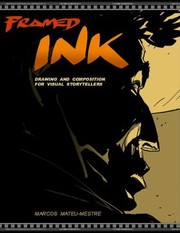
Teaches composition and visual narrative through cinematic framing — skills that make concept art communicate a story, not just depict a character or scene.
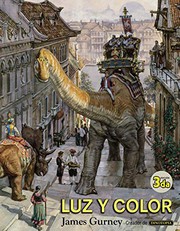
Gurney's definitive guide to realistic color and lighting gives concept artists the tools to set mood, atmosphere, and time-of-day — critical for world-building and character presentation.
World-Building & Creature/Environment Design
IntermediateExpand from single characters to cohesive worlds — designing environments, creatures, and props that feel culturally and ecologically consistent with a narrative.
▸ Study plan for this stage
Pace: 8–10 weeks, ~25–30 pages/day (alternating focus: 4–5 weeks on Imaginative Realism, then 4–5 weeks on The Wildlife of Star Wars)
- Imaginative worlds require grounding in observable reality—studying light, color, perspective, and natural phenomena to build believable fictional environments
- Creature design must balance anatomical logic with narrative purpose—understanding skeletal structure, locomotion, and evolutionary pressures creates internally consistent beings
- Environmental storytelling through color, texture, and composition—how landscapes and props communicate culture, climate, and history without exposition
- Ecological consistency—designing creatures and environments that coexist logically within a shared world system rather than as isolated elements
- Reference gathering and visual research as foundational practice—building personal libraries of real-world observation to inform imaginative work
- Design iteration and problem-solving—how constraints (gravity, biology, narrative) drive creative solutions rather than limiting them
- Cultural and biological diversity in world-building—avoiding monocultures by designing varied species, environments, and design languages within a single world
- How does Gurney use real-world observation (light, atmosphere, geology) as a foundation for painting imaginary worlds, and why is this approach more effective than pure fantasy?
- What anatomical and evolutionary principles does Whitlatch apply when designing Star Wars creatures, and how do these constraints make designs feel believable rather than arbitrary?
- How do environment and creature design work together to establish a cohesive world? Give a specific example from Star Wars.
- What role does cultural context play in environment and prop design? How would you design a settlement differently for a desert-dwelling species versus an aquatic one?
- How can you use color, texture, and composition in environmental design to communicate backstory and function without relying on text?
- What is the relationship between an artist's reference library and their ability to design imaginative worlds?
- Complete 5–10 environment studies from Imaginative Realism exercises (focusing on light, atmosphere, and perspective), then reimagine each in a fictional world of your own creation
- Design a complete creature using Whitlatch's methodology: sketch anatomical structure, determine locomotion and diet, then refine surface details—include written notes on evolutionary pressures
- Build a visual reference library (digital or physical) of 50+ real-world images organized by biome, material, and function; use this to inform one complete environment design
- Design a small ecosystem: choose a climate/world, then design 3–5 creatures that could coexist there, plus the environment they inhabit—ensure each creature's form reflects its ecological niche
- Create a 'world bible' for a fictional setting: document climate, dominant species, cultural artifacts, color palette, and material culture; then produce 3–5 finished paintings/drawings demonstrating consistency
- Redesign a creature from an existing fictional world (not Star Wars) using Whitlatch's principles—document your reasoning for anatomical choices and how it fits its environment
Next up: This stage equips you with the tools to design internally consistent worlds where every element—creature, environment, and artifact—reinforces a cohesive vision; the next stage will focus on translating these designs into narrative-driven visual storytelling and production design for film, games, or illustration.

Gurney shows how to paint convincing scenes of things that don't exist, combining research, reference, and imagination — the core skill of world-building concept art.
Whitlatch, a professional creature designer, reveals how anatomy, ecology, and narrative logic combine to create believable alien life — an advanced model for creature concepting.
Professional Workflow & Industry Thinking
ExpertInternalize the mindset, process, and presentation skills of a working concept artist — from brief to final deliverable — and learn how top professionals approach creative problem-solving.
▸ Study plan for this stage
Pace: 8–10 weeks, ~40–50 pages/day with 2–3 days per week dedicated to applied exercises and project work
- The MDA framework (Mechanics, Dynamics, Aesthetics) and how design decisions cascade from core mechanics to player experience
- Iterative design thinking: prototyping, playtesting, and refinement as the foundation of professional creative problem-solving
- Brief interpretation and constraint-driven creativity—extracting the essential design intent before visual execution
- Rapid ideation and sketching techniques for generating and evaluating multiple solutions under time pressure
- Visual communication hierarchy: how to present concepts that clearly convey function, mood, and design intent to stakeholders
- Translating game design principles into character and environment concept art—form follows function and narrative
- Imagination-driven sketching: developing a personal visual language while maintaining clarity and purposefulness
- Professional presentation standards: portfolio-ready deliverables, annotation, and context that justify design choices
- How does the MDA framework help you evaluate whether a character design serves the game's mechanics and intended player experience?
- What is your process for interpreting a creative brief, and how do you identify constraints that will drive your design decisions?
- How do rapid iteration and sketching differ from polished final art, and why is speed essential in professional concept work?
- How do you present concept art to a team or client in a way that communicates not just the visual, but the reasoning behind your choices?
- What techniques from 'Sketching from the Imagination' help you generate multiple viable solutions quickly, and how do you evaluate which to develop further?
- How would you apply game design thinking (from Schell) to justify a character design choice to a director or producer?
- Read and annotate a game design brief (real or self-created), then extract 3–5 core design constraints and explain how each should influence your character/environment concept
- Complete 5 rapid ideation sessions (15–20 minutes each) on a single prompt, generating 8–12 rough sketches per session, then select and defend your strongest direction
- Redesign an existing game character using the MDA framework—identify its core mechanic, analyze how the current design serves that mechanic, then propose an alternative that maintains function while shifting aesthetic
- Create a fully annotated concept sheet for one character or environment: rough sketches, refined concept, color/material notes, and 100–150 words explaining design decisions tied to the brief
- Conduct a peer or self-critique session using the 'design intent vs. visual execution' framework—does the sketch clearly communicate what it's supposed to do?
- Sketch from imagination for 30 minutes daily for 2 weeks, focusing on one theme (e.g., 'sci-fi soldiers,' 'fantasy merchants'), tracking how your speed and clarity improve
Next up: This stage equips you with the professional mindset and workflow to approach concept art as problem-solving, preparing you to tackle specialized domains (environment design, creature design, visual effects) with the same disciplined, brief-driven methodology.
Teaches how design decisions serve a larger creative vision and audience experience — essential thinking for concept artists working within game or film production pipelines.

A curated collection of sketchbooks from top concept artists worldwide, revealing raw ideation processes and how professionals move from thumbnail to polished concept — the ideal capstone for the curriculum.
Discussion
Keep reading
Paths that share books, cover the same subject, or open a related topic.