German Literature: Best Books to Read, in Order
This curriculum traces the arc of German literature from its Classical peak through Romanticism, the modernist revolution of Kafka and Mann, and into the postwar era. Starting at an intermediate level, each stage deepens thematic and stylistic complexity, so that earlier works build the cultural and literary vocabulary needed to fully appreciate what follows.
The Classical Foundation: Goethe
IntermediateGrasp the humanist ideals, lyric power, and dramatic scope of German Classicism through Goethe, the towering figure against whom all later German writers define themselves.
▸ Study plan for this stage
Pace: 6–7 weeks, ~25–30 pages/day. *Werther* (100 pages) in weeks 1–2; *Faust, Part One* (150+ pages) in weeks 3–6; final review and synthesis in week 7.
- Sturm und Drang emotionalism vs. Classical restraint: how *Werther*'s passionate subjectivity gives way to *Faust*'s exploration of human striving within cosmic order
- The Faustian bargain and the limits of human knowledge: Faust's insatiable desire to transcend mortal bounds and the metaphysical consequences
- Goethe's treatment of love as both redemptive force and destructive passion: Werther's fatal infatuation contrasted with Gretchen's tragic innocence in *Faust*
- The role of nature and the sublime: how natural imagery reflects inner psychological states in *Werther* and cosmic forces in *Faust*
- Character as vehicle for philosophical inquiry: Werther and Faust as embodiments of Enlightenment contradictions—reason vs. desire, ambition vs. acceptance
- Dramatic form and lyric intensity: how Goethe fuses epistolary confession (*Werther*) with theatrical spectacle (*Faust*) to deepen emotional and intellectual impact
- The German language as expressive instrument: Goethe's linguistic innovation and musicality as hallmarks of German Classicism
- What is the relationship between Werther's emotional crisis and the broader Sturm und Drang movement? How does his fate critique or endorse the valorization of feeling over reason?
- Explain the Faustian bargain: what does Faust seek, what does he surrender, and what does the wager reveal about human ambition and the limits of knowledge?
- How do the female characters—Lotte in *Werther* and Gretchen in *Faust*—function as mirrors to the male protagonists' inner lives? What is the cost of their love?
- Analyze the role of the supernatural and demonic forces in *Faust, Part One*. How does Mephistopheles embody skepticism about human nature and divine order?
- What is Goethe's vision of nature in these two works? How does it differ from Romantic nature-worship and reflect Classical ideals?
- How does Goethe use language, form, and style to create psychological depth in *Werther* and metaphysical scope in *Faust*? What makes these works distinctly German?
- Close-read 3–4 key letters from *Werther* (e.g., the opening letter, his declaration of love, his final letters) and annotate the shifts in tone, imagery, and self-awareness. Track how his language deteriorates as his crisis deepens.
- Create a comparative character map: list Werther's and Faust's core desires, obstacles, and choices side-by-side. Write a 1-page analysis of how each protagonist embodies different responses to the human condition.
- Trace the motif of the unattainable beloved across both works. Write a 2-page essay comparing Werther's obsession with Lotte to Faust's pursuit of Gretchen—what does each relationship reveal about desire and responsibility?
- Perform or record a dramatic reading of 2–3 scenes from *Faust, Part One* (e.g., Faust's opening monologue, the Pact scene, or the Garden scene with Gretchen). Attend to meter, rhythm, and emotional register.
- Research and write a 1-page reflection on the historical context of *Werther*'s publication (1774) and its reception—why did it become a cultural phenomenon? How does this illuminate Goethe's critique of Romanticism?
- Create a visual or written "map" of the supernatural realm in *Faust*—Mephistopheles, the Witches' Kitchen, the spirits—and analyze how Goethe uses the demonic to externalize Faust's inner conflicts.
Next up: This stage establishes Goethe as the foundational genius of German letters and German Classicism's humanist vision, equipping you to recognize how later German writers (Schiller, Heine, the Romantics, and moderns) either build upon, react against, or reinterpret his legacy of passionate intellect and formal mastery.

A short, electrifying epistolary novel that introduces Goethe's world and the Sturm und Drang sensibility. Its themes of passion, alienation, and doomed idealism echo throughout every later stage of this curriculum.

The central monument of German literature. Reading it after Werther reveals how Goethe transformed youthful emotion into a philosophical drama about knowledge, desire, and the human condition.
The Romantic Turn
IntermediateUnderstand how German Romanticism reacted to and extended Classicism, exploring the uncanny, the fragmentary, and the mythic in both prose and poetry.
▸ Study plan for this stage
Pace: 4–5 weeks, ~25–30 pages/day. Begin with Novalis (1–2 weeks), then move to Hoffmann's tales (2–3 weeks), allowing time for reflection and cross-textual analysis.
- The Romantic elevation of night, dreams, and the inner world as sites of spiritual truth and transcendence (Novalis's *Hymns to the Night*)
- Fragmentation and incompleteness as aesthetic and philosophical principles—the fragment as a complete artistic form
- The uncanny (*das Unheimliche*) as a destabilizing force that reveals hidden dimensions of reality and the self (Hoffmann's tales)
- Myth and the mythic imagination as ways to access deeper truths beyond rational Enlightenment thought
- The artist-figure as visionary or outsider struggling between the mundane world and transcendent realms
- Synesthesia and the blending of sensory experiences, especially music and visual imagery, as Romantic techniques
- The tension between Romantic longing (*Sehnsucht*) and the impossibility of fulfillment in the material world
- How does Novalis use the night as a symbol and spiritual space in *Hymns to the Night*, and what does this reveal about Romantic attitudes toward Classicism's emphasis on clarity and reason?
- What role does fragmentation play in Novalis's *Hymns to the Night & Spiritual Songs*—how does the incomplete or aphoristic form itself embody Romantic philosophy?
- In Hoffmann's *The Golden Pot* and other tales, how does the uncanny function to blur the boundaries between the real and the magical, and what does this suggest about the nature of perception and reality?
- Compare the figure of the artist or visionary in Novalis and Hoffmann: how do they each portray the artist's relationship to society and transcendence?
- How do Novalis and Hoffmann use myth, dream, and the irrational to extend or critique the values of German Classicism?
- What is the role of longing (*Sehnsucht*) in both texts, and why is it often presented as both beautiful and tragic?
- Close-read 2–3 individual hymns from Novalis, paying attention to imagery of night, death, and transcendence; annotate metaphors and trace how they evolve across the sequence.
- Write a 500-word reflection on a moment of the uncanny in Hoffmann's *The Golden Pot*—describe what makes it uncanny and what psychological or philosophical truth it seems to reveal.
- Create a visual mood board or diagram mapping the contrasts between the rational/mundane world and the magical/transcendent world in one Hoffmann tale; label key symbols and their meanings.
- Compose a short fragmentary piece (200–300 words) in the style of Novalis's aphorisms or *Hymns*—experiment with how incompleteness and suggestion can convey meaning.
- Compare a passage from Novalis's *Hymns to the Night* with a passage from a Hoffmann tale that deals with dreams or visions; analyze how each author uses language and imagery differently to evoke the supernatural.
- Research and write a 300-word note on how Hoffmann's tales engage with or critique Enlightenment rationalism, using specific examples from *The Golden Pot* or another tale in the collection.
Next up: This stage establishes the Romantic privileging of the inner, irrational, and mythic—foundations that will deepen as you encounter later German Romantic and post-Romantic figures who grapple with history, nationalism, and the limits of Romantic idealism.

A slim, visionary prose-poem cycle that defines the Romantic longing for transcendence and the beyond. Its mystical intensity is best appreciated with Goethe's lyricism fresh in mind.
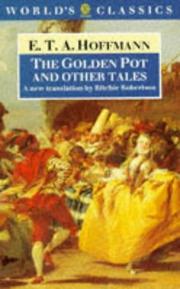
Hoffmann's uncanny fairy tales blend the everyday with the supernatural, pioneering the psychological darkness that will reappear in Kafka. Reading him here bridges Romanticism and literary modernism.
Modernist Masterworks: Kafka & Mann
IntermediateExperience the two defining voices of German-language modernism—Kafka's existential dread and Mann's epic irony—and understand how they transform the Romantic and Classical inheritance.
▸ Study plan for this stage
Pace: 8–10 weeks, ~40–50 pages/day (with reflection days built in)
- Kafka's absurdist logic: how bureaucratic and biological systems trap individuals in inescapable situations without rational explanation
- The grotesque as modernist method: using physical transformation and surreal scenarios to expose psychological and social truths
- Mann's narrative irony: the gap between a character's self-perception and their actual moral or intellectual condition
- Decadence and disease as metaphors for cultural decline: how physical illness reflects spiritual and civilizational malaise
- The individual versus systems: Kafka's focus on powerless subjects versus Mann's focus on complicit consciousness
- Time and stasis: how modernist narratives resist linear progress and trap characters in cyclical or suspended states
- The inheritance of Romanticism and Classicism: how both writers critique idealism, genius, and transcendence from within the tradition
- How does Kafka use physical metamorphosis and bureaucratic procedure as parallel forms of dehumanization in 'The Metamorphosis' and 'The Trial'?
- What is the effect of Mann's narrative irony in 'Death in Venice'—how does Aschenbach's self-deception about his artistic mission relate to his moral collapse?
- How do both Kafka and Mann use disease, decay, or bodily transformation to explore modernist anxieties about meaning and identity?
- What is the relationship between individual consciousness and impersonal systems (bureaucracy, nature, time) in these four works?
- How do Kafka and Mann each critique or transform the Romantic ideal of the artist or genius figure?
- What role does irony, ambiguity, or refusal of closure play in the narrative structure of these texts, and what does this suggest about modernist epistemology?
- Close-read one scene from 'The Metamorphosis' and one from 'The Trial' side-by-side, identifying how Kafka uses absurdist logic differently in each to create alienation
- Write a 2–3 page character study of Aschenbach ('Death in Venice') that tracks the gap between his stated artistic principles and his actual behavior—annotate moments where Mann's irony is most cutting
- Create a visual map or timeline of 'The Magic Mountain' showing how time functions differently inside the sanatorium versus the outside world; note what this suggests about modernist narrative
- Compose a short scene (500 words) written in Kafka's style: take a mundane modern situation (job interview, airport security, online customer service) and render it absurdist and nightmarish
- Comparative essay (1500–2000 words): analyze how Kafka and Mann each use the body (Gregor's insect form, Aschenbach's aging, Hans Castorp's illness) as a site of modernist meaning-making
- Discussion or journal reflection: identify one moment in each author where you felt the text resisting your desire for moral clarity or narrative resolution—what does this resistance accomplish?
Next up: This stage establishes the modernist critique of reason, progress, and the unified self—preparing you to encounter how later German and European writers (Expressionists, Dadaists, and post-war authors) radicalize these techniques into fragmentation, linguistic experiment, and political allegory.
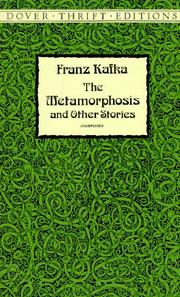
The perfect entry point into Kafka: compact, viscerally strange, and thematically inexhaustible. Its alienation and bureaucratic absurdity feel like a dark mirror of Romantic isolation.
Kafka's full novelistic vision of guilt, power, and incomprehensible systems. Reading it after The Metamorphosis reveals the larger architecture of his world.
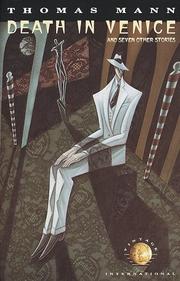
A novella-length masterpiece that consciously invokes Goethe and Greek myth while dissecting artistic obsession and moral collapse. It is the ideal bridge between Kafka's anxiety and Mann's grander novels.

Mann's supreme achievement: a vast, ironic novel of ideas set in a sanatorium, debating the fate of European civilization. All the earlier reading—Classical humanism, Romantic longing, Kafkaesque unease—converges here.
Postwar & Modern Classics
ExpertEngage with the literature that grappled with the catastrophe of the 20th century and reshaped German letters, from the rubble of WWII through the late-century novel.
▸ Study plan for this stage
Pace: 6–7 weeks, ~25–30 pages/day (approximately 180–210 pages per week)
- Magical realism and the grotesque as responses to historical trauma: how Grass uses surrealism and dark comedy to represent the unspeakable horrors of Nazi Germany and WWII
- The unreliable narrator and fragmented consciousness: Oskar's drumming as a metaphor for controlling narrative and reality, and the breakdown of coherent selfhood in postwar literature
- Alienation and the divided self: Hesse's exploration of the intellectual's estrangement from society and the internal struggle between civilization and primal instinct
- The picaresque and episodic structure as formal responses to historical rupture: how both novels resist linear narrative to mirror the fragmentation of the postwar world
- Artistic rebellion and nonconformity as survival: the artist-figure (Oskar, Harry Haller) as both victim and agent of resistance against totalizing systems
- Memory, guilt, and moral reckoning: how these texts engage with German complicity, collective trauma, and the impossibility of returning to innocence
- The carnivalesque and transgression: the use of excess, obscenity, and taboo-breaking to expose social hypocrisy and challenge bourgeois morality
- How does Oskar's drumming function as both a literal and metaphorical act of resistance in *The Tin Drum*, and what does his refusal to grow suggest about the postwar German condition?
- Compare the narrative strategies of Grass and Hesse: how do fragmentation, unreliability, and non-linear structure reflect the psychological and historical crises of their respective periods?
- What is the significance of the grotesque and magical realism in *The Tin Drum* as a response to the historical trauma of Nazism and WWII?
- How does Hesse's concept of the 'Steppenwolf' as a divided self relate to broader postwar anxieties about identity, authenticity, and belonging?
- Discuss the role of the artist-figure in both novels: in what ways do Oskar and Harry Haller represent critiques of, or alternatives to, the societies they inhabit?
- How do both texts engage with questions of guilt, complicity, and moral responsibility in the aftermath of historical catastrophe?
- Close-read three key scenes from *The Tin Drum, Part 2* (e.g., the glass-shattering concert, Oskar's arrest, a moment of magical realism) and annotate them for narrative technique, symbolism, and historical resonance.
- Create a character map or psychological profile of Oskar that traces his development across Part 2, noting moments where his agency, reliability, and moral position shift or become ambiguous.
- Analyze the structure and pacing of *Der Steppenwolf*: identify the episodic sections, the role of the 'Magic Theatre' sequence, and how fragmentation mirrors Harry's internal state.
- Write a comparative essay (1,500–2,000 words) on how Grass and Hesse use formal innovation (magical realism, stream-of-consciousness, non-linearity) to represent postwar alienation and trauma.
- Trace the motif of music, performance, or artistic expression across both texts: how do Oskar's drum and Harry's engagement with jazz and literature function as acts of meaning-making or rebellion?
- Conduct a historical research exercise: identify 2–3 specific historical events or contexts referenced in *The Tin Drum, Part 2* (e.g., the Nazi period, the war's end, postwar displacement) and write a brief reflection on how Grass transforms them through magical realism.
Next up: This stage establishes the postwar novel's formal and thematic preoccupations—trauma, fragmentation, artistic resistance—that will inform your engagement with later-20th-century German literature's continued reckoning with history, identity, and the possibilities of narrative itself.
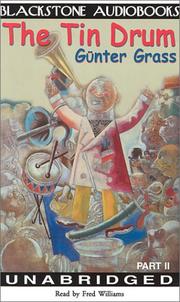
The defining novel of postwar German literature: a hallucinatory, satirical reckoning with Nazism and collective guilt. The mythic and grotesque modes learned from Hoffmann and Mann are here pushed to their limit.
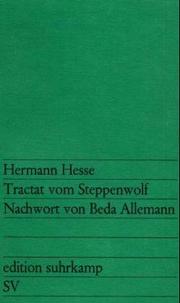
Hesse's fragmented, visionary portrait of a man torn between bourgeois life and spiritual chaos draws directly on the Romantic tradition and anticipates postmodern self-consciousness, rounding out the curriculum's arc.
Discussion
Keep reading
Paths that share books, cover the same subject, or open a related topic.