Audiobook narration looks like reading aloud and is not. It is three separate disciplines running simultaneously. You are acting, sustaining character and intention across hours of unbroken text. You are performing as a vocal athlete, holding consistent tone and energy across sessions that may span weeks without an audible seam. And you are engineering, because the great majority of narration is now recorded in home booths to specifications that publishers and retailers enforce on noise floor, peak levels and room tone.
Almost nobody fails at narration because they cannot read well. They fail because the recording is unusable, or because their voice gives out on day three, or because the performance is flat over a long stretch that a single audition clip disguised. So this path assembles the three skills rather than pretending one book covers them.
A practical note on the field: narration is competitive freelance work, rates vary widely between royalty-share and per-finished-hour contracts, and the effect of synthetic voice on the lower end of the market is real and unresolved. Read these to build craft, not as a guarantee of work.
Start with the craft of voice acting
The Art of Voice Acting by James Alburger is the standard broad text: interpretation, character work, script analysis, microphone technique and the business of the industry. It covers commercial and animation work as well as long-form narration, and the interpretive material — finding the intention behind a line and playing it rather than reciting it — is exactly what separates listenable narration from audio wallpaper.
Follow it with Voice Acting For Dummies by David Ciccarelli and Stephanie Ciccarelli, which is more current on the working reality: how casting sites function, what a decent home setup costs, how auditions are submitted and how jobs are actually priced. The two overlap on fundamentals, so if you buy one for craft take Alburger and if you buy one for the business take Ciccarelli.
Build the instrument
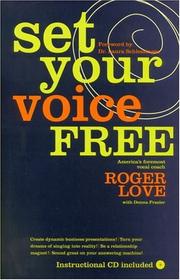
Set your voice free by Roger Love is the vocal technique book on this path. Love works on breath support, resonance placement, the bridge between chest and head voice, and the daily exercises that let a voice survive long sessions. Narrators lose more days to vocal fatigue than to anything else, and the warm-up and recovery material here is the practical answer.
Learn to record yourself properly
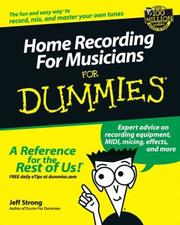
Home recording for musicians for dummies by Jeff Strong is not a narration book, and it is on this path because narration is home recording. Signal chain, gain staging, interfaces, microphone placement, acoustic treatment versus soundproofing, editing and file formats are all the same problems a musician faces, and Strong explains them without assuming a technical background. Read the room-treatment chapters twice; an untreated room is the single most common reason a submitted file gets rejected.
Go back to acting fundamentals
Finish with A practical handbook for the actor by Melissa Bruder and colleagues, a short and rigorous book on playing actions rather than emotions. It is the most useful thing on this list for the actual performance: it gives you a repeatable method for deciding what a character is doing to another character in a scene, which is precisely the decision you must make hundreds of times per book without a scene partner in the room.
Practise on real text
Record a chapter of public-domain fiction, listen back critically, and compare against a professional narration of the same book. Follow the full path in order — craft, voice, studio, acting — and you will build the three skills the job actually requires rather than only the obvious one.
Follow the full ordered path here: Best Books on Audiobook Narration and Voice Work.
Ready to learn something deeply?
Build a reading path — free