Bohumil Hrabal Reading Order: Where to Start
Bohumil Hrabal wrote in long, drunken, digressive sentences that sound like a man talking in a pub, and the shortest books are the best introduction to that voice because the technique is easier to hear at speed. Start with the two famous short novels, move to the two comic ones, then to the Nymburk books written in his mother's voice, and only then to the fragmentary late trilogy. Almost nothing here is over 250 pages, and the English translations are scattered across small presses, so build the path rather than hunting for a collected edition.
Start Here: The Two Short Novels
IntermediateMeet Hrabal's talking voice and his central joke — the idiot narrator who turns out to be the only educated man in the room.
▸ Study plan for this stage
Pace: A week for both. Too loud a solitude is 98 pages and Closely watched trains is 85 — under 200 pages between them, and each is an evening's reading. But read them slowly and, if you can, read a page or two aloud. Hrabal writes in long, drunken, digressive sentences modelled on a man talking in a pub,
- The talking voice as the whole technique: Hrabal called his mode pábení, roughly a kind of inspired blathering, and the sentences are built to sound like speech rather than prose
- The idiot narrator who is secretly the most educated man in the room — Hanta in Too loud a solitude has spent thirty-five years pulping banned books and reading them first
- Censorship as the joke and the wound. A man destroying literature for a living, and salvaging it, is a description of what it was to be a Czech writer under two occupations
- Digression as structure. A Hrabal paragraph will leave the subject entirely and return by a route you did not expect, and the route is the content
- Closely watched trains and the comic-then-suddenly-not shift — the last twenty pages change register violently, and how he handles that turn is the thing to watch
- Sex and death treated with exactly the same tone, which is the source of both the comedy and the discomfort
- The occupation as background rather than subject: the Germans are simply there, the way weather is there, which is far more unsettling than confrontation would be
- What does Hanta actually do all day, and how does Hrabal make a description of manual labour into a philosophy?
- Where does a typical Hrabal sentence leave its subject, and how does it get back?
- In Closely watched trains, at what point does the comedy stop, and what does Hrabal do differently in those last pages?
- How does the book treat the German occupation — what is remarkable about how little attention it is given?
- What is the relationship between the two narrators' apparent foolishness and what they actually know?
- Read the first page of Too loud a solitude aloud. If nothing else in this path, do this — the voice is the whole thing and it is inaudible on the page.
- Take one long sentence and diagram where it changes subject. Hrabal's digressions have a consistent shape and seeing it once makes the rest of the path much easier.
- Watch the 1966 film of Closely watched trains after reading the book. It won the Oscar and the comparison shows exactly what Hrabal's prose was doing that the camera cannot.
- Note where the English translations are published. Hrabal is scattered across small presses in English and there is no collected edition, so building this path means buying book by book — worth knowing before you go looking.
Next up: Having learned to hear the voice at 90 pages, you can now take it at 250 — which is exactly what the two comic novels ask, since they sustain the same digression across a whole life rather than an afternoon.

A paper-mill worker who has spent thirty-five years pulping banned books and reading them first. Under a hundred pages, and the single best thing he wrote — start here.
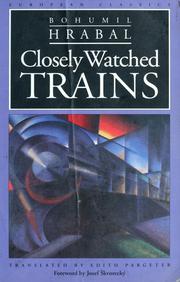
A boy at a rural railway station under German occupation, comic and then suddenly not. Read second: it is the book the famous Oscar-winning film came from, and the shift in the last twenty pages teaches you how Hrabal handles violence.
The Big Comic Novels
IntermediateTake on the longer picaresque books, where the digression is sustained for a whole life rather than an afternoon.
▸ Study plan for this stage
Pace: Two to three weeks for I Served The King Of England (243 pages) and Dancing Lessons for the Advanced in Age (123). The first is the most conventionally readable book in the path and goes quickly. The second is one uninterrupted sentence for its entire length, with no full stops to rest on, and needs
- The picaresque shape of I Served The King Of England — a very short waiter rising through hotels, the Republic, the occupation and the Communist takeover, always slightly beneath notice
- Smallness as vantage point: Ditie is ignored by everyone important, which is why he sees everything, and it is Hrabal's most efficient political device
- Collaboration handled without moralising. The narrator marries a German, prospers, and the book declines to condemn him in the terms a reader expects
- Wealth and its worthlessness as the novel's arc — the fortune arrives exactly when the world that valued it disappears
- Dancing Lessons as a formal experiment with a purpose: one sentence spoken by an old shoemaker to some young women, and the lack of stops is the sound of a man who cannot be interrupted
- The uncle's stories inside the stories, a Hrabal signature, where anecdote nests inside anecdote until the frame is lost
- Comedy as the delivery system for twentieth-century Czech history: three regime changes narrated by people too busy talking to notice
- How does Ditie's physical smallness function in I Served The King Of England — practically, and as an idea?
- How does the novel handle his collaboration, and why does it refuse to judge him?
- What happens to the fortune, and what is the joke Hrabal is making about the whole century?
- What does the single sentence of Dancing Lessons achieve that ordinary punctuation could not?
- Which of the two is the better book, and are they even trying to do the same thing?
- Read Dancing Lessons in one or at most two sittings. It is 123 pages and the unpunctuated form punishes stopping.
- In I Served The King Of England, mark each regime change. There are several and Hrabal signals them so lightly that a distracted reader will miss one entirely.
- Count how many stories in Dancing Lessons are told about someone else rather than by the speaker. The ratio is the point of the book.
- Read a page of Dancing Lessons aloud without pausing for breath where you want to. That physical difficulty is the effect Hrabal is producing deliberately.
Next up: The comic register is now familiar, which lets the next stage do something quieter with it — the same voice turned on his own family and small town, and in his mother's mouth rather than his own.
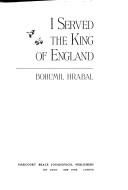
A tiny hotel waiter's rise and fall through the Republic, the occupation and the Communist takeover. The most novel-shaped of his books and the easiest to recommend to someone who wants a plot.
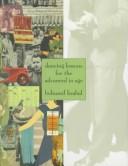
One uninterrupted sentence for the whole book, spoken by an old shoemaker to some young women. Read it after the others — knowing the voice makes the formal stunt readable rather than exhausting.
The Nymburk Books
IntermediateRead the family novels set in the small-town brewery of his childhood, told mostly in his mother's voice.
▸ Study plan for this stage
Pace: Three to four weeks for Cutting it short (304 pages), The little town where time stood still (311) and Harlequin's millions (312) — the longest stretch in the path, about 900 pages. Read them in order; the second is the direct sequel to the first and the third revisits the same characters decades la
- The brewery at Nymburk as Hrabal's own childhood, and the setting he returned to more than any other
- His mother Maryška as narrator of Cutting it short — a man writing his mother's voice, exuberant and physical, and the boldest ventriloquism in his work
- Hair as the book's central image and its comedy: cutting it short is both a literal act and the arrival of modernity, speed and the twentieth century
- Uncle Pepin, the great talker, who is the source of Hrabal's whole style and appears across all three books
- The handover of narration to the son in The little town where time stood still, which is also the handover from private enterprise to nationalisation — the family brewery taken away
- Comedy curdling into elegy across the pair: the same jokes told about a world that has been abolished
- Harlequin's millions and old age — the same characters in a home for the elderly in a decaying castle, with a piped-music waltz playing over everything, which is the most openly sad thing Hrabal wrote
- What is the significance of Maryška cutting her hair, and how many things does the act stand for at once?
- Why does Hrabal write the first book in his mother's voice and the second in the son's? What changes with the switch?
- How is the nationalisation of the brewery described, and how does the tone differ from the way the same politics appear in I Served The King Of England?
- What does Uncle Pepin contribute besides comedy, and what does Hrabal owe him stylistically?
- By Harlequin's millions, what has happened to the exuberance of the first book — is it gone, or transformed?
- Read Cutting it short and The little town where time stood still consecutively. They are one book split by a narrator and the pairing is the point.
- Note every appearance of Uncle Pepin across the three novels. He is the closest thing Hrabal has to a thesis statement about where his own voice came from.
- Track what happens to the brewery specifically — who owns it, who runs it, who is allowed inside. It is the political history of Czechoslovakia in one building.
- After Harlequin's millions, reread the first chapter of Cutting it short. The distance between them is the point of reading all three.
Next up: You have now seen Hrabal write his mother, his uncle and his town; the last stage is the one where he finally writes himself, and where the form he has been bending starts coming apart on purpose.

His mother Maryška, her hair, and the brewery — the first of the family books and the most exuberant. Note that some English editions bind it together with the next title in one volume.
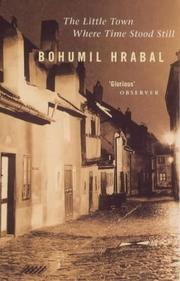
The same town after the war, narrated by the son, as the private world is nationalised out of existence. The direct sequel and the sadder half of the pair.

The same characters again, decades later, in a home for the elderly in a decaying castle. The late masterpiece of this strand and the most openly elegiac book he wrote.
The Late and Loose Work
IntermediateFinish with the autobiographical trilogy and the odd small books, where the form comes apart on purpose.
▸ Study plan for this stage
Pace: Three to four weeks for four books totalling about 700 pages. In-house weddings (171 pages) and Gaps (131) read quickly; Vita nuova (288) is the hardest thing in this path — written almost without full stops and considerably less charming than Dancing Lessons — and deserves two weeks on its own. All
- The late trilogy as self-portrait by ventriloquism: Hrabal writes his own life in his wife Eliška's voice, which is the same trick as Cutting it short turned on himself
- Being described by your spouse as a formal device — the trilogy's Hrabal is seen from the outside, and he does not come off especially well, which is deliberate
- Vita nuova's near-total abandonment of punctuation, applied to the literary Prague of the 1950s and 60s rather than to a comic monologue
- Writers under Communism as documentary material: the manuscripts circulated, the censors, the friends who did and did not compromise
- Gaps and 1968, running up to the Soviet invasion and after — the trilogy's conclusion and the only sustained self-portrait Hrabal left
- All My Cats as the book that recasts everything: a short, undefended memoir about the cats at his country cottage and what he did to them, written without the protection of comedy
- Guilt without absolution. The geniality of the earlier books reads differently once you have read the one where the narrator is straightforwardly culpable
- What does Hrabal gain by writing his own life in his wife's voice, and what does he avoid?
- How is he portrayed in the trilogy, and how flattering is it?
- What does the loss of punctuation in Vita nuova do to a book about literary politics rather than about a talker?
- How does Gaps handle 1968, and what does it refuse to say?
- Does All My Cats change how you read the rest of Hrabal? Be specific about which books it affects most.
- Read Vita nuova in long sittings, and stop only at chapter breaks. Mid-page stopping in an unpunctuated book is what makes readers give up on it.
- Read All My Cats absolutely last. Its effect is entirely dependent on the affection built up over the preceding eleven books.
- After the trilogy, write two sentences on what kind of man the books describe. Then compare that with the narrator of Too loud a solitude.
- Look up where Hrabal died in 1997 and the circumstances. It is not a spoiler and it is genuinely relevant to how the late books read.
- List which of these twelve books you would give someone with only one evening. Almost everyone comes back to the first one, which is worth noticing.
Next up: This is the end of the path — the voice, the comedy, the family and finally the man behind them — and the natural next move is a rereading of Too loud a solitude, which is a considerably darker book once you know who wrote it.

The first of the late trilogy, in which Hrabal writes his own marriage in his wife Eliška's voice. Read it after the Nymburk books — it is the same trick, turned on himself.
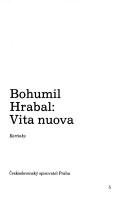
The middle volume, written almost without full stops, covering the literary Prague of the 1950s and 60s. The most demanding book in the path and the one that most rewards having read the rest.

The trilogy's conclusion, running up to the invasion of 1968 and after. Completes the only sustained self-portrait he left.

A short, disturbing memoir about the cats at his country cottage and what he did to them. Read it last: it is the least defended thing he published and it recasts the geniality of everything before it.
Discussion
Keep reading
Paths that share books, cover the same subject, or open a related topic.