Franz Kafka Reading Order: Where to Start
This curriculum moves through Kafka's work in the order that best builds comprehension and emotional resonance: short fiction first (where his voice is most concentrated), then the unfinished novels (which reward readers who already feel at home in his world), and finally the private writings — diaries and letters — that illuminate the man behind the myth. Translation guidance is woven in at each stage so you always know which edition to reach for.
The Stories — Kafka's Core Voice
IntermediateAbsorb Kafka's essential style, themes, and dark humor through his most celebrated and accessible short fiction, while establishing which translations to trust.
▸ Study plan for this stage
Pace: 10–12 weeks total. Week 1–3: "The Metamorphosis and Other Stories" (~20–25 pages/day, re-reading "The Metamorphosis" twice — once for plot, once for style). Week 4–5: "In the Penal Colony" (~15–20 pages/day, slow and annotated). Week 6–12: "The Penguin Complete Short Stories" (~15–20 pages/day, trea
- The Kafkaesque: bureaucratic absurdity, inexplicable guilt, and the individual crushed by opaque systems — first encountered viscerally in 'The Metamorphosis' and systematized in 'In the Penal Colony'
- Transformation as alienation: Gregor Samsa's metamorphosis is not a fantasy but a literalization of how modern labor and family obligation dehumanize the self
- The Law as unknowable authority: in 'In the Penal Colony' the torture machine inscribes the law directly onto the body — punishment precedes any comprehensible verdict
- Dark humor and deadpan narration: Kafka's comedy arises from the gap between the horror of events and the matter-of-fact, bureaucratic tone in which they are described
- The parable form: many stories in the Penguin Complete collection (e.g., 'Before the Law', 'A Message from the Emperor') function as self-contained philosophical parables that resist single interpretations
- Translation fidelity and voice: comparing available translations (Muir, Hofmann, Bernofsky) reveals how much of Kafka's irony, rhythm, and ambiguity lives or dies in the translator's choices
- The unfinished and the fragmentary as aesthetic: Kafka's shorter pieces, aphorisms, and fragments in the Penguin Complete are not failed works but enact incompleteness as a deliberate condition of meaning
- Kafka's biographical shadow: his Prague Jewish identity, his fraught relationship with his father, and his ambivalence about publishing all inflect the fiction without reducing it to autobiography
- After reading 'The Metamorphosis', can you articulate what Gregor's transformation reveals about his role in the family economy — and why his family's relief at his death is presented without authorial condemnation?
- In 'In the Penal Colony', what does the torture apparatus represent, and how does the fate of the Officer complicate any simple reading of the story as an anti-authoritarian allegory?
- Across the Penguin Complete collection, what recurring structural pattern do you notice in how Kafka's protagonists relate to authority figures, and can you cite at least three stories as evidence?
- How does Kafka's use of free indirect discourse — narrating from inside a character's limited perspective without irony markers — create the reader's sense of unease and complicity?
- Comparing at least two translations of a single passage (e.g., the opening line of 'The Metamorphosis'), what specific word-level choices most alter the tone, and which translation do you trust most and why?
- What distinguishes a Kafka parable (such as 'Before the Law' from the Penguin Complete) from a conventional short story, and what interpretive demands does the parable form place on the reader?
- The Double-Read of 'The Metamorphosis': Read it first for narrative experience, then re-read it highlighting every moment where another character's economic or emotional need overrides concern for Gregor — build a marginal timeline of his progressive erasure.
- Translation Autopsy: Find two different translations of the opening sentence of 'The Metamorphosis' (e.g., Muir's 'vermin', Hofmann's 'monstrous vermin', Bernofsky's 'terrible vermin'). Write a one-page close reading of how each word choice frames the entire story's moral universe.
- Apparatus Diagram for 'In the Penal Colony': Draw or describe in writing the torture machine's three parts and their functions, then write a paragraph arguing what each part symbolizes — this forces engagement with Kafka's precise, almost technical descriptive prose.
- Parable Inventory: As you read through the Penguin Complete, keep a running log of every piece that functions as a parable (under ~3 pages, no resolution, an allegorical figure of authority). At the end, write a one-paragraph 'theory of the Kafka parable' in your own words.
- Voice Imitation Exercise: Write a 300–500 word scene in Kafka's style — a character receives an official letter informing them of a punishment or obligation whose reason is never explained. Focus on deadpan tone, bureaucratic diction, and the protagonist's anxious compliance rather than resistance.
- Thematic Constellation Map: After finishing the Penguin Complete, create a visual or written map connecting at least eight stories by shared motifs (e.g., 'the messenger who never arrives', 'the door that cannot be opened', 'the animal narrator'). Use this map to identify which themes feel most central to Kafka's project.
Next up: Mastering Kafka's short fiction — his voice, his recurring symbols, and his parable logic — gives you the interpretive vocabulary and stamina needed to tackle the unfinished, labyrinthine architecture of his novels, where the same themes operate at novel-length scale and with far greater structural ambiguity.
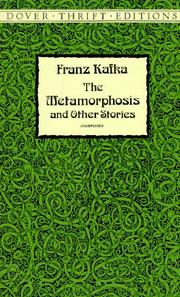
The perfect entry point: short, complete, and containing every major Kafkaesque element — alienation, family guilt, bureaucratic absurdity. Use the Susan Bernofsky translation (Norton, 2014) for its colloquial precision and excellent introduction.

A single, harrowing story that escalates Kafka's themes of law, punishment, and senseless authority; reading it after The Metamorphosis shows how his darkness can operate without any domestic warmth at all.

The definitive single-volume collection (Schocken Books, translated by multiple hands including Willa and Edwin Muir, Tania and James Stern). Read it cover-to-cover: the ordering moves from early parables to late masterpieces like 'A Hunger Artist' and 'Josephine the Singer,' building your fluency in his symbolic vocabulary.
The Novels — Unfinished Cathedrals
IntermediateNavigate Kafka's three unfinished novels in the order that makes their escalating scale and ambiguity manageable, understanding why their incompleteness is part of their meaning.
▸ Study plan for this stage
Pace: 8–10 weeks total: ~2 weeks for Amerika (~30 pages/day), ~3 weeks for The Trial (~25 pages/day), ~3–4 weeks for The Castle (~20 pages/day, slower pace to absorb increasing density and ambiguity)
- Productive incompleteness — all three novels were left unfinished by Kafka and published posthumously by Max Brod; their open endings are not failures but structural features that amplify existential unease
- Escalating scale and opacity — Amerika is relatively picaresque and readable, The Trial introduces bureaucratic dread and guilt without cause, and The Castle pushes ambiguity to its furthest extreme, making each novel a preparation for the next
- The Kafkaesque protagonist — Karl Rossmann, Josef K., and K. form a trilogy of everyman figures who are perpetually displaced, denied agency, and unable to decode the systems that govern them
- Bureaucracy as metaphysical force — in all three novels, institutions (shipping companies, courts, castle administrations) are not merely corrupt but fundamentally inaccessible, operating on logic the protagonist — and reader — can never fully grasp
- Space and threshold — doors, gates, corridors, antechambers, and villages on the edge of a castle recur as symbols of perpetually deferred access and the impossibility of arrival
- Guilt without origin — Josef K. in The Trial is arrested for an unnamed crime; this groundless guilt prefigures existentialist and psychoanalytic readings and echoes throughout all three novels
- The role of women and helpers — female characters (Brunelda in Amerika, Leni in The Trial, Frieda and the landlady in The Castle) and male helpers consistently offer ambiguous aid that neither saves nor fully betrays the protagonist
- Max Brod's editorial hand — understanding that chapter order, titles, and even the existence of these texts as novels is partly Brod's construction is essential to reading them critically
- In what ways does Karl Rossmann's journey through Amerika differ in tone and narrative logic from Josef K.'s ordeal in The Trial, and what does this difference reveal about Kafka's evolving method?
- Why is the incompleteness of The Trial and The Castle — the missing or fragmentary chapters — considered meaningful rather than merely accidental, and how does each novel's final extant scene function as a de facto ending?
- How does the castle itself in The Castle operate as a symbol — what does it represent, and why is the fact that K. never reaches it central to the novel's meaning?
- Compare the nature of the accusation or obstacle in each novel: Karl's alleged theft of an umbrella in Amerika, Josef K.'s unnamed arrest in The Trial, and K.'s disputed land-surveyor appointment in The Castle. What pattern emerges?
- How do the bureaucratic systems in The Trial and The Castle differ from each other in structure and in the kind of despair they produce in their protagonists?
- What is the significance of Max Brod's editorial decisions — including his choice to publish, his chapter ordering, and his suggested endings — for how we read these novels today?
- Threshold mapping: For each novel, draw a simple diagram of the physical and institutional barriers the protagonist encounters (doors, offices, courts, the castle gatehouse, etc.). Annotate each threshold with whether it is ever crossed and what happens at the attempt — then compare all three diagrams side by side.
- Protagonist voice journal: After finishing each novel, write a one-page first-person journal entry as Karl, Josef K., or K. at their most desperate moment. Focus on what they understand about their situation versus what remains opaque — this forces you to inhabit the gap between character knowledge and reader knowledge.
- The incompleteness experiment: Read the final extant chapter of The Trial ('In the Cathedral') and the final extant chapter of The Castle, then write a one-paragraph 'ending' for each. Afterward, research Brod's notes on Kafka's intended endings and compare — reflect on how your instinct to close the narrative differs from Kafka's apparent resistance to closure.
- Bureaucracy audit: Choose one scene from The Trial (e.g., Josef K.'s first interrogation) and one from The Castle (e.g., K.'s phone call to the castle) and write a side-by-side analysis of how each bureaucratic encounter is staged — who holds power, what information is withheld, and how the prose style itself enacts confusion.
- Escalation chart: Create a simple three-column table — one column per novel — and track five dimensions across all three: (1) protagonist's social status, (2) clarity of the central conflict, (3) accessibility of the antagonist institution, (4) narrative resolution, and (5) overall prose density. Use this to articulate in writing the 'escalating ambiguity' arc of the stage.
- Close reading of a door: Select the 'Before the Law' parable from The Trial and Kafka's description of the castle gate in The Castle. Write a 500-word comparative close reading focused solely on the imagery of thresholds, access, and waiting — connecting it to the key concept of space and deferral.
Next up: Mastering the novels' unresolved systems and symbolic architecture equips the reader to engage with Kafka's shorter prose — the parables, aphorisms, and stories — where the same themes are distilled to their most concentrated and philosophically explicit form.
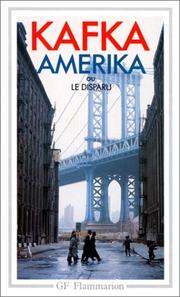
The earliest and most picaresque of the three novels; its relatively linear plot and dark comedy make it the gentlest introduction to Kafka at novel length. Use the Michael Hofmann translation (New Directions, 2002), which restores Kafka's own title and captures his ironic energy.

The most famous novel and the one where the themes of the stories — guilt, opaque authority, self-defeating logic — reach their fullest expression. Read it second so the stories have already primed your intuitions. The Breon Mitchell translation (Schocken, 1998) is the scholarly gold standard.

The most demanding and philosophically rich of the three; its near-plotless, hypnotic quality only rewards readers who have already spent time in Kafka's world. Use the Mark Harman translation (Schocken, 1998) for its fidelity to Kafka's long, winding sentences.
The Private Writings — Diaries & Letters
ExpertEncounter Kafka as a real, struggling human being — his self-doubt, his broken engagements, his relationship to writing and to his father — so that the fiction can be re-read with far greater depth.
▸ Study plan for this stage
Pace: 6–8 weeks total. Weeks 1–5: The Diaries (~500 pages), reading roughly 20–25 pages per day in focused sittings — resist skimming; treat each entry as a micro-text. Weeks 6–8: Letter to His Father (~50 pages), but read it three times: once straight through, once annotated slowly, once aloud. Reserve t
- The diary as laboratory: Kafka used his diaries not merely as confession but as a workshop for fiction — unfinished stories, character sketches, and narrative experiments appear alongside personal anguish, blurring the line between 'private' and 'literary'.
- Writing as existential lifeline vs. impossible demand: Kafka repeatedly frames writing as the only activity that justifies his existence, yet also as something that destroys his sleep, his health, and his relationships — a paradox that saturates both books.
- The broken engagements and Felice Bauer: The diaries document Kafka's tortured on-again/off-again engagement to Felice in real time, revealing how intimacy and creative solitude felt mutually exclusive to him — a biographical key to figures like the bachelor in his fiction.
- The father as cosmic authority: In Letter to His Father, Hermann Kafka is constructed not just as a biographical parent but as an archetypal overwhelming force — arbitrary, physically imposing, impossible to satisfy — that Kafka explicitly links to his own sense of guilt, smallness, and paralysis.
- Self-accusation as rhetorical strategy: The Letter is a masterwork of ambivalence; Kafka simultaneously indicts his father and pre-emptively undermines his own accusations, performing the very psychological trap he is trying to escape.
- The body as site of conflict: Both texts are saturated with references to Kafka's body — his thinness, his tuberculosis, his insomnia, his vegetarianism — as an arena where psychological and familial pressures become physical.
- Jewish identity and cultural in-betweenness: The diaries record Kafka's fascination with Yiddish theater, Eastern European Jewish culture, and Zionism, revealing an identity crisis between assimilated Prague-German bourgeois life and a Jewish heritage he felt estranged from.
- Time, procrastination, and the night: The diaries obsessively track Kafka's inability to write during the day (occupied by his insurance job) and his desperate, guilt-laden relationship with nighttime writing hours — a structural condition that shaped everything he produced.
- After reading the Diaries, can you identify at least three passages where a diary entry directly seeds or rehearses a motif that appears in Kafka's published fiction? What does this reveal about his creative process?
- How does Kafka describe the act of writing in the Diaries — is it consistently portrayed the same way over the years, or does his attitude shift? What life events seem to trigger the most dramatic changes in tone?
- In Letter to His Father, Kafka anticipates and rebuts his father's possible counter-arguments before Hermann can make them. What does this rhetorical move tell us about Kafka's psychological relationship to authority, and how does it mirror the logic of his fictional courts and bureaucracies?
- Both books are addressed to a reader who never truly received them (the diaries were not meant for publication; the Letter was never delivered). How does this 'unsent' quality shape the voice and honesty of each text?
- Using evidence from both books, construct a portrait of what 'freedom' meant to Kafka — was it something he genuinely wanted, or something he both desired and feared? How does this tension illuminate characters like Georg Bendemann or Gregor Samsa?
- How do the Diaries complicate or enrich a reading of Letter to His Father? Does knowing the day-to-day Kafka make the Letter feel more or less like a reliable self-portrait?
- Diary dialogue: Choose five diary entries spread across different years and write a one-paragraph 'response' from an imagined future Kafka looking back on each — this forces you to track how his self-perception evolved rather than treating the diaries as a static document.
- Rhetorical map of the Letter: On a single large sheet, diagram the Letter's argumentative structure — every accusation Kafka makes, every pre-emptive self-rebuttal, and every moment he grants his father a point. Identify the pattern: does Kafka ever 'win' an exchange? What does the map's shape tell you?
- Parallel-text annotation: Select a short Kafka fiction you have already read (e.g., The Metamorphosis or The Judgment) and annotate it using only quotations from the Diaries and the Letter as marginal notes — linking fictional moments to their biographical echoes.
- Voice transcription exercise: Rewrite one diary entry (of your choice) as if it were a letter addressed to Felice Bauer, then rewrite the same entry as if it were addressed to Hermann Kafka. Compare the three versions: what changes, what stays the same, and what does that reveal about Kafka's self-presentation?
- The unsent letter: Write your own 'Letter to My Father/Mother/Authority Figure' modeled on Kafka's rhetorical structure — make an accusation, then immediately undercut it. Reflect afterward on how performing the form illuminates Kafka's psychological bind.
- Chronological guilt log: As you read the Diaries, keep a running list of every instance where Kafka expresses guilt or self-condemnation, noting the target (writing, his body, his father, Felice, his job). Tally and categorize at the end — the resulting data will viscerally demonstrate which pressures dominated his inner life.
Next up: Having internalized Kafka's private voice — his guilt architecture, his father complex, his equation of writing with survival — the reader is now equipped to return to the major fiction not as a stranger but as a confidant, able to decode the autobiographical pressure encoded in every locked door, every impossible verdict, and every son who cannot escape his family's gaze.
Kept from 1910 to 1923, these journals show Kafka's creative process, his anguish about writing, and the raw material that became his fiction; reading them after the novels lets you trace exact connections between life and art.
A short, devastating text (never sent) that is essentially Kafka's autobiography of guilt; it retroactively illuminates The Metamorphosis, The Trial, and the diaries in a single concentrated read.
Critical Context — Understanding the Kafka Myth
ExpertSituate Kafka historically, biographically, and philosophically, and understand how his friend Max Brod shaped — and arguably distorted — his posthumous reputation.
▸ Study plan for this stage
Pace: 6–8 weeks total: Weeks 1–3 on Wagenbach's "Kafka" (~20–25 pages/day, including re-reading dense biographical passages); Weeks 4–6 on Canetti's "Kafka's Other Trial" (~15–20 pages/day, reading slowly and cross-referencing the letters to Felice as Canetti quotes them); Week 7–8 reserved for comparativ
- The biographical Kafka vs. the mythologized Kafka: how Wagenbach's meticulous archival approach (Prague milieu, family dynamics, insurance-office career) grounds Kafka in concrete historical and social reality, resisting abstraction
- Prague's multilingual, ethnically fractured identity — German-speaking Jewish minority within a Czech city under Habsburg rule — as a formative pressure on Kafka's language, alienation, and self-perception
- Kafka's relationship to his own body, illness (tuberculosis), and writing as competing or intertwined vocations, surfacing in Wagenbach's account of his daily routines and notebooks
- Max Brod's editorial and interpretive role: his decision to publish against Kafka's explicit wishes, and how his theological-redemptive reading (Kafka as religious visionary) became the dominant lens for decades
- Canetti's counter-reading: the Letters to Felice as a power drama, with Kafka using the engagement and its repeated breaking as a laboratory for self-preservation and the exercise of a subtle, epistolary will-to-control
- The 'Kafka myth' as a cultural construct — the confluence of Brod's hagiography, Cold War existentialist appropriation, and the erasure of the specific Prague-Jewish context Wagenbach restores
- Writing as self-defense and self-destruction simultaneously: Canetti's thesis that Kafka's literary productivity depended on maintaining the tension of the Felice relationship without ever resolving it
- Methodological contrast between the two books: Wagenbach's scholarly biography versus Canetti's essayistic, psychologically penetrating close-reading — and what each method reveals or conceals
- According to Wagenbach, in what specific ways did Kafka's Prague — its class structure, linguistic politics, and Jewish community — shape both the content and the formal strangeness of his writing?
- What were Kafka's own stated wishes regarding his unpublished manuscripts, and how does Brod's justification for overriding them reveal a particular interpretive agenda that colored all subsequent Kafka reception?
- How does Canetti reframe the Letters to Felice — not as love letters but as something more unsettling — and what does this reframing suggest about the relationship between Kafka's erotic life and his creative life?
- In what sense does Canetti's Kafka exercise 'power' through apparent weakness and self-abasement in the correspondence with Felice Bauer, and how does this complicate the image of Kafka as passive victim of circumstance?
- How do Wagenbach and Canetti together challenge the existentialist and theological readings of Kafka (guilt, grace, the Law as metaphysical) by insisting on biographical and psychological specificity?
- What does the phrase 'the Kafka myth' mean after reading both books, and who are its principal architects — both witting and unwitting?
- Biographical timeline: After finishing Wagenbach, construct a detailed chronological timeline of Kafka's life that maps external events (job, family, Prague politics, health) against his major works — note where Wagenbach's facts contradict or complicate things you previously believed about Kafka.
- Brod autopsy: Find and read Brod's own brief preface to 'The Trial' (freely available). Write a one-page close reading identifying every interpretive claim Brod makes, then annotate each one with how Wagenbach and/or Canetti would respond to or complicate it.
- Letter analysis using Canetti's lens: Select three to five letters from the Felice correspondence as quoted by Canetti and write a short analysis (300–400 words each) testing Canetti's 'power drama' thesis — do you find it convincing, reductive, or illuminating in each case?
- Comparative methodology essay: Write a 600–800 word reflection on the difference in method between Wagenbach (archival biography) and Canetti (essayistic close reading). What does each approach make visible? What does each risk suppressing or distorting?
- Myth-mapping exercise: Draw or diagram 'the Kafka myth' as a web — place Kafka at the center and map outward the agents (Brod, translators, critics, Cold War culture) and ideas (existential guilt, the Law, the absurd, the prophetic Jew) that Wagenbach and Canetti identify as distortions. Annotate each node with a specific passage from one of the two books.
- Debate preparation: Prepare a five-minute oral or written argument either defending or prosecuting Brod's decision to publish Kafka's manuscripts. Draw exclusively on evidence from Wagenbach and Canetti, and steelman the opposing position before concluding.
Next up: By stripping away the Brod-inflected myth and grounding Kafka in biography, psychology, and historical context, this stage equips the reader to return to the primary texts — the novels, stories, and diaries — with a far more precise and critically suspicious eye, ready to read Kafka's actual prose on its own demanding terms.

A concise, authoritative biography by a leading Kafka scholar; it covers the Prague context, the Jewish intellectual world, and the publishing history without overwhelming the reader — the ideal critical companion after finishing the primary texts.
Nobel laureate Canetti reads the Letters to Felice as a sustained act of psychological self-torture that mirrors The Trial; this slim masterpiece of literary criticism shows how to read Kafka's life and work as a single, unified project.
Discussion
Keep reading
Paths that share books, cover the same subject, or open a related topic.