Best Books on Criminology, in Reading Order
This curriculum builds from the ground up — starting with the "why" of crime (theory), moving through how society responds (policing, courts, punishment), then examining the prison system in depth, and finally arriving at the rigorous evidence on what actually works to reduce crime. Each stage assumes the vocabulary and conceptual grounding of the one before it, so reading in order is essential.
Foundations: Why Do People Commit Crime?
BeginnerUnderstand the major classical and modern theories of crime — biological, psychological, sociological, and structural — and develop the core vocabulary of criminology.
▸ Study plan for this stage
Pace: 4–5 weeks, ~40–50 pages/day. Start with Schmalleger's foundational overview (2–3 weeks), then move to Gottfredson's focused theoretical framework (2 weeks). Allow 2–3 days for review and synthesis at the end.
- Classical criminology: rational choice, deterrence, and the social contract as explanations for crime
- Biological and psychological theories: how genetics, neurology, personality, and mental health relate to criminal behavior
- Sociological theories: strain, social disorganization, labeling, and subcultural explanations for crime
- Self-control theory: Gottfredson's argument that low self-control is the primary stable predictor of crime across contexts
- The distinction between crime and criminality: crime as an event, criminality as a propensity or trait
- Structural and environmental factors: poverty, inequality, family dysfunction, and community conditions as crime drivers
- The vocabulary of criminology: offender, victim, deviance, felony, misdemeanor, recidivism, and etiology
- What are the core assumptions of classical criminology, and how do they differ from modern biological and psychological approaches?
- How do strain theory, social disorganization, and labeling theory each explain the causes of crime?
- What is self-control theory, and why does Gottfredson argue that low self-control is a more parsimonious explanation for crime than multiple competing theories?
- How do biological, psychological, and sociological factors interact to produce criminal behavior, and what does the evidence suggest about their relative importance?
- What is the difference between crime (a specific act) and criminality (a propensity), and why does this distinction matter for criminological theory?
- How do structural factors like poverty and family dysfunction create conditions for crime, and what role does individual agency play?
- Create a comparison matrix of classical, biological, psychological, and sociological theories from Schmalleger: list each theory's core assumptions, key predictors of crime, and empirical support or limitations.
- Read a real criminal case study (from news or court records) and apply 3–4 different theories from Schmalleger to explain the offender's behavior; note which theories fit best and why.
- Summarize Gottfredson's self-control theory in one page, then identify 2–3 critiques or limitations he acknowledges; discuss whether his theory can account for organized crime or white-collar crime.
- Interview or survey 5–10 people about what they think causes crime; categorize their responses by theory (classical, biological, psychological, sociological) and compare to the academic literature in the books.
- Write a short essay (500–750 words) arguing which theoretical framework from Schmalleger best explains a specific crime type (e.g., homicide, theft, drug trafficking), using evidence from both books.
- Create flashcards or a glossary of 30–40 key criminology terms from both books (e.g., deterrence, strain, labeling, self-control, recidivism); quiz yourself weekly.
Next up: This stage establishes the theoretical foundations and vocabulary needed to evaluate how crime is measured, predicted, and prevented—preparing you to examine criminological research methods, crime statistics, and evidence-based interventions in the next stage.

The single best entry-point textbook: it surveys every major theory, institution, and debate in criminology in plain language, giving beginners a complete map of the field before diving into specialist works.
Hirschi's social bond theory is one of the most influential ideas in criminology; reading this classic early anchors the learner in empirical, testable theory rather than pure speculation.
Gottfredson and Hirschi's self-control theory is the most cited criminological theory of the last 30 years — reading it second shows how theory evolves and sparks productive debate.
Policing: Power, Practice, and Reform
BeginnerUnderstand how policing actually works on the ground, the history of police power, racial and community dynamics, and the evidence on what policing strategies are effective.
▸ Study plan for this stage
Pace: 4–5 weeks, ~40–50 pages/day. "Thinking about Crime" (Wilson): ~2 weeks. "Rise of the Warrior Cop" (Balko): ~2–3 weeks. Allow 3–4 days for review and synthesis.
- Wilson's rational choice theory of crime and the role of police deterrence and certainty of punishment
- The historical evolution of American policing from community-based to militarized models
- The rise of SWAT teams, paramilitary tactics, and the 'warrior cop' mentality in post-1960s policing
- The relationship between the War on Drugs and the expansion of police powers and aggressive enforcement
- Racial disparities in policing outcomes and how enforcement practices concentrate in minority communities
- The tension between crime control effectiveness and civil liberties/community trust
- Evidence on what actually deters crime versus what police departments believe works
- The role of political incentives and bureaucratic interests in shaping police strategy
- According to Wilson, what role does the certainty (versus severity) of punishment play in deterring crime, and what are the limitations of this model?
- How did American policing transform from the early 20th century through the 1960s, and what specific events or policies accelerated the militarization Balko describes?
- What is the connection between the War on Drugs and the proliferation of SWAT teams and no-knock raids, according to Balko?
- How do Wilson's crime control assumptions compare with Balko's historical evidence about whether aggressive policing tactics actually reduce crime?
- What does Balko argue about the racial and community impacts of warrior-cop tactics, and how does this relate to police legitimacy?
- What reforms or alternatives do Wilson and Balko (implicitly or explicitly) suggest for more effective and accountable policing?
- Create a timeline mapping the key shifts in American policing from 1900–2000, marking Wilson's theoretical framework against Balko's historical events (e.g., creation of first SWAT team, major drug war escalations).
- Analyze a local police department's use-of-force or arrest data by race/ethnicity; compare patterns to Balko's claims about disparate impact and explain using Wilson's rational choice logic.
- Write a 2–3 page critical response: Does Wilson's deterrence model account for the militarization and racial targeting Balko documents? What's missing?
- Interview a local police officer or community advocate about their views on crime prevention; record whether their assumptions align more with Wilson's rational-choice model or reflect concerns Balko raises.
- Research and summarize one specific SWAT raid or drug enforcement operation from Balko's book; analyze what it reveals about police incentives and community impact.
- Design a hypothetical police reform proposal that addresses Balko's concerns about militarization while maintaining the crime-deterrence principles Wilson emphasizes.
Next up: This stage establishes how policing actually operates in practice and the historical/structural forces shaping police behavior, preparing you to examine specific reform models, accountability mechanisms, and evidence-based alternatives in the next stage.
Wilson's influential and readable analysis of crime policy — including the broken-windows idea — is essential context for understanding how policing philosophy developed in the late 20th century.
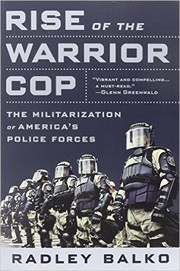
A rigorously reported history of the militarization of American policing; it provides the critical counterweight to Wilson and shows how policy ideas translate (and distort) in practice.
Punishment, Courts, and Mass Incarceration
IntermediateGrasp the philosophy and history of punishment, how the court system processes offenders, and how the United States arrived at the largest incarceration rate in the world.
▸ Study plan for this stage
Pace: 12–14 weeks, ~25–30 pages/day. Allocate 4–5 weeks to "Discipline and Punish" (dense, theoretical), 3–4 weeks to "The New Jim Crow" (moderate pace), and 3–4 weeks to "Punishment and Inequality in America" (data-driven, analytical).
- Panopticism and surveillance as mechanisms of social control: how Foucault's prison architecture metaphor explains modern disciplinary systems
- The shift from public execution to hidden incarceration: how punishment evolved from spectacle to normalization of confinement
- Mass incarceration as a racial caste system: how drug policy and criminal justice enforcement perpetuate racial subordination in the post-Civil Rights era
- The role of discretion in the criminal justice system: how prosecutorial and judicial discretion enables systemic racial disparities
- Incarceration's economic and social consequences: how imprisonment disrupts labor markets, family stability, and intergenerational mobility
- The prison-industrial complex and political economy: how incarceration became a tool of social management and economic interest
- Collateral consequences of conviction: how criminal records function as a permanent legal status that restricts rights and opportunities
- How does Foucault's concept of the panopticon explain the shift from public punishment to modern incarceration, and what does he argue about the purpose of this shift?
- What is the 'New Jim Crow' according to Michelle Alexander, and how does she argue that mass incarceration functions as a system of racial control?
- How do drug enforcement policies and prosecutorial discretion contribute to racial disparities in incarceration rates, as discussed in Alexander's work?
- What does Bruce Western demonstrate about the relationship between incarceration and economic inequality in America?
- How has incarceration affected labor market participation and wage inequality for formerly incarcerated individuals and their families?
- What are the collateral consequences of conviction, and how do they create a permanent underclass as described across these three texts?
- Create a visual timeline mapping the evolution of punishment from Foucault's historical examples (torture, public execution) through modern mass incarceration, annotating key policy shifts and their stated rationales.
- Analyze a contemporary criminal case (from news or court records) through the lens of prosecutorial discretion: identify points where discretionary decisions could have altered the outcome, and consider how race or class might have influenced those decisions.
- Map the 'New Jim Crow' framework onto a specific jurisdiction: research local drug enforcement patterns, sentencing disparities, and collateral consequences policies to assess Alexander's thesis in your region.
- Conduct a data analysis exercise: using Western's statistics on incarceration and employment, calculate the cumulative economic impact of mass incarceration on a hypothetical cohort (e.g., 1,000 men with felony convictions).
- Interview or survey 3–5 people with criminal justice system experience (formerly incarcerated individuals, public defenders, social workers, or family members) about collateral consequences; synthesize findings against the authors' claims.
- Write a comparative policy brief: propose how a jurisdiction could reduce incarceration while addressing public safety, grounding your argument in evidence from all three texts.
Next up: This stage establishes the philosophical foundations and empirical realities of punishment and incarceration in America, preparing you to examine specific reform proposals, rehabilitation models, and alternative justice systems in the next stage.
Foucault's landmark analysis of how punishment shifted from public torture to surveillance and imprisonment is the theoretical backbone for understanding modern carceral systems — challenging but essential.
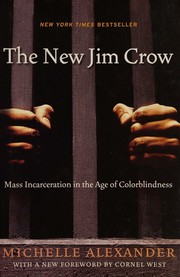
Alexander's meticulously documented argument that mass incarceration functions as a racial caste system is the most widely read and debated criminology book of the 21st century — a must-read at this stage.

Western provides the rigorous sociological and quantitative evidence behind the mass incarceration story, complementing Alexander's legal-political argument with hard data.
Inside Prisons: Life, Culture, and Consequences
IntermediateUnderstand what actually happens inside prisons — the social order, the psychological effects on inmates, and the long-term consequences of incarceration for individuals and communities.
▸ Study plan for this stage
Pace: 6–7 weeks, ~40–50 pages/day. Start with Sykes' theoretical framework (2–3 weeks), then move to Kerman's memoir (3–4 weeks) to see lived experience through that lens.
- The 'pains of imprisonment' (deprivation of liberty, goods, heterosexual contact, autonomy, security) and how inmates adapt psychologically and socially
- Inmate social order and informal hierarchies: roles, codes, and power structures that emerge within prison walls
- Institutional culture and the adaptation modes inmates adopt (e.g., 'doing time,' 'jailing,' 'gleaning') to survive incarceration
- The psychological and emotional toll of incarceration on individuals, including identity loss, trauma, and coping mechanisms
- How race, gender, sexuality, and prior social status shape the prison experience and create distinct subcultures
- The collateral consequences of incarceration: family separation, reentry challenges, and long-term effects on communities
- The tension between formal prison rules and the informal inmate code that actually governs daily life
- How prisons function as total institutions that strip individuality and reshape behavior and identity
- What are Sykes' 'pains of imprisonment,' and how do they differ from simple physical punishment? How does Kerman's narrative illustrate these pains?
- Describe the inmate social order in Sykes' analysis. What roles and hierarchies does Kerman encounter, and how do they compare to Sykes' theoretical framework?
- How do inmates adapt to incarceration according to Sykes? What adaptation modes does Kerman employ, and what does her experience reveal about the effectiveness of these strategies?
- What is the informal inmate code, and how does it conflict with or complement official prison rules? Provide examples from both texts.
- How do race, gender, and sexuality shape the prison experience? How does Kerman's identity as a white, educated woman affect her position within the prison hierarchy compared to her peers?
- What are the long-term psychological and social consequences of incarceration discussed in these texts, and what does Kerman's post-release experience suggest about reintegration?
- Create a detailed map of the inmate social hierarchy in Sykes' prison (based on his case study) and compare it to the groups and power dynamics Kerman describes at FCI Danbury. Note similarities and differences.
- Write a character analysis of Kerman through the lens of Sykes' adaptation modes: Which mode(s) does she employ? How does her adaptation change over time?
- Document the 'pains of imprisonment' as Kerman experiences them chapter by chapter. Create a table showing which pain is most acute at different points in her sentence.
- Conduct a close reading of 3–4 key scenes in Kerman's memoir where she encounters the informal inmate code. Explain how Sykes' theory helps you understand her reactions and choices.
- Interview or survey 2–3 people (if possible) who have experience with the criminal justice system (incarcerated individuals, family members, corrections staff, social workers). Ask them to reflect on whether Sykes' and Kerman's descriptions match their understanding of prison life. Synthesize findings in a 2–3 page reflection.
- Create a visual timeline of Kerman's psychological and emotional journey through incarceration, annotating moments where Sykes' concepts (identity loss, coping, social adaptation) are most evident.
Next up: Having grasped the internal dynamics and human costs of incarceration, you are now prepared to examine the systemic, policy-level, and historical factors that created and perpetuate mass incarceration—understanding not just what happens inside prisons, but why prisons exist in their current form and what alternatives exist.
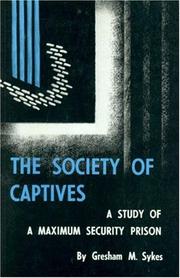
The foundational sociological study of prison life, showing how inmates and staff create informal social orders — this 1958 classic remains the starting point for all prison sociology.

Kerman's memoir of a year in federal prison provides vivid, humanizing ground-level detail that makes the abstract sociology of Sykes concrete and emotionally real.
What Actually Reduces Crime? The Evidence
ExpertCritically evaluate the empirical evidence on crime-reduction strategies — from hot-spots policing to drug policy, rehabilitation, and situational prevention — and think like a policy-minded criminologist.
▸ Study plan for this stage
Pace: 4–5 weeks, ~40–50 pages/day (approximately 300 pages total; adjust for re-reading key chapters on crime, incentives, and policy implications)
- Incentives as the hidden driver of behavior: how economic incentives shape criminal decisions and policy outcomes
- The sumo wrestling and cheating analogy: recognizing hidden incentives and unintended consequences in systems designed to prevent crime
- Data-driven detective work: using empirical evidence and unconventional datasets to test assumptions about what actually reduces crime
- Correlation vs. causation in crime research: critically evaluating whether observed patterns prove cause-and-effect relationships
- The economics of drug dealing: understanding the rational economic choices criminals make and why street-level dealers often earn little
- Parenting, environment, and crime: evaluating what factors (socioeconomic, behavioral, cultural) actually predict criminal outcomes
- Policy unintended consequences: how well-intentioned interventions can backfire or fail to achieve their stated goals
- Thinking like an economist about crime: applying cost-benefit logic and incentive analysis to evaluate crime-reduction strategies
- What is Levitt's core argument about incentives, and how does he use the sumo wrestling example to illustrate hidden incentives in systems?
- According to Freakonomics, what does the data reveal about the relationship between parenting, socioeconomic factors, and crime outcomes?
- How does Levitt use empirical evidence to challenge conventional wisdom about what reduces crime (e.g., policing, incarceration, or social programs)?
- What economic logic does Levitt apply to explain street-level drug dealing, and what does this reveal about the rationality of criminal actors?
- How does Levitt distinguish between correlation and causation when evaluating crime-reduction policies, and why does this distinction matter?
- What unintended consequences or policy failures does Levitt identify in crime-reduction strategies, and what does this teach us about designing effective interventions?
- Identify three examples from Freakonomics where Levitt uses unconventional data sources (crime statistics, sumo records, baby names, etc.) to test a hypothesis about crime or behavior. For each, explain why the data source is surprising and what it reveals that traditional sources might miss.
- Select one crime-reduction policy mentioned in Freakonomics (e.g., increased policing, drug enforcement, or parental involvement programs). Map out the intended incentives and then brainstorm three potential unintended consequences or perverse incentives that could undermine the policy.
- Create a two-column comparison: 'What People Believe Reduces Crime' vs. 'What Levitt's Evidence Suggests.' Use specific examples from the book and note where conventional wisdom aligns or conflicts with the empirical findings.
- Analyze the drug-dealing economics chapter: calculate or estimate the hourly wage of a street-level dealer based on Levitt's data, then explain why rational actors might still choose this work despite low pay. What does this reveal about incentive structures?
- Write a short policy memo (1–2 pages) proposing a crime-reduction intervention based on Levitt's incentive-centered logic. Identify the incentives you're trying to shift, the evidence supporting your approach, and at least two potential unintended consequences you'd monitor.
- Conduct a 'Freakonomics-style' investigation: identify a local crime or policy issue, propose an unconventional data source or question that could test assumptions about it, and outline how you'd gather and analyze that data to challenge conventional wisdom.
Next up: This stage establishes the empirical, incentive-centered mindset and critical skepticism needed to evaluate crime-reduction strategies—preparing you to examine specific policy domains (hot-spots policing, rehabilitation, situational prevention) with the same data-driven rigor and attention to unintended consequences that Levitt models.
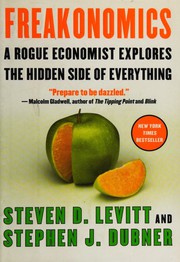
Levitt's chapter on the crime drop of the 1990s — and the broader book's use of natural experiments — teaches the learner to ask 'what does the data actually say?' before accepting any crime narrative.
Discussion
Keep reading
Paths that share books, cover the same subject, or open a related topic.