How to learn Economics
This curriculum takes a complete beginner from intuitive economic thinking all the way to rigorous analytical and theoretical mastery. Each stage builds the vocabulary, mental models, and mathematical comfort needed for the next, so no step feels like a leap into the unknown.
Foundations: How Economists Think
BeginnerDevelop core economic intuition — scarcity, incentives, trade-offs, supply and demand — without any technical apparatus, and get excited about the discipline.
▸ Study plan for this stage
Pace: 10–12 weeks total, reading ~25–35 pages per day on weekdays with weekends reserved for reflection and exercises. Suggested split: Weeks 1–3 for "The Worldly Philosophers" (~300 pp), Weeks 4–8 for "Basic Economics" (~600 pp, slower pace due to density), Weeks 9–11 for "The Armchair Economist" (~250 p
- Scarcity and the fundamental economic problem: unlimited wants vs. limited resources, as framed by the great thinkers Heilbroner profiles (Smith, Malthus, Ricardo, Marx, Keynes)
- The role of incentives: how prices, profits, and penalties shape human behavior, a thread running through all three books but hammered home by Sowell and Landsburg
- Trade-offs and opportunity cost: every choice forecloses another; Sowell's repeated insistence that 'there are no solutions, only trade-offs' is the stage's central mantra
- Supply and demand as a self-organizing system: Sowell's detailed, math-free exposition of how prices coordinate millions of strangers without central direction
- The price system as information: prices are not just numbers but signals that carry knowledge no single person possesses, echoing Hayek's insight as discussed in Heilbroner
- Unintended consequences: Landsburg's 'armchair' analyses show how well-meaning policies routinely produce outcomes opposite to their intent
- Economic thinking as a discipline of asking 'and then what?': the habit of tracing second- and third-order effects, central to Landsburg's method
- The history of economic ideas as a response to real-world crises: Heilbroner grounds each thinker in the social upheaval that provoked their theories, showing economics is a living, evolving conversation
- After reading Heilbroner, can you explain in plain language why each major economist he profiles — Smith, Malthus, Ricardo, Marx, Marshall, Keynes — arose when they did, and what problem they were trying to solve?
- Using Sowell's framework, how does a price ceiling (like rent control) or a price floor (like a minimum wage) disrupt the supply-demand coordination mechanism, and what are the predictable second-order effects?
- What does Sowell mean when he says 'the first lesson of economics is scarcity' and 'the first lesson of politics is to disregard the first lesson of economics'? Give a concrete real-world example.
- Drawing on Landsburg's method, how would an economist analyze a seemingly non-economic question — such as why movie theaters charge the same ticket price for popular and unpopular films — and what does this reveal about economic thinking as a general tool?
- What is opportunity cost, and why do all three authors treat it as more fundamental than monetary cost? Construct your own example not found in the books.
- How do the three books complement each other? What does each one contribute that the others do not — in terms of historical narrative (Heilbroner), systematic principles (Sowell), and provocative application (Landsburg)?
- The 'And Then What?' journal: Each week, pick one current news story involving a price change, a new regulation, or a government program. Write a one-page chain of consequences — immediate effect, second-order effect, third-order effect — in the style Landsburg models in 'The Armchair Economist.'
- Heilbroner timeline: After finishing 'The Worldly Philosophers,' draw a hand-made timeline mapping each economist profiled to (a) the historical crisis of their era and (b) their single most important idea. Pin it somewhere visible for the rest of the stage.
- Sowell supply-and-demand diagram (no math required): Choose three real markets (e.g., housing in a big city, gasoline after a hurricane, concert tickets). For each, write a paragraph — no graphs needed — describing what happens to price and quantity when supply or demand shifts, using only Sowell's verbal logic.
- Opportunity-cost audit: List ten decisions you made this week (what to eat, how to spend an evening, whether to buy something). For each, identify the single most valuable alternative you gave up. Reflect in writing on how this changes how you perceive 'free' time or 'free' goods.
- Debate both sides: Pick one policy Sowell critiques (rent control, price gouging laws, farm subsidies). Write a 200-word case FOR the policy as a non-economist might argue it, then a 200-word rebuttal using Sowell's economic reasoning. This builds the habit of steelmanning before refuting.
- Book-club discussion (solo or with a partner): After finishing all three books, hold a 30-minute structured conversation — or write a 500-word essay — answering: 'If Smith, Sowell, and Landsburg sat at the same table, what would they agree on, and where might they argue?'
Next up: Having built a confident, math-free intuition for how markets work and how economists reason, the reader is now ready to encounter these same ideas expressed with greater rigor — through models, graphs, and formal definitions — in an intermediate microeconomics or macroeconomics stage without feeling intimidated by the formalism.

A narrative history of economic thought from Smith to Keynes that gives beginners a 'big picture' map of the field and its key ideas before diving into any single one.

Builds rigorous economic reasoning in plain English — no graphs, no equations — covering prices, markets, labor, and trade, creating the vocabulary needed for every later stage.

Sharpens the habit of applying economic logic to everyday life, reinforcing the intuitions from Sowell and making the reader think like an economist before formal study begins.
Core Principles: Micro & Macro
BeginnerUnderstand the standard models of microeconomics and macroeconomics — markets, firms, GDP, inflation, monetary and fiscal policy — at a first-year college level.
▸ Study plan for this stage
Pace: 10–12 weeks total. Weeks 1–9: Mankiw's "Principles of Economics" (~40–50 pages/day, 5 days/week — work through parts sequentially: supply & demand → consumer/producer theory → market structures → factor markets → GDP/growth → money & inflation → short-run fluctuations → fiscal & monetary policy). We
- Supply and demand: the laws, shifts in curves, and market equilibrium (Mankiw, Parts I–II)
- Elasticity: price elasticity of demand/supply, income elasticity, and their real-world implications (Mankiw, Ch. 5)
- Consumer and producer surplus, efficiency, and the welfare costs of taxes and price controls (Mankiw, Chs. 7–9)
- Market structures: perfect competition, monopoly, oligopoly, and monopolistic competition — how each affects price and output (Mankiw, Part IV)
- Externalities and public goods: market failures and the role of government intervention (Mankiw, Chs. 10–11)
- Macroeconomic measurement: GDP, CPI, unemployment rate — what they capture and what they miss (Mankiw, Part V)
- Monetary policy, the quantity theory of money, inflation, and the role of central banks (Mankiw, Parts VI–VII)
- Incentives as the hidden driver of behavior: how people respond to incentives in unexpected ways, and how data can reveal causation vs. correlation (Freakonomics, all chapters)
- Using supply and demand diagrams from Mankiw, explain what happens to the equilibrium price and quantity of gasoline when a new fuel tax is imposed — who bears more of the burden, buyers or sellers, and why does elasticity determine this?
- Mankiw distinguishes perfect competition from monopoly. What are the key differences in how price and output are determined, and why does monopoly produce a deadweight loss?
- How does Mankiw define GDP, and what are its four expenditure components? Why is GDP an imperfect measure of economic well-being?
- Walk through the chain of events Mankiw describes when a central bank increases the money supply — how does this affect inflation in the long run versus output in the short run?
- Freakonomics argues that incentives are the cornerstone of modern life. Choose one example from the book (e.g., real-estate agents, sumo wrestlers, or drug dealers' finances) and explain how it illustrates a concept also covered in Mankiw — such as principal-agent problems, information asymmetry, or price theory.
- Both Mankiw and Levitt touch on unintended consequences of policies or incentives. Identify one example from each book and compare the economic reasoning used to explain the outcome.
- Supply & Demand Diagram Drill (Mankiw-based): For 10 real-world news headlines (e.g., a drought, a new tariff, a tech breakthrough), draw the before-and-after supply/demand diagram, label the shift, and state the new equilibrium direction — do this weekly during Weeks 1–3.
- Elasticity Calculator (Mankiw, Ch. 5): Collect price and quantity data for two products — one with inelastic demand (e.g., insulin) and one with elastic demand (e.g., luxury handbags) — compute price elasticity of demand and write a one-paragraph policy memo on what a tax on each product would achieve.
- GDP Decomposition Exercise (Mankiw, Part V): Download the latest GDP release from the Bureau of Economic Analysis (bea.gov), identify the four expenditure components (C, I, G, NX), calculate each component's share, and compare to Mankiw's explanation of typical proportions.
- Incentive Audit — Freakonomics Style: After finishing Freakonomics, pick one institution you interact with (school, workplace, gym, etc.), identify three incentive structures at play, predict one unintended consequence of each, and write a one-page 'Levitt-style' analysis connecting it to a Mankiw concept (e.g., moral hazard, externalities).
- Policy Debate Card (synthesis exercise): Create a two-sided 'policy card' for three economic policies (e.g., minimum wage, carbon tax, quantitative easing) — one side uses Mankiw's models to predict effects; the other uses a Freakonomics-style 'what do the incentives really say?' lens to challenge or nuance the model.
- Concept Mapping: At the end of Week 12, draw a single concept map linking at least 12 terms from Mankiw (e.g., elasticity, deadweight loss, CPI, multiplier effect) to at least 3 real-world stories from Freakonomics, showing how the formal models and the empirical case studies reinforce each other.
Next up: Mastering Mankiw's standard models and Freakonomics' incentive-driven empirical thinking gives you the theoretical vocabulary and critical instincts needed to tackle more advanced or specialized economics texts — whether that means diving into behavioral economics, international trade, development economics, or data-driven policy analysis at an intermediate level.
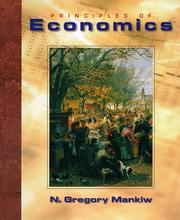
The world's most widely used introductory economics textbook; it formalizes everything from Stage 1 with clear models, graphs, and real-world applications across both micro and macro.
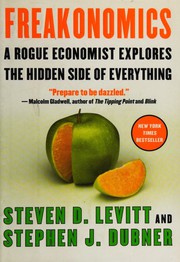
Read alongside or just after Mankiw to see how economists use data and incentive analysis to answer surprising real-world questions, cementing the micro toolkit in a memorable way.
Intermediate Depth: Markets, Behavior & Institutions
IntermediateGo beyond the standard model to understand market failures, behavioral economics, information problems, and how institutions shape economic outcomes.
▸ Study plan for this stage
Pace: 10–13 weeks total. Week 1–4: "Thinking, Fast and Slow" (~25–30 pages/day, focusing on Parts I–V). Weeks 5–9: "The Wealth of Nations" (~20–25 pages/day, prioritizing Books I–III and selected chapters of Book IV–V). Weeks 10–13: "An Inquiry into the Nature and Causes of the Wealth of Nations" — since
- System 1 vs. System 2 thinking (Kahneman): fast intuitive cognition vs. slow deliberate reasoning, and how each drives economic decisions
- Cognitive biases and heuristics (Kahneman): anchoring, availability, representativeness, loss aversion, and prospect theory as departures from the 'rational agent' model
- Behavioral market failures: how systematic irrationality at the individual level aggregates into inefficient market outcomes
- The division of labor and specialization (Smith): how breaking tasks into components drives productivity, interdependence, and economic growth
- The price mechanism and the 'invisible hand' (Smith): how decentralized price signals coordinate self-interested behavior to produce social order
- Labor theory of value and the components of price (Smith): wages, profit, and rent as the natural decomposition of commodity prices
- Institutions and market structure (Smith): the role of legal frameworks, monopoly power, mercantilism, and government policy in shaping or distorting market outcomes
- Information and incentive problems implicit in Smith: how asymmetric interests between merchants, workers, and landlords foreshadow modern information economics
- According to Kahneman, why do individuals systematically deviate from the predictions of classical rational-choice theory, and what does this imply for the assumption of homo economicus that underlies Smith's market model?
- How does Smith's concept of the 'invisible hand' depend on competitive markets, and what conditions — identifiable in both Smith's own text and Kahneman's behavioral findings — can cause it to break down?
- What is the relationship between the division of labor and market size in Smith's framework, and how does this dynamic explain patterns of economic development and trade?
- How do loss aversion and prospect theory (Kahneman) challenge the standard supply-and-demand prediction that buyers and sellers respond symmetrically to equivalent gains and losses?
- Smith is often read as a champion of free markets, yet 'The Wealth of Nations' contains extensive critiques of merchants, monopolies, and certain government policies. What institutional conditions does Smith argue are necessary for markets to serve the public interest?
- How do the cognitive limitations described by Kahneman interact with the information and incentive problems Smith observes among different economic classes (workers, merchants, landlords) to produce market failures that neither author fully theorizes alone?
- Bias audit: After finishing Kahneman, keep a one-week personal 'decision journal.' Record 3–5 economic decisions per day (purchases, time allocation, risk choices) and label which heuristic or bias was active. Review at week's end to see which biases are most persistent in your own behavior.
- Invisible hand stress-test: Choose one real-world market (e.g., used cars, healthcare, social media). Using Smith's framework, map out how the price mechanism should coordinate it, then use Kahneman's behavioral insights to identify at least three specific points where the mechanism likely fails in practice. Write a 1–2 page analysis.
- Close-reading comparison: Select the same economic phenomenon — say, wage determination or the price of grain — and find Smith's treatment of it in 'The Wealth of Nations.' Write a side-by-side annotation: what Smith assumes about human decision-making vs. what Kahneman's research would predict. Note where they align and where they conflict.
- Prospect theory graphing exercise: Draw the value function from Kahneman's prospect theory from memory, then apply it to a concrete Smith-era scenario (e.g., a merchant deciding whether to accept a trade at a small loss vs. forgo a certain gain). Explain in writing how the shape of the curve changes the predicted outcome versus standard utility theory.
- Institution mapping: After completing Smith, create a visual diagram of the institutions Smith identifies as either enabling or distorting markets (e.g., guilds, joint-stock companies, colonial trade laws, the corn laws). For each, write one sentence on the incentive problem it creates and whether a behavioral economics lens (Kahneman) adds any explanatory power.
- Synthesis essay: Write a 500–700 word essay answering: 'If Adam Smith had read Daniel Kahneman, what one major revision would he have made to his theory of markets?' Draw specific evidence from both books, citing chapters or parts.
Next up: By internalizing how real human psychology (Kahneman) interacts with market institutions and incentive structures (Smith), the reader is now equipped to engage with more formal and contemporary treatments of market failures — including externalities, public goods, game theory, and policy design — that characterize advanced economic analysis.
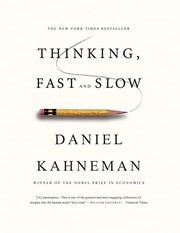
Introduces behavioral economics and the psychology of decision-making, directly challenging the rational-agent assumption of standard models and expanding the analytical toolkit.

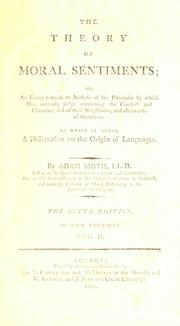
Now that the reader has formal models, returning to this foundational text reveals the deep origins of market theory, division of labor, and the limits of laissez-faire — essential intellectual grounding.

Placeholder — see above; listed once as The Wealth of Nations.
Intermediate Depth: Markets, Behavior & Institutions
IntermediateGo beyond the standard model to understand market failures, behavioral economics, information asymmetry, and how institutions shape economic outcomes.
▸ Study plan for this stage
Pace: 3–4 weeks, ~25–30 pages/day (Misbehaving is ~370 pages); read one part per week, pausing after each to review notes and complete reflection exercises
- Bounded Rationality: humans have cognitive limits that prevent fully rational decision-making, contrary to the 'Econ' model assumed in standard theory
- Mental Accounting: people partition money into separate psychological 'buckets' (e.g., entertainment vs. savings) rather than treating all wealth as fungible
- Prospect Theory & Loss Aversion: losses loom larger than equivalent gains, causing predictable deviations from expected utility theory
- Heuristics and Biases: mental shortcuts like anchoring, availability, and representativeness lead to systematic, predictable errors
- The Endowment Effect: people overvalue things simply because they own them, violating the Coase theorem's assumption of preference independence from ownership
- Nudges & Choice Architecture: the way choices are presented (defaults, framing, ordering) powerfully shapes decisions without restricting options
- Fairness and Social Preferences: people care about fairness and reciprocity, often sacrificing personal gain to punish perceived unfairness (e.g., ultimatum game behavior)
- The SIFs (Supposedly Irrelevant Factors): variables that standard economic models ignore — context, history, social norms — actually matter enormously for real behavior
- What is the core difference between a 'Human' and an 'Econ' as Thaler defines them, and why does this distinction challenge the foundations of neoclassical economics?
- How does mental accounting explain behaviors like treating a tax refund differently from regular income, even though money is fungible?
- What is loss aversion, and how does Prospect Theory (developed by Kahneman and Tversky, as discussed by Thaler) predict that people will behave differently when choices are framed as losses versus gains?
- What is the endowment effect, and what does it imply about the Coase theorem's real-world applicability?
- How can a policymaker use 'nudges' and choice architecture to improve outcomes without resorting to mandates or bans? Give a concrete example from the book.
- Why do participants in ultimatum game experiments reject unfair offers, and what does this reveal about the limits of self-interest as an economic assumption?
- **Behavior Audit Journal:** For one full week, log 3 personal financial or everyday decisions per day. After finishing the book, revisit each entry and label which bias or heuristic (loss aversion, mental accounting, anchoring, etc.) best explains the decision.
- **Prospect Theory Mapping:** Choose a real decision you face (e.g., switching phone plans, accepting a job offer). Draw a value function curve and plot the gains and losses of each option as Prospect Theory would predict, then compare it to what a purely rational 'Econ' would choose.
- **Nudge Design Challenge:** Pick a real-world problem (low retirement savings, unhealthy eating, low organ donation rates). Design a choice architecture intervention — define the default, the framing, and the feedback mechanism — and write a one-page brief justifying each design choice using concepts from Misbehaving.
- **Ultimatum & Dictator Game Simulation:** Play a round of the ultimatum game with a friend or classmate (use small real stakes if possible). Record offers made and accepted/rejected, then analyze the results: do they match standard theory or Thaler's behavioral predictions? Write up your findings.
- **'Supposedly Irrelevant Factors' Case Study:** Find a recent news story involving a market, policy, or business decision. Identify at least two SIFs (context, fairness norms, framing, social pressure) that the standard economic model would have ignored but that clearly influenced the outcome. Write a 300-word analysis.
- **Concept Debate:** Write two short paragraphs (one page total) arguing first *for* and then *against* the following claim: 'Because humans are predictably irrational, governments are justified in using nudges to override individual choices.' Use specific evidence and examples from Misbehaving to support both sides.
Next up: Misbehaving establishes that real economic actors are systematically non-rational and context-dependent, which naturally raises the next-level question: when individual irrationality and information gaps interact with markets and institutions at scale, what kinds of systemic failures and inequalities emerge — setting the stage for deeper study of market failures, asymmetric information, and instit
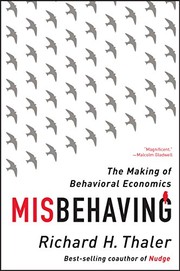
Picks up where Kahneman leaves off, showing how behavioral insights have been integrated into mainstream economics and policy, bridging intuition and formal theory.
Advanced Theory: Rigorous Economics
ExpertEngage with graduate-level economic theory, macroeconomic dynamics, and frontier debates — reading economics as a practicing economist would.
▸ Study plan for this stage
Pace: 10–14 weeks total: ~5–6 weeks on Varian's "Intermediate Microeconomics" (~25–30 pages/day, working all end-of-chapter problems), then ~5–6 weeks on Blanchard's "Macroeconomics" (~20–25 pages/day, pausing to derive key equations independently). Budget extra time for mathematical derivations and probl
- Consumer theory: utility maximization, expenditure minimization, duality, and the Slutsky equation (Varian Ch. 1–10)
- Producer theory: cost functions, profit maximization, and the relationship between short-run and long-run supply (Varian Ch. 18–21)
- General equilibrium and welfare economics: Walrasian equilibrium, Pareto efficiency, and the two fundamental theorems (Varian Ch. 28–31)
- Market failures: externalities, public goods, information asymmetry, and moral hazard (Varian Ch. 34–37)
- IS-LM and AS-AD frameworks: goods market, financial market, and labor market interactions in the short and medium run (Blanchard Ch. 3–9)
- Expectations and dynamics: adaptive vs. rational expectations, the expectations-augmented Phillips Curve, and inflation-unemployment trade-offs (Blanchard Ch. 14–16)
- Open-economy macroeconomics: the Mundell-Fleming model, exchange rate regimes, and current account dynamics (Blanchard Ch. 18–21)
- Long-run growth: the Solow growth model, technological progress, and sources of cross-country income differences (Blanchard Ch. 10–13)
- Given a consumer's utility function and budget constraint, can you derive the Marshallian and Hicksian demand functions and verify the Slutsky decomposition into substitution and income effects (Varian)?
- How do the two fundamental theorems of welfare economics connect competitive equilibrium to Pareto efficiency, and under what real-world conditions do they break down (Varian Ch. 28–31)?
- Using Blanchard's IS-LM model, trace the full short-run and medium-run effects of a contractionary monetary policy shock on output, the interest rate, and the price level.
- How does Blanchard's expectations-augmented Phillips Curve differ from the original Phillips Curve, and what does it imply for the long-run neutrality of monetary policy?
- In Blanchard's open-economy model, how does the choice of exchange rate regime (fixed vs. floating) alter the effectiveness of fiscal and monetary policy under perfect capital mobility?
- What are the steady-state predictions of the Solow growth model as presented by Blanchard, and how does the inclusion of technological progress change conclusions about long-run living standards?
- Varian problem sets — work every end-of-chapter mathematical exercise in Parts I–IV; for each demand function derived, verify Roy's identity and Shephard's lemma hold numerically with a chosen example.
- Slutsky matrix drill — pick three different utility functions (Cobb-Douglas, CES, quasi-linear), derive the full Slutsky matrix for each, and confirm symmetry and negative semi-definiteness.
- General equilibrium simulation — build a simple 2-good, 2-consumer Edgeworth box in a spreadsheet; compute the contract curve, find the competitive equilibrium price ratio, and verify both welfare theorems hold.
- IS-LM dynamic tracing — for each major policy shock in Blanchard (fiscal expansion, monetary tightening, supply shock), draw the full sequence of IS-LM and AS-AD diagrams from short-run impact through medium-run adjustment, labeling every shift with its causal mechanism.
- Solow model calibration — using Blanchard's framework, calibrate the Solow model to a real country (e.g., South Korea or Botswana) using World Bank data: estimate the savings rate, depreciation, and implied steady-state capital-output ratio; compare to actual data.
- Debate memo — after finishing both books, write a 1–2 page analytical memo arguing either for or against a specific policy (e.g., a carbon tax or a zero-interest-rate policy), explicitly grounding every claim in a micro or macro mechanism from Varian or Blanchard.
Next up: Mastering Varian's rigorous micro foundations and Blanchard's dynamic macro frameworks equips the reader with the formal toolkit — optimization, equilibrium, and expectations — needed to engage with frontier research papers, econometric methods, and specialized fields such as game theory, monetary economics, or development economics at the graduate level.
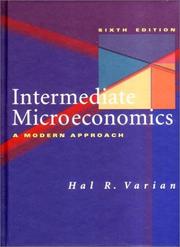
The standard bridge to graduate microeconomics; introduces formal optimization, consumer and producer theory, and game theory with the mathematical rigor needed for serious study.

The canonical intermediate-to-advanced macro text, covering growth, business cycles, monetary and fiscal policy with formal models, preparing the reader for research-level material.

A landmark work of empirical and theoretical economics on inequality and capital; reading it at this stage allows full critical engagement with its data, models, and contested conclusions.
Discussion
Keep reading
Paths that share books, cover the same subject, or open a related topic.