Criminology is an argument, not a consensus. Ask why crime rises and falls and you will get incompatible answers from serious scholars: self-control, opportunity, poverty, policing, incarceration, lead exposure, demographics. A reading list that presents only one of those explanations will feel coherent and leave you badly informed. This path deliberately puts the disagreement in front of you.
The order therefore runs from a neutral survey, to the major theoretical camps, to what happens after arrest — policing, punishment and prison. Read the theory before the polemic, or you will not have the equipment to judge the polemic.
Get the map of the field
Start with Criminology Today by Frank Schmalleger. It is a textbook, it reads like one, and that is the point: it lays out the schools of thought, the measurement problems, and the basic statistics of offending without arguing for a position. Skim the parts you already know and use it as a reference for terminology.
Meet the competing theories
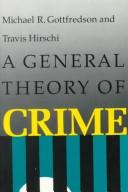
A general theory of crime by Michael Gottfredson and Travis Hirschi is the most influential single theoretical claim of the last forty years: that crime is largely explained by low self-control, established early and stable across life. It is elegant, testable, and heavily contested — critics argue it under-weights opportunity, context and the way self-control is measured.
Read it against Thinking about crime by James Q. Wilson, which argues from a different direction — that policy should focus on deterrence, incapacitation and situational control rather than on distant social causes. Wilson's work sits behind decades of American crime policy, including the broken-windows argument he co-authored, which remains a live empirical dispute rather than a settled result.
Then read Discipline and Punish. Michel Foucault is not a criminologist in the empirical sense; his subject is how punishment shifted from spectacle to surveillance and what that reveals about modern power. Some readers find it indispensable, others find it too abstract to test. It reframes the questions the other books answer.
Policing, punishment and the American prison
Rise of the Warrior Cop by Radley Balko traces the militarization of American police — SWAT proliferation, the drug war, the erosion of the knock-and-announce rule. It is written from a libertarian position and is upfront about it.
The New Jim Crow by Michelle Alexander argues that mass incarceration operates as a racialized system of social control. It has been enormously influential and has drawn substantive criticism, notably over how much of the incarceration boom drug enforcement explains. Read it alongside Punishment and inequality in America, in which Bruce Western works quantitatively through what imprisonment does to employment, earnings and families — the empirical spine under the argument.
For life inside, The society of captives by Gresham Sykes remains the classic sociological study of a maximum-security prison and the informal order that governs it. Orange Is the New Black by Piper Kerman is a memoir rather than research, and useful as a corrective to abstraction, though a middle-class writer's short sentence is not a representative view of American incarceration.
Close with Freakonomics by Steven Levitt and Stephen Dubner, whose crime chapters — particularly the abortion-and-crime hypothesis — are worth reading precisely because they were vigorously challenged. Following that dispute is a short course in how criminological claims get tested.
For adjacent methods, the sociology hub covers the research traditions these authors draw on.
Read them in this order and you will hold the arguments rather than pick one.
Follow the full ordered path here: Best Books on Criminology, in Reading Order.