Most people arrive at archaeology through the discoveries: Tutankhamun's tomb, Troy, Pompeii, the terracotta army. Those stories are genuinely thrilling and they are a bad place to start, because they teach you to think of archaeology as finding things. The discipline is about inference — what can legitimately be concluded from an assemblage, a stratigraphic sequence, a radiocarbon date with error bars — and the excitement of the digs makes far more sense once you know how the reasoning works.
The reading order below therefore puts the method before the romance, and the romance before the theory. It also front-loads a short book, because the standard textbook is a brick and it helps to know why you are opening it.
Get oriented quickly
Start with Archaeology: A Very Short Introduction by Paul Bahn. In a couple of hours it tells you what archaeologists actually do, how sites are found and dated, and what the discipline can and cannot claim. It is the cheapest possible way to find out whether you want the big book.
Then the standard textbook
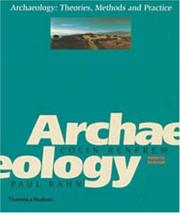
Archaeology: theories, methods, and practice by Colin Renfrew and Paul Bahn is the field's standard survey and has been for decades. Survey, excavation, dating, environment, subsistence, technology, trade, cognition and the practicalities of doing archaeology are each given a proper chapter with worked case studies. Read it selectively rather than cover to cover; it is designed as a course text. If you take one book from this path, it is this one.
Now enjoy the discoveries, critically
With the method in hand, the great narratives repay reading. The Discovery of the Tomb of Tutankhamen is Howard Carter's own account, which is both a primary source and a demonstration of how much excavation practice has changed — the recording standards Carter used were advanced for 1922 and would be unacceptable now. Gods, Graves, and Scholars by C. W. Ceram is the classic popular history of archaeology's heroic age, covering Schliemann, Champollion, Layard and the rest. It is dated, occasionally credulous, and still the book that has recruited more archaeologists than any other.
Then a regional deep dive: Prehistoric Europe by Barry Cunliffe, an authoritative illustrated survey from the Palaeolithic through to the Iron Age, showing what a synthesis built from thousands of excavations actually looks like.
Learn to judge claims and dates
The Past in Perspective by Kenneth Feder is a world-prehistory textbook by an author best known for his work debunking pseudo-archaeology, and it is unusually explicit about how archaeologists evaluate evidence. Pair it with Bones, Rocks and Stars by Chris Turney, a clear short account of the dating science itself — radiocarbon, dendrochronology, luminescence — including what the error ranges mean and where dates get contested. Understanding dating is what separates reading archaeology from believing it.
Finish with the theory
Ian Hodder's two books close the path. Reading the past sets out the post-processual argument that material culture is meaningfully constituted and that interpretation cannot be reduced to processual science, and it is the key statement of a debate that split the discipline in the 1980s. The archaeological process then applies that thinking to excavation practice itself — reflexive method, interpretation at the trowel's edge, and the Catalhoyuk project where Hodder tested it. The processual-versus-post-processual argument has never been fully settled, and reading Hodder after Renfrew lets you hear both sides properly.
Follow the full path in order and the discoveries stay exciting without becoming the whole subject.
Follow the full ordered path here: How to Learn Archaeology From Books, in Order.