Best Books on Mass Incarceration in America, in Reading Order
The United States imprisons a larger share of its population than any comparable country, and the explanation for how that happened is genuinely disputed among the people who study it most closely. This path starts with the two books that put the subject in front of a mass audience, then immediately sets out the competing accounts of what actually drove the prison boom, works back through the longer history, goes inside courts and prisons, and ends on consequences and the argument between reform and abolition.
Where the public conversation starts
BeginnerAbsorb the two books that made mass incarceration a mainstream issue, and understand the moral case each of them makes.
▸ Study plan for this stage
Pace: Two to three weeks for about 650 pages. The New Jim Crow is argumentative non-fiction with a heavy apparatus of statistics and case law — 25 to 30 pages a session, and read the notes, because Alexander's evidence is where the later disagreement will land. Just Mercy is narrative and moves quickly; m
- Alexander's core thesis: that the war on drugs operates as a system of racialised social control, and that the mechanism is not the sentence alone but the permanent second-class legal status that follows a felony conviction
- The idea of collateral consequences — disenfranchisement, housing and employment exclusion, benefit bars — as the part of the punishment that never ends, which becomes the whole subject of Miller's book in the final stage
- Colourblindness as Alexander's target: her claim that a system can produce racially patterned outcomes without any explicitly racial rule, and why that makes it hard to challenge legally
- Stevenson's counter-method — argument by particular case rather than by aggregate — and what a single wrongful conviction can show that a statistic cannot
- Prosecutorial and police discretion as they appear in Stevenson's casework, which is the same lever Pfaff will later identify as decisive
- Juvenile and death-penalty sentencing as the sharp edge of the system, and Stevenson's argument that a person is more than the worst thing they have done
- The distinction between the moral case and the causal case — both books make a moral argument powerfully; only one of them makes a strong empirical claim about causes, and the next stage tests it
- What specifically does Alexander mean by calling the system a caste, and what would have to be true of the data for that description to hold?
- Which of the collateral consequences she describes is, in your view, the most consequential, and why?
- In Just Mercy, what does Walter McMillian's case reveal about how a conviction was produced, and which actors made which decisions?
- Stevenson works case by case and Alexander works from aggregate patterns. What can each method establish that the other cannot?
- After both books, what causal claim about the prison boom do you now hold, and how confident are you in it?
- Write Alexander's argument in 200 words as a chain of claims — premise to premise to conclusion — rather than as a summary. Keep it; you will test each link against Pfaff in the next stage.
- List the collateral consequences Alexander catalogues, then check which of them apply in your own state. Most readers find the list longer than they expected.
- Take one case from Just Mercy and write out every discretionary decision — by police, prosecutor, defence counsel, judge, appellate court — that had to go one way for the outcome to occur.
- Note every place where Alexander's evidence rests on drug offences specifically rather than on convictions generally. Mark those pages; they are exactly what Pfaff disputes.
- Write down, before starting the next stage, what proportion of the American prison population you believe is there for a drug offence. Then check it against Pfaff. The gap between guess and figure is the most instructive moment in this path.
Next up: You now hold the account that shaped the public debate, stated as clearly as its author could make it — which is exactly the condition for reading the scholars in the next stage who think its central causal claim is mistaken.
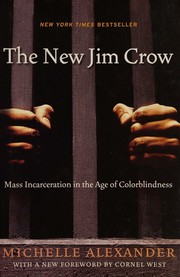
Alexander's argument that the war on drugs functions as a racial caste system reorganised how Americans talk about criminal justice. Start here because it sets the terms of the debate — including for the scholars in the next stage who think its central causal claim is wrong.
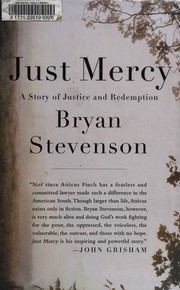
Stevenson's account of his death penalty and juvenile sentencing work puts individual cases where the statistics are, and shows how the system operates on people without resources. It supplies the ground-level reality that makes the structural arguments legible.
What actually caused the prison boom — a live disagreement
IntermediateBe able to state and weigh the competing explanations: drug enforcement, prosecutorial discretion, violent-crime sentencing, and Black political demand for tougher policing.
▸ Study plan for this stage
Pace: Five to six weeks for roughly 1,060 pages, and the slowest stage in the path by some distance. Locked In (311pp) is data-driven and demands you follow the numbers rather than skim them. Locking Up Our Own (320pp) is history and reads more easily. The Collapse of American Criminal Justice (432pp) is
- Pfaff's central finding: that the growth in prison populations tracks a rise in felony charges filed per arrest, which points at county prosecutors rather than at federal drug policy or private prisons
- The state-prison versus federal-prison distinction, which does most of the work in Pfaff's argument — the federal system is drug-heavy and small; the state systems hold most prisoners and are violence-heavy
- Why private prisons hold a small share of prisoners despite their prominence in the public argument, and what Pfaff says follows for reform strategy
- Forman's finding that Black officials, ministers and residents in Washington D.C. often supported tougher drug and gun enforcement, and his careful insistence that this reflects the real violence they faced rather than false consciousness
- Forman's 'all-of-the-above' account of how many separate reasonable-seeming decisions aggregated into an unreasonable system, which is a different shape of explanation from a single-cause thesis
- Stuntz's structural claim: that power drained from local juries and communities toward legislatures and prosecutors, and that an ever-expanding criminal code made charging, not adjudicating, the decisive act
- Stuntz on the collapse of the trial — when almost every case ends in a plea, the substantive law matters less than the prosecutor's charging menu
- How to hold a genuine scholarly disagreement open: these authors are not arguing about values so much as about mechanisms, and the evidence for each mechanism is of different kinds and different quality
- What share of state prisoners are held for drug offences, according to Pfaff, and what does he say the standard account got wrong about it?
- What is Pfaff's evidence that prosecutors are the decisive actors, and what is the strongest objection to that inference?
- How does Forman's D.C. material complicate Alexander's account without endorsing Pfaff's, and what does Forman think that means for how the story should be told?
- In Stuntz's account, what did the expansion of the criminal code make possible that a narrower code would not have?
- If Pfaff is right, which reforms follow — and are they the same ones that follow if Alexander is right?
- Where do all three authors actually agree? Naming the common ground is harder and more useful than naming the dispute.
- Take the chain of claims you wrote for Alexander and mark each link as supported, complicated or contradicted by Pfaff. This is the central exercise of the whole path.
- Write a one-page memo, as if to a state legislator, setting out what Pfaff says the highest-leverage reform is and why — then a second one saying what follows from Alexander instead. Notice how different the two documents are.
- Find the passage in Locking Up Our Own where a specific Black-led constituency backs a specific tougher law, and write 200 words on what Forman thinks it demonstrates and what he explicitly says it does not.
- Diagram Stuntz's account of where discretion sits at each stage — legislature, police, prosecutor, jury, judge — and mark where he says the power moved from and to.
- For each of the three books, write one sentence naming the kind of evidence it rests on: administrative data, archival and interview history, or doctrinal and institutional analysis. Then rank them by how much weight you think each kind can bear here.
Next up: Every explanation in this stage begins somewhere in the twentieth century, so the next stage goes further back — to how crime statistics were racialised in the 1890s, and to a prison uprising that showed the political stakes a decade before the boom.

Pfaff argues from the data that drug offences and private prisons explain far less of the growth than the standard account claims, and that the decisive actors were local prosecutors filing more felony charges. It is the most direct empirical challenge to Alexander, and reading them back to back is the point of this stage.

Forman shows Black officials and communities in Washington D.C. supporting tougher drug and gun laws in response to real violence, which complicates any single-cause racial narrative without denying the racial outcome. A Pulitzer winner and the most careful book on the subject's hardest question.

Stuntz's structural account traces the problem to the shift of power from juries and communities to legislators and prosecutors, and to a criminal code that made almost everything chargeable. Written by a legal scholar and published posthumously, it is the deepest institutional explanation available.
The longer history
IntermediateSee that the current system has roots reaching back to emancipation, and that the prison population was already the subject of violent political conflict before the boom.
▸ Study plan for this stage
Pace: Five to six weeks for about 1,130 pages, most of it Thompson. The Condemnation of Blackness (392pp) is academic history and worth 20 to 25 pages a session with the notes. Blood in the Water is 738 pages and is best read as three movements — the conditions and the uprising, the retaking of the prison
- Muhammad's core finding: that from the 1890s the same crime statistics were read as evidence of innate Black criminality and as evidence of white immigrants' bad circumstances, and that the asymmetry of interpretation was the invention
- The role of the census and early social science in giving that asymmetry the authority of data, which is a caution for every statistical argument in the previous stage
- How a 'crime problem' framing displaced discussion of the conditions producing crime, and the durability of that displacement into modern policy
- Attica's actual demands — medical care, food, mail, religious practice, an end to arbitrary discipline — which were bread-and-butter conditions rather than the revolutionary programme reported at the time
- The retaking of the prison and the false initial account of how the hostages died, and what Thompson shows about how quickly that account entered the record
- The four-decade legal aftermath and the sealed records Thompson had to prise open, which makes the book a study of institutional secrecy as much as of a rebellion
- Prisons as sites of organised political demand — a fact that is invisible in accounts starting with the 1980s boom, and which changes what the boom looks like
- What exactly did Muhammad find about how the same statistic was interpreted differently by race, and who was doing the interpreting?
- How did the framing of crime as a racial trait rather than a social condition shape the policy options that seemed available later?
- What were the Attica prisoners actually demanding, and how did that differ from how the demands were described at the time?
- Who killed the hostages at Attica, what was said at the time, and how long did it take for the record to be corrected?
- Reading these two books after the previous stage: does the longer history support Alexander's continuity argument, Pfaff's proximate-cause argument, or neither cleanly?
- Find one modern news story using crime statistics and read it with Muhammad's method — ask what is being explained by circumstance and what by character, and for whom. This is a skill, not a one-off observation.
- Write 200 words on Muhammad's distinction between crime data as measurement and crime data as argument, using his own examples rather than contemporary ones.
- Build a timeline of Attica: conditions, the uprising, the negotiation, the retaking, the official account, the litigation, the settlements. Thompson's structure is chronological and the timeline is the book's skeleton.
- List the Attica demands and check how many concern conditions that Bauer will describe in the next stage. The overlap across half a century is the point.
- Return to the memo you wrote from Pfaff and ask whether Muhammad's evidence changes anything in it. If it does not, say why — a good answer here is genuinely difficult.
Next up: Having seen how the system was justified and how it was resisted, the next stage puts you inside the two rooms where it actually operates day to day: the plea-bargaining courtroom and the prison itself.

Muhammad traces how crime statistics were used from the 1890s to construct Black criminality as an innate trait while white ethnic crime was explained by circumstance. It is the prehistory that makes the twentieth-century policy choices intelligible.

The definitive history of the 1971 Attica uprising and its suppression, based on records the state fought to keep sealed. It shows prisons as sites of organised political demand and organised state violence, a decade before the boom began.
Inside courts and prisons
IntermediateUnderstand how the system processes people day to day — plea bargaining, courtroom culture, and what conditions inside a for-profit prison are actually like.
▸ Study plan for this stage
Pace: Three weeks for about 640 pages. Crook County (272pp) is ethnography with a scholarly frame and reads at a steady 25 pages a session. American Prison (368pp) alternates undercover reporting with historical chapters and moves faster. Read Van Cleve first — the courtroom precedes the prison in every d
- Plea bargaining as the actual mechanism of American criminal justice — the trial is the exception, which is why Van Cleve's room matters more than any courtroom drama
- Van Cleve's finding of a shared professional culture across prosecution, defence and bench, and her argument that defendants are processed by a group with more in common with each other than with them
- The observational method itself: what a decade of court-watching can document that case files cannot, and what it necessarily cannot establish
- Bauer's four months as a guard, and his central observation that the institution degrades the staff as well as the incarcerated — low pay, understaffing, and the incentives those create
- The convict-leasing history Bauer interleaves with the reportage, which links the modern private prison to a much older business of profiting from confinement
- Cost-per-prisoner economics and what gets cut when a facility is run for margin — medical care, staffing ratios, programming — and how that shows up in daily incidents
- How Bauer's private-prison focus sits against Pfaff's point that private prisons hold a small share of prisoners: the book is important as an account of conditions and profit logic, not as an explanation of scale
- What does Van Cleve observe about how court professionals speak about defendants, and what does she argue it reveals about the institution rather than about individuals?
- If almost every case ends in a plea, what is a defence lawyer's actual job, and how does that differ from the public picture?
- What did Bauer find about staffing, training and medical care at Winn, and which of those did he judge to follow from the profit model specifically?
- How does the convict-leasing history change how you read Bauer's contemporary reporting?
- Both authors are participants in what they describe — one as an observer over years, one undercover for months. What does each method buy, and what does it cost in reliability?
- Spend a morning in a real open criminal courtroom in your area, then write a page comparing what you saw to Van Cleve's account. Public sessions are open to anyone; this is the single most valuable exercise in the path.
- Write out the sequence of a felony case from charge to disposition as Van Cleve describes it, marking who holds discretion at each step. Compare it with the Stuntz diagram from the previous stage.
- In American Prison, list every incident Bauer describes that he attributes to understaffing. Then note which of them a public prison would plausibly also produce.
- Take the Attica demands from the previous stage and mark each one that appears again in Bauer's account of Winn. Write a paragraph on what the overlap does and does not prove.
- Write 200 words on why a defendant might plead guilty to something they did not do, using only mechanisms both books actually document.
Next up: The last stage follows people out of these rooms — into the labour market, the family and the supervision regime — and then asks the question the whole path has been building toward: reform or abolition.

A decade of ethnographic observation in Chicago's criminal courts, documenting how professionals talk about and process defendants when they think no one is listening. Almost all cases end in a plea, so this room — not the trial — is where American criminal justice happens.
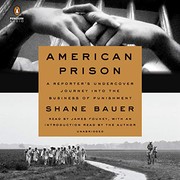
Bauer worked four months as a guard in a Louisiana private prison and interleaves the reporting with a history of convict leasing and prison profit. It is the strongest account of conditions inside, and it treats guards as people the system also degrades.
Consequences, reform, and abolition
BeginnerFollow what incarceration does to families, labour markets and communities after release, and be able to argue the reform and abolition positions fairly against each other.
▸ Study plan for this stage
Pace: Four to five weeks for about 850 pages, and the most intellectually demanding stage. Punishment and Inequality in America (264pp) is quantitative sociology; read the tables rather than skipping them, at perhaps 15 to 20 pages a session. Halfway Home (177pp) is ethnography and memoir and reads quickl
- Western's finding that incarceration operates as a driver of inequality rather than merely a consequence of it — depressing lifetime earnings, employment and marriage rates in measurable ways
- The invisibility problem Western identifies: standard labour statistics exclude the incarcerated, so official measures of employment and wage progress were flattered by the prison population
- Concentration of effect — that incarceration's costs land on particular neighbourhoods and cohorts rather than being spread thinly, which is what makes aggregate figures misleading
- Miller's concept of a distinct legal status after release: supervision conditions, fees, exclusions and revocations that make release a change in the form of control rather than its end
- The scale point implicit in Miller — the supervised population outside prison is far larger than the population inside it, which reframes what the subject even is
- Gilmore's argument that California's prison expansion resolved a specific crisis of surplus land, surplus labour, surplus capital and surplus state capacity — an explanation from political economy rather than from crime rates
- The reform-versus-abolition distinction as Gilmore frames it: whether the institution's harms are defects to be corrected or functions to be understood, and what each position implies about incremental change
- How to assess a position you may not hold — Gilmore's is the rigorous version of the abolition argument, and the useful test is whether you can state it in a form she would accept before deciding what you think
- What are the specific measured effects of incarceration on earnings, employment and family formation in Western's data, and how does he establish them as effects rather than correlations?
- Why does excluding prisoners from labour statistics distort the picture, and what does correcting for it change?
- What does Miller mean by calling post-release life a legal status rather than freedom, and what concrete conditions does he point to?
- What crisis does Gilmore say prison expansion solved in California, and what is her evidence that this, rather than rising crime, drove the building programme?
- State the abolition argument in its strongest form and the reform argument in its strongest form. What would each side accept as evidence against it?
- Across all eleven books: which single explanation of the prison boom do you now find best supported, and which of the others has the strongest remaining objection to it?
- Reconstruct one of Western's central findings from his own tables — write out what is being compared, to what, and what is being controlled for. Doing this once teaches you to read the rest of the quantitative literature.
- List every condition of supervision Miller documents, then estimate the annual cost in fees and time of complying with all of them. The arithmetic is the argument.
- Write Gilmore's thesis in 200 words in terms she would endorse, without any evaluative language. Only then write a second 200 words on what you think of it.
- Return to the two memos you wrote in stage two and write a third from Gilmore's position. Set the three side by side; the differences are the whole reform debate in miniature.
- Write a final page naming the three claims in this path you are most confident about and the three you consider genuinely unsettled, citing which book each rests on. Honest uncertainty is the intended outcome of a path built on a live disagreement.
Next up: This is the end of the path — from the books that set the public terms, through the scholarly dispute about causes, the longer history, the courtroom and the cellblock, to consequences and the reform debate — and the natural next step is to reread The New Jim Crow, which reads very differently once Pfaff, Forman and Stuntz are in your head.

The foundational quantitative work on incarceration as a driver of inequality — how prison time reshapes earnings, employment and family formation, concentrated in particular communities. This is the evidence base most policy arguments draw on.

Miller follows people after release into a supervision regime of fees, conditions and exclusions that he calls a distinct legal status rather than freedom. It extends Western's statistics into lived experience and shifts the subject from prisons to the much larger population under control outside them.
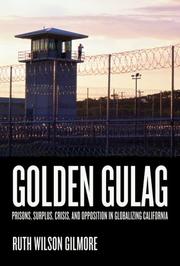
Gilmore's study of California's prison expansion as a solution to surplus land, labour and capital is the intellectual foundation of prison abolition. Whether or not you accept the conclusion, it is the serious version of the position, and it belongs at the end where you can assess it against everything else you have read.
Discussion
Keep reading
Paths that share books, cover the same subject, or open a related topic.