The Best Books on Counterpoint and Voice Leading
This curriculum is designed for an expert-level musician who wants to master counterpoint and voice leading from the ground up in species, through rigorous tonal part-writing, into the analytical and compositional craft behind Bach and the broader contrapuntal tradition. Each stage sharpens a distinct layer of skill—strict species discipline, tonal harmonic integration, advanced chromatic voice leading, and finally direct engagement with the masterworks—so that every book builds directly on the technical vocabulary and musical intuition established by the one before it.
Species Counterpoint: The Strict Foundation
ExpertInternalize the rules and logic of strict counterpoint through all five species in two, three, and four voices, building the ear-training and contrapuntal reflexes that underpin all later work.
▸ Study plan for this stage
Pace: 12–14 weeks, ~25–30 pages/day with daily written exercises and ear-training drills. Weeks 1–4: Fux (foundational rules); Weeks 5–8: Jeppesen (historical context and refinement); Weeks 9–14: Schubert (modal application and synthesis). Allow 2–3 days per week for review, composition practice, and play
- The five species of counterpoint (note-against-note through florid counterpoint) as a pedagogical progression that mirrors compositional complexity
- Cantus firmus as the structural anchor: how a fixed melody constrains and enables all other voices
- Voice leading rules (contrary motion, parallel fifths/octaves, voice crossing, range, and spacing) as expressions of musical logic, not arbitrary prohibitions
- The distinction between strict (academic) and free counterpoint, and why mastering strict rules first builds intuition for later flexibility
- Sixteenth-century modal practice (Ionian, Dorian, Phrygian, Lydian, Mixolydian) as the harmonic and melodic framework for Renaissance counterpoint
- Dissonance treatment: suspension, passing tone, and neighbor tone as controlled departures from consonance that strengthen voice independence
- Two-, three-, and four-voice textures as progressively complex applications of the same fundamental principles
- Ear training as inseparable from written work: hearing the rules in action trains the contrapuntal reflex
- What are the five species of counterpoint, and how does each species add complexity to the relationship between the cantus firmus and the countermelody?
- Why are parallel fifths and octaves prohibited in strict counterpoint, and what voice-leading alternatives accomplish similar harmonic goals?
- How do the rules of strict counterpoint differ between two-voice, three-voice, and four-voice writing, and what new challenges emerge in each texture?
- What is the role of dissonance in strict counterpoint, and how do suspensions, passing tones, and neighbor tones function within the rules?
- How do the six Renaissance modes (Ionian through Mixolydian) shape melodic contour, harmonic closure, and the choice of final consonance in modal counterpoint?
- How does mastering strict counterpoint prepare you to recognize and break rules effectively in free counterpoint and later compositional styles?
- Complete all written exercises in Fux's *The Study of Counterpoint* (species 1–5 in two voices), writing out solutions by hand and checking against provided examples
- Compose a complete two-voice first-species counterpoint above and below a given cantus firmus in each of the six modes, then play or sing both voices aloud
- Write a three-voice second-species counterpoint (two notes against one in the cantus) using Jeppesen's guidelines, focusing on voice independence and smooth voice leading
- Transcribe and analyze 5–6 Renaissance motets or madrigals from Jeppesen's historical examples, marking dissonances, suspensions, and voice-leading patterns
- Compose a four-voice florid counterpoint (species 5) above a cantus firmus in Dorian mode, applying Schubert's modal principles and checking for parallel motion, range, and spacing
- Sing or play back every exercise aloud (or use notation software with playback) to train your ear to recognize smooth voice leading, awkward leaps, and harmonic closure
Next up: Mastery of strict species counterpoint—the rules, the ear, and the reflexes—equips you to understand how Renaissance and Baroque composers bent and broke these rules in free counterpoint, fugue, and larger polyphonic forms, where the same principles of voice independence and harmonic logic operate beneath greater surface freedom.

The foundational treatise of the species system, presented as a Socratic dialogue. Every subsequent counterpoint pedagogy responds to Fux, so reading it first establishes the canonical vocabulary and the historical baseline against which all other approaches are measured.
Jeppesen corrects and refines Fux through rigorous historical analysis of Palestrina's actual practice. Reading it immediately after Fux reveals which 'rules' are pedagogical abstractions and which reflect genuine Renaissance voice-leading norms.
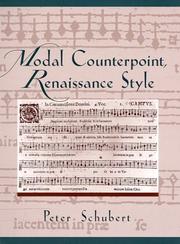
A modern, hands-on workbook that translates the Fux–Jeppesen tradition into practical exercises with clear explanations. Its graded approach and attention to melodic shape consolidates species skills before moving into tonal harmony.
Tonal Harmony and Part-Writing
ExpertMaster the voice-leading principles of the common-practice period—chord connection, figured bass, harmonic rhythm, and four-part chorale writing—as the bridge between strict species and free tonal composition.
▸ Study plan for this stage
Pace: 8–10 weeks, ~40–50 pages/day (alternating between Piston and Kostka; approximately 4–5 weeks per book)
- Chord connection and smooth voice leading: minimizing leaps, maintaining common tones, and managing contrary/parallel motion between parts
- Figured bass as a notational system for harmonic analysis and realization—translating figured bass symbols into four-part texture
- Harmonic rhythm: the pacing and placement of chord changes relative to metric structure and melodic phrasing
- Four-part chorale writing: SATB voice ranges, doubling conventions, and resolution of tendency tones in functional harmony
- Functional harmony in tonal context: how dominant, subdominant, and tonic functions organize phrase structure and cadential closure
- Voice independence and counterpoint within harmonic texture: balancing vertical sonority with linear integrity
- Common-practice period conventions: stylistic constraints that govern voice leading, spacing, and harmonic progression
- What are the primary objectives of smooth voice leading, and how do common tones, contrary motion, and minimal leaps achieve them?
- How do you read and realize a figured bass line, and what does each numeral or symbol indicate about the harmonic content and voicing?
- What is harmonic rhythm, and how does it interact with metric structure and melodic shape to create phrase coherence?
- What are the voice ranges, doubling rules, and spacing conventions for SATB writing, and when can these rules be broken for musical effect?
- How do functional harmony (I, IV, V, vi, etc.) and cadential patterns (authentic, plagal, deceptive, half) structure tonal phrases?
- How do you resolve leading tones, seventh chords, and other tendency tones in four-part writing while maintaining voice independence?
- Realize 10–15 figured bass exercises from Piston and Kostka, focusing on smooth voice leading and proper spacing; compare your realizations with provided solutions
- Analyze 5–8 chorale excerpts (Bach or similar) by identifying harmonic function, voice-leading techniques, and cadential patterns; annotate with Roman numerals and voice-leading arrows
- Compose 4–6 short SATB phrases (8–16 bars each) using given harmonic progressions (e.g., I–IV–V–I, I–vi–IV–V–I); ensure smooth voice leading and proper doubling
- Transcribe and arrange 3–4 simple melodies into four-part chorale style, adding appropriate harmonies and managing voice leading constraints
- Complete 8–10 voice-leading error-correction exercises: identify and fix parallel fifths, poor spacing, awkward leaps, and unresolved tendency tones in provided SATB excerpts
- Compose a short harmonic analysis study: take a complete Bach chorale or similar work and create a detailed analysis including Roman numerals, figured bass, harmonic rhythm notation, and voice-leading observations
Next up: This stage equips you with the technical mastery of chord connection, voice independence, and functional harmony needed to move into free composition and advanced harmonic analysis, where these principles become intuitive tools for creating coherent, expressive tonal music.
A rigorous, analytically precise treatment of tonal harmony and part-writing that assumes musical maturity. Its systematic coverage of voice-leading rules in four-part texture provides the tonal grammar needed for everything that follows.
Complements Piston with abundant worked examples and exercises, particularly strong on chromatic harmony and modulation. Reading it alongside or after Piston deepens fluency in the part-writing conventions of the 18th and 19th centuries.
The Craft of Bach: Chorale and Invertible Counterpoint
ExpertUnderstand the specific contrapuntal and harmonic techniques Bach employs in his chorales and contrapuntal works, including invertible counterpoint, canon, and the integration of harmony with linear motion.
▸ Study plan for this stage
Pace: 8–10 weeks, ~40–50 pages/day (Salzer first: 3–4 weeks; Riemenschneider chorales: 5–6 weeks with intensive score study)
- Invertible counterpoint and its role in creating structural unity and thematic transformation across multiple voices
- Voice-leading principles in Bach's chorales: smooth voice motion, avoiding parallel fifths/octaves, and maintaining independence of lines
- The integration of harmonic function with linear motion—how Bach's voice leading creates both harmonic progression and melodic coherence
- Canon and fugal techniques as applied in Bach's contrapuntal works, including subject design and answer construction
- Harmonic rhythm and its relationship to contrapuntal density in chorale settings
- The use of suspensions, passing tones, and neighbor tones as both melodic and harmonic devices in Bach's texture
- Structural analysis of Bach chorales: identifying cadential patterns, phrase structure, and tonal architecture
- Practical application of counterpoint to four-part writing with the constraints of chorale texture
- What is invertible counterpoint, and how does Bach use it to create unity and variation in his contrapuntal works?
- How does Bach balance harmonic progression with linear independence in his four-part chorale writing?
- What are the key voice-leading rules Bach observes in his chorales, and what are the exceptions he makes for musical effect?
- How do suspensions and non-harmonic tones function both melodically and harmonically within Bach's chorale texture?
- How can you identify and analyze the structural components of a Bach chorale (phrases, cadences, harmonic rhythm)?
- What techniques from Salzer's counterpoint principles can you identify and apply when analyzing a Bach chorale from the Riemenschneider collection?
- Complete Salzer's written exercises on invertible counterpoint at the octave, fifth, and fourth, then verify your work against provided solutions
- Analyze 10–15 Bach chorales from the Riemenschneider collection for voice-leading violations and exceptions, documenting the musical purpose of each
- Compose a short two-voice canon (8–16 bars) using principles from Salzer, then expand it to four parts in chorale style
- Transcribe and annotate a Bach chorale, marking all non-harmonic tones, suspensions, and identifying the harmonic rhythm and cadential structure
- Rewrite one Bach chorale using different voice-leading solutions (e.g., different inversions, registrations) while maintaining harmonic content, comparing your version to Bach's original
- Compose an original four-part chorale (16–24 bars) applying Salzer's voice-leading principles and invertible counterpoint techniques, then self-critique against Bach's practice
Next up: This stage equips you with the analytical and compositional tools to understand Bach's contrapuntal mastery and voice-leading sophistication, preparing you to explore more complex fugal architecture, multi-movement forms, and the application of these principles to larger instrumental works.

Salzer and Schachter integrate Schenkerian voice-leading analysis with strict counterpoint pedagogy, showing how linear motion governs tonal structure at every level. This is the essential bridge between species rules and Bach's free compositional practice.

The primary source itself. Studied systematically after Salzer, the chorales become a laboratory for observing every voice-leading principle—non-chord tones, chromatic inflection, and phrase structure—in Bach's own hand.
Schenkerian Analysis and Deep Voice-Leading Structure
ExpertDevelop the ability to hear and graph multi-level voice-leading structure using Schenkerian theory, revealing how surface counterpoint and harmony are governed by deeper linear and harmonic prolongations.
▸ Study plan for this stage
Pace: 8–10 weeks, ~40–50 pages/day (with score analysis interspersed). Allocate 5–6 weeks to "Free Composition" (dense, foundational theory), then 2–3 weeks to "Harmony and Voice Leading" (application and synthesis).
- The Ursatz (fundamental structure): the two-part framework of Urlinie (melodic line) and Bassbrechung (bass arpeggiation) that governs all tonal music
- Levels of structure: foreground, middleground, and background, and how surface counterpoint prolongs deeper harmonic and linear relationships
- Prolongation: the concept that surface notes and chords elaborate and extend fundamental structural tones without changing the underlying harmonic function
- Interruption and structural closure: how the Urlinie may be interrupted (typically at the mediant) and resumed, and how authentic cadences confirm structural closure
- Register and voice leading across multiple levels: how individual voices maintain coherence while participating in larger-scale linear progressions
- Harmonic function in Schenkerian terms: distinguishing between structural harmonies (I, V, I) and subsidiary chords that prolong these functions
- Graphing and notation: reading and creating Schenkerian graphs at multiple levels to visualize hierarchical voice-leading structure
- Integration of counterpoint and harmony: understanding how species counterpoint principles underpin the voice-leading logic of tonal compositions
- What is the Ursatz, and why is it considered the fundamental structure underlying all tonal compositions?
- How do foreground, middleground, and background levels differ, and what role does prolongation play in connecting them?
- What is the difference between a structural harmony and a prolongational chord, and how do you identify each in a score?
- How does interruption function in Schenkerian analysis, and what is the typical point at which an interruption occurs?
- How would you construct a multi-level Schenkerian graph for a short tonal piece, and what does each level reveal about voice-leading coherence?
- In what ways do the voice-leading principles from species counterpoint manifest in the harmonic progressions and linear structures of tonal music?
- Study Schenker's own analyses in 'Free Composition': select 3–4 complete analyses and trace the Ursatz, identifying the Urlinie and Bassbrechung at the background level, then work downward through middleground levels to understand how surface detail prolongs the structure.
- Analyze a simple binary or ternary form (e.g., a Minuet or short Prelude) by constructing a three-level Schenkerian graph: background (Ursatz), middleground (primary prolongations), and foreground (surface counterpoint and harmony).
- Identify and label structural versus prolongational harmonies in a Bach chorale or Mozart sonata movement, marking which chords are essential to the harmonic progression and which elaborate them.
- Practice graphing interruptions: find a piece with a clear mediant cadence followed by a return to the tonic, and graph how the Urlinie is interrupted and resumed.
- Transcribe and analyze a piece with clear register shifts: show how individual voices maintain linear coherence while the overall texture changes across multiple octaves.
- Compose or arrange a short eight-bar phrase with explicit prolongational structure: write a background Ursatz (I–V–I), add middleground elaborations, then fill in foreground counterpoint, labeling each level.
Next up: Mastery of Schenkerian analysis and multi-level voice-leading structure equips you to recognize how even complex, extended tonal works are unified by simple underlying principles—preparing you to apply these insights to larger forms, chromatic harmony, and the analysis of works that push or transcend traditional tonality.

Schenker's magnum opus presents his complete theory of tonal structure as layered voice-leading. Reading it at this stage—after thorough species and tonal training—allows the expert learner to engage its arguments critically and productively.
The most rigorous modern integration of voice-leading and harmonic analysis in a single text, deeply informed by Schenkerian thinking. It synthesizes everything in the curriculum into a unified, practical framework for both analysis and composition.
Discussion
Keep reading
Paths that share books, cover the same subject, or open a related topic.