The Best Books on Visual Effects for Film, in Order
This curriculum takes an intermediate learner from a solid conceptual grounding in how VFX works—its history, pipeline, and core disciplines—through the technical and artistic mastery of compositing and CGI, and finally into the professional craft of supervising and designing effects at an industry level. Each stage builds the vocabulary and mental models needed to absorb the next, moving from "how it all fits together" to "how to do it" to "how to lead and innovate it."
The Big Picture: History, Pipeline & Craft
IntermediateUnderstand the full VFX pipeline, its history, and the vocabulary shared across every discipline—giving you a mental map before diving into any single craft.
▸ Study plan for this stage
Pace: 6–8 weeks, ~40–50 pages/day (approximately 2–3 hours of focused reading)
- The complete VFX pipeline: pre-production planning, on-set supervision, post-production workflows, and how each phase depends on the others
- Historical evolution of VFX from practical effects through digital revolution to modern hybrid approaches, and how past techniques inform current practice
- Core VFX terminology and roles across disciplines: compositing, motion capture, 3D modeling, animation, rotoscoping, color correction, and visual effects supervision
- ILM's foundational methodologies and problem-solving approaches that became industry standards
- The relationship between creative vision and technical constraints: how budgets, schedules, and available technology shape VFX decisions
- Pre-visualization and planning as critical tools for communicating complex effects before expensive production and post-production phases
- Quality control, review processes, and iteration cycles that ensure effects meet creative and technical standards
- Collaboration between VFX supervisors, directors, cinematographers, and department heads to integrate effects seamlessly into live-action filmmaking
- Walk through the complete VFX pipeline from script to final delivery: what happens in each phase, who is responsible, and why the sequence matters?
- How did the transition from practical to digital effects change the role of the VFX supervisor and the planning process?
- Explain the key differences between on-set VFX supervision and post-production VFX work, and why both are essential.
- What is pre-visualization, why is it critical to VFX production, and how does it save time and money downstream?
- Describe at least three major VFX disciplines mentioned in the books and explain how they interact in a typical shot.
- How do budget and schedule constraints influence VFX decision-making, and what trade-offs might a VFX supervisor need to negotiate?
- What lessons from ILM's early work (practical effects, motion control, digital pioneers) remain relevant to modern VFX production?
- Create a detailed pipeline flowchart for a hypothetical film sequence involving both practical and digital effects, labeling each phase, key roles, and decision points.
- Watch a behind-the-scenes VFX featurette (e.g., from an ILM-supervised film) and annotate it against the pipeline stages described in the VES handbook—identify where each phase appears.
- Write a one-page VFX supervisor's brief for a fictional scene: outline the creative goal, technical approach, on-set requirements, and post-production workflow.
- Create a glossary of 30–40 VFX terms from both books, organized by discipline (e.g., compositing, animation, motion capture), with brief definitions and context.
- Interview a VFX professional (or find a recorded interview) and map their career path and key projects against the historical timeline and pipeline concepts from the books.
- Sketch or diagram three historical VFX techniques (e.g., motion control, matte painting, practical compositing) and explain how each evolved or was replaced by digital methods.
Next up: With a solid mental map of the full pipeline, its history, and shared vocabulary, you're now ready to specialize in a single VFX discipline—whether compositing, animation, motion capture, or another craft—knowing exactly where your expertise fits into the larger production ecosystem.
The Visual Effects Society's official industry reference covers every department of the pipeline in one authoritative volume—read first to get the complete map of how VFX productions are structured and executed.
A deep historical account of how modern VFX was invented at ILM; reading this second grounds all technical knowledge in the real creative and engineering problems that shaped the industry.
Compositing: The Core Discipline
IntermediateMaster the theory and practice of digital compositing—the skill that ties every VFX element together—from mathematical foundations to professional node-based workflows.
▸ Study plan for this stage
Pace: 6–8 weeks, ~40–50 pages/day, with 2–3 days per week dedicated to hands-on compositing practice
- Color spaces, bit depth, and linear vs. non-linear workflows—the mathematical foundation that determines image quality and compositing accuracy
- Alpha channels, premultiplication, and keying theory—how transparency is encoded and manipulated in digital images
- Node-based compositing architecture—understanding signal flow, layer operations, and how professional software organizes effects
- Rotoscoping and masking techniques—manual frame-by-frame refinement for precise element isolation and integration
- Color correction and grading within compositing—matching, balancing, and enhancing footage to achieve photorealism
- Motion tracking and camera tracking—anchoring 2D and 3D elements to live-action footage
- Layering, blending modes, and compositing math—how multiple elements combine and interact at the pixel level
- Professional compositing workflows—from asset organization to final delivery, including render passes and optimization
- Why is linear color space critical for compositing math, and what artifacts occur when compositing in non-linear space?
- What is premultiplication, and why do you need to unpremultiply before certain operations and repremultiply before output?
- How do you approach keying a green-screen element, and what are the common pitfalls in preserving edge detail and color fringing?
- Describe the signal flow in a node-based compositor: how do data, images, and parameters move through a network?
- What is the difference between rotoscoping for isolation versus rotoscoping for refinement, and when would you use each?
- How do you match lighting, color, and motion blur between a CG element and live-action background footage?
- Set up a linear compositing pipeline in a node-based compositor (Nuke, Fusion, or equivalent): import footage, verify color space, and output in both linear and sRGB to observe the difference
- Perform a complete keying workflow on green-screen footage—pull a key, refine edges with despill and edge tools, and integrate the element over a new background
- Create a multi-layer composite with at least 5 elements (foreground, background, effects, color correction, text) using proper blending modes and alpha management
- Rotoscope a moving object for 50–100 frames, creating a clean matte; compare manual frame-by-frame work with motion-tracked or automated approaches
- Perform 2D motion tracking on a piece of live-action footage and use the tracked data to stabilize or attach a graphic element to a moving feature
- Color-correct and grade a composite to match a reference image—adjust curves, saturation, and contrast while preserving the integrity of all layers
Next up: This stage equips you with the disciplined, mathematical thinking and hands-on proficiency in compositing that is essential before tackling advanced topics like 3D integration, particle systems, and photorealistic VFX production pipelines.
The definitive textbook on compositing; it establishes the mathematical and perceptual principles (color, light, alpha, keying) that every other compositing resource assumes you already know.

A highly practical, production-focused companion that translates compositing theory into real-world shot-solving techniques—read after Brinkmann to see the principles applied on actual film work.
CGI & Visual Simulation
IntermediateUnderstand how 3D computer graphics—modeling, shading, lighting, rendering, and simulation—are created and integrated into live-action footage.
▸ Study plan for this stage
Pace: 8–10 weeks, ~40–50 pages/day. Start with "The Visual Story" (weeks 1–3, ~150 pages), then transition to "Physically Based Rendering" (weeks 4–10, ~600+ pages with deep technical sections). Allocate extra time for PBR's math-heavy chapters and rendering algorithm implementation.
- Visual language fundamentals: how composition, color, contrast, and spatial relationships guide viewer attention and emotion in film
- 3D modeling principles: geometry representation, topology, and how digital models are constructed for photorealistic rendering
- Physically based rendering (PBR) pipeline: how light interacts with surfaces using energy conservation, BRDFs, and material properties
- Shading and material systems: implementing realistic surface behavior through texture mapping, normal maps, and shader networks
- Global illumination and rendering algorithms: ray tracing, path tracing, and Monte Carlo integration for photorealistic image synthesis
- Lighting in 3D space: how digital lights simulate real-world photometry and integrate with rendering equations
- Simulation and dynamics: particle systems, cloth, and fluid simulation for complex visual effects in live-action integration
- Compositing and integration: how rendered CGI elements are color-corrected, matched, and composited into live-action footage
- How do the principles of visual composition from 'The Visual Story' (framing, contrast, color theory) apply to lighting and material choices in 3D rendering?
- Explain the rendering equation and how it models light transport. Why is energy conservation critical for photorealistic results?
- What is a BRDF, and how do different material properties (roughness, metallic, subsurface scattering) affect how surfaces reflect light?
- Compare ray tracing and path tracing: what problems does each solve, and why would you choose one over the other for a visual effects shot?
- How do you integrate rendered CGI into live-action footage? What steps ensure the lighting, color, and motion blur match the plate?
- Describe the role of normal maps and displacement maps in creating surface detail without excessive geometry complexity.
- Read 'The Visual Story' chapters on composition and color, then analyze 3 VFX shots from films (e.g., Blade Runner 2049, Dune) and document how lighting and material choices reinforce the visual narrative.
- Implement a basic ray tracer in C++ or Python following PBR's core chapters, rendering a simple scene with diffuse and specular surfaces to understand the rendering equation hands-on.
- Create a physically based material in a 3D package (Blender, Maya, or Substance Designer) with measured real-world values (albedo, roughness, metallic), render under controlled lighting, and compare to reference photography.
- Render the same 3D scene using two different algorithms (e.g., ray tracing vs. path tracing) and analyze convergence speed, noise patterns, and final image quality differences.
- Composite a simple CGI object (sphere or cube) into a live-action plate, matching lighting direction, color temperature, shadows, and motion blur to the background.
- Study a complex VFX sequence (e.g., a creature or vehicle in a film) and reverse-engineer the likely modeling, shading, lighting, and simulation techniques used based on PBR principles.
Next up: This stage equips you with the technical foundation of how photorealistic 3D graphics are created and integrated, preparing you to advance into specialized topics like advanced simulation (fluids, destruction), procedural generation, or real-time rendering optimization for production pipelines.
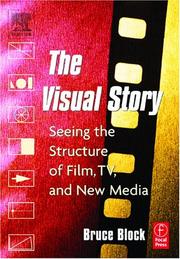
Before tackling CGI software and math, this book builds the visual language (contrast, tone, color, space) that CG artists must consciously control—essential conceptual grounding for all 3D work.
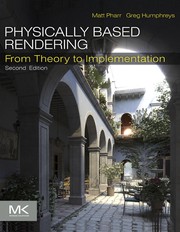
The gold-standard text on how light and materials are simulated in production renderers; reading it here gives you the scientific foundation behind every CGI image you will create or supervise.
Production Design & the Art of Illusion
ExpertDevelop the artistic and directorial eye needed to design convincing illusions—understanding how VFX serves story, how on-set decisions affect post, and how great supervisors think.
▸ Study plan for this stage
Pace: 4–5 weeks, ~25–30 pages/day, with 2–3 days per week for reflection and exercises
- How VFX serves narrative and emotional storytelling rather than existing as spectacle alone
- The supervisor's role as a bridge between creative vision and technical execution on set and in post-production
- On-set decision-making: camera placement, lighting, actor positioning, and practical effects that directly impact post-production work
- The illusion of reality: how to design effects that audiences accept as believable within the film's world
- Collaboration workflows between production design, cinematography, and VFX departments
- Historical and contemporary case studies of how great supervisors solved complex visual problems
- Pre-visualization and planning as essential tools for controlling cost and maintaining artistic intent
- The psychology of visual perception and how audiences read composite images and digital environments
- How does a VFX supervisor balance creative ambition with practical constraints of budget, time, and technology?
- What on-set decisions (lighting, camera angle, actor blocking) have the most significant impact on post-production VFX work, and why?
- How do you design an effect that feels real to an audience—what are the key principles of believability in visual illusion?
- Describe a case study from the book where the supervisor's planning and collaboration prevented costly mistakes or elevated the final result.
- How does understanding the history of practical and digital effects inform better decision-making on modern productions?
- What is the relationship between production design and VFX supervision, and how do these departments work together to serve the story?
- Analyze a film scene (from Rickitt's case studies or another film) and write a 1–2 page breakdown of what on-set decisions likely influenced the VFX work, including camera angle, lighting, and actor positioning.
- Create a pre-visualization plan for a hypothetical VFX sequence: identify what must be shot practically, what will be added in post, and what decisions the supervisor must make before production begins.
- Watch a behind-the-scenes featurette or commentary for a VFX-heavy film and identify moments where production design and VFX supervision collaborated—document the decisions and their impact.
- Sketch or storyboard a simple visual illusion (e.g., a creature, environment, or impossible action) and explain how you would achieve it on set and in post, referencing principles from Rickitt.
- Interview a working VFX supervisor, cinematographer, or production designer (in person, via email, or through existing podcasts/interviews) and ask how they approach the planning and collaboration process; synthesize their answers against Rickitt's framework.
- Conduct a comparative analysis: select two versions of a scene (practical vs. digital, or different VFX approaches) and evaluate which is more effective for storytelling and why, using Rickitt's criteria for believability and narrative purpose.
Next up: This stage equips you with the directorial and supervisory mindset—understanding how to think like a VFX leader who serves story—preparing you to dive deeper into the technical and software-specific skills needed to execute those visions in the next stage.
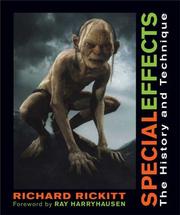
A comprehensive survey of both practical and digital effects techniques across film history; at this advanced stage it sharpens your ability to choose the right tool—practical vs. digital—for any given shot.
Supervision, Innovation & the Future
ExpertThink like a VFX supervisor and innovator—understanding how to lead a show, push creative boundaries, and situate your work within the evolving landscape of the craft.
▸ Study plan for this stage
Pace: 8–10 weeks, ~25–30 pages/day, with 1–2 weeks dedicated to each book plus integration time
- Visual language and shot grammar as the foundation for VFX decision-making and supervisor leadership
- How compositional choices (framing, depth, movement) communicate narrative intent and emotional subtext
- The role of the VFX supervisor in translating directorial vision into technical and creative execution
- Cinefex's case-study methodology: learning from real productions to understand problem-solving under constraints
- Innovation within constraints: how technical limitations drive creative solutions in VFX supervision
- The evolution of VFX craft and how to position yourself as a forward-thinking leader in the industry
- Collaborative communication: using shot grammar language to brief teams and defend creative choices
- How does understanding shot grammar enable you to communicate more effectively with directors, cinematographers, and VFX artists?
- What is the relationship between compositional choices and the emotional or narrative impact of a visual effect?
- How would you use the principles in Grammar of the Shot to evaluate whether a proposed VFX solution serves the story?
- What case studies from Cinefex demonstrate how constraints (budget, time, technology) led to innovative VFX solutions, and what can you learn from them?
- As a VFX supervisor, how would you balance pushing creative boundaries with the practical realities of production schedules and budgets?
- How has the VFX craft evolved according to Cinefex, and what does that evolution tell you about where the industry is heading?
- Annotate 5–10 shots from films you admire, identifying the grammar principles Thompson describes and explaining how each compositional choice serves the narrative or emotional goal
- Read 3–4 Cinefex case studies in depth and create a one-page 'problem-solution' brief for each, identifying the constraint, the creative choice, and the outcome
- Rewrite a VFX brief for a scene from a film you know well, using shot grammar terminology to articulate why specific visual choices matter beyond technical specs
- Conduct a 'supervision simulation': given a director's intent and a Cinefex-style constraint (budget, time, or technology limitation), propose an innovative VFX solution with visual references and reasoning
- Create a 'visual language guide' for a hypothetical VFX-heavy sequence, mapping shot grammar principles to emotional beats and explaining how each shot choice supports the supervisor's vision
- Analyze how a Cinefex case study's approach to problem-solving reflects or challenges your current assumptions about VFX innovation and leadership
Next up: This stage equips you to think strategically as a VFX leader—grounding creative decisions in visual language and learning from industry case studies—preparing you to either specialize in a specific VFX discipline with this supervisory mindset or to develop a personal point of view on the future direction of the craft.
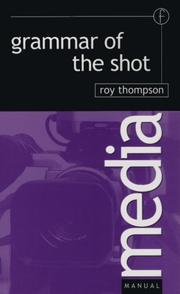
A concise, authoritative guide to cinematographic grammar; VFX supervisors must speak the language of directors and DPs fluently, and this book is the fastest path to that shared vocabulary.
The industry's journal of record for VFX breakdowns on major productions; reading deep into its back catalog exposes you to the decision-making and problem-solving of the world's top supervisors across decades.
Discussion
Keep reading
Paths that share books, cover the same subject, or open a related topic.