Ear Training and Sight-Singing: The Best Books, In Order
This curriculum builds ear training from the ground up, moving from basic pitch and interval recognition through chord quality and rhythm, then into sight-singing, and finally into the practical skill of transcribing real music by ear. Each stage assumes mastery of the previous one, so working through the books in order ensures no gaps in foundational listening vocabulary before tackling more complex musical structures.
Foundations: Pitch, Intervals & Basic Listening
BeginnerDevelop a reliable inner ear for pitch, understand and recognize all basic intervals, and build the mental framework for active musical listening.
▸ Study plan for this stage
Pace: 4–5 weeks, ~25–30 pages/day, with daily listening and singing practice (30–45 minutes)
- Pitch as a fundamental perceptual unit: frequency, octave equivalence, and the chromatic scale
- Interval identification by quality (major, minor, perfect, augmented, diminished) and size (unison through octave)
- Melodic vs. harmonic interval recognition and the role of context in perception
- Active listening strategies: focused attention, mental singing, and internal reference pitches
- The relationship between physical sensation (vocal production) and auditory perception
- Relative pitch development through interval-based thinking rather than absolute pitch memorization
- Foundational ear-training methodology: isolation, repetition, and multi-sensory reinforcement
- What is the difference between a major third and a minor third, and how can you reliably distinguish them by ear?
- How do you use a reference pitch to identify intervals melodically, and why is this more practical than absolute pitch?
- What are the characteristic sonic qualities of perfect intervals (unison, fourth, fifth, octave) versus imperfect intervals?
- Explain the relationship between singing an interval and recognizing it aurally—why is vocal production essential to ear training?
- What listening strategies help you maintain focus and accuracy when identifying intervals in real musical contexts?
- How do you distinguish between enharmonic equivalents (e.g., C# and Db) in terms of interval quality and function?
- Daily interval singing: sing each interval (unison through octave) up and down from a given starting pitch, then listen to recorded examples and match them by ear
- Reference pitch anchoring: choose a familiar song snippet for each interval (e.g., 'Happy Birthday' for a major sixth) and use it as a mental reference when identifying intervals
- Melodic dictation drills: listen to short 2–4 note melodies and write down the intervals between consecutive notes
- Harmonic interval listening: listen to pairs of notes played simultaneously and classify them by quality (major, minor, perfect, augmented, diminished)
- Interval singing from notation: read an interval from staff notation, sing it without hearing it first, then verify against a recording
- Reverse interval identification: given an interval name, sing it accurately, then check against a reference recording to refine intonation
Next up: Mastery of pitch perception and interval recognition establishes the mental vocabulary needed to identify and analyze chords, harmonic progressions, and larger melodic structures in the next stage.

A comprehensive, widely-used university text that introduces pitch, scales, and intervals systematically from scratch — the ideal starting point for a complete beginner building aural vocabulary.

A classic, in-print workbook that reinforces interval recognition and melodic dictation with structured exercises, cementing what the first book introduces conceptually.
Harmony by Ear: Chords & Progressions
BeginnerRecognize chord qualities (major, minor, diminished, augmented, dominant 7th) and common harmonic progressions by ear alone.
▸ Study plan for this stage
Pace: 6–8 weeks, ~40–50 pages/week. Start with "Tonal Harmony" (weeks 1–4, focusing on chord construction and quality chapters), then move to "Harmonic Experience" (weeks 5–8, emphasizing listening exercises and progression patterns). Allocate 3–4 hours/week for reading and 4–5 hours/week for ear training
- Chord construction: how major, minor, diminished, and augmented triads are built from root, third, and fifth intervals
- Chord quality identification: distinguishing sonic characteristics of each triad type by ear
- Dominant 7th function: the role of the V7 chord in creating tension and resolution within tonal contexts
- Harmonic progressions: common patterns (I–IV–V–I, ii–V–I, vi–IV–I–V) and their emotional/functional qualities
- Root position vs. inversions: how chord voicing affects harmonic sound and progression recognition
- Listening for harmonic context: training the ear to perceive chords within musical phrases rather than in isolation
- Tonal gravity and resolution: how chord progressions create expectation and fulfillment in tonal music
- Can you identify a major triad, minor triad, diminished triad, and augmented triad by ear alone, without seeing the notes?
- What is the functional role of a dominant 7th chord, and how does it differ sonically from a major V chord?
- Can you recognize the I–IV–V–I progression and other common progressions (ii–V–I, vi–IV–I–V) when played in various keys?
- How does chord inversion affect the sound of a progression, and can you hear the difference between root position and first/second inversions?
- What emotional or tonal qualities do different progressions convey, and how does harmonic context shape chord perception?
- Can you identify chord progressions in real musical excerpts from the 'Harmonic Experience' listening examples?
- Sing or play isolated major, minor, diminished, and augmented triads daily (5–10 minutes) until you can identify them by ear within 2–3 seconds
- Transcribe chord progressions from provided audio examples in 'Harmonic Experience'; start with simple 4-chord progressions, progress to 8-chord sequences
- Practice singing the root, third, and fifth of chords in different keys to internalize interval relationships that define chord quality
- Use a keyboard or instrument to play progressions from 'Tonal Harmony' while listening critically, then play them again without looking and identify each chord
- Create a personal chord-quality reference library: record yourself playing each chord type in multiple keys, then listen back to build aural memory
- Analyze and listen to real musical examples (provided or sourced) that use the progressions studied; identify chords in context before checking answers
Next up: Mastering chord recognition and progression patterns by ear establishes the foundation for identifying melody-harmony relationships and voice leading, preparing you to understand how individual melodic lines interact within harmonic structures in the next stage.
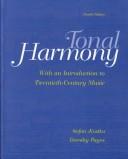
The most widely-used harmony textbook in North America; reading it alongside active listening drills builds the theoretical map needed to identify chords and progressions aurally.
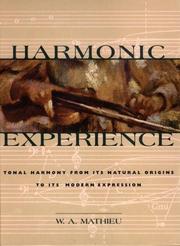
Uniquely bridges theory and ear training by asking the reader to sing and listen to every harmonic concept introduced — ideal for internalizing chord color and function, not just naming them.
Rhythm & Meter: Feeling the Beat
IntermediateAccurately perceive, clap, sing, and notate rhythmic patterns in simple and compound meters, including syncopation and tuplets.
▸ Study plan for this stage
Pace: 4–5 weeks, ~20–25 pages/day from Starer, then 15–20 pages/day from Ottman; allocate 3–4 days/week for active rhythm practice (clapping, singing, notating)
- Simple vs. compound meter: recognizing duple, triple, and quadruple divisions and their compound equivalents (6/8, 9/8, 12/8)
- Beat vs. subdivision: distinguishing the underlying pulse from the rhythmic divisions above and below it
- Syncopation: identifying and performing rhythms that emphasize off-beat or weak-beat placements
- Tuplets: understanding and executing triplets, quintuplets, and other irregular divisions within a beat
- Rhythmic notation: accurately reading and writing rhythmic patterns across different meters and tempos
- Internalization through kinesthetic response: developing muscle memory for complex rhythms via clapping and conducting patterns
- Sight-singing rhythmic content: integrating rhythm with melodic line to reinforce meter and phrasing
- What is the difference between simple and compound meter, and how do you identify each by ear and by time signature?
- How do syncopation and tuplets alter the expected metrical accent, and why is this important for accurate performance?
- Can you clap and notate a syncopated rhythm in 4/4 and a tuplet-based rhythm in 6/8 without reference materials?
- How does understanding beat subdivision help you maintain accuracy when performing complex rhythmic patterns?
- What strategies from Starer's exercises help you internalize irregular rhythms, and how do you apply them to Ottman's sight-singing examples?
- How does rhythmic accuracy in isolation prepare you to integrate rhythm with melody and harmonic context?
- Daily clapping drills from Starer: work through one section per day, clapping each pattern at least 5 times at increasing tempos, then notate what you clapped
- Meter identification by ear: listen to recordings of simple and compound meter examples, identify the time signature, and explain your reasoning
- Syncopation performance: select 3–4 syncopated patterns from Starer, clap them while conducting the underlying beat, then sing them on a single pitch
- Tuplet isolation exercises: practice triplets, quintuplets, and septuplets in isolation, then integrate them into Starer's mixed-rhythm exercises
- Sight-singing from Ottman: work through 2–3 melodies per session, focusing on rhythmic accuracy first (clap the rhythm), then add the pitch
- Rhythmic dictation: have a partner or use a metronome to perform rhythms from Starer, then notate them in real time; check against the book
- Conducting patterns with complex rhythms: conduct 4/4, 3/4, 6/8, and 9/8 while clapping syncopated or tuplet-based patterns to internalize the relationship between beat and subdivision
Next up: Mastery of rhythm and meter in isolation—through Starer's systematic drills and Ottman's integrated sight-singing—establishes the rhythmic foundation necessary to tackle harmonic rhythm, voice leading, and the coordination of multiple rhythmic lines in ensemble contexts.
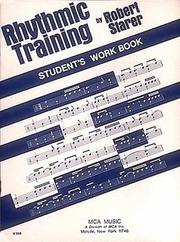
A concise, progressive workbook dedicated entirely to rhythm — it isolates rhythmic reading and dictation so the learner can master meter and subdivision without the distraction of pitch.

Introduces rhythmic complexity within the context of melodic sight-singing, bridging the gap between pure rhythm exercises and real musical phrases.
Sight-Singing: Reading Music Aloud
IntermediateSight-sing diatonic and chromatic melodies confidently using solfège or scale-degree numbers, integrating pitch and rhythm simultaneously.
▸ Study plan for this stage
Pace: 4–5 weeks, ~20–25 pages/day (alternating between Carr and Berkowitz), with 3–4 days/week dedicated to active sight-singing practice
- Solfège syllables (do-re-mi-fa-sol-la-ti-do) and scale-degree numbers as tools for vocalizing pitch relationships without absolute pitch
- Interval recognition and singing from written notation: major/minor seconds, thirds, fourths, fifths, and larger intervals in diatonic contexts
- Simultaneous integration of rhythm and pitch: reading note values, rests, and time signatures while maintaining accurate intonation
- Diatonic melody construction: singing melodies that stay within a single major or minor key using the seven scale degrees
- Chromatic alterations: introducing accidentals (sharps, flats, naturals) and singing chromatic passing tones and neighbor tones within diatonic frameworks
- Sight-singing strategies: scanning ahead, identifying key signature and tonal center, chunking phrases, and using mental rehearsal before vocalizing
- Tonal memory and pitch stability: maintaining consistent intonation across longer phrases and returning accurately to the tonal center after leaps
- How do you use solfège syllables or scale-degree numbers to approach an unfamiliar diatonic melody, and what mental steps should you take before singing?
- What is the relationship between interval size and the solfège syllables or scale degrees involved, and how does this help you sing intervals accurately?
- How do you manage the simultaneous demands of reading rhythm (note values, rests, time signatures) and pitch when sight-singing a new piece?
- What strategies do you use to maintain pitch stability and return to the tonal center after singing a large interval or leap?
- How do chromatic alterations (sharps, flats, naturals) change the solfège syllables or scale-degree numbers you sing, and how do you prepare for them?
- What is the difference between singing a diatonic melody and a melody with chromatic passing tones, and how does your preparation differ?
- Daily solfège warm-up (10 minutes): sing major and minor scales in multiple keys using solfège syllables and scale-degree numbers, focusing on consistent intonation and tempo
- Interval drills from Carr's exercises: sing isolated major/minor seconds, thirds, fourths, fifths, and sixths in ascending and descending motion, then identify them by ear
- Sight-singing practice from Carr's graded melodies: work through 5–8 new melodies daily (starting with simple diatonic examples), scanning each before singing and recording yourself to assess accuracy
- Rhythm integration exercises: clap or tap the rhythm of a melody while singing the pitch on a single syllable (e.g., 'la'), then combine rhythm and pitch together
- Berkowitz's melodic exercises: complete 3–4 exercises per session focusing on the specific interval and rhythmic patterns introduced in that section
- Chromatic alteration practice: sing diatonic melodies, then re-sing them with added accidentals, noting how solfège syllables shift (e.g., ti becomes ti-flat or ti-sharp)
- Peer or teacher feedback sessions (2–3 times/week): perform sight-sung melodies for a partner or instructor and receive feedback on pitch accuracy, rhythm precision, and phrasing
- Transposition exercises: take a melody you've mastered in one key and sight-sing it in 2–3 other keys to deepen interval understanding and flexibility
Next up: Mastering diatonic and chromatic sight-singing in this stage equips you to tackle more complex melodic contexts—such as modulation between keys, larger intervallic leaps, and non-diatonic scales—preparing you for advanced ear-training work that demands rapid pitch recognition and secure tonal orientation across diverse musical styles.

A thorough, graded anthology of sight-singing exercises that moves from simple diatonic melodies to chromatic and modal examples — the most direct path to fluent sight-singing.
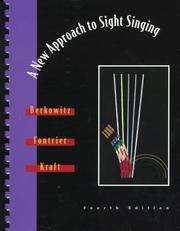
A beloved conservatory standard that pairs melodic exercises with two- and three-part examples, pushing the reader to internalize harmony while singing — essential before tackling transcription.
Transcription: Hearing & Writing Real Music
ExpertTranscribe melodies, bass lines, chord progressions, and full arrangements from recordings, applying all prior ear training skills to real-world music.
▸ Study plan for this stage
Pace: 4–5 weeks, ~25–30 pages/day, with daily transcription practice sessions (1–2 hours)
- Chord-scale relationships: understanding which scales fit over which chords and why, enabling harmonic context recognition in recordings
- Harmonic function and voice leading: how chords progress logically and how voices move smoothly, making chord progressions predictable by ear
- Jazz harmony extensions and alterations: recognizing 9ths, 11ths, 13ths, and altered tones in real recordings, not just basic triads
- Reharmonization and substitution: identifying when musicians use tritone substitutes, secondary dominants, and modal interchange in transcriptions
- Applying chord-scale theory to transcription: using harmonic knowledge to predict and verify what you hear, reducing guesswork
- Listening for harmonic rhythm and tension-resolution: tracking when chords change and how dissonance resolves, anchoring transcription accuracy
- Connecting melody to underlying harmony: hearing how melodic notes relate to chord tones vs. passing/approach tones
- How do you determine which scale(s) fit over a given chord, and how does this help you transcribe a melody more accurately?
- What is the relationship between chord-scale theory and voice leading, and why does understanding this improve your ability to predict chord progressions by ear?
- How do you recognize and transcribe jazz harmony extensions (9ths, 11ths, 13ths) and alterations in a real recording?
- What are common harmonic substitutions (tritone substitutes, secondary dominants, modal interchange) and how do you identify them in a transcription?
- How can you use harmonic rhythm and tension-resolution patterns to verify the accuracy of a chord progression you've transcribed?
- When transcribing a melody, how do you distinguish between chord tones, passing tones, and approach tones, and why does this matter?
- Read and annotate chapters on chord-scale relationships; for each chord type (major, minor, dominant, half-diminished), write out all applicable scales and practice singing them over recordings of those chords
- Transcribe 3–4 jazz standards (e.g., 'So What,' 'All the Things You Are,' 'Autumn Leaves') focusing first on chord progressions, then verify your transcription against the chord-scale theory principles in the book
- Identify and notate harmonic substitutions in 2–3 jazz recordings: mark where tritone substitutes, secondary dominants, or modal interchange occur, then explain why the musician made that choice
- Transcribe a bass line from a jazz recording (8–16 bars) and analyze how it outlines the underlying chord progression; annotate which chord tones and extensions the bass player emphasizes
- Transcribe a melody and harmonic accompaniment together from a recording; for each melodic note, label whether it's a chord tone, passing tone, approach tone, or extension, and explain how the melody relates to the harmony
- Create a 'harmonic listening journal': listen to 5–10 minutes of jazz daily, pause frequently, and write down chord changes you hear, then verify against a lead sheet and reflect on which chord-scale relationships helped you identify them
Next up: This stage equips you with the harmonic vocabulary and listening strategies to transcribe complex, real-world jazz arrangements; the next stage will likely deepen your ability to transcribe full ensemble textures, improvisation, and stylistic nuances by building on this solid harmonic foundation.

Expands harmonic hearing into jazz and extended chord vocabulary, giving the transcriber the language needed to identify and notate complex real-world harmony accurately.
Discussion
Keep reading
Paths that share books, cover the same subject, or open a related topic.