Music composition: the best books to learn in order
This curriculum takes you from the very basics of music theory and harmony all the way through counterpoint, form, orchestration, and the craft of composing your own music. Each stage builds directly on the last — you'll first develop the theoretical vocabulary and ear you need, then learn how voices and structures work together, and finally study the professional tools and creative process that turn knowledge into original compositions.
Foundations: Theory & Harmony
BeginnerBuild a solid grounding in music theory, scales, chords, intervals, and basic tonal harmony — the essential vocabulary for everything that follows.
▸ Study plan for this stage
Pace: 8–10 weeks, ~40–50 pages/day with daily theory exercises and ear training
- Pitch notation, clefs, and the chromatic/diatonic scale systems as the foundation for all melodic and harmonic thinking
- Interval identification and quality (major, minor, perfect, augmented, diminished) as the building blocks of melody and harmony
- Triad construction (major, minor, diminished, augmented) and seventh chords, with voice-leading principles for smooth progressions
- Functional harmony: tonic, subdominant, and dominant functions and their roles in creating tonal coherence and resolution
- Diatonic harmony within major and minor keys, including chord progressions, cadences, and how harmony supports melodic structure
- Roman numeral analysis as a systematic language for understanding harmonic function and structure across different pieces
- Voice leading and part-writing conventions that create smooth, singable lines while maintaining harmonic integrity
- How melody, harmony, and rhythm work together to create musical phrases and formal structures
- How do you construct and identify intervals, and what is the functional difference between a major third and a minor third in a harmonic context?
- What are the four types of triads, how are they built, and how does their harmonic function differ in a key?
- Explain the concept of harmonic function: what distinguishes tonic, subdominant, and dominant chords, and why do certain progressions feel resolved or unresolved?
- How do you perform Roman numeral analysis on a chord progression, and what does the Roman numeral tell you about both the chord's scale degree and its function?
- What are the four types of cadences (authentic, plagal, half, deceptive), and how does each create a different sense of closure or continuation?
- How do voice-leading principles (smooth voice leading, avoiding parallel fifths and octaves, maintaining proper spacing) improve the sound and singability of a harmonic progression?
- Complete all scale and interval drills in The Complete Musician (Chapters 1–3): write out major and minor scales in all keys, identify intervals by sight and ear, and practice singing intervals to internalize their sound
- Build and identify all triad types (major, minor, diminished, augmented) on every scale degree in multiple keys using Tonal Harmony's chord construction exercises; practice both written and aural recognition
- Perform Roman numeral analysis on 10–15 short progressions from each textbook, labeling each chord's function and explaining why the progression works tonally
- Compose or rewrite 5–6 simple four-part chorale progressions (8–16 bars each) using proper voice leading, focusing on smooth voice leading and correct cadential formulas from The Musician's Guide
- Transcribe and analyze 3–4 short musical excerpts (hymns, folk melodies, or simple classical pieces) to identify harmonic progressions, cadences, and functional harmony in real music
- Daily ear training: sing and identify intervals, triads, and seventh chords; practice recognizing cadences and harmonic functions by ear using online tools or textbook recordings
Next up: Mastering this foundational vocabulary—scales, intervals, chords, and functional harmony—equips you to analyze real compositions, understand how composers manipulate harmonic tension and resolution, and begin composing your own music with intentional harmonic choices.
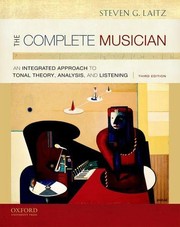
The most comprehensive and widely-used undergraduate harmony textbook; it introduces pitch, rhythm, scales, and chords in a carefully sequenced way that prepares you for all later study.
A canonical second reference on tonal harmony that reinforces Laitz with clear explanations of diatonic and chromatic harmony, voice leading, and modulation — reading it alongside or after Laitz cements the concepts.

Bridges raw theory to actual musical listening and analysis, helping you connect what you read on the page to what you hear — a crucial skill before moving into composition proper.
Counterpoint: The Logic of Moving Voices
BeginnerUnderstand how independent melodic lines interact, follow voice-leading rules, and create musical texture — the engine behind all Western composition from Bach to film scores.
▸ Study plan for this stage
Pace: 4–5 weeks, ~25–30 pages/day. Start with Kennan's practical overview (1–2 weeks), then move to Fux's systematic method (2–3 weeks). Allocate 2–3 days per major species of counterpoint for hands-on practice.
- The five species of counterpoint (first through fifth) as a progressive method for learning voice independence
- Voice-leading rules: contrary motion, parallel motion, oblique motion, and when each serves musical purpose
- Consonance and dissonance treatment — when dissonances are permitted and how they must be approached and left
- The cantus firmus as a structural anchor and how to construct countermelodies against it
- Independence of melodic lines: each voice must be singable, avoid crossing, and maintain its own contour
- Texture creation through species counterpoint — how layering voices builds harmonic and rhythmic complexity
- The relationship between strict counterpoint rules and their application in real compositions (Bach, Renaissance masters)
- What are the five species of counterpoint, and what rhythmic relationship does each species have to the cantus firmus?
- Explain the difference between contrary, parallel, and oblique motion, and give an example of when each is musically appropriate.
- What are the rules for treating dissonance in counterpoint, and why do these rules exist?
- How do you construct a singable, independent melodic line that works against a given cantus firmus?
- What is voice crossing, and why should it generally be avoided in strict counterpoint?
- How does understanding species counterpoint help you analyze or compose music with multiple independent voices?
- Write first-species counterpoint (note-against-note) above and below given cantus firmi from Kennan and Fux, focusing on smooth voice leading and consonance.
- Compose second-species counterpoint (two notes against one) and identify where passing tones and neighbor tones naturally occur.
- Create third-species counterpoint (four notes against one) and practice maintaining melodic independence while filling rhythmic space.
- Write fourth-species counterpoint (syncopated counterpoint) and carefully resolve all suspensions according to Fux's rules.
- Compose fifth-species counterpoint (florid counterpoint) combining all previous species, then compare your work to examples in both texts.
- Analyze a Bach two-part invention or a Renaissance motet using the species framework — identify which species principles are at work.
- Rewrite a passage from a Bach prelude or fugue, extracting just two voices and labeling the type of motion (contrary, parallel, oblique) at each cadence.
- Compose a short two-voice piece (8–16 bars) using a cantus firmus of your choice, applying all voice-leading rules from Kennan and Fux.
Next up: Mastery of species counterpoint provides the foundation for understanding how multiple independent voices create harmonic function and structure, preparing you to study functional harmony, fugal form, and the compositional techniques used in larger works.
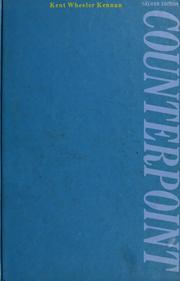
A clear, practical introduction to species counterpoint that starts from first principles; its step-by-step species approach makes it ideal for beginners coming straight from harmony study.
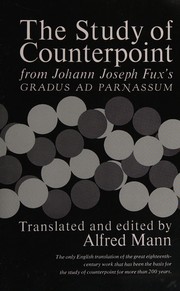
The historic source that taught Haydn, Mozart, and Beethoven; reading it after Kennan gives you direct access to the classical tradition and shows how the rules were originally conceived and justified.
Form & Structure: How Music Is Organized
IntermediateLearn how composers shape time — through phrase structure, binary and ternary forms, sonata form, rondo, theme and variations — so you can plan and build larger compositions with intention.
▸ Study plan for this stage
Pace: 6–8 weeks, ~25–30 pages/day (Green first: 3–4 weeks; Rosen second: 3–4 weeks). Allocate extra time for score study and composition sketches between books.
- Phrase structure and cadential goals: how phrases are built, how cadences (authentic, half, deceptive, plagal) define phrase endings and create closure
- Binary form (simple and rounded): two-part structures with contrasting or related sections, and how the return of material creates unity
- Ternary form (simple and compound): three-part ABA structures and their role in creating balanced, memorable designs
- Theme and variations: how a composer transforms a single idea through melodic, harmonic, rhythmic, and textural variation while maintaining recognizability
- Sonata form as dramatic architecture: exposition (two themes, modulation), development (fragmentation, key exploration), recapitulation (return and resolution), and how this form shapes large-scale tension and release
- Rondo form and its variants (ABACA, ABACABA): how recurring refrains alternate with contrasting episodes to create coherence and listener engagement
- Tonal function and harmonic planning: how key relationships, harmonic rhythm, and functional harmony support formal design across all structures
- Score analysis as a tool: how to identify formal sections, label them, and understand the composer's choices in real works
- What are the four main cadence types, and how does each one function to end or punctuate a phrase?
- Explain the difference between simple binary and rounded binary form, and provide an example of when each is used.
- How does ternary form differ from binary form in terms of structure and emotional effect?
- What is the role of the development section in sonata form, and how does it differ functionally from the exposition and recapitulation?
- Describe how theme and variations maintains unity while creating interest through transformation.
- Compare rondo and sonata form: what are their structural similarities and key differences, and when might a composer choose one over the other?
- How do harmonic planning and key relationships reinforce formal structure in a multi-movement work?
- Analyze 3–4 complete movements from Green's examples (e.g., minuets, sonata movements): label all formal sections, identify cadences, and mark key areas on a score.
- Compose a 16–24 bar binary form (simple or rounded) for a solo instrument or small ensemble, ensuring clear phrase structure and a functional cadence at the end of each section.
- Compose a ternary form (ABA) piece where the B section modulates to a related key; return to the original key and theme in the A section.
- Take a simple 8–16 bar theme and compose 3–4 variations using different techniques (melodic ornamentation, harmonic reharmonization, rhythmic transformation, textural change).
- Analyze a complete sonata-form movement (e.g., first movement of a Classical symphony or sonata) using Rosen's framework: identify the exposition's two theme areas and modulation, trace the development's harmonic journey and thematic fragmentation, and explain how the recapitulation resolves the exposition's tensions.
- Compose a sonata-form exposition (approximately 40–60 bars) with a first theme in the tonic, a transition, and a second theme in the dominant (or relative major), ensuring clear harmonic and thematic contrast.
- Analyze a rondo movement (e.g., from a Classical concerto or sonata finale) and map its formal structure (ABACA or ABACABA); identify how the refrain provides unity and how episodes create variety.
- Compose a short rondo (ABACA, ~80–120 bars) where the A section is memorable and returns unchanged, and the B and C episodes modulate and introduce contrasting material.
Next up: This stage equips you with the structural blueprints that composers use to organize time and shape listener experience; the next stage will deepen your understanding of how these forms function across different genres, historical periods, and cultural contexts, and how to adapt and innovate within them.
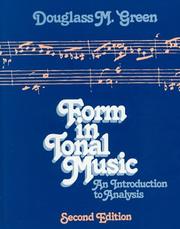
The standard text on musical form; it systematically covers every major formal archetype with score examples, giving you a reliable analytical toolkit before you start designing your own pieces.
A deeper, more nuanced exploration of the most important large-scale form in Western music; Rosen's insights into how great composers bent the rules will inspire your own formal thinking.
Orchestration & Texture: Writing for Instruments
IntermediateDevelop practical knowledge of every orchestral instrument's range, timbre, and technique, and learn how to combine them effectively to realize your compositional ideas in sound.
▸ Study plan for this stage
Pace: 8–10 weeks, ~40–50 pages/day (with daily listening and score study)
- Instrument families and their acoustic properties: strings, woodwinds, brass, percussion, and how each family produces and projects sound
- Range, tessitura, and transposition for every orchestral instrument—knowing practical limits vs. extreme ranges
- Timbre and color: how to select instruments to achieve specific emotional and sonic effects
- Doubling and combining instruments: unison, octaves, and harmonic blending to create cohesive textures
- Orchestral texture types: monophonic, homophonic, polyphonic, and heterophonic writing for different musical contexts
- Idiomatic writing: understanding each instrument's technical strengths, weaknesses, and natural playing patterns
- Balance and blend: managing dynamics, register, and spacing to ensure clarity and balance in multi-instrumental writing
- Score layout and notation conventions: reading and writing full orchestral scores with proper voice leading
- What are the practical ranges and transpositions of the major orchestral instruments, and when would you use extreme ranges vs. comfortable tessitura?
- How do you combine instruments from different families to create a unified harmonic texture, and what are the acoustic principles behind successful doubling?
- What textural approaches would you use to orchestrate a melody that needs to stand out, versus one that should blend into a background accompaniment?
- How do you write idiomatically for strings, woodwinds, brass, and percussion—what techniques and patterns are natural to each instrument?
- Given a short piano sketch or harmonic progression, how would you orchestrate it for a small ensemble or full orchestra, and what choices would you make about timbre and balance?
- What is the relationship between orchestration and form—how does texture and instrumentation support or clarify the structure of a piece?
- Complete all orchestration exercises in Adler's book systematically, starting with single-instrument studies and progressing to multi-instrument combinations
- Transcribe and analyze 3–5 orchestral scores (e.g., Beethoven symphonies, Brahms, Debussy, or Stravinsky) to identify how composers solve specific orchestration problems
- Orchestrate a simple 8–16 bar melody or chord progression for strings only, then for woodwinds only, then for mixed ensemble—compare the results
- Write a short passage (16–32 bars) for a chamber ensemble (e.g., 2 violins, viola, cello, flute, clarinet) focusing on clear voice leading and balanced texture
- Create a 'color study': take a single harmonic progression and orchestrate it 4–5 different ways using different instrumental combinations to explore how timbre changes perception
- Analyze and reorchestrate a passage from an existing orchestral work, making deliberate changes to timbre, balance, or texture, and justify your choices in writing
Next up: This stage equips you with the technical vocabulary and practical toolkit to realize any compositional idea through orchestration; the next stage will likely deepen your understanding of how to use these tools strategically within larger forms and styles, or explore specialized orchestration techniques (contemporary extended techniques, electronic/hybrid ensembles, or genre-specific approaches).
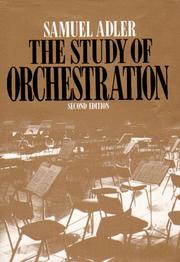
The definitive modern orchestration textbook, covering every instrument family with audio examples and exercises; it is the essential reference for any composer writing for acoustic forces.
Craft & Creative Process: Writing Your Own Music
ExpertSynthesize everything learned into an active compositional practice — developing your own voice, working through creative blocks, understanding style, and finishing real pieces.
▸ Study plan for this stage
Pace: 4–5 weeks, ~25–30 pages/day, with 2–3 composition days per week interspersed throughout
- Hindemith's concept of Gebrauchsmusik (functional/utility music) and its role in defining compositional purpose and audience
- The relationship between harmonic function and voice leading as foundational to coherent musical structure
- Melodic construction principles: shape, contour, intervallic logic, and how melody emerges from harmonic context
- The integration of traditional forms (sonata, rondo, theme & variations) with personal voice and contemporary materials
- Hindemith's approach to orchestration and instrumentation as integral to compositional conception, not afterthought
- Overcoming creative blocks through systematic understanding of craft constraints as creative enablers
- Developing a personal compositional method: finding your materials, establishing your rules, and iterating toward finished work
- How does Hindemith define the relationship between a composition's functional purpose and its musical materials? What does Gebrauchsmusik teach us about writing music with intention?
- Explain Hindemith's approach to harmonic function and voice leading. How do these principles help create coherence without relying solely on traditional tonality?
- What are Hindemith's core principles for melodic construction, and how do they differ from Romantic-era melody writing?
- How can you apply Hindemith's systematic approach to form and structure when developing your own compositional voice?
- What role does orchestration play in Hindemith's compositional process, and how should you integrate instrumental thinking into your initial compositional conception?
- Describe a creative block you've encountered and explain how Hindemith's craft-based approach might help you work through it systematically.
- Compose a short functional piece (2–3 minutes) in Hindemith's Gebrauchsmusik spirit: write music explicitly designed for a specific purpose (teaching, social gathering, film scene, etc.) and reflect on how that constraint shaped your material choices
- Analyze a movement from a Hindemith composition (e.g., Mathis der Maler, Ludus Tonalis) focusing on harmonic function and voice leading; then compose an 8–16 bar passage using his harmonic principles
- Write three different melodic lines for the same harmonic progression, experimenting with Hindemith's melodic principles (shape, interval logic, rhythmic profile); compare them and choose the strongest
- Compose a short theme and two variations using Hindemith's approach to form; document your structural decisions and how you maintained coherence while varying the material
- Orchestrate or re-instrument a piece you've already written, making deliberate choices about timbre and register based on Hindemith's principles; explain how instrumentation changes the piece's character
- Identify a compositional problem in one of your recent sketches (weak transition, unclear form, melodic awkwardness); apply Hindemith's systematic craft approach to diagnose and revise it
Next up: This stage grounds you in a rigorous, systematic compositional philosophy that balances constraint with creative freedom—preparing you to either specialize in a particular genre, explore advanced orchestration and large-form writing, or develop a portfolio of finished works with a coherent personal voice.

A great 20th-century composer's systematic theory of how harmonic tension and melodic motion drive composition; it challenges you to think like a working composer rather than a student.
Discussion
Keep reading
Paths that share books, cover the same subject, or open a related topic.