How to learn Music theory
This curriculum takes you from zero musical knowledge to a deep, professional-level understanding of music theory. Each stage builds directly on the last: you first internalize the basic language of music, then master harmony and voice leading, then explore advanced tonal and post-tonal systems, and finally develop an analytical and compositional perspective that ties everything together.
Foundations: The Language of Music
BeginnerRead and write music notation fluently; understand rhythm, scales, intervals, and basic chord construction — the raw vocabulary every later stage assumes.
▸ Study plan for this stage
Pace: 10–12 weeks total. Weeks 1–7: "Fundamentals of Music" by Earl Henry (~20–25 pages/day, 4–5 days/week) — work through it chapter by chapter, pausing to complete Henry's built-in exercises before moving on. Weeks 8–12: "Music Theory for Dummies" by Michael Pilhofer (~25–30 pages/day, 4–5 days/week) —
- Staff, clefs (treble, bass, alto), ledger lines, and pitch naming — the spatial grammar of written music as laid out in Henry's opening chapters
- Rhythm and meter: note/rest values, time signatures (simple and compound), beaming, ties, and dots — Henry devotes extensive drill to these before harmony is introduced
- The major scale: whole- and half-step construction, key signatures, and the circle of fifths — the backbone of tonal music treated in depth by both Henry and Pilhofer
- Minor scales: natural, harmonic, and melodic forms, their key signatures, and how they relate to their relative and parallel majors
- Intervals: numerical size, quality (perfect, major, minor, augmented, diminished), inversion, and aural recognition — Henry builds these systematically; Pilhofer reinforces with memorable shortcuts
- Triads and basic chord construction: major, minor, augmented, and diminished triads, their spellings, and how they are built from intervals stacked in thirds
- Diatonic harmony basics: Roman-numeral analysis and the function of chords within a key (tonic, subdominant, dominant) as introduced in the later chapters of both books
- Accidentals, enharmonic equivalents, and chromatic alteration — essential for reading real repertoire and addressed practically in Pilhofer's examples
- Given any major or minor key signature, can you name every sharp or flat and identify the tonic — and reverse-engineer the key from a key signature you haven't memorized?
- How do you determine the quality and size of any interval between two notes on the staff, and what is its inversion?
- What is the step-pattern difference between natural, harmonic, and melodic minor scales, and why does each variant exist musically?
- How do you construct a major, minor, augmented, and diminished triad above any given root, using both interval knowledge and scale-degree knowledge?
- How do simple and compound time signatures differ, and how do you correctly beam and group rhythmic figures within each?
- What Roman numeral and quality does each diatonic triad receive in a major key, and which three chords are considered the primary harmonic pillars?
- Clef drills (Weeks 1–2): Every day, write out all note names on the treble and bass staves — including ledger lines up to a 10th above and below — without looking at a reference. Time yourself until you can name any note in under two seconds.
- Rhythm dictation (Weeks 2–4, drawn from Henry's exercise sets): Clap or tap along to a metronome while reading every rhythmic exercise in Henry's meter chapters; then notate simple rhythms you hear in songs you know, checking against a lead sheet or score.
- Scale writing marathon (Weeks 4–6): Write every major and all three forms of every minor scale (all 12 roots) by hand on staff paper, adding the correct key signature beside each. Cross-check with the circle-of-fifths diagram in either Henry or Pilhofer.
- Interval identification flashcards (Weeks 5–7): Make a two-sided flashcard deck — one side shows two notes on a staff, the other gives size and quality. Drill until you can identify any diatonic or chromatic interval within 3 seconds; then practice singing each interval using the melodic triggers Pilhofer suggests.
- Triad spelling and keyboard mapping (Weeks 7–9, bridging into Pilhofer): Spell all four triad qualities above every chromatic pitch (48 triads total), write them on the staff, and locate them on a piano or MIDI keyboard. Play each one, listening for the characteristic sound of each quality.
- Roman-numeral analysis mini-project (Weeks 10–12, using Pilhofer's harmony chapters): Take 4–6 simple folk songs or hymns (e.g., from a public-domain hymnal or lead sheet), write out the melody on staff paper, add the chords given, and label every chord with a Roman numeral and quality. Verify your analysis by checking whether the chords fit the diatonic pattern for that key.
Next up: ">Fluency with notation, scales, intervals, and triads built in this stage is the prerequisite vocabulary for the next stage, where those raw materials are assembled into chord progressions, voice leading, and harmonic syntax — the grammar that turns isolated chords into coherent musical sentences.
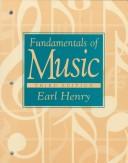
A clear, methodical introduction to notation, rhythm, scales, and intervals. Starting here ensures you can read and write the symbols that all subsequent books take for granted.

Reinforces fundamentals with an accessible, conversational tone and covers basic chords and keys. Reading it second solidifies notation skills and introduces harmonic thinking before formal study begins.
Core Harmony: Chords, Keys, and Progressions
BeginnerUnderstand diatonic harmony, chord function, basic voice leading, and common progressions — the central grammar of tonal Western music.
▸ Study plan for this stage
Pace: 16–20 weeks total. Weeks 1–10: "Tonal Harmony" by Kostka — aim for ~25–35 pages/day, 4–5 days/week, covering roughly one chapter every 4–5 days. Weeks 11–20: "The Complete Musician" by Laitz — ~20–30 pages/day, 4–5 days/week, revisiting and deepening every concept from Kostka with Laitz's integrated
- Diatonic triads and seventh chords built on every scale degree in major and minor keys — their quality, spelling, and Roman numeral labeling (e.g., I, ii, iii, IV, V, vi, vii°)
- Chord function: the three harmonic pillars of tonal music — Tonic (T), Predominant (PD), and Dominant (D) — and how they create tension and resolution (Kostka Ch. 4–6; Laitz Unit 2)
- The dominant–tonic relationship: V and V7 resolving to I, including the leading tone's obligation to resolve upward and the seventh's obligation to resolve downward (Kostka Ch. 7–8; Laitz Unit 3)
- Basic voice leading principles in four-part (SATB) writing: avoiding parallel fifths and octaves, proper doubling, smooth contrary/oblique motion, and minimal leap size (Kostka Ch. 5–6; Laitz Units 2–3)
- Secondary dominants (V/V, V/IV, etc.) as chromatic chords that temporarily tonicize a non-tonic scale degree, expanding the harmonic palette beyond strict diatonicism (Kostka Ch. 15; Laitz Unit 5)
- Cadence types — authentic (PAC, IAC), half, plagal, and deceptive — and their structural roles in defining phrases and formal sections (Kostka Ch. 4; Laitz Unit 2)
- Common harmonic progressions and their normative patterns: I–IV–V–I, I–ii–V–I, circle-of-fifths progressions, and the role of the ii chord as the most important predominant (Kostka Ch. 9–10; Laitz Unit 4)
- Phrase structure and harmonic rhythm: how the rate of chord change, phrase length (typically 4 or 8 bars), and cadential goals interact to shape musical meaning (Laitz Unit 2–3)
- Given any major or minor key, can you spell and label all seven diatonic triads and seventh chords by quality and Roman numeral without hesitation?
- What is the functional difference between a ii chord and a IV chord, and why does Kostka (and Laitz) treat ii as the stronger predominant in common-practice voice leading?
- How do the voice-leading rules for resolving V7 to I differ when the resolution is complete (all four chord tones present) versus incomplete, and what doubling adjustments are required in each case?
- What makes a cadence a Perfect Authentic Cadence (PAC) versus an Imperfect Authentic Cadence (IAC), and how does Laitz connect cadence type to phrase-level formal function?
- How does a secondary dominant (e.g., V7/V) differ from a diatonic chord in spelling and function, and what voice-leading obligations does its chromatically altered tone carry?
- Trace a standard T–PD–D–T progression through a four-bar phrase in G major using SATB notation: which chords did you choose, where did you place the cadence, and which voice-leading rules governed your decisions?
- **SATB Harmonization Drills (Kostka-style):** Every week, take a given soprano melody of 4–8 bars in a specified key and harmonize it in four parts on staff paper. Check every vertical interval for parallel fifths/octaves, verify doublings, and label each chord with Roman numerals and figured bass. Start with only I, IV, and V; add ii, vi, and vii° as you progress through Kostka.
- **Roman Numeral Analysis of Real Repertoire (Laitz-style):** Using the anthology excerpts referenced in Laitz, analyze one short piece or passage per week (Bach chorales are ideal). Write the Roman numeral and functional label (T/PD/D) beneath every chord, identify all cadences by type, and mark phrase boundaries. Sing or play the passage before and after analysis.
- **Keyboard Realization:** At a piano or keyboard, play every diatonic triad and seventh chord in root position and all inversions in at least three keys per week — hands together, in close position. Then play the progression I–ii6–V7–I in all 12 major keys, focusing on smooth voice leading in the upper three voices over a bass line.
- **Cadence Composition:** Compose eight original 4-bar phrases (two per week over four weeks), each ending with a different cadence type (PAC, IAC, HC, deceptive). Notate them in SATB format, label all chords, and then play them at the keyboard. Compare your harmonic rhythm choices and discuss why some feel more or less conclusive.
- **Secondary Dominant Substitution:** Take five progressions you have already harmonized diatonically and rewrite each one inserting at least one secondary dominant (V/ii, V/IV, V/V, or V/vi). Resolve each secondary dominant correctly, note the chromatic voice-leading obligation, and compare the expressive effect of the two versions by playing both.
- **Listening Journal:** For each chapter in both Kostka and Laitz, find one recording of a piece that exemplifies the chapter's concept (e.g., a Bach chorale for voice leading, a Mozart sonata for phrase structure). Write 3–5 sentences connecting what you hear to the theoretical concept, citing specific measure numbers. This trains the ear–theory feedback loop that Laitz explicitly builds into his
Next up: Mastering diatonic harmony, chord function, and SATB voice leading in this stage gives you the stable tonal grammar needed to understand how composers deliberately depart from it — through modulation, modal mixture, borrowed chords, and chromatic harmony — which form the core challenges of the next stage.
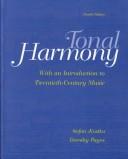
The most widely used undergraduate harmony textbook worldwide. It systematically covers triads, seventh chords, diatonic and chromatic harmony, and introduces voice leading — the essential core of tonal theory.
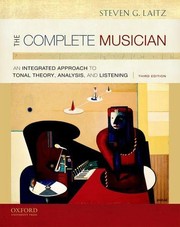
Pairs beautifully with Kostka by integrating written theory, ear training, and keyboard skills. Reading it second deepens harmonic understanding by connecting abstract rules to sound and performance.
Voice Leading and Counterpoint
IntermediateMaster the craft of moving individual voices smoothly and expressively, understanding counterpoint as the structural backbone beneath all harmony.
▸ Study plan for this stage
Pace: 10–13 weeks total: ~4–5 weeks on Kennan's "Counterpoint" (~20–25 pages/day, focusing on species exercises and two-voice writing), followed by ~6–8 weeks on Aldwell's "Harmony and Voice Leading" (~25–30 pages/day, integrating harmonic analysis with smooth voice movement across all four parts).
- The five species of counterpoint (note-against-note through florid) as codified in Kennan, and how each species isolates a distinct rhythmic and melodic challenge
- Consonance vs. dissonance management: which intervals are stable, which require preparation and resolution, and why (Kennan's foundational rules)
- Melodic writing principles: stepwise motion as the default, leaps governed by size and direction, and the avoidance of awkward melodic outlines (Kennan)
- Two-voice counterpoint as a structural skeleton: how a cantus firmus and a single added voice already imply harmonic motion (Kennan)
- Voice-leading imperatives in four-part writing: contrary/oblique/similar motion preferences, avoidance of parallel fifths and octaves, and doubling conventions (Aldwell)
- Harmonic rhythm and its interaction with voice leading: how chord frequency and metric placement shape the smoothness or tension of a passage (Aldwell)
- The treatment of non-chord tones — passing tones, neighbor tones, suspensions, appoggiaturas, and pedal points — as the primary expressive tools of voice leading (Aldwell)
- Phrase structure and cadential voice leading: how soprano-bass counterpoint frames every harmonic progression at the cadence (Aldwell)
- According to Kennan, what distinguishes second-species counterpoint from third-species, and what new dissonance treatment does each species introduce?
- How does Kennan's approach to melodic writing in the cantus firmus inform the shaping of an expressive vocal or instrumental line more broadly?
- In Aldwell's framework, why are parallel fifths and octaves prohibited, and what specific voice-leading alternatives does he recommend to avoid them?
- How does Aldwell connect the concept of harmonic progression to the moment-to-moment movement of individual voices — what is the relationship between chord choice and voice-leading efficiency?
- What is a suspension, how is it prepared and resolved according to both Kennan and Aldwell, and why is it considered one of the most powerful expressive devices in tonal music?
- How do the two-voice contrapuntal principles learned in Kennan manifest in the soprano-bass framework that Aldwell uses as the foundation for four-part writing?
- Complete at least one full set of all five species against a given cantus firmus (both above and below) using Kennan's exercises, writing each species by hand and then playing it at the keyboard to hear the effect of each rule
- Transcribe a short Bach chorale (8–16 bars) and annotate every non-chord tone using Aldwell's taxonomy (passing tone, neighbor, suspension, etc.), then rewrite the passage removing all non-chord tones to hear how much expressive color they contribute
- Take any four-bar harmonic progression from Aldwell's exercises and rewrite the soprano voice three different ways (stepwise, leaping, mixed), keeping the inner voices and bass fixed — compare how soprano contour changes the character of the same harmony
- Using Kennan's two-voice framework, compose an original 10–16 bar florid (fifth-species) counterpoint above a self-written cantus firmus, then expand it into a four-voice chorale texture following Aldwell's doubling and spacing guidelines
- Identify and correct deliberate errors: write out a four-part passage with five hidden parallel fifths/octaves or faulty doublings, swap with a study partner (or self-check after 24 hours) and explain each correction using Aldwell's specific rules
- Analyze the opening 16 bars of a Bach two-part invention using Kennan's species lens — label which 'species' each bar most resembles — then write a one-page reflection on how Bach blends species fluidly in free counterpoint
Next up: By internalizing smooth voice movement and the contrapuntal logic beneath chord progressions, the reader is now equipped to tackle more complex harmonic language — chromatic harmony, modulation, and extended tonality — where the same voice-leading principles govern increasingly adventurous chord relationships.

A concise, practical guide to species counterpoint and 18th-century style. Tackling counterpoint at this stage reveals why voice-leading rules in harmony exist and trains your ear to hear independent lines.
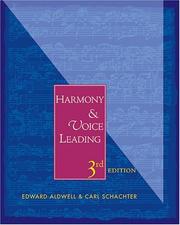
Bridges harmony and counterpoint into a unified discipline, showing how melodic motion drives chord progressions. Its rigorous approach prepares you for the advanced analytical work ahead.
Advanced Tonal Analysis: Form and Chromaticism
ExpertAnalyze large-scale musical forms, understand chromatic and late-Romantic harmony, and apply Schenkerian concepts to hear deep structural layers in tonal music.
▸ Study plan for this stage
Pace: 14–18 weeks total. Week 1–5: Forte's "The Structure of Atonal Music" (~20–25 pages/day, focusing on pitch-class set theory chapters); Weeks 6–10: Schoenberg's "Structural Functions of Harmony" (~15–20 pages/day, working through each harmonic region carefully with score examples at hand); Weeks 11–18
- Pitch-class set theory (Forte): pitch-class sets, prime forms, interval vectors, and set-class equivalence under transposition and inversion
- Set complexes and K/Kh relations (Forte): how larger families of sets relate to one another to create atonal coherence
- Chromatic harmonic regions (Schoenberg): the system of tonal regions (tonic, dominant, subdominant, mediant, submediant, Neapolitan, etc.) and their relative distances from a home key
- Transformational harmony and the Chart of Regions (Schoenberg): how composers navigate smoothly or abruptly between remote keys in late-Romantic music
- Vagrant harmonies (Schoenberg): diminished seventh, augmented triads, and augmented sixth chords as harmonies that belong to multiple regions simultaneously
- Formal functions (Caplin): the distinction between tight-knit and loose formal organization, and the roles of presentation, continuation, and cadential phrases
- Sentence and period as thematic archetypes (Caplin): how the basic idea, its repetition/contrast, and the cadential drive define Classical formal logic
- Large-scale formal units (Caplin): small ternary, sonata, and rondo forms understood through the lens of formal function rather than mere sectional labeling
- After reading Forte, how would you identify the prime form of a pitch-class set found in an atonal passage, and what does its interval vector reveal about its harmonic color?
- How does Schoenberg's Chart of Regions reframe chromatic modulation — what makes a region 'close' or 'remote,' and how do vagrant harmonies facilitate motion between them?
- Using Schoenberg's framework, how would you analyze a late-Romantic passage that moves from C major through E major to A-flat major — what regions are visited and what pivot harmonies enable the transitions?
- According to Caplin, what distinguishes a sentence from a period at the level of formal function, and why does this distinction matter for understanding Classical phrase rhythm?
- How does Caplin's concept of 'formal function' (beginning, middle, end) apply recursively at different formal levels — from the four-bar phrase up to the full sonata movement?
- In what ways does Forte's pitch-class set vocabulary begin to illuminate the harmonic language of late-Romantic music (e.g., Liszt, Wagner) that sits on the boundary between tonality and atonality?
- Forte set-class drill: Select 10–15 short atonal passages (e.g., early Schoenberg or Webern miniatures). Extract every distinct pitch-class set of cardinality 3–6, reduce each to prime form, and look up its interval vector in Forte's Appendix. Write a one-paragraph commentary on how the interval vectors shape the passage's sonic character.
- Chart of Regions mapping: Choose three late-Romantic pieces (e.g., a Brahms intermezzo, a Liszt tone poem, a Wagner excerpt). Draw Schoenberg's Chart of Regions for each tonic, then trace every modulation in the piece as a path on the chart, labeling the vagrant harmony or pivot chord used at each transition.
- Vagrant harmony identification: Scan through the harmonic examples in Schoenberg's 'Structural Functions of Harmony' and compile a personal reference table of all vagrant chord types (diminished sevenths, augmented sixths, augmented triads), listing for each: its spelling, which regions it can belong to, and a real repertoire example.
- Formal-function annotation: Using Caplin's terminology, produce a complete formal-function score annotation of at least two Classical movements (one sonata-form, one small ternary). Label every phrase segment as presentation, continuation, cadential, or other Caplin category, and identify all cadence types (IAC, PAC, HC, DC).
- Sentence vs. period composition: Compose one original 8-bar sentence and one original 8-bar period in a Classical style, then write a brief analytical memo explaining how each fulfills (or deliberately subverts) Caplin's formal-function criteria.
- Integrative analysis project: Choose a late-Romantic piano piece that sits at the tonal/atonal boundary (e.g., a Scriabin prelude or a late Liszt piece). Apply all three frameworks in sequence — use Forte's set theory on its most chromatic passages, Schoenberg's regions to map its tonal trajectory, and Caplin's formal functions to describe its phrase architecture — then write a 2–3 page synthesis
Next up: Mastering chromatic harmonic regions, pitch-class set logic, and deep formal architecture here equips the reader to cross the threshold into fully post-tonal and twentieth-century music, where these tonal anchors dissolve and new organizing principles — serialism, spectral harmony, and non-functional form — must be confronted on their own terms.
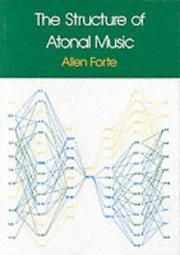
Introduces pitch-class set theory, the primary analytical tool for 20th-century music. Placed here, after mastering tonal harmony, it shows exactly where and why tonality breaks down.
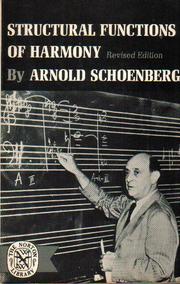
Written by one of the most important composers of the 20th century, this book traces chromatic harmony from common practice to its dissolution — a crucial bridge between tonal and post-tonal thinking.
Provides a rigorous, modern framework for understanding musical form (sentence, period, sonata, etc.). Reading it here ties harmonic and contrapuntal knowledge to large-scale architectural thinking.
Deep Mastery: Synthesis and Modern Perspectives
ExpertSynthesize everything into a flexible, creative understanding of how music works across styles — from Schenkerian deep structure to 20th-century techniques — and develop your own analytical voice.
▸ Study plan for this stage
Pace: 10–12 weeks total: Weeks 1–5 on "Audacious Euphony" (~25–30 pages/day, including re-reading dense analytical passages); Weeks 6–11 on "The Study of Orchestration" (~30–35 pages/day, with active score study alongside each chapter); Week 12 reserved for synthesis projects combining both books.
- Neo-Riemannian theory and the Tonnetz: understanding triadic transformations (P, L, R) outside of traditional voice-leading and functional harmony
- Hexatonic and octatonic systems as described by Cohn: how chromatic harmony generates its own internal logic independent of diatonic tonality
- Voice-leading efficiency and parsimonious voice leading: how minimal motion between chords creates large-scale chromatic coherence in Cohn's framework
- Audacious euphony's core thesis: that 19th-century chromatic harmony is not 'failed' diatonicism but a self-sufficient system with its own grammar
- Orchestral color as a structural force in Adler: timbre, blend, and register as compositional parameters, not mere decoration
- Adler's systematic treatment of each instrument family — strings, woodwinds, brass, percussion, keyboard/harp — including technical limits, idiomatic writing, and ensemble combinations
- Orchestration as voice leading in disguise: how doublings, spacing, and instrumental choice reinforce or undermine harmonic and contrapuntal structure
- Synthesis of chromatic harmonic language with orchestral realization: how 19th- and 20th-century composers (e.g., Wagner, Strauss, Debussy) deploy both simultaneously
- How does Cohn's neo-Riemannian framework reinterpret passages of chromatic harmony that traditional Roman-numeral analysis struggles to explain — and what are its limitations?
- What is the Tonnetz, and how can you use it to map a progression from a late-Romantic score (e.g., a Schubert or Wagner excerpt)?
- How does Adler distinguish between idiomatic and non-idiomatic writing for a given instrument, and why does this distinction matter for a composer or analyst?
- In what ways does orchestration reinforce or contradict the harmonic language described by Cohn — can you find a specific passage where timbral choice amplifies a neo-Riemannian transformation?
- How do hexatonic and octatonic collections function as harmonic 'regions' in Cohn's model, and how do they appear in the orchestral repertoire Adler discusses?
- What is your own analytical voice at this stage — which theoretical frameworks (Schenkerian, neo-Riemannian, orchestrational) do you find most illuminating, and how do you combine them?
- Tonnetz Mapping Exercise: Select 8–10 chromatic progressions from a Schubert piano sonata or Wagner opera vocal score and plot each on the Tonnetz, labeling every P, L, and R transformation; write a one-paragraph interpretation of the large-scale shape using Cohn's vocabulary.
- Hexatonic/Octatonic Identification Drill: Take three orchestral scores (e.g., Debussy's La Mer, Strauss's Till Eulenspiegel, Brahms's Fourth Symphony) and mark every passage that Cohn's model would classify as hexatonic or octatonic; annotate how Adler's orchestration principles are deployed in each passage.
- Orchestration Reduction and Re-orchestration: Choose a 16–32 bar passage from a full orchestral score, reduce it to a piano sketch, analyze its harmonic language with neo-Riemannian tools, then re-orchestrate it for a different ensemble (e.g., wind quintet or string quartet) using Adler's idiomatic guidelines.
- Analytical Essay (1500–2000 words): Write a synthesis analysis of a single movement from a late-Romantic or early-Modern orchestral work, integrating Cohn's harmonic framework with Adler's orchestrational principles — argue how the two dimensions reinforce each other structurally.
- Instrument Family Deep Dives: For each major instrument family in Adler, compose or arrange a 8–16 bar passage that deliberately exploits one idiomatic technique per instrument (e.g., string harmonics, brass stopped notes, woodwind multiphonics), then analyze whether the harmonic language of the passage is better described in diatonic or neo-Riemannian terms.
- Personal Theoretical Manifesto: Draft a 1-page statement of your own analytical methodology — which tools from Cohn and Adler you prioritize, what questions you find most generative, and what repertoire you most want to analyze — to serve as a compass for independent study beyond this curriculum.
Next up: By internalizing both the deep chromatic harmonic logic of Cohn and the practical orchestral grammar of Adler, the reader is now equipped to engage with original composition, advanced score study, or specialized research — moving from guided analysis into fully independent creative and scholarly work.

Presents neo-Riemannian theory, a powerful modern framework for analyzing chromatic harmony that complements both Schenkerian and set-theory approaches encountered earlier.
Extends theoretical knowledge into the real sonic world of instruments and timbre. Ending with orchestration shows how every theoretical concept — voice leading, harmony, form — manifests in actual sound.
Discussion
Keep reading
Paths that share books, cover the same subject, or open a related topic.