Central Asian Cooking: The Best Books to Read, in Order
There is no large English-language cookbook tradition for Uzbekistan, Tajikistan, Kyrgyzstan or Kazakhstan, so this path is assembled from three kinds of book and it helps to know which you are holding: narrative travel books that carry recipes, straight recipe collections, and one ethnographic field record. It starts with Caroline Eden, who has done more than anyone to put the Silk Road table in English, widens into the post-Soviet repertoire the region shares with Russia and the Caucasus, and ends with the neighbours whose food explains what is on the Central Asian plate.
Start at the Silk Road Table
BeginnerLearn the core repertoire — plov and the kazan, non bread, lagman, manti, the teahouse — from books that show you the place as well as the dish.
▸ Study plan for this stage
Pace: 3–4 weeks, and this is a cooking stage rather than a reading stage — plan around one dish a week. Samarkand is 224 pages and half travel narrative, half recipes; Red Sands is 320 and works the same way but assumes you already know the basics. The Silk Road Gourmet is the odd one out: a straight coun
- Plov and the kazan — the rice, the zirvak base, the carrot and the cumin, and why the pot shape is not incidental
- Non and lepyoshka: tandyr-baked breads, the stamp, and bread's position at the centre of the table rather than beside it
- Lagman and manti as the noodle and dumpling axis running east from the region
- The choyxona or teahouse as a social institution and what gets served there
- The difference between a travel book that carries recipes (Eden) and a recipe collection organised by country (Kelley) — you use them in opposite directions
- Why there is so little English-language Central Asian cookery writing, and what that scarcity does to the reliability of any single source
- Uzbek and Tajik as distinct culinary registers rather than one regional cuisine
- What actually distinguishes an Uzbek plov from a Tajik one, and what do Eden and Kelley each say about it?
- What equipment does this cooking genuinely require, and what can be substituted without ruining the dish?
- How does Eden use the travel narrative — is the reportage supporting the recipes or the other way round?
- What does Red Sands cover that Samarkand does not, and why does it work only as the second book?
- Where do Eden's and Kelley's versions of the same dish differ, and does either explain the choice?
- Cook a plov from Samarkand and the corresponding plov in The Silk Road Gourmet within a fortnight of each other. Write down the differences in rice handling and in when the carrot goes in, and decide which you will use as your standard.
- Make non from whichever of these books gives you a method you can run in a domestic oven, and record what you had to change. Bread is the one thing every later book on this path assumes you have made.
- Read Samarkand's narrative sections with a map open and mark each city as you reach it. Then do the same with Red Sands. The two coverage areas overlap only partly, which is why both are here.
- Index Kelley by dish rather than by country: build your own one-page list of which page holds lagman, manti, samsa, plov and shashlik, so it works as the reference it is meant to be.
Next up: You now have the core repertoire; the next stage explains why the same kitchen that makes plov also makes pelmeni.

The obvious first book: part travel narrative, part recipe collection, covering Uzbekistan and the Caucasus. Published as Samarkand: Recipes and Stories from Central Asia and the Caucasus, but our catalogue holds the one record under the bare title.

Eden's Central Asian follow-up, and the more purely regional of the two — Kazakhstan, Kyrgyzstan and back into Uzbekistan. Read it second because it assumes you already know what plov and non are and goes after the smaller, stranger things instead.

A straight recipe collection organised country by country along the Silk Road, with the historical trade routes as the organising idea. Use it as the working recipe reference behind Eden's narrative books.
The Post-Soviet Layer
IntermediateUnderstand the Russian and Soviet overlay on the region's food, which is not a detour — it is why a Tashkent kitchen makes both plov and pelmeni.
▸ Study plan for this stage
Pace: 3–4 weeks. Please to the Table is 674 pages and encyclopedic — do not read it front to back; work through its Central Asian and Caucasian chapters and use the rest as a lookup. Mastering the Art of Soviet Cooking is a 338-page memoir with recipes attached, written by a participant about her own fami
- Why the Soviet century is not a detour from Central Asian food but part of its explanation
- The dishes that travelled in — pelmeni, borscht, the canteen repertoire — and the ones that travelled out
- The Korean diaspora in Central Asia and morkovcha, the carrot salad that exists nowhere in Korea
- The official Soviet cookbook and the canteen as an actual force on what people cooked
- The difference between a reference volume (von Bremzen's Please to the Table), a memoir by a participant (Mastering the Art of Soviet Cooking) and an essay-led recipe collection (Goldstein)
- Preserving, fermenting and the northern pantry as techniques the region absorbed
- Reading a memoir as evidence: von Bremzen is writing her own family's history, not surveying a cuisine
- Which dishes on a Tashkent table are Russian or Soviet in origin, and how would you tell?
- What does von Bremzen's memoir claim about how shortage shaped Soviet cooking, and what kind of evidence is that claim built on?
- Where the memoir and the reference book cover the same dish, do they agree, and what accounts for any difference?
- How did the Korean deportations of the 1930s end up on the Central Asian plate?
- What does Goldstein's fermenting and preserving material add that neither von Bremzen book covers?
- Cook morkovcha from whichever of these books carries it, then find the Korean-diaspora references in Red Sands and read them again with the dish in front of you.
- Take one dish that appears in both Please to the Table and Beyond the North Wind and cook both versions. Note where von Bremzen's encyclopedic instruction is terser than Goldstein's essay-led one, and which you found easier to follow.
- Read Mastering the Art of Soviet Cooking with a pencil and mark every passage where the author is recounting personal or family experience as against reporting something general. The proportion is the reason to read it after the reference book.
- Start a ferment or a preserve from Goldstein — cabbage or cucumbers — and keep it going while you read the rest of the path. It is the technique the region's winters actually run on.
Next up: With the Soviet overlay accounted for, the next stage goes underneath it to the home and mountain cooking that the restaurant and canteen repertoires never covered.
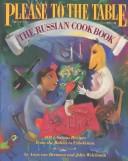
The reference volume for the whole former Soviet Union, with substantial Central Asian and Caucasian sections. It is encyclopedic rather than atmospheric — the book you check a technique in.
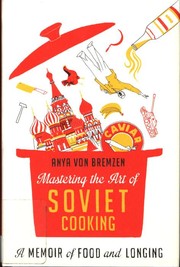
A memoir with recipes, not a cookbook, and it explains the food politics — shortages, canteens, the official cuisine — that shaped what the region actually cooked for seventy years. Read it after Please to the Table for the argument behind the recipes.

Goldstein's Russian collection, with strong essay material on preserving, fermenting and the northern pantry. Useful here for the Russian half of the Central Asian table and for the Korean-diaspora and Slavic dishes Eden keeps running into.
The Deep Record
IntermediateGo past the restaurant repertoire to the home and mountain cooking, and to bread, which is the constant across the whole region.
▸ Study plan for this stage
Pace: 4–5 weeks. With Our Own Hands is 688 pages and is not a cookbook at all — it is a multi-year ethnographic record of food and farming in the Pamirs of Tajikistan and Afghanistan, compiled by Frederik van Oudenhoven with Jamila Haider, with recipes embedded in a documentation project. Read it in secti
- Home and mountain cooking as a separate tradition from the restaurant and teahouse repertoire
- Bread as the organising category: tandyr breads, griddle breads, and what determines which a community makes
- Subsistence agriculture, seed varieties and the food system behind the recipes — which is what van Oudenhoven and Haider are actually documenting
- The vegetable and pulse cooking that the meat-and-rice books consistently underplay
- Ethnographic record versus recipe collection: what a documentation project can tell you that a cookbook cannot, and where it stops being usable in a kitchen
- The Pamirs as a specific place with a specific food system, not a stand-in for Central Asia generally
- Alford and Duguid's method — travel plus technique — and its limits as a regional source
- What is With Our Own Hands documenting, and how does that purpose change how its recipes are written?
- What distinguishes the Pamir repertoire from the Uzbek and Kazakh food in Eden's books?
- How many genuinely different bread techniques does Flatbreads and Flavors identify in and around this region, and what determines each?
- What vegetable and pulse dishes does Batmanglij supply that the earlier books on this path skip entirely?
- Where a recipe in the Pamir book is unmakeable outside the Pamirs, what is it still telling you?
- Bake one bread from Flatbreads and Flavors that you have not made before, then read the corresponding bread passages in With Our Own Hands and note what the ethnographic account adds about who bakes it and when.
- Cook two pulse or vegetable dishes from Silk Road Cooking and put them on the table beside a plov. That meal is the correction the stage is for.
- Go through With Our Own Hands and list the recipes you could actually make with ingredients available to you, and the ones you could not. Then write a paragraph on what the second list tells you about the food system the book is recording.
- Take one dish that appears in both With Our Own Hands and one of the Eden books and compare the two write-ups. One is a field record, one is travel writing with a recipe; the difference in what each thinks worth stating is the lesson.
Next up: Everything so far has been inside the region; the last stage reads outward to Persia, the Caucasus and the Black Sea, where most of the ingredients and half the techniques came from.

The most unusual book on this path: a multi-year ethnographic record of food and farming in the Pamirs of Tajikistan and Afghanistan, written with Jamila Haider. It is a documentation project with recipes in it, not a cookbook, and there is nothing else like it in English.
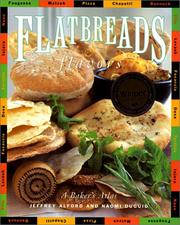
Alford and Duguid's bread-first survey, which is the right way into non, lepyoshka and the tandyr. A recipe collection organised by bread type with travel writing around it.

A vegetarian recipe collection tracking dishes along the Silk Road from Iran outward. It is the best single source for the vegetable and pulse cooking the meat-and-rice books underplay.
The Neighbours
IntermediateRead outward into Persia, the Caucasus and the Black Sea, where most of the region's ingredients and half its techniques come from.
▸ Study plan for this stage
Pace: 4 weeks. Taste of Persia is 392 pages covering Iran, Armenia, Azerbaijan, Georgia and Kurdistan, with reportage between the recipes; The Georgian Feast is 244 pages, the standard English book on Georgian food, recipes plus substantial cultural essays; Kaukasis is 240 pages and the most straightforwa
- Persian rice technique — the soak, the parboil, the steaming, the tahdig — as the direct ancestor of plov
- The supra and the tamada: the Georgian feast as a structured event, which is what Goldstein's book established as a subject in English
- Walnut, pomegranate, sour plum and herb in quantity — the Caucasian flavour base and where it does and does not reach into Central Asia
- Trade routes as the actual mechanism by which dishes travel, which is Eden's argument in Black Sea
- Goldstein as the scholarly anchor on Georgia and Hercules as the modern working cook — read in that order for a reason
- How much of what looks Central Asian is Persian or Caucasian in origin, and how to tell
- What exactly does Persian rice technique do that the Uzbek plov method does not, and where did each diverge?
- What is a supra, and how does the structure of the meal determine what is cooked?
- Where do Goldstein and Hercules disagree on a Georgian dish, and what accounts for it — region, era, or kitchen practicality?
- Which ingredients on the Central Asian table can be traced to Persia or the Caucasus, and by what route?
- After Black Sea, what does the phrase Silk Road table mean to you that it did not at the start of this path?
- Cook a Persian polow from Taste of Persia and an Uzbek plov from Samarkand in the same week. Write down every point at which the two methods diverge — rice, fat, when the meat goes in, whether the pot is opened. That comparison is the whole point of the stage.
- Make khachapuri from The Georgian Feast and from Kaukasis and taste them side by side; note which book assumed more of you and which produced the better result.
- Read Black Sea and mark every dish Eden encounters that you have already met in Samarkand or Red Sands. The list is short and it is the evidence for the trade-route argument.
- Assemble one meal drawn from four different books on this path — a bread, a rice dish, a pulse or vegetable dish and a preserve — and write down which book each came from. If you can do that, the path has done its job.
Next up: You can now place any Central Asian dish you meet against its Persian, Caucasian or Soviet neighbours and say where it came from and which of these books to check.

A recipe collection with reportage covering Iran, Armenia, Azerbaijan, Georgia and Kurdistan. The rice cookery here is the direct ancestor of plov, and reading it makes the Uzbek versions legible.
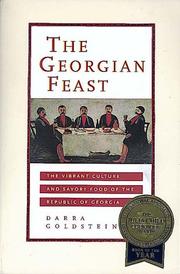
The standard English book on Georgian food and the one that established the supra as a subject. Recipes with substantial cultural essay material; take it as the Caucasian anchor.

A modern, cook-from-it recipe collection across Georgia, Azerbaijan and Armenia. Placed after Goldstein because Hercules assumes you know what the dishes are and is more interested in making them work in a home kitchen.

Closes the loop back to Eden. Heavily narrative — Odesa, Istanbul, Trabzon — with fewer recipes than Samarkand, and it shows how far the same trade routes carried the same dishes.
Discussion
Keep reading
Paths that share books, cover the same subject, or open a related topic.