Cook Indian food at home
This curriculum takes a home cook from zero to confident Indian cooking across four progressive stages. It begins by building spice literacy and foundational technique, then moves through regional diversity and bread-making, before arriving at the deep flavor intuition of an experienced Indian home cook.
Foundations: Spices, Technique & First Dishes
BeginnerUnderstand the Indian spice pantry, learn tempering (tadka), and successfully cook a handful of essential weeknight dishes with confidence.
▸ Study plan for this stage
Pace: 10–12 weeks total, reading roughly 20–25 pages per session, 4–5 sessions per week. Week 1–3: "Indian-ish" by Priya Krishna (read cover to cover, including headnotes and family anecdotes — they carry technique tips). Week 4–6: "The Everyday Wok Cookbook" by Lorna Yee (focus on high-heat technique cha
- The Indian spice pantry: identifying, toasting, and storing the core whole and ground spices introduced across Priya Krishna's ingredient notes and Madhur Jaffrey's opening spice essays (cumin, coriander, turmeric, mustard seeds, cardamom, cloves, dried chiles, etc.)
- Tempering / Tadka: the technique of blooming whole spices in hot fat to release volatile oils, as demonstrated in recipe after recipe in both 'Indian-ish' and Madhur Jaffrey's foundational chapters
- Layering flavor: understanding the sequence of aromatics (onion → ginger/garlic → dry spices → wet ingredients) that underpins most of the weeknight dishes in 'Indian-ish' and Jaffrey's everyday recipes
- High-heat cooking and mise en place: lessons drawn from 'The Everyday Wok Cookbook' on prepping all ingredients before heat is applied — a discipline that transfers directly to fast Indian sautés and tarka
- Building a sauce base (masala): how tomatoes, onions, and spices are cooked down into a cohesive gravy, a recurring structure in Madhur Jaffrey's curry and dal recipes
- Dal as a foundation dish: understanding lentil varieties, cooking ratios, and finishing techniques (the poured tadka) as taught through Jaffrey's dal chapter and echoed in Krishna's simpler dal recipes
- Balancing the five flavor dimensions in Indian cooking — heat, salt, acid (tamarind, lime, amchur), fat, and sweetness — using examples from all three books
- Recipe reading as a skill: interpreting the narrative headnotes and technique cues in Priya Krishna's conversational style vs. Jaffrey's more classical instructional prose
- After reading 'Indian-ish,' can you name at least eight spices Priya Krishna considers pantry staples, explain what each contributes aromatically or flavor-wise, and locate them in her recipes?
- What is tadka (tempering), why must the fat be hot before spices are added, and how do the recipes in 'Indian-ish' and Madhur Jaffrey's Indian Cooking differ in how they apply this technique?
- How does the high-heat, prep-everything-first discipline taught in 'The Everyday Wok Cookbook' apply to cooking a tarka dal or a quick Indian sauté — what goes wrong if you don't have ingredients ready?
- Walk through the flavor-layering sequence (fat → whole spices → aromatics → ground spices → main ingredient → liquid) using a specific recipe from Madhur Jaffrey's Indian Cooking as your example.
- What are the key differences between a wet masala (sauce-based curry) and a dry sabzi (vegetable stir-fry), and which recipes from 'Indian-ish' and Jaffrey best illustrate each?
- How would you adjust salt, acid, and heat at the end of cooking a dal or curry, and which passages or recipe notes in the three books guide that final tasting and balancing step?
- Spice shelf build: Using the pantry lists in 'Indian-ish' and Madhur Jaffrey's opening chapters as your shopping guide, assemble a starter spice collection. Label each jar, then smell and taste each spice raw — write two or three tasting notes per spice in a dedicated cooking journal.
- Tadka drill: Make a plain pot of boiled lentils or rice, then practice the tadka technique three separate times using different spice combinations from 'Indian-ish' (e.g., mustard seeds + curry leaves, cumin + dried chile, cumin + asafoetida). Pour each over the lentils and compare the flavor impact side by side.
- Mise en place speed session: Choose any recipe from 'The Everyday Wok Cookbook' that requires high-heat cooking and practice fully prepping every ingredient — measured, chopped, and staged — before turning on the stove. Then cook the dish. Repeat with a fast Indian sauté from 'Indian-ish' and note how the same discipline changes your confidence and result.
- Cook the 'Indian-ish' core five: Over three weeks, cook at least five recipes from Priya Krishna's book (aim for one dal, one egg dish, one vegetable sabzi, one rice dish, and one raita or condiment). After each, write a short reflection: what worked, what you'd adjust, and which technique from the book you applied.
- Jaffrey deep-dive dish: Select one 'project' recipe from Madhur Jaffrey's Indian Cooking — ideally a meat or chicken curry with a built masala — and cook it twice in the same week. On the first cook, follow the recipe exactly. On the second, adjust one variable (spice quantity, cooking time of onions, or acid at the end) and document the difference.
- Flavor-balance journal: For every dish you cook during this stage, record the final tasting adjustments you made (added lime? more salt? a pinch of sugar?). After 8–10 dishes, review the journal and identify your personal patterns — do you under-salt, under-acid, or under-spice? Use this self-knowledge going into the next stage.
Next up: Mastering the spice pantry, tadka, and the flavor-layering sequence in this stage gives the reader the perceptual vocabulary and muscle memory needed to tackle more complex regional cuisines, multi-component meals, and advanced techniques (slow-cooked biryanis, regional spice blends, bread-making) in the next stage with genuine understanding rather than rote recipe-following.

A warm, accessible entry point written for a Western home kitchen — it demystifies spices and tempering without overwhelming, and every recipe is genuinely weeknight-friendly.
The classic English-language introduction to Indian home cooking. After Krishna builds comfort, Jaffrey provides the foundational vocabulary of spice combinations, dal, and simple curries that every Indian cook knows.
Building Flavor: The Logic Behind Indian Cooking
BeginnerUnderstand *why* Indian cooking works — how layering aromatics, fat, and spices at different stages creates depth — so you can cook intuitively rather than just follow recipes.
▸ Study plan for this stage
Pace: 3–4 weeks, ~20–25 pages/day; read each recipe twice — once for the method, once for the *why* behind each step. Spend the final 3–4 days reviewing and cooking.
- The Tadka (tarka) technique: blooming whole spices in hot fat to release fat-soluble flavor compounds before any other ingredient is added
- Layering aromatics in sequence — onions first to build a sweet base, then ginger and garlic, then tomatoes — and why the order is not arbitrary
- The difference between whole spices (long, slow flavor release) and ground spices (immediate, surface-level flavor) and when Ramineni deploys each
- Cooking out the rawness: why spices and the onion-tomato masala base must be sautéed until the oil separates before liquids are added
- Fat as a flavor carrier: how ghee, oil, and butter each change the aromatic profile of the same dish
- Salt as a layering tool: adding it at multiple stages (with onions, with tomatoes, at the end) to draw out moisture and build depth
- The role of acid (tamarind, yogurt, tomato, lime) in balancing richness and brightening the final dish
- Finishing touches — fresh herbs, a squeeze of citrus, a drizzle of cream — as the final flavor layer that lifts the whole dish
- In Ramineni's recipes, what is happening chemically and sensorially when you bloom cumin seeds or mustard seeds in hot oil before adding onions — and how would the dish change if you skipped this step?
- Why does Ramineni consistently instruct you to cook the onion-ginger-garlic-tomato base until the oil visibly separates from the masala, and what does under-cooking this stage taste like?
- How does Ramineni use the same core spices (cumin, coriander, turmeric, chili) across different recipes, and what does varying their ratios or the stage at which they are added do to the final flavor?
- What is the functional difference between adding yogurt versus tomatoes as the acidic element in a gravy, based on the recipes in the book?
- Looking at two or three recipes side by side, can you identify the shared structural skeleton (fat → whole spice → aromatic base → ground spice → protein/vegetable → liquid → finish) even when the specific ingredients differ?
- How does Ramineni's approach to quick weeknight cooking preserve the logic of layering without sacrificing depth — what shortcuts does she use, and which steps does she never skip?
- The Tadka Comparison: Make a simple dal twice — once skipping the tadka entirely, once with a proper tadka of cumin, mustard seeds, and dried chili in ghee poured over the top. Taste side by side and write three sentences on the difference.
- Masala Base Drill: Cook the onion-ginger-garlic-tomato base from any Ramineni gravy recipe, stopping at three checkpoints (2 min, 8 min, 15 min) to taste a tiny spoonful. Note how the flavor changes at each stage and when the raw edge disappears.
- Spice Ratio Experiment: Choose one of Ramineni's simpler spice blends and cook the same vegetable (e.g., potatoes or cauliflower) three times, doubling the coriander in one batch and doubling the cumin in another. Document the flavor shift.
- Fat Swap Test: Cook the same recipe once with neutral oil and once with ghee. Observe and write down how the aroma in the pan differs from the first 30 seconds onward, and how the finished dish tastes.
- Recipe Deconstruction Exercise: Pick any three recipes from the book and map each one onto the structural skeleton (fat → whole spice → aromatics → ground spice → main ingredient → liquid → finish). Identify any steps that deviate and hypothesize why.
- Intuitive Cooking Challenge: After finishing the book, cook a simple vegetable or egg dish without following any recipe — only using the layering logic you have internalized. Write a brief reflection on which decisions felt confident and which felt uncertain, to guide your next stage of learning.
Next up: Mastering the repeatable flavor-building skeleton in Ramineni's accessible recipes gives you the structural confidence to tackle more complex regional variations, longer spice lists, and unfamiliar techniques in the next stage without feeling overwhelmed.

Bridges the gap between beginner recipes and real technique by explaining the 'base sauce' method used in Indian home kitchens, reinforcing flavor-layering intuition with approachable recipes.
Regional Curries & Breads
IntermediateCook confidently across India's major regional traditions — North Indian gravies, South Indian coconut-based curries, and essential breads like roti, paratha, and poori.
▸ Study plan for this stage
Pace: 8–10 weeks total: Weeks 1–5 on "Dakshin" (~20–25 pages/day, including re-reading recipe headnotes and technique notes); Weeks 6–10 on "Flatbreads and Flavors" (~15–20 pages/day, with extra time budgeted for hands-on bread sessions 2–3 times per week).
- South Indian regional identity: how Chandra Padmanabhan organizes Dakshin by state (Tamil Nadu, Karnataka, Kerala, Andhra Pradesh) and why geography, climate, and religion shape each cuisine's flavor profile
- Coconut in all its forms: fresh grated coconut, coconut milk (thin and thick), and toasted coconut as thickening, flavoring, and finishing agents in South Indian curries
- The South Indian tempering (tadka/thalippu): the specific sequence of mustard seeds, curry leaves, dried red chillies, and asafoetida bloomed in oil or ghee as the aromatic foundation of Dakshin's gravies
- Wet masala pastes vs. dry spice blends: how Dakshin builds complexity through freshly ground chutneys and pastes (e.g., coconut-coriander, tamarind-based) rather than pre-mixed powders
- Tamarind as the primary souring agent: its role in rasam, sambar, and Andhra-style curries, and how to balance its acidity against sweetness and heat
- Flatbread taxonomy from Flatbreads and Flavors: understanding the spectrum from unleavened (roti, chapati, poori) to leavened (naan-adjacent breads) and the role of fat (ghee, oil, butter) in layering and texture
- Dough hydration and resting: how Jeffrey Alford's recipes teach the relationship between flour type (atta/whole wheat vs. maida/refined), water ratio, and resting time on the final texture and pliability of a flatbread
- Regional bread-curry pairing logic: matching the weight and richness of a bread (e.g., flaky paratha vs. light roti) to the body of a curry (thin rasam vs. thick coconut gravy) as a cross-book synthesis skill
- After reading Dakshin, can you explain at least three ways a Kerala coconut curry differs in technique and ingredient from an Andhra-style curry — and trace those differences back to the regional chapters Padmanabhan uses?
- What is the role of asafoetida (hing) in South Indian cooking as described in Dakshin, and why is it used in place of or alongside onion and garlic in certain communities' recipes?
- Using Flatbreads and Flavors as your reference, what are the critical differences in dough preparation between a roti, a paratha, and a poori — specifically regarding fat incorporation, rolling technique, and cooking method?
- How does Jeffrey Alford use travel narrative and cultural context in Flatbreads and Flavors to explain why certain flatbreads are staples in specific regions, and can you give two concrete examples from the book?
- Synthesizing both books: if you were serving a South Indian coconut-milk fish curry from Dakshin, which bread from Flatbreads and Flavors would you pair with it and why — considering texture, richness, and regional logic?
- What does Dakshin teach about the use of tamarind in sambar versus rasam — how do the quantity, preparation method, and supporting spices differ between these two foundational South Indian dishes?
- Cook one representative curry from each of the four South Indian states covered in Dakshin (Tamil Nadu, Karnataka, Kerala, Andhra Pradesh) on separate days, journaling the differences in tempering sequence, souring agent, and coconut usage each time.
- Make a fresh coconut paste from scratch as directed in Dakshin and use it in at least two different recipes — compare the result to a batch made with store-bought desiccated coconut to internalize why Padmanabhan insists on fresh coconut.
- Prepare a side-by-side tasting of sambar and rasam from Dakshin on the same day, using the same tamarind block — note how spice ratios, dal, and cooking time transform the same souring agent into two entirely different dishes.
- Work through the roti, paratha, and poori recipes in Flatbreads and Flavors in a single weekend 'bread lab': make all three back-to-back, focusing on how dough feel, fat layering (or lack thereof), and cooking surface (tawa vs. deep oil) change the outcome.
- Practice the paratha lamination technique from Flatbreads and Flavors at least three times on separate days, deliberately varying the amount of ghee brushed between folds, and record how this changes the flakiness and crispness of the finished bread.
- Design and cook a complete two-course South Indian meal — a curry from Dakshin paired with a bread from Flatbreads and Flavors — writing a one-page rationale for why the specific curry and bread complement each other in terms of texture, richness, and regional tradition.
Next up: Mastering South Indian coconut curries and foundational Indian breads builds the palate calibration and dough intuition needed to tackle more complex, multi-component dishes — such as North Indian Mughal-influenced kormas, biryanis, and stuffed breads — where layering fat, spice, and technique becomes even more intricate.
A dedicated deep-dive into South Indian cooking — coconut, curry leaves, mustard-seed tempering, and rice-based dishes that are underrepresented in general Indian cookbooks.
Covers the full world of Indian flatbreads (roti, paratha, naan, poori) with clear technique explanations, filling the bread gap that most curry-focused books leave.
Cooking Like an Indian Home Cook: Deep Mastery
ExpertInternalize the instincts of a generational Indian home cook — slow-cooked dishes, complex spice blends, restaurant-level curries made at home, and the ability to improvise.
▸ Study plan for this stage
Pace: 10–13 weeks total. Week 1–4: "An Invitation to Indian Cooking" by Madhur Jaffrey (~20–25 pages/day, cook at least 2 recipes per week). Week 5–8: "The Curry Guy" by Dan Toombs (~20 pages/day, focus on sauce bases and BIR techniques, cook 2–3 recipes per week). Week 9–13: "Prashad Cookbook" by Kaushy
- Instinctive spice layering: understanding when and why to add whole vs. ground spices at different stages of cooking, as demonstrated throughout Jaffrey's foundational recipes
- The 'masala base' as architecture: how onion, ginger, garlic, tomato, and spice ratios form the structural skeleton of most Indian curries, explored across all three books
- BIR (British Indian Restaurant) technique: Dan Toombs's method of pre-cooked base gravy, par-cooked proteins, and high-heat finishing to replicate restaurant-quality curries at home
- Regional identity of dishes: Jaffrey's pan-Indian perspective vs. Kaushy Patel's deeply rooted Gujarati-Hindu vegetarian tradition — understanding how geography and culture shape flavor
- Slow cooking and patience: the role of low-and-slow braising, dum-style cooking, and long-simmered dals as taught by Jaffrey and Patel, where time is itself an ingredient
- Improvisation through ratio literacy: learning to adjust heat, acidity (tamarind, yogurt, lemon), fat, and salt by taste rather than strict measurement — a thread running through all three authors' philosophies
- Vegetarian mastery: Prashad's approach to making vegetables and legumes the star through textural contrast, tempering (tadka), and bold but balanced spicing
- Spice blend construction: moving beyond store-bought mixes to building custom blends (garam masala, chaat masala, dhana jeeru) from scratch as modeled by Jaffrey and Patel
- After reading Jaffrey, can you explain why she adds whole spices to hot oil before any other ingredient, and what sensory cues tell you they are ready?
- What is the 'base gravy' in Dan Toombs's BIR system, how is it made, and how does it allow you to produce multiple restaurant-style curries quickly from a single batch?
- How does Kaushy Patel's Gujarati cooking philosophy — as expressed in the Prashad Cookbook — differ from the broader pan-Indian style Jaffrey presents, particularly in its use of sweetness, dairy, and restraint with chili heat?
- Across all three books, what are the common techniques for building depth in a curry sauce, and where do the authors' approaches meaningfully diverge?
- How would you use the instincts developed from these three books to improvise a curry from whatever proteins and vegetables you have on hand, without following a recipe?
- What role does tadka (tempering) play in the Prashad recipes, and how does Patel use it differently at the beginning versus the end of a dish?
- 'Masala base matrix' drill: Using Jaffrey's recipes as a guide, cook the same onion-tomato-spice base three times — varying the fat (ghee, mustard oil, neutral oil) and the spice sequence — and document how each variation changes the final flavor profile.
- BIR base gravy project: Follow Dan Toombs's base gravy recipe exactly, make a large batch, freeze it in portions, and then use it over two weeks to cook at least four different Curry Guy recipes (e.g., a korma, a madras, a jalfrezi, and a bhuna) to experience how one base becomes many dishes.
- Blind spice identification: Toast and smell each whole spice used across the three books individually (cardamom, cloves, cinnamon, star anise, fenugreek, mustard seeds, curry leaves, etc.), then practice identifying them blind to build sensory memory.
- Grind your own spice blends: Make Jaffrey's garam masala and Patel's dhana jeeru from scratch, then use each in a corresponding recipe from their respective books. Compare the aroma and taste to a store-bought equivalent side by side.
- The improvisation challenge: Once you have finished all three books, cook a full Indian meal (dal, one curry, one vegetable side, and a raita) using only what is in your pantry — no recipe, only the instincts and ratios internalized from Jaffrey, Toombs, and Patel.
- Prashad vegetarian deep-dive: Choose one week to cook exclusively from the Prashad Cookbook, preparing at least five different dishes, and journal how Kaushy Patel's use of tempering, sweetness, and texture challenges or expands your assumptions built from the earlier two books.
Next up: Mastering the home-cook instincts, regional depth, and restaurant replication techniques across these three books gives the reader the confident, flexible foundation needed to explore more specialized or scholarly works — such as regional deep-dives, historical food writing, or professional-level Indian culinary traditions — without being overwhelmed by complexity.
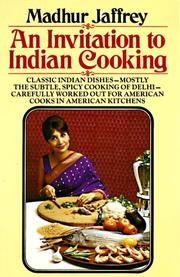
Jaffrey's most personal and nuanced book; revisiting her at this stage reveals layers of technique and flavor logic that were invisible as a beginner — a true masterclass in restraint and balance.

Decodes the specific techniques (pre-cooked base gravy, blooming spices in oil) that produce the rich, restaurant-style curries many home cooks crave, bridging home cooking and professional results.

A celebrated British-Indian vegetarian restaurant's recipes translated for home cooks — represents the pinnacle of flavor complexity achievable without meat, rounding out a complete Indian cooking education.
Discussion
Keep reading
Paths that share books, cover the same subject, or open a related topic.