Basque food is best approached from the home end. The dishes that define it — bacalao al pil-pil, marmitako, txuleta, piperrada — are short on ingredients and long on technique, which means an authoritative modern cookbook teaches you more in a week than a survey of Spanish cooking does in a month. Start there, then work outwards to pintxos, restaurants and history.
One practical warning before the list. Our catalogue holds four books whose display titles differ only by an article or a plural — Basque, The Basque, The Basque Country and The Basques — and they are four entirely different books by four different authors, only one of which is a cookbook. Always check the author, which the sections below name every time.
The core cookbooks
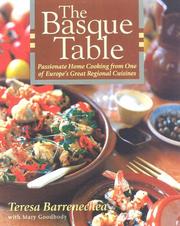
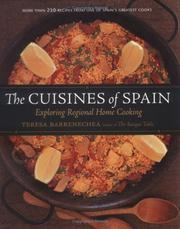
Marti Buckley's Basque country is the book to buy first: a modern, tested, English-language cookbook of the region's home dishes with enough context to explain why a sauce is emulsified with a wrist motion rather than a whisk. Teresa Barrenechea's The Basque table is the older standard from a chef born in Bilbao, more traditional in framing and still excellent on the fish cookery. Her The Cuisines of Spain is a much broader national survey; useful, but it is not a Basque book, so treat it as background rather than as a second Basque cookbook.
José Pizarro's Basque is a chef's personal collection — the London-based Spanish cook travelling his own country — and is the most contemporary and the least encyclopaedic of the three. Gerald Hirigoyen writes from the French Basque side, which is a genuinely different kitchen; The Basque kitchen is his fuller cookbook and the reason to include him.
Pintxos, the bar tradition
Pintxos are their own discipline and deserve their own book. They are bar food built to be eaten standing up, often assembled in advance and finished to order, which is a different set of habits from the stovetop cooking in the books above. Hirigoyen's Pintxos is the earlier English-language treatment, built around the San Sebastián bar counter, and it shares a fair amount of its author's sensibility with The Basque kitchen — one of the two is usually enough unless you cook a great deal from both sides of the border. Marti Buckley's Book of Pintxos is the newer and more thorough one, and it overlaps heavily with her first book's spirit without repeating its recipes — if you already own Basque country, this is the natural second volume rather than a substitute.
The restaurants, and the history
The Basque Country holds one of the densest concentrations of celebrated restaurants in the world, and two books here come from that world. Arzak secrets by Juan Mari Arzak documents the San Sebastián restaurant that anchored the new Basque cuisine movement, and Mugaritz by Andoni Luis Aduriz is a chef's book from one of the most conceptual kitchens in Europe. Neither is a home-cooking manual. Read them as documents of what the region's chefs think they are doing.
For context, three non-cookbooks. Mark Kurlansky's The Basque is his popular history of the Basque people, food included, and is the most readable entry into why this is a distinct culture rather than a Spanish region. Paddy Woodworth's The Basque Country is a cultural history and travel account, more attentive to the modern politics. Roger Collins's The Basques is the academic one — an early and medieval history of the people, written for readers who want the scholarship rather than the story.
Cook from Buckley and Barrenechea, drink in the pintxos books, and read Kurlansky on the train. Follow the full path in order for the sequence in full.
Follow the full ordered path here: The Best Basque Cookbooks to Read First, in Order.
Ready to learn something deeply?
Build a reading path — free