Caribbean Literature: Best Books to Read in Order
This curriculum builds a deep, ordered engagement with Caribbean literature through three authors at its heart — V.S. Naipaul, Derek Walcott, and Jamaica Kincaid — while grounding the reader first in the broader tradition they emerged from. Starting at the intermediate level, each stage moves from accessible narrative prose into denser, more allusive poetry and autofiction, so that by the final stage the reader can hold the full weight of Walcott's epic ambition and Naipaul's most demanding work.
The Caribbean World: Essential Context
IntermediateEstablish the cultural, historical, and imaginative landscape of the Caribbean — colonialism, diaspora, identity, and language — through two foundational works that make Naipaul, Walcott, and Kincaid immediately richer.
▸ Study plan for this stage
Pace: 6–7 weeks, ~40–50 pages/day (approximately 3 weeks per novel, with overlap for reflection and note-taking)
- Colonial displacement and the rewriting of canonical narratives: how Rhys rewrites Jane Eyre from Bertha's perspective, and how this act of revision becomes a political statement about silenced voices
- The Caribbean as a space of fractured identity shaped by slavery, colonialism, and the plantation economy: how geography, race, and class intersect in both novels
- Language as a site of power and resistance: the use of Creole, English, and linguistic hybridity as markers of colonial domination and cultural survival
- The psychological and emotional toll of displacement and alienation: madness, exile, and the search for belonging in Rhys and Lamming
- Memory, childhood, and the formation of consciousness in colonial contexts: how both authors use intimate, lyrical narration to explore the interior lives of colonized subjects
- The role of women and gender in colonial and postcolonial Caribbean society: Antoinette's vulnerability in Wide Sargasso Sea versus the collective coming-of-age in In the Castle of My Skin
- Diaspora and return: the tension between staying and leaving, between the Caribbean homeland and the metropole, as a defining Caribbean experience
- How does Jean Rhys use the character of Antoinette to challenge the representation of Bertha Mason in Jane Eyre, and what does this revision suggest about whose stories get told in colonial literature?
- What role does the natural landscape of Jamaica and Dominica play in Wide Sargasso Sea, and how does it reflect or resist the characters' emotional and psychological states?
- In In the Castle of My Skin, how does Lamming use the collective voice and childhood perspective to represent the experience of colonized Belize, and what does this narrative strategy reveal about community and identity?
- How do both Rhys and Lamming use language—including Creole, dialect, and shifts in register—to represent the power dynamics between colonizer and colonized?
- What is the significance of madness and alienation in Wide Sargasso Sea, and how does Antoinette's fate reflect broader Caribbean experiences of displacement?
- How do the two novels differ in their treatment of hope, resistance, and the possibility of self-determination for their protagonists and communities?
- Create a comparative timeline: map the historical events referenced in both novels (slavery, emancipation, colonial rule, migration) and annotate how each author positions their narrative within this timeline.
- Close-read a passage from Wide Sargasso Sea (e.g., the fire scene or Antoinette's first encounter with Rochester) and a passage from In the Castle of My Skin (e.g., the school scenes or the departure sequence) side-by-side, analyzing how each author uses imagery, syntax, and tone to convey colonial alienation.
- Write a dialogue or letter exchange between Antoinette (Rhys) and one of Lamming's characters, exploring how they might understand each other's experiences of displacement and identity.
- Research and annotate: identify 3–4 references to real Caribbean history, geography, or colonial policy in each novel, and write brief notes on what the author gains by embedding these historical details into the narrative.
- Create a character map for In the Castle of My Skin that tracks the relationships, class positions, and fates of the boys and adults in the village; then reflect on how Lamming uses these interconnections to represent colonial society as a whole.
- Rewrite a scene from Wide Sargasso Sea from Rochester's perspective, then compare it to Rhys's version; reflect on what is gained and lost in each telling, and what this exercise reveals about narrative authority and bias.
Next up: This stage establishes the historical, linguistic, and psychological foundations of Caribbean literature—the colonial wound, the fractured self, and the power of narrative revision—preparing you to engage with Naipaul's ironic deconstruction of postcolonial identity and Walcott's and Kincaid's more direct interrogations of belonging, language, and inheritance.
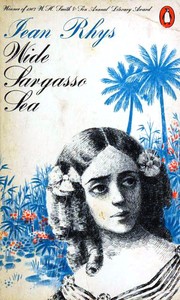
Rhys's reimagining of Jane Eyre from a Creole Caribbean woman's perspective is the perfect entry point: it dramatizes colonial displacement, silenced identity, and the violence of belonging — themes that run through every author in this curriculum.
Lamming's semi-autobiographical novel of growing up in Barbados under British colonialism is the essential prose companion to Walcott's poetry; it gives the reader the village, the cane field, and the colonial schoolroom that haunt the whole tradition.
Naipaul: The Satirist and the Exile
IntermediateRead Naipaul in the order that reveals his development — from comic Trinidadian satirist to unflinching analyst of postcolonial displacement — and understand why he remains both indispensable and contested.
▸ Study plan for this stage
Pace: 8–10 weeks, ~40–50 pages/day. Miguel Street (3 weeks), A House for Mr Biswas (4 weeks), The Enigma of Arrival (2–3 weeks), with 1 week for synthesis and comparative reflection.
- Comic realism and satirical voice: how Naipaul uses humor and irony to expose social pretension and colonial mimicry in Miguel Street
- The search for home and belonging: Mr Biswas's obsessive quest for property ownership as a metaphor for postcolonial identity and rootlessness
- Narrative unreliability and the author's distance: Naipaul's shifting relationship to his narrators across the three works
- Displacement and exile: the progression from Trinidad-centered comedy to the existential alienation of the English countryside in The Enigma of Arrival
- The colonial legacy and mimicry: how characters in all three works perform versions of metropolitan culture and values
- Solitude and self-invention: the individual's struggle to construct meaning and identity outside inherited social structures
- Naipaul's evolving prose style: from episodic sketches to expansive psychological realism to meditative fragmentation
- How does Naipaul's satirical tone in Miguel Street differ from the more sympathetic portrayal of Mr Biswas, and what does this shift reveal about his artistic development?
- What is the significance of Mr Biswas's house, and how does his pursuit of property ownership reflect deeper anxieties about postcolonial identity and belonging?
- How does The Enigma of Arrival depart from the social comedy of the earlier novels, and what new themes does it introduce about exile and artistic consciousness?
- Trace the theme of mimicry and colonial imitation across all three works: how do characters in each novel relate to metropolitan (British) culture and values?
- How does Naipaul's narrative perspective change across the three books, and what effect does this have on the reader's relationship to the protagonist or narrator?
- What role does Trinidad (or its absence) play in each novel, and how does Naipaul's treatment of place evolve from Miguel Street to The Enigma of Arrival?
- Close-read 3–4 key scenes from Miguel Street (e.g., B. Wordsworth, the tailor, the baker) and annotate Naipaul's satirical techniques—irony, understatement, absurdity—noting how he ridicules both colonial pretension and Trinidadian aspiration.
- Create a detailed character map of Mr Biswas's family and social circle, tracking how each relationship either anchors or destabilizes his sense of self and his pursuit of the house.
- Write a 500-word comparative analysis of how Naipaul portrays the colonial relationship in Miguel Street versus A House for Mr Biswas—how does his critique deepen or shift?
- Trace the motif of 'home' across all three novels: collect 8–10 passages where characters reflect on or struggle with belonging, and write a short essay on how the concept evolves.
- Rewrite a scene from Miguel Street in the style of The Enigma of Arrival—shift from episodic satire to meditative, introspective prose—and reflect on what is gained and lost in the translation.
- Create a timeline of Naipaul's own biographical exile (Trinidad → Oxford → England → travels) and annotate it with key moments from each novel; discuss how autobiography shapes the fiction.
Next up: This stage establishes Naipaul as a major postcolonial voice and reveals the psychological and formal complexity beneath his reputation for detachment, preparing you to engage with his later essays, travel writing, and more overtly political works that extend these themes of displacement and cultural critique across the wider postcolonial world.

This linked story collection set in Port of Spain is Naipaul's most accessible and warmest book; it establishes his ear for Trinidadian vernacular and his tragicomic view of colonial aspiration before his tone darkens.
Naipaul's masterpiece — a vast, Dickensian novel about an Indo-Trinidadian man's lifelong struggle for a home of his own. Read after Miguel Street, the reader already knows the world and can feel the full tragic weight.

Naipaul's late, meditative autofiction about living in the English countryside as a postcolonial writer is his most philosophically demanding work; it completes the arc from Trinidad to exile and is best read after his earlier fiction.
Kincaid: Anger, Memory, and the Mother Island
IntermediateExperience Jamaica Kincaid's compressed, incantatory prose — her dissection of colonialism, motherhood, and Antigua — and understand how she forges a distinctly Caribbean feminist voice.
▸ Study plan for this stage
Pace: 4–5 weeks, ~40–50 pages/day (Annie John: ~3 weeks; A Small Place: ~1–2 weeks)
- Kincaid's compressed, incantatory prose style: repetition, rhythm, and accumulation as tools for emotional intensity and colonial critique
- The mother-daughter relationship as a site of both love and rupture, shaped by colonial legacies and gendered expectations
- Antigua as a character: how Kincaid renders the island as both intimate homeland and site of colonial exploitation
- The bildungsroman interrupted: how Annie John's coming-of-age is fractured by colonial consciousness and maternal estrangement
- Kincaid's essayistic rage in A Small Place: the direct address to the tourist/reader as a rhetorical strategy for decolonial critique
- The relationship between personal memory and collective colonial history: how individual trauma mirrors national trauma
- Caribbean feminist voice: rejecting both colonial and patriarchal narratives through defiant, uncompromising prose
- How does Kincaid use repetition and rhythm in Annie John to convey Annie's emotional states and her relationship to her mother? Provide specific textual examples.
- Trace the transformation of Annie's relationship with her mother throughout Annie John. What colonial and gendered dynamics underlie their estrangement?
- In A Small Place, how does Kincaid's direct address to 'you' (the tourist) function as a rhetorical strategy? What effect does this create?
- How does Kincaid depict Antigua differently in Annie John versus A Small Place, and what does each representation reveal about her stance toward the island?
- What role does colonialism play in shaping the personal relationships and individual psychology depicted in Annie John?
- How does A Small Place extend or complicate the themes of memory, belonging, and resentment introduced in Annie John?
- Close-read a passage from Annie John (e.g., the opening pages or the mother-daughter bathing scene) and annotate instances of repetition, parallelism, and incantatory language. Explain how these stylistic choices create emotional resonance.
- Create a timeline of Annie's relationship with her mother across Annie John, marking key moments of closeness and rupture. Annotate each moment with the colonial or gendered pressures at play.
- Write a 2–3 page response: Imagine Annie John as an adult reading A Small Place. How might she recognize her own experience of Antigua reflected in Kincaid's essay? What new understanding might she gain?
- Analyze Kincaid's use of the second-person 'you' in A Small Place. Rewrite a passage in first person ('I') or third person ('they') and compare the rhetorical effect. What is lost or gained?
- Research the historical context of Antigua's colonization and independence (1981). Create an annotated list of colonial references in both texts and explain how Kincaid weaves history into personal narrative.
- Write a comparative character sketch: How does the mother in Annie John embody or resist colonial ideology? How does Kincaid herself (as narrator in A Small Place) position herself against colonial structures?
Next up: This stage establishes Kincaid's signature fusion of intimate, lyrical prose with unflinching political critique—a model for understanding how Caribbean women writers transform personal memory into decolonial testimony, preparing you to engage with other postcolonial Caribbean voices that similarly weaponize narrative form against empire.
Kincaid's coming-of-age novel in Antigua is her most narrative and accessible work; its portrait of a girl's rupture from her mother mirrors the colony's rupture from Britain, setting up the political fury of her later essays.

This searing essay-polemic about Antigua and tourism is Kincaid at her most direct and politically explicit; reading it after Annie John transforms the personal into the structural and makes her anger fully legible.
Walcott: The Poet of the Caribbean Sea
ExpertEngage with Derek Walcott's poetry from his lyric foundations to his Nobel-winning epic, understanding how he synthesizes Greek myth, African memory, and Caribbean landscape into a new world literature.
▸ Study plan for this stage
Pace: 8–10 weeks, ~40–50 pages/day. Week 1–2: *In a Green Night* (60 pages); Week 3–4: *Another Life* (80 pages); Week 5–10: *Omeros* (320+ pages, with slower pacing for epic complexity)
- Walcott's lyric voice: how personal observation and sensory precision ground his early Caribbean poetry
- The colonial palimpsest: how Walcott excavates and rewrites European literary tradition through Caribbean experience
- Mythic synthesis: the fusion of Greek/Roman mythology with African diasporic memory and Caribbean landscape
- Autobiographical epic: *Another Life* as the poet's bildungsroman and artistic manifesto
- The archipelago as form: how island geography shapes narrative structure and fragmentation in *Omeros*
- Language as creolization: Walcott's use of English, patois, and classical allusion to forge a new world literature
- Postcolonial consciousness: the tension between European inheritance and Caribbean self-assertion
- How does Walcott use precise, sensory language in *In a Green Night* to transform the Caribbean landscape into a subject worthy of high lyric poetry?
- What is the relationship between Walcott's personal history and artistic development in *Another Life*, and how does he position himself as both colonial subject and inheritor of Western tradition?
- How does *Omeros* adapt Homer's *Iliad* and *Odyssey* to tell the story of Caribbean fishermen, and what does this transformation reveal about postcolonial literature?
- Trace the evolution of Walcott's treatment of Africa and African memory across the three works—how does it deepen or shift?
- How does Walcott use language—including shifts between standard English and Caribbean vernacular—to assert literary authority and create a new aesthetic?
- What role does the sea play as both literal setting and metaphorical space across these three works?
- Close-read 3–4 poems from *In a Green Night* (e.g., 'A Far Cry from Africa,' 'Ruins of a Great House,' 'The Almond Trees') and annotate Walcott's use of imagery, meter, and classical allusion
- Map the autobiographical arc in *Another Life*: identify key figures (Dunstan St. Omer, Harry Simmons) and trace how Walcott mythologizes his own artistic formation
- Create a comparative chart tracking how a single mythic figure (e.g., Achilles, Helen, Odysseus) appears across *Another Life* and *Omeros*, noting how meaning shifts
- Write a 2–3 page essay analyzing how Walcott's treatment of colonialism in one poem from *In a Green Night* (e.g., 'A Far Cry from Africa') anticipates themes developed in *Omeros*
- Perform a close reading of a passage from *Omeros* (e.g., Book I, the opening invocation, or a scene with Achilles and Hector) that demonstrates Walcott's creolization of Homeric language
- Create a visual or written 'map' of the Caribbean islands and locations referenced in *Omeros*, noting how geography structures the narrative and connects to Walcott's earlier work
Next up: This stage establishes Walcott as the foundational voice of contemporary Caribbean literature and postcolonial poetics, preparing readers to engage with how his synthesis of classical tradition, colonial history, and Caribbean specificity has influenced subsequent generations of writers working across the Caribbean, the diaspora, and the postcolonial world.

Walcott's early collection introduces his central preoccupations — the divided self, the beauty and wound of the Caribbean, the colonial language turned against itself — in shorter, more approachable lyrics that build the reader's ear for his style.
This autobiographical long poem about growing up in St. Lucia and becoming an artist is the essential bridge between Walcott's lyric voice and his epic ambition; it rewards the reader who has already absorbed his shorter poems.

Walcott's 1990 epic — a Caribbean retelling of Homer set among St. Lucian fishermen — is the summit of the curriculum. Every prior book has prepared the reader for its layered allusions, its grief for history, and its redemptive vision of the sea.
Discussion
Keep reading
Paths that share books, cover the same subject, or open a related topic.