Best Burmese Cookbooks to Learn the Cuisine
Burmese cuisine is one of Southeast Asia's most distinctive and underexplored culinary traditions, built on fermented pastes, sour-bright salads, slow-cooked curries, and the iconic noodle soup mohinga. This curriculum moves from broad cultural and flavor orientation through the essential technique-driven cookbooks, and finally into the specialist deep-dives on fermentation, regional noodles, and the full Burmese pantry — each stage equipping the reader with the vocabulary and confidence needed for the next.
Foundations: Flavor, Culture & First Recipes
BeginnerUnderstand the cultural context of Burmese food, learn the essential flavor principles (sour, fermented, umami-rich, herbaceous), and cook a first set of approachable dishes including basic salads, a simple mohinga, and introductory curries.
▸ Study plan for this stage
Pace: 4–5 weeks, ~25–30 pages/day, with 2–3 cooking sessions per week
- The role of geography, history, and ethnic diversity in shaping Burmese cuisine's flavor profile
- The four core flavor pillars of Burmese food: sourness (lime, tamarind, vinegar), fermentation (fish paste, shrimp paste), umami richness, and fresh herbs
- How to balance and layer these flavors in a single dish to achieve authentic taste
- Essential Burmese ingredients, pantry staples, and where to source them
- The structure and technique of basic Burmese salads (thoke) and how they differ from other Asian salads
- Mohinga as a foundational dish: its cultural significance, broth-building technique, and component assembly
- Curry foundations: oil-infusing aromatics, paste-making, and the difference between wet and dry curries
- How fresh herbs, garnishes, and condiments complete and personalize a Burmese meal
- What geographic and historical factors have influenced Burmese cuisine, and how do they appear in the food described in 'Rivers of Flavor' and 'The Food of Burma'?
- How do the four core flavors (sour, fermented, umami, herbaceous) work together in a Burmese dish, and can you identify them in a recipe you've read?
- What are the key differences between Burmese salads (thoke) and Southeast Asian salads from other regions, and why does the balance of flavors matter?
- Walk through the steps of making a basic mohinga broth and explain why each component (fish paste, aromatics, spices) contributes to the final dish
- What are the essential Burmese pantry ingredients you need to start cooking, and how would you source them?
- Describe the technique for infusing oil with aromatics and paste in a Burmese curry, and explain how this differs from other curry traditions
- Read the cultural and geographic introduction in 'Rivers of Flavor' (Chapters 1–2) and map out how climate, trade routes, and ethnic groups influenced the ingredients and flavors you'll be cooking with
- Create a Burmese pantry inventory: list 15–20 essential ingredients from both books, note their flavor profile (sour/fermented/umami/herbaceous), and source at least 10 from local or online suppliers
- Cook a simple vegetable or chickpea thoke (salad) from 'The Food of Burma', tasting and adjusting the balance of lime, fish sauce, and herbs until it feels authentically Burmese
- Prepare a basic mohinga broth following the recipe in 'The Food of Burma', documenting each step and tasting how the flavors develop as you add fish paste, aromatics, and spices
- Cook two different curries from 'The Food of Burma' (e.g., a chicken curry and a vegetable curry), paying attention to the oil-infusing and paste-building technique, and note how the flavor profile differs between them
- Prepare a complete Burmese meal (salad + curry + rice + condiments/garnishes) and invite someone to taste it; ask them to identify the sour, fermented, umami, and herbaceous notes
Next up: This foundation in flavor balance, ingredient knowledge, and core techniques (thoke, mohinga, curries) equips you to explore more complex regional variations, specialty dishes, and advanced flavor layering in the next stage.

The single best entry point for English-speaking cooks: Duguid traveled extensively in Myanmar and presents recipes alongside vivid cultural narrative, making the unfamiliar pantry — shrimp paste, fermented fish, dried shrimp — feel logical and accessible. Read this first to build your flavor map.
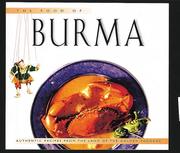
A compact, practical companion that fills in everyday home-cooking dishes Duguid's more journalistic book touches lightly — useful for reinforcing pantry staples and getting comfortable with Burmese proportions and technique before moving deeper.
Core Techniques: Salads, Mohinga & Noodles
BeginnerMaster the architecture of Burmese salads (lahpet thoke, ginger salad, tea-leaf salad) and gain confident command of mohinga and the major noodle dishes — ohn no khao swè, nan gyi thoke — understanding how dressings, toppings, and broths are built.
▸ Study plan for this stage
Pace: 2–3 weeks, ~40–50 pages/day, with 2–3 cooking sessions per week
- The foundational structure of Burmese salads: the balance of sour, salty, spicy, and umami through dressings and the layering of textures (crispy, soft, chewy)
- Lahpet thoke (tea-leaf salad) as the quintessential Burmese salad and its cultural significance in Aye's narrative
- The architecture of mohinga: the rice noodle broth as a flavor base, the role of fish sauce and aromatics, and the construction of toppings and garnishes
- Ohn no khao swè (coconut chicken noodles) and nan gyi thoke (wheat noodle salad) as distinct noodle expressions with different dressing and broth philosophies
- How Aye uses food memoir to reveal technique: reading between personal anecdotes to extract the 'why' behind ingredient choices and cooking methods
- The interplay of dressings, toppings, and broths as modular components that can be mixed, matched, and adapted across dishes
- What are the key flavor and textural components that define a Burmese salad, and how does lahpet thoke exemplify these principles?
- How does MiMi Aye use personal narrative and family history to convey cooking technique in 'Mandalay'?
- What is the structural difference between mohinga, ohn no khao swè, and nan gyi thoke, and how do their broths, dressings, and toppings differ?
- How do you build a balanced mohinga broth, and what role does fish sauce play in achieving depth of flavor?
- What techniques does Aye employ to develop layers of flavor and texture in salads and noodle dishes?
- How can the modular components of Burmese dressings and toppings be adapted or substituted while maintaining the integrity of a dish?
- Read and annotate the lahpet thoke section in 'Mandalay,' noting every ingredient, technique, and cultural detail Aye mentions; then make lahpet thoke from scratch, tasting and adjusting each component (sour, salt, spice, umami) independently
- Prepare a mohinga broth from Aye's guidance, tasting it at each stage (after aromatics, after fish sauce, after simmering); document how the flavor evolves and compare to a restaurant version if possible
- Cook ohn no khao swè and nan gyi thoke side-by-side in a single session, then write a comparative tasting note on how their broths, dressings, and textural profiles differ
- Make a ginger salad (or another Burmese salad from the book) and experiment with one variable—e.g., the acid source or the ratio of crispy to soft elements—to understand how each component contributes to balance
- Create a 'dressing and topping matrix' by extracting all the dressings, garnishes, and toppings mentioned across the salad and noodle recipes in 'Mandalay,' then test swapping one component between two dishes to see how it changes the final result
- Re-read a key passage from 'Mandalay' that describes a meal or cooking moment, then cook that dish while referencing the passage, noting how Aye's language reveals implicit technique (e.g., 'crispy' suggests a specific cooking method or ingredient state)
Next up: This stage establishes the core flavor-building and assembly logic of Burmese cuisine—how to balance and layer tastes and textures—which will serve as the foundation for understanding more complex curries, rice dishes, and composed meals in the next stage.

MiMi Aye is the most authoritative Burmese food writer in English today; this book dedicates full chapters to salads and noodle dishes with precise, tested recipes and clear explanations of why each element — the toasted chickpea flour, the crispy shallots, the fermented tea leaves — does what it does.
Written by two sisters raised in a Burmese household in London, this book excels at demystifying lahpet (pickled tea leaf) and the full salad canon, and its mohinga recipe is among the most step-by-step available — ideal for consolidating what Mandalay introduced.
The Fermented Pantry & Advanced Burmese Cooking
ExpertAchieve mastery of the fermented and preserved ingredients that define authentic Burmese flavor — ngapi (shrimp paste), laphet (fermented tea), pickled mustard greens, and fermented bean cakes — and understand how to source, make, or substitute them with confidence.
▸ Study plan for this stage
Pace: 4–5 weeks, ~40–50 pages/day, with 2–3 days per week dedicated to fermentation experiments and ingredient sourcing
- Fermentation as a biochemical process: how microorganisms (bacteria, yeasts, molds) transform raw ingredients through anaerobic and aerobic pathways
- Salt's critical role in fermentation: osmotic pressure, microbial selection, and flavor development in ngapi and pickled vegetables
- Starter cultures and wild fermentation: understanding when to inoculate with cultures versus relying on ambient microbes for Burmese applications
- Flavor development through time: how fermentation duration, temperature, and vessel choice affect the final taste profile of ngapi, laphet, and bean cakes
- Sourcing vs. making: evaluating quality markers in commercial fermented ingredients and knowing when home production is feasible versus impractical
- Safety and spoilage recognition: identifying signs of successful fermentation versus contamination in high-salt and protein-rich ferments
- Ingredient substitution logic: understanding flavor profiles well enough to propose functional alternatives when authentic ingredients are unavailable
- Explain the role of salt concentration in preventing pathogenic bacteria while encouraging beneficial microorganisms in ngapi fermentation
- What are the key differences between aerobic and anaerobic fermentation, and which applies to shrimp paste production?
- How would you evaluate the quality of commercially available ngapi, laphet, and pickled mustard greens to determine if they meet standards for authentic Burmese cooking?
- Describe the fermentation timeline and temperature conditions for at least two Burmese fermented ingredients, and explain how deviations affect flavor
- What visual, olfactory, and textural signs indicate successful fermentation versus spoilage in a high-protein ferment like ngapi?
- Given limited access to authentic ingredients, propose a substitution strategy for laphet or ngapi that maintains the umami and funky depth essential to Burmese dishes
- Conduct a salt-brine fermentation experiment: prepare two batches of mustard greens or similar vegetables with different salt concentrations (3% vs. 5%), document daily observations, and taste at 1, 2, and 4 weeks to understand salt's impact on flavor and texture
- Source and taste-compare three commercial brands of ngapi (shrimp paste) and laphet (fermented tea), documenting aroma, color, texture, and flavor intensity; identify which best suits traditional Burmese recipes and why
- Attempt a small-batch ngapi or fermented bean cake fermentation (if feasible in your climate/kitchen), following Katz's fermentation principles; maintain a detailed log of temperature, smell, and visual changes over 4–8 weeks
- Create a fermented pantry inventory: map out where to source ngapi, laphet, pickled mustard greens, and fermented bean cakes in your region (Asian markets, online suppliers, or local fermentation enthusiasts); document prices, brands, and quality notes
- Prepare a substitution cheat sheet: for each major Burmese fermented ingredient, research and test one viable alternative (e.g., miso or anchovy paste for ngapi depth) and document how it alters a specific Burmese dish
- Conduct a fermentation safety workshop: review Katz's guidance on contamination signs, then inspect 3–4 fermented samples (your own or purchased) and write a brief assessment of safety and quality for each
Next up: This stage equips you with the scientific and practical foundation to confidently handle, source, and even produce the fermented backbone of Burmese cuisine, setting you up to integrate these ingredients into complex, authentic Burmese dishes with full understanding of how fermentation shapes flavor and authenticity.

The definitive reference on fermentation principles worldwide; reading this gives the Burmese cook the scientific and practical grounding to understand ngapi, laphet, and fermented bean pastes from first principles, enabling improvisation and troubleshooting.
Discussion
Keep reading
Paths that share books, cover the same subject, or open a related topic.