Grow an expert backyard food garden
This curriculum takes a complete beginner from understanding basic soil and seed to managing a productive, year-round food garden at home. Each stage builds directly on the last — starting with mindset and fundamentals, moving through hands-on technique, then into advanced planning, soil science, and season extension so the gardener can eventually grow food in every month of the year.
Foundations: Soil, Seeds & First Beds
BeginnerUnderstand how plants grow, how to build a productive bed from scratch, and successfully complete a first full growing season with vegetables.
▸ Study plan for this stage
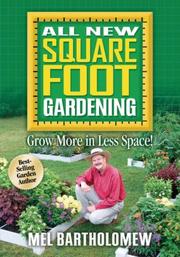
Pace: 8–10 weeks total. Weeks 1–4: "Square Foot Gardening" by Mel Bartholomew (~20–25 pages/day, reading alongside building your first SFG box if the season allows). Weeks 5–9: "The Vegetable Gardener's Bible" by Edward C. Smith (~25–30 pages/day, cross-referencing Smith's plant profiles against the crops
- The Square Foot Gardening grid system: dividing a 4×4 bed into 16 one-square-foot cells and spacing plants by their per-square density (Bartholomew)
- Mel's Mix: the 1/3 blended compost + 1/3 peat moss + 1/3 coarse vermiculite soilless growing medium and why it outperforms native soil (Bartholomew)
- The 'no-dig, no-till' philosophy: building up rather than digging down, and why disturbing soil structure harms productivity (Bartholomew & Smith)
- Edward Smith's W-O-R-D system (Wide rows, Organic methods, Raised beds, Deep soil) as a complementary framework for maximizing yield per square foot (Smith)
- Deep, loose, fertile soil: Smith's emphasis on at least 12–24 inches of biologically active, well-amended soil as the foundation of plant health (Smith)
- Seed starting vs. transplanting: when to direct-sow vs. start indoors, hardening off, and reading seed packets for timing (both books)
- The full growing-season cycle: soil prep → planting → watering → feeding → pest/disease scouting → harvest → bed reset (both books)
- Succession planting and interplanting: staggering sowings and pairing crops to extend harvest and use space efficiently (Bartholomew & Smith)
- According to Bartholomew, what are the three ingredients of Mel's Mix and why is each one chosen — what role does each play in drainage, aeration, and fertility?
- How does the SFG grid system determine how many plants go in a single square, and can you give the correct density for at least four different crops (e.g., carrots, lettuce, tomatoes, radishes)?
- What does Smith mean by 'deep soil,' and what specific preparation steps does he recommend to achieve the 12–24 inch rooting depth he considers ideal?
- How do Bartholomew's and Smith's approaches to soil building differ, and in what ways are they complementary for a beginner starting from scratch?
- What is succession planting, and how would you apply it to a crop like lettuce or radishes across a single growing season using advice from either book?
- Walk through the complete lifecycle of one vegetable crop — from choosing a variety and starting seeds to final harvest — drawing on guidance from both books.
- Build (or plan on paper) a 4×4 SFG box: sketch all 16 squares, assign a crop to each using Bartholomew's spacing charts, and calculate exactly how many seeds or transplants you need before buying anything.
- Mix a small batch of Mel's Mix (even a single wheelbarrow's worth) and compare its texture, drainage, and weight to a handful of your native garden soil — record your observations in a gardening journal.
- Using Smith's plant profiles, select 5–8 vegetables suited to your climate and season, then create a planting calendar that maps each crop to its direct-sow or transplant date, expected days-to-harvest, and a succession interval.
- Conduct a 'soil audit' of your yard: dig a 12-inch hole, note soil color, texture, compaction, and any worm activity, then write a one-page amendment plan referencing Smith's recommendations for improving what you find.
- Complete one full grow-out from seed to table with at least two crops (e.g., radishes for a quick win + one longer-season crop like beans or kale), keeping a weekly log of watering, feeding, problems noticed, and harvest weights.
- After finishing both books, write a one-page 'My Garden Philosophy' statement that synthesizes Bartholomew's efficiency-focused grid method with Smith's deep-soil organic principles — note where they agree, where they differ, and which ideas you will adopt.
Next up: ">Completing a first full season with both books' frameworks gives you direct, soil-level experience with plant lifecycles and bed management, creating the practical vocabulary and confidence needed to tackle more advanced topics — such as multi-season crop rotation, soil ecology, composting systems, and integrated pest management — that a next-stage curriculum would build upon.
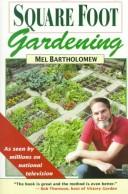
The single best entry point for beginners — it introduces a simple, high-yield raised-bed system that removes overwhelm and delivers quick wins, building confidence and core vocabulary (spacing, soil mix, succession planting).
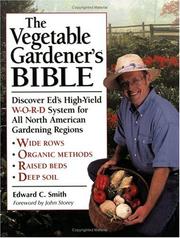
Expands on the first book by covering a wide range of vegetables in depth, teaching soil preparation, watering, and pest basics — the essential reference to keep beside the first bed all season.
Growing Deeper: Fruit, Technique & the Full Kitchen Garden
BeginnerAdd fruit crops (berries, tree fruit) to the garden, understand pruning and training, and develop a more complete planting plan that covers spring through fall.
▸ Study plan for this stage
Pace: 6–8 weeks total: spend weeks 1–3 on "The Backyard Orchardist" (~25–30 pages/day), then weeks 4–7 on "The Fruit Gardener's Bible" (~20–25 pages/day), with week 8 reserved for review, cross-referencing both books, and completing hands-on exercises.
- Fruit crop selection by climate and space: understanding chill hours, hardiness zones, and rootstock choices as introduced in The Backyard Orchardist
- Tree fruit life cycles: how apple, pear, cherry, and plum trees progress from planting through bearing age, and what to expect each season
- Pruning fundamentals: the difference between heading cuts and thinning cuts, when to prune each fruit type, and the goals of an open-center vs. central-leader form (covered in depth in The Backyard Orchardist)
- Training systems for small spaces: espalier, dwarf rootstocks, and high-density planting strategies drawn from both books
- Berry crops and brambles: planting, trellising, and annual pruning cycles for strawberries, raspberries, blueberries, and grapes as detailed in The Fruit Gardener's Bible
- Pollination requirements: self-fertile vs. cross-pollinating varieties, selecting compatible pollinators, and bloom-time matching across both books
- Pest and disease management specific to fruit: common orchard problems (fire blight, apple scab, brown rot, codling moth) and organic/IPM approaches outlined in The Backyard Orchardist
- Whole-garden seasonal planning: integrating fruit trees, berry patches, and vegetable beds into a cohesive spring-through-fall planting and harvest calendar
- After reading The Backyard Orchardist, can you explain what 'chill hours' are and why they matter when choosing an apple or peach variety for your specific region?
- What is the difference between a heading cut and a thinning cut, and when would you use each one on a young fruit tree?
- Using The Fruit Gardener's Bible as your guide, what are the key differences in pruning timing and technique between raspberries (floricanes vs. primocanes) and blueberries?
- How do you identify a compatible pollinator pair for two fruit trees, and what bloom-time information from The Backyard Orchardist would you consult?
- What are three signs of fire blight described in The Backyard Orchardist, and what immediate steps should a beginner take upon discovering it?
- Drawing on both books, how would you sketch a simple integrated garden plan that places a dwarf apple tree, a blueberry patch, and a raised vegetable bed to make best use of sunlight, space, and pollinator access?
- Chill-hour audit: Look up the average annual chill hours for your zip code/region, then use the variety tables in The Backyard Orchardist to identify at least three tree-fruit varieties that are realistically suited to your climate. Write a one-paragraph justification for each choice.
- Pruning cut practice: Using a neglected shrub or young ornamental tree in your yard (or a bundle of branches from a nursery), practice making clean heading cuts and thinning cuts with bypass pruners. Photograph before and after, and annotate the photos with the cut type and your reasoning, referencing the pruning diagrams in The Backyard Orchardist.
- Pollination pairing chart: Create a simple two-column chart of at least four fruit types (e.g., apple, pear, sweet cherry, blueberry). For each, note whether it is self-fertile or needs a partner, and name at least one compatible pollinator variety, citing page references from both books.
- Berry trellis sketch: Using the trellising guidance in The Fruit Gardener's Bible, draw a scaled diagram of a raspberry or grape trellis sized for a 10–15 ft row in your yard. Label post spacing, wire heights, and the pruning zones for first- and second-year canes.
- Seasonal harvest calendar: Build a month-by-month table (March–November) that maps the expected bloom, fruit development, and harvest windows for at least five crops — mixing tree fruit, berries, and two vegetables from earlier stages — using harvest timing information from both books.
- Integrated garden layout plan: Draft a bird's-eye sketch of your actual or imagined backyard that incorporates at least one dwarf or semi-dwarf fruit tree, one berry planting, and two vegetable beds. Annotate it with sun exposure, spacing requirements, and pollinator pathways, drawing specific spacing and siting guidance from The Backyard Orchardist and The Fruit Gardener's Bible.
Next up: Mastering fruit crops, pruning logic, and multi-season planning in this stage gives the reader the horticultural vocabulary and whole-garden perspective needed to tackle advanced topics such as soil fertility management, cover cropping, and season extension — the natural next frontier for a maturing kitchen gardener.
The go-to beginner guide for home fruit growing — covers tree selection, planting, pruning, and pest management in plain language, bridging the gap from vegetables to fruit production.

Broadens fruit knowledge beyond tree fruit to include berries, grapes, and small fruits, giving the gardener a complete picture of perennial food crops and how to integrate them with annual vegetables.
The Living Soil: Fertility, Composting & Ecology
IntermediateUnderstand soil biology deeply enough to build and maintain fertility naturally, reduce inputs, and make the garden increasingly self-sustaining.
▸ Study plan for this stage
Pace: 6–8 weeks total. Week 1–4: "Teaming with Microbes" (~20–25 pages/day, reading all three parts carefully — treat Part 1 on soil biology as foundational theory before moving on). Week 5–8: "The Market Gardener" (~15–20 pages/day, pausing after each chapter to connect Fortier's practical techniques bac
- The Soil Food Web: the interconnected community of bacteria, fungi, protozoa, nematodes, arthropods, and earthworms that drives nutrient cycling — the central framework of 'Teaming with Microbes'
- Bacterial-dominant vs. fungal-dominant soils: Lowenfels explains how the ratio of bacteria to fungi determines which plants thrive, and how tillage, pH, and organic matter inputs shift that balance
- The nitrogen cycle through biology: how bacteria fix, immobilize, and mineralize nitrogen, making synthetic fertilizers largely redundant in a biologically active soil
- Mycorrhizal networks: how fungal hyphae extend plant root reach, trade minerals (especially phosphorus) for plant sugars, and why broad-spectrum pesticides and aggressive tillage sever these networks
- Compost as a biological inoculant, not just a nutrient source: Lowenfels frames finished compost as a delivery vehicle for diverse microbial life, shifting the reader's mental model from chemistry to ecology
- Fortier's permanent bed system and minimal tillage: 'The Market Gardener' shows how raised, permanent beds protect soil structure and the food web built in Stage 1 of reading, translating Lowenfels's biology into daily farm decisions
- Fortier's fertility program — compost applications, green manures, and targeted amendments: a practical, low-external-input system grounded in feeding the soil rather than the plant
- Closing the nutrient loop: Fortier's emphasis on on-site compost production and crop residue management as the operational expression of the self-sustaining garden goal
- After reading 'Teaming with Microbes,' can you trace the journey of a nitrogen atom from atmospheric N₂ through bacterial fixation, immobilization in microbial biomass, predation by protozoa, and final plant uptake — without referencing a synthetic fertilizer at any step?
- How does Lowenfels explain the difference between a bacterially dominated and a fungally dominated soil, and which type does each of the following favor: a vegetable bed, a perennial border, a mature forest?
- Why does Lowenfels argue that synthetic, soluble fertilizers can actively damage the soil food web, and what is the mechanism by which they do so?
- How does Fortier's permanent raised-bed system in 'The Market Gardener' protect and leverage the biological activity described by Lowenfels — specifically regarding tillage depth, compaction, and fungal hyphae?
- What is Fortier's composting and amendment schedule, and how does it reflect the principle of feeding soil organisms first rather than feeding plants directly?
- How would you diagnose a fertility problem in your own garden using biological indicators (earthworm counts, fungal threads, plant vigor) rather than relying solely on a chemical soil test?
- Soil life audit: Before finishing 'Teaming with Microbes,' dig three sample holes in different parts of your garden (a cultivated bed, a path, an undisturbed corner). Count earthworms per cubic foot, note the presence of white fungal threads, smell the soil (earthy = actinomycetes active), and photograph the structure. Revisit after completing both books to see what you now understand about what y
- Build or restart a compost pile using Lowenfels's biological lens: layer carbon and nitrogen materials with attention to particle size and moisture, aiming for the 'hot' thermophilic phase he describes. Log temperatures daily for two weeks and identify which phase (bacterial bloom → fungal takeover → actinomycete finishing) you are in at each reading.
- Map your soil food web: After finishing Part 1 of 'Teaming with Microbes,' draw your own diagram of the soil food web from memory, labeling each trophic level, the nutrients released at each predator–prey interaction, and one human practice that helps or harms each link.
- Apply Fortier's bed-prep method to at least one new or existing bed: measure and mark permanent 30-inch beds, apply a 2-inch compost layer without digging it in, and observe over 4 weeks how earthworms and soil structure respond compared to a dug control bed nearby.
- Conduct a 'feeding the soil' amendment trial: following Fortier's recommendations in 'The Market Gardener,' apply only compost and one approved organic amendment (e.g., kelp meal or rock phosphate) to half a bed, and nothing to the other half. Grow a fast crop (radishes or lettuce) and compare germination rate, leaf color, and yield at harvest.
- Write a one-page 'Soil Fertility Plan' for your garden that integrates both books: specify your compost production target (Fortier's quantities), your tillage approach (Lowenfels's food-web rationale), and two biological indicators you will monitor each season to judge whether fertility is improving.
Next up: Understanding that healthy soil biology is the engine of plant health naturally leads to the next stage: once you can build and sustain fertility, you are ready to study how plants use that fertility to grow — opening the door to crop planning, spacing, succession sowing, and season extension.

Transforms how a gardener thinks about soil — explaining the soil food web in accessible terms — and is the essential prerequisite for understanding why organic fertility practices actually work.

Though written for small-scale market growers, this book's intensive bed system, compost-first fertility approach, and crop planning tools are exactly what a serious home gardener needs to maximize a small space year-round.
Advanced Planning: Succession, Rotation & Pest Management
IntermediateDesign a full-season planting calendar with succession crops, multi-year rotation plans, and integrated pest and disease management strategies.
▸ Study plan for this stage
Pace: 6–8 weeks total: Weeks 1–3 cover "Crop Rotation and Cover Cropping" by Seth Kroeck (~20–25 pages/day, including time to sketch rotation diagrams); Weeks 4–7 cover "The Organic Gardener's Handbook of Natural Pest and Disease Control" by Fern Marshall Bradley (~25–30 pages/day, using the encyclopedia-
- Plant family groupings (Brassicas, Nightshades, Alliums, Legumes, Cucurbits, etc.) and why rotating them across beds breaks pest and disease cycles
- Cover crop selection and timing: how nitrogen-fixing legumes, soil-building grasses, and weed-suppressing covers are sequenced between cash crops (Kroeck)
- Multi-year rotation frameworks: designing 3- to 4-year bed rotation maps that account for soil nutrient needs, pH preferences, and residue management (Kroeck)
- Succession planting logic: staggering sowings of the same crop (e.g., lettuce, beans, radishes) every 2–3 weeks to extend harvest windows across the full season
- Integrated Pest Management (IPM) hierarchy: prevention first (healthy soil, rotation, resistant varieties), then cultural controls, then biological controls, then least-toxic organic sprays (Bradley)
- Identification-before-action: using Bradley's pest and disease profiles to correctly ID problems by symptom, insect, or pathogen before choosing a response
- Biological and physical controls: beneficial insect habitat, row covers, sticky traps, copper barriers, and how to deploy them proactively rather than reactively (Bradley)
- Organic spray and soil amendment protocols: understanding active ingredients (neem, spinosad, kaolin clay, copper, sulfur), their modes of action, and their impact on beneficial organisms (Bradley)
- Using the plant family groupings in Kroeck, can you map out a 4-year rotation plan for a 4-bed backyard garden, explaining what follows what and why?
- What are the key criteria Kroeck outlines for choosing a cover crop — and how would you select one to follow a heavy-feeding brassica crop in a short fall window?
- According to Bradley's IPM framework, what steps should you exhaust before reaching for any spray, even an organic one — and why does rotation (from Kroeck) count as a first-line IPM tool?
- A plant in your garden shows yellowing leaves with dark spots on the undersides. Using Bradley's identification system, what is your diagnostic process, and what cultural or biological controls would you try first?
- How do succession planting schedules interact with rotation plans — what conflicts can arise when you want to replant the same bed with a second crop mid-season, and how do you resolve them?
- What are the risks of over-relying on organic sprays like copper or spinosad, according to Bradley, and how does a well-designed rotation plan (Kroeck) reduce the need for them?
- Draw a to-scale map of your actual or planned garden beds, label each with its current plant family, then use Kroeck's rotation principles to write out a 4-year rotation schedule for every bed — annotate each transition with the cover crop you would plant between seasons.
- Build a 12-month succession planting calendar for at least three crops (e.g., lettuce, bush beans, and a root vegetable): calculate sow dates, transplant dates, and expected harvest windows so that a new planting is ready every 2–3 weeks throughout the growing season.
- Create a 'Pest & Disease Pressure Map' for your region: using Bradley's handbook, list the 8–10 most likely pests and diseases for the crops in your rotation, note their peak pressure windows, and pre-schedule the preventive measures (row covers, beneficial insect plants, kaolin applications) on your planting calendar.
- Conduct a 20-minute garden walk once a week for four consecutive weeks; use Bradley's identification keys to name every pest or beneficial insect you observe, record findings in a log, and practice the 'identify first, act second' discipline before deciding on any intervention.
- Design a cover crop trial: select two different cover crops from Kroeck's recommendations for the same bed, research their seed costs and termination methods, and write a one-page plan explaining which you would choose and how you would incorporate the biomass before the next cash crop.
- Cross-reference exercise: take any pest or disease entry from Bradley and trace back to Kroeck to identify which rotation move or cover crop would reduce that pest's soil reservoir or host availability — write a one-paragraph 'prevention prescription' linking both books for at least five different problems.
Next up: Mastering multi-year rotation, succession timing, and proactive pest management creates the detailed seasonal blueprint that naturally leads into the next stage — learning the hands-on cultivation techniques (soil preparation, direct sowing, transplanting, watering, and feeding) needed to actually execute that plan bed by bed throughout the growing season.

Provides a practical, garden-scale framework for rotation and cover crops — the two tools that tie together soil health, pest suppression, and long-term productivity in one coherent system.
The most comprehensive organic pest and disease reference for home gardeners; read here once the gardener has enough experience to recognize problems and apply targeted solutions.
Year-Round Harvest: Season Extension & Preservation
ExpertExtend the growing season into winter using low-cost structures, and preserve surplus harvests so the garden feeds the household across all twelve months.
▸ Study plan for this stage
Pace: 8–10 weeks total: Weeks 1–5 cover "Four-Season Harvest" (~25–30 pages/day, 5 days/week); Weeks 6–10 cover "The Art of Fermentation" (~20–25 pages/day, 5 days/week — slower pace to absorb dense technical and cultural content). Allow extra time to pause and attempt hands-on fermentation projects along
- Cold hardiness ratings and the distinction between frost-hardy and frost-tolerant crops, as Coleman uses them to select what to grow in unheated or minimally heated structures
- The 'two-blanket' system: using both a cold frame or low tunnel (outer layer) and row cover fabric (inner layer) to create a microclimate several hardiness zones warmer than the outdoor air
- Succession planting timed to the 'Persephone period' — Coleman's term for the roughly 10 weeks around the winter solstice when day length drops below 10 hours and plant growth nearly halts — so crops reach harvestable size before or after that window
- Cold frame and unheated greenhouse design principles: siting for maximum solar gain, thermal mass, ventilation to prevent overheating on sunny winter days, and low-cost DIY construction
- Fermentation as a preservation technology: how lactic-acid bacteria (LAB) create an anaerobic, acidic environment that inhibits pathogens and spoilage organisms without heat or canning equipment, drawn from Katz's foundational explanation in 'The Art of Fermentation'
- The role of salt in vegetable ferments: how concentration affects microbial selection, texture, flavor, and shelf life — and how to adjust it for different vegetables and climates as Katz describes
- Fermentation beyond vegetables: Katz's survey of fermented grains, beans, dairy, beverages, and meats as a framework for thinking about whole-diet preservation from a backyard harvest
- Integrating season extension and preservation into a 12-month harvest calendar: using Coleman's planting schedules alongside Katz's preservation techniques so no surplus is wasted and the household eats from the garden year-round
- According to Coleman, what specific crops are best suited to overwintering in an unheated cold frame in a temperate climate, and why do their cold-hardiness characteristics make them ideal candidates?
- How does Coleman's 'Persephone period' concept change the way you time plantings in late summer and early autumn, and what happens to crops planted too late to beat that window?
- What are the structural and siting requirements Coleman recommends for a low-cost, high-performance cold frame or hoop house, and how do these maximize passive solar gain while preventing overheating?
- According to Katz, what are the essential conditions required for a successful lacto-ferment, and what are the most common failure points a home fermenter should watch for?
- How does Katz distinguish between wild fermentation and culture-driven fermentation, and what are the practical implications of each approach for a backyard gardener preserving a surplus harvest?
- How would you design a 12-month eating plan that combines Coleman's season-extension strategies with Katz's preservation methods to ensure the household never relies solely on store-bought produce?
- Build or retrofit one low-cost season-extension structure (cold frame, low tunnel with wire hoops and row cover, or repurposed window-frame cloche) following Coleman's siting and construction principles; monitor internal vs. external temperatures daily for two weeks and log the difference.
- Create a 'Persephone period' planting calendar for your specific location: look up your latitude, calculate your local 10-hour day-length window, then back-calculate the last safe direct-sow dates for five crops Coleman recommends for winter harvest.
- Conduct a cold-hardiness trial: plant the same variety of a frost-tolerant green (e.g., spinach, mâche, or kale) both inside your season-extension structure and in an unprotected bed; harvest and compare yield, texture, and flavor after the first hard frost.
- Make a basic lacto-fermented sauerkraut using only cabbage and salt, following Katz's core method; document brine levels, smell, bubble activity, and taste at days 3, 7, 14, and 21 to internalize the fermentation arc he describes.
- Expand into a second ferment using a vegetable from your own garden (e.g., fermented carrot sticks, kimchi-style greens, or dilly beans); experiment with a different salt concentration than your first batch and compare the results in flavor and preservation quality.
- Draft a written 12-month harvest-and-preservation plan for your garden: map each month to what Coleman says will be harvestable from your structures AND what Katz-style preserved goods from summer/autumn surplus will fill any fresh-harvest gaps.
Next up: Mastering season extension and fermentation-based preservation gives the gardener full control over the production-to-table pipeline, which naturally raises the next challenge: scaling up and systematizing — whether through soil fertility planning, seed saving, or integrating animals — topics that build directly on the year-round, self-sufficient mindset established here.
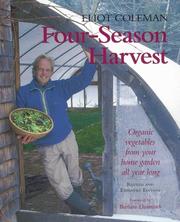
The definitive guide to cold-hardy crops and low-tech season extension (cold frames, row covers, unheated tunnels) — Coleman's methods are the gold standard for year-round home food production.

Closes the loop from garden to table by teaching fermentation as the most versatile, low-energy preservation method — a natural capstone that rewards the serious gardener with a full food-production lifestyle.
Discussion
Keep reading
Paths that share books, cover the same subject, or open a related topic.