How to learn Marketing
This curriculum takes you from the core psychology and principles of marketing all the way through brand strategy, digital channels, and data-driven decision-making. Each stage builds on the last: you first internalize why people buy, then how to position and message, then how to execute across modern channels, and finally how to think like a chief marketer who integrates everything into a coherent, measurable strategy.
Foundations: How People Think & Why They Buy
BeginnerUnderstand the psychological and behavioral roots of consumer decision-making — the 'why' behind all marketing — and get a plain-language overview of the marketing discipline.
▸ Study plan for this stage
Pace: 8–10 weeks total (~20–25 pages/day, 5 days/week): Weeks 1–3 for "Influence" (~320 pp), Weeks 4–6 for "This Is Marketing" (~240 pp), Weeks 7–9 for "Contagious" (~240 pp), with Week 10 reserved for review, reflection, and completing exercises.
- Cialdini's 6 Principles of Persuasion (Reciprocity, Commitment & Consistency, Social Proof, Authority, Liking, Scarcity) and how each exploits deep-seated cognitive shortcuts
- The concept of 'weapons of influence' — automatic, near-unconscious triggers that drive compliance and purchasing behavior
- Godin's core idea that marketing is about finding the smallest viable audience and serving them with empathy and specificity, not shouting at the masses
- The distinction between 'selfish marketing' (interruption) and 'generous marketing' (creating genuine change for people you seek to serve)
- Tension and enrollment: how Godin frames the marketer's job as creating tension that moves people toward a better version of themselves
- Berger's STEPPS framework — Social Currency, Triggers, Emotion, Public, Practical Value, Stories — as the six drivers of word-of-mouth and virality
- The role of social transmission: why people share things and how products and ideas can be 'built to share' by design
- The unifying thread across all three books: human behavior is predictable, emotionally driven, and socially embedded — and effective marketing works with these forces, not against them
- After reading Influence, can you name and define all six of Cialdini's principles and give a real-world marketing example for each one?
- How does Godin redefine 'marketing' in This Is Marketing, and why does he argue that finding a smaller, more specific audience is more powerful than targeting everyone?
- What is the 'minimum viable audience' concept from Godin, and how does it challenge traditional mass-marketing thinking?
- According to Berger's STEPPS framework in Contagious, which two or three drivers do you think are most responsible for a recent viral product or campaign you've observed, and why?
- How do the psychological triggers described by Cialdini show up inside the STEPPS framework Berger outlines — where do these two models overlap?
- Taken together, what do all three books suggest about the relationship between trust, emotion, and effective marketing?
- Influence audit: For one week, keep a log of every advertisement, email, or sales interaction you encounter. Label each with the Cialdini principle(s) it uses. At the end of the week, tally which principles appear most often and reflect on which felt most persuasive to you personally.
- Audience empathy map (Godin): Pick a real or imaginary product. Following Godin's framework, write a one-page 'who is it for and what is it for' brief — define the worldview of your smallest viable audience, the tension they feel, and the change your product promises to make in their lives.
- STEPPS teardown (Berger): Choose one piece of content that went viral (a video, a campaign, a meme, a product). Score it 1–5 on each of Berger's six STEPPS dimensions, write two sentences justifying each score, and identify which single driver was the primary engine of its spread.
- Cross-book synthesis essay (500–700 words): Write a short essay answering the question, 'Why do people buy things?' drawing on at least one specific idea from each of the three books. Focus on connecting the dots rather than summarizing each book separately.
- Redesign exercise: Take a real marketing message you find weak or unconvincing (an ad, a product page, a pitch). Rewrite or sketch a revised version that deliberately applies at least two Cialdini principles, Godin's empathy-first framing, and one STEPPS trigger. Annotate your choices.
- Teach-back: Explain the core idea of each book in plain language to someone unfamiliar with marketing — a friend, family member, or colleague. Aim for 3–5 minutes per book. Note which concepts were hardest to explain simply; those are the ones to revisit.
Next up: By establishing that consumer behavior is rooted in psychology, identity, and social dynamics, this stage gives the reader the 'why' behind human decisions — the essential lens through which the next stage's more strategic and tactical marketing frameworks (positioning, segmentation, brand-building, and the marketing mix) will make intuitive, grounded sense rather than feeling like abstract theory
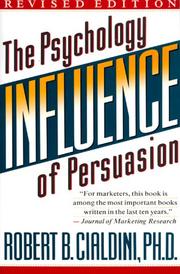
The single best starting point: Cialdini's six principles of persuasion explain the psychological levers every marketer pulls. Reading this first gives you the mental model that makes everything else click.
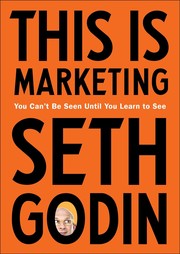
Godin reframes marketing as serving a specific audience rather than shouting at everyone — a modern, ethical philosophy that corrects beginner misconceptions before they take root.

Explains the science of why things spread, giving you a concrete framework (STEPPS) for making ideas and products worth talking about — a natural next step after understanding persuasion.
Strategy & Positioning: Standing Out in the Market
BeginnerLearn how to define a market position, craft a compelling message, and build a brand that occupies a distinct place in the customer's mind.
▸ Study plan for this stage
Pace: 4–5 weeks total: Week 1–2 — Read "Positioning" by Al Ries (~20–25 pages/day, including time to pause and reflect on real brand examples); Week 3–4 — Read "Building A StoryBrand" by Donald Miller (~25–30 pages/day, completing one chapter before moving to the next); Week 5 — Review notes from both boo
- Positioning as a mental battle: the core idea from Ries that positioning is not about what you do to a product, but what you do to the mind of the prospect
- The product ladder: how consumers rank competing brands in mental 'ladders' per category, and why being #1 or owning a rung matters
- Repositioning the competition: the strategy of shifting how customers perceive a rival in order to create space for your own brand
- The power of a narrow focus: why trying to be everything to everyone dilutes a brand, and how specialization creates strength
- The SB7 Framework from StoryBrand: the seven-part narrative structure (Character, Problem, Guide, Plan, Call to Action, Avoiding Failure, Success) that clarifies brand messaging
- The customer as hero, brand as guide: Miller's foundational principle that the customer — not the brand — must be positioned as the hero of the story
- The three levels of problem: external, internal, and philosophical problems that a brand must address to connect deeply with customers
- Message clarity over cleverness: both books converge on the idea that a simple, clear, and consistent message always outperforms a complex or creative one
- According to Ries, why is it more effective to own a word or concept in the customer's mind than to compete on product features alone?
- What is the 'product ladder' concept, and how should it influence the strategy of a brand that is entering a market as a challenger rather than a leader?
- In the StoryBrand framework, why is it a mistake for a brand to position itself as the hero of its own story, and what role should it play instead?
- How do the three levels of customer problems (external, internal, philosophical) work together, and why does addressing only the external problem leave marketing power on the table?
- How do the core arguments of 'Positioning' and 'Building A StoryBrand' complement each other — and where, if anywhere, do they create tension?
- If you had to write a one-sentence brand positioning statement for a real or hypothetical company using insights from both books, what would it look like and why?
- Brand Ladder Audit: Choose 3 product categories you use daily (e.g., coffee, smartphones, running shoes). Draw the mental ladder of brands as you perceive them, then research whether the market-share data matches your mental map — note where Ries's theory holds and where it surprises you.
- Repositioning Analysis: Find a real-world example of a brand that successfully repositioned a competitor (e.g., how challenger brands have taken on category leaders). Write a one-page breakdown of the strategy using Ries's repositioning framework.
- One-Word Equity Exercise: For your own personal brand, a side project, or a company you admire, identify the single word or concept it could own in the customer's mind. Justify your choice and explain what you would have to sacrifice to own it consistently.
- StoryBrand BrandScript: Using Miller's SB7 framework, write a complete BrandScript for a real business (your own, an employer, or a favorite brand) — filling in all seven sections: Hero, Problem (all three levels), Guide, Plan, Call to Action, Failure Stakes, and Success Vision.
- Website Header Test: Apply Miller's 'grunt test' to five websites of your choice — can a stranger understand what the company offers, how it helps them, and what to do next within five seconds? Document your findings and rewrite two of the weakest headers using StoryBrand principles.
- Synthesis Statement: Write a 1–2 page essay connecting Ries and Miller — explain how 'owning a position in the mind' (Ries) and 'becoming the guide in the customer's story' (Miller) are two sides of the same strategic coin, using at least one concrete brand example to illustrate.
Next up: Mastering positioning and brand messaging gives you the strategic foundation — the 'what and why' of your market place — so the next stage can build on this by exploring the tactical and psychological tools (pricing, persuasion, consumer behavior) that bring a defined position to life in the real world.

The foundational text on how brands win by owning a concept in the prospect's mind. Read before any other strategy book because it defines the vocabulary every subsequent author uses.

Translates positioning into messaging by teaching you to frame the customer as the hero and your brand as the guide — a practical, immediately applicable storytelling framework.
Channels & Execution: Reaching Your Audience
IntermediateMaster the key modern marketing channels — content, digital, and growth — and understand how to build systems that attract, convert, and retain customers.
▸ Study plan for this stage
Pace: 8–10 weeks total: Week 1–3 — "Traction" (~25–30 pages/day, including the 19-channel Bullseye framework chapters); Week 4–6 — "Hacking Growth" (~25–30 pages/day, focusing on the growth-hacking loop and experimentation chapters); Week 7–10 — "Epic Content Marketing" (~20–25 pages/day, a denser strateg
- The Bullseye Framework (Traction): systematically testing all 19 traction channels — from SEO and content marketing to PR, SEM, and viral marketing — to find the one or two that move the needle for your specific business
- Traction vs. Product Work (Traction): Weinberg's '50% rule' — dedicating equal time to building the product and building the distribution engine simultaneously, not sequentially
- The Growth Hacking Loop (Hacking Growth): the continuous, cross-functional cycle of Analyze → Ideate → Prioritize → Test → Learn that replaces one-off campaigns with a compounding system
- North Star Metric & Activation (Hacking Growth): identifying the single metric that best captures delivered customer value, and obsessing over the activation moment ('aha moment') that converts new users into retained ones
- Retention as the Foundation (Hacking Growth): Ellis's argument that sustainable growth is impossible without first solving retention — acquisition spend is wasted if users churn before experiencing core value
- The Content Marketing Mission Statement (Epic Content Marketing): Pulizzi's framework for defining WHO you serve, WHAT you deliver, and the OUTCOME for the audience — the strategic anchor for all content decisions
- Content Tilt & Owned Media (Epic Content Marketing): finding a unique angle (the 'content tilt') that differentiates your content in a crowded space, and building an owned audience asset (email list, community) rather than renting attention on third-party platforms
- Channel–Message–Audience Fit: the cross-book synthesis that the right channel (Traction), the right experiment cadence (Hacking Growth), and the right content (Epic Content Marketing) must align for execution to compound
- After running a Bullseye exercise on a business of your choice, which 3 channels landed in your 'promising' ring and why — what evidence or reasoning drove those rankings?
- How does Weinberg's 50% rule challenge the conventional startup assumption that 'if you build it, they will come,' and what does it mean practically for how a team allocates its weekly calendar?
- Walk through Ellis's growth hacking loop end-to-end: what happens at each stage, who owns each stage, and what makes this a 'loop' rather than a linear campaign?
- What is a North Star Metric, how do you choose one, and how does it differ from vanity metrics like total page views or app downloads?
- According to Pulizzi, why is building an owned audience (e.g., an email list) strategically superior to accumulating followers on a social platform, and what risks does relying on rented platforms create?
- How would you write a Content Marketing Mission Statement for a real or hypothetical brand, and how does the 'content tilt' concept help that brand stand out against established competitors?
- Bullseye Audit (Traction): Pick a real product or side project. List all 19 traction channels from Weinberg's framework. Score each on feasibility and potential, move them into the outer/middle/inner rings, and write a one-paragraph rationale for your top 3 'inner ring' choices.
- 50% Time Audit (Traction): Map out one week of a hypothetical product team's calendar. Deliberately split tasks into 'product' and 'traction' buckets and rebalance until you hit the 50/50 split — note what had to be cut or delegated.
- Growth Experiment Sprint (Hacking Growth): Design a mini growth experiment for a chosen activation problem. Write a full experiment card: hypothesis, channel, metric (tied to the North Star), test duration, minimum detectable effect, and what 'pass/fail' looks like. Run it if possible, or peer-review it with a colleague.
- Retention Diagnosis (Hacking Growth): Using any product you have access to (your own, a free tool, or a case study), map the user journey and identify the most likely drop-off point before the 'aha moment.' Propose two testable interventions Ellis's framework would suggest.
- Content Mission Statement Workshop (Epic Content Marketing): Write a one-sentence Content Marketing Mission Statement for a brand (real or invented) using Pulizzi's formula: '[Brand] provides [audience] with [type of content] to help them [desired outcome].' Then identify the brand's 'content tilt' by auditing 5 competitors' content and pinpointing the gap.
- Channel–Content–Growth Integration Map: Create a one-page visual that connects all three books: choose a business, assign its top Bullseye channel (Traction), define the content it will produce for that channel (Epic Content Marketing), and map how results will be measured and iterated on using the growth loop (Hacking Growth).
Next up: Mastering channels and execution systems builds the distribution muscle that the next stage will deepen — once you know how to reach and retain an audience, you're ready to explore brand strategy, positioning, and the psychological principles that make messaging resonate and stick.
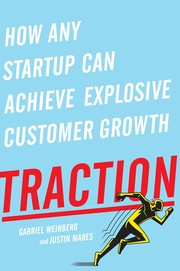
Introduces the 19 traction channels available to any marketer and a disciplined framework (Bullseye) for finding which ones work for your specific situation — essential before going deep on any single channel.

Brings the growth-hacking mindset to execution: rapid experimentation, cross-functional teams, and data loops. Builds on Traction by showing how to systematically optimize the channels you've chosen.

The definitive guide to content as a long-term marketing engine. Pairs with the growth mindset by showing how owned media compounds over time in ways paid channels cannot.
Brand & Customer Relationships: Playing the Long Game
IntermediateUnderstand how great brands are built over time through loyalty, emotion, and consistent customer experience — moving beyond campaigns to enduring brand equity.
▸ Study plan for this stage
Pace: 2–3 weeks, ~20–25 pages/day (Buyology is ~240 pages of core content); read each chapter twice — once for narrative flow, once to annotate neuromarketing insights and brand implications
- Neuromarketing & the subconscious mind: most purchase decisions are made below the level of conscious awareness, meaning traditional surveys and focus groups often lie
- Somatic markers: the brain uses emotionally tagged memories as mental shortcuts to drive brand preference and buying behavior
- Mirror neurons & emotional contagion: consumers unconsciously mirror the feelings brands project, making emotional consistency a strategic asset
- The power of ritual and sensory branding: rituals (e.g., the Oreo twist) and multi-sensory cues create deep, durable brand associations that outlast any single campaign
- Brand religion and loyalty: the world's strongest brands (Apple, Harley-Davidson) borrow structural elements from religion — iconography, community, a sense of belonging — to generate near-fanatical loyalty
- Subliminal vs. subtle messaging: Lindström debunks crude subliminal advertising but shows that subtle, consistent sensory and emotional cues accumulate into powerful brand equity over time
- The buy-ology of fear, sex, and storytelling: primal emotional triggers are the true currency of long-term brand memory, not rational product features
- SSP (Smashable Brand): a brand is truly strong when any single sensory element — a sound, a color, a shape — can instantly identify it without a logo
- According to Lindström's neuromarketing research, why do consumers so often say one thing in a focus group but do another at the point of purchase — and what does this mean for how brands should measure loyalty?
- What is a somatic marker, and how do brands deliberately build them over years of consistent customer experience to create automatic preference?
- How do the world's most powerful brands replicate the structural elements of religion (ritual, community, iconography, a clear enemy), and can you map at least one real brand onto each element?
- What is the 'Smashable Brand' test, and how would you apply it to audit a brand you interact with daily — what sensory elements pass or fail?
- Lindström argues that sensory branding (sound, smell, touch, taste, sight) creates more durable equity than visual-only advertising. What practical steps could a brand take to expand beyond visual identity?
- How does the concept of mirror neurons explain why brand storytelling and aspirational lifestyle imagery are more effective at building long-term loyalty than feature-benefit messaging?
- The Smashable Brand Audit: Pick three brands you use weekly. Strip away their logo and name. List every remaining sensory cue (color palette, jingle, packaging texture, signature smell, spokesperson voice). Score each brand 1–5 on how identifiable it is from cues alone. Write a one-page memo on what each brand should strengthen.
- Somatic Marker Mapping: Choose a brand you feel loyal to. Write a personal timeline of every meaningful interaction you've had with it (first purchase, a moment it surprised you, a time it disappointed you). Identify which interactions created positive somatic markers and which eroded them — then propose two experience-design changes to reinforce the positive ones.
- Brand Religion Canvas: Using Lindström's religion analogy, create a one-page canvas for a brand of your choice with six columns: Creed (brand promise), Icons (visual/sensory symbols), Rituals (repeated customer behaviors), Community (tribe identity), Sacred Words (brand vocabulary), and Enemy (who/what the brand stands against). Present it as if pitching a long-term loyalty strategy.
- Neuromarketing Research Critique: Find one published case study of a brand using traditional focus groups and one using biometric/neuromarketing methods. Compare the insights each method surfaced. Write a 300-word reflection on what Buyology's findings suggest about the limits of self-reported consumer data.
- Sensory Branding Concept Sprint: Imagine you are the brand manager for a local coffee shop with no marketing budget. Using Lindström's sensory branding principles, design a low-cost, multi-sensory brand experience (covering at least 3 of the 5 senses). Sketch the concept and explain which emotional/somatic response each sensory element is designed to trigger.
- Emotional Trigger Inventory: Watch five TV or YouTube ads from different categories (auto, food, tech, fashion, charity). For each, identify the primary primal trigger Lindström would classify it under (fear, sex, humor, aspiration, belonging, etc.). Rate how effectively the ad converts that trigger into a long-term brand memory cue rather than just short-term attention.
Next up: Buyology reveals the invisible, subconscious architecture beneath brand loyalty — establishing that enduring equity is built through emotion, ritual, and sensory consistency — which sets the foundation for the next stage, where these psychological principles are translated into deliberate strategic frameworks for brand positioning, customer experience design, and long-term relationship management.

Uses neuromarketing research to reveal the subconscious forces that drive brand loyalty, deepening your understanding of why emotional branding works and how to design for it.
Advanced Mastery: Data, Strategy & the CMO Mindset
ExpertIntegrate analytics, long-term brand strategy, and organizational thinking to make marketing decisions the way a senior leader does — balancing creativity with rigorous measurement.
▸ Study plan for this stage
Pace: 8–10 weeks total: Weeks 1–5 on "Marketing Metrics" (~25–30 pages/day, including time to work through formulas and data examples); Weeks 6–10 on "Eating the Big Fish" (~20–25 pages/day with strategic reflection pauses after each chapter). Reserve the final 3–4 days for cross-book synthesis and capsto
- The full marketing metrics stack — from share of market and penetration to CLV, NPS, and ROMI — and how each metric maps to a specific business decision (Farris)
- Decomposing revenue and profit drivers: understanding how margin, price, volume, and mix interact so marketing investments can be evaluated rigorously (Farris)
- Customer lifetime value (CLV) and customer equity as the financial north star for long-term brand investment decisions (Farris)
- Share of voice vs. share of market dynamics and the strategic implications of over- or under-investing in media relative to competitors (Farris)
- The Challenger Brand mindset: how resource-constrained brands can disrupt category leaders by sacrificing breadth for a single-minded, provocative idea (Morgan)
- The 8 Credos of Challenger Brands — including Lighthouse Identity, Thought Leadership, and Overcommitment — as a strategic operating system for brand-building (Morgan)
- Balancing quantitative rigor (Farris) with bold, emotionally resonant positioning (Morgan): the core tension and skill of the senior marketing leader
- Organizational and CMO-level thinking: translating metric-driven insights into brand strategy narratives that align cross-functional teams and secure executive buy-in
- Given a P&L and media spend dataset, which Farris metrics would you prioritize to diagnose whether a brand's marketing investment is creating or destroying value — and why?
- How does Farris's treatment of Share of Voice (SOV) vs. Share of Market (SOM) change the way you would advise a challenger brand on its media budget allocation?
- According to Morgan, what fundamentally distinguishes a Challenger Brand's strategy from a niche brand's strategy, and how does the concept of a 'Lighthouse Identity' operationalize that difference?
- How would you use CLV and customer equity metrics (Farris) to build the financial business case for the kind of bold, long-term brand commitment Morgan advocates in 'Eating the Big Fish'?
- A CMO must present a three-year brand strategy to the CFO. Drawing on both books, how do you structure an argument that balances measurable short-term ROMI with the longer-horizon brand equity investments Morgan champions?
- Which of Morgan's 8 Credos is most dependent on having strong marketing measurement infrastructure in place first, and how does Farris's framework support it?
- Metrics Audit: Choose a real or hypothetical brand and build a one-page 'marketing dashboard' using at least 8 metrics from Farris (e.g., penetration, CLV, ROMI, SOV, NPS, gross margin, churn rate, brand awareness). Write a two-paragraph executive narrative interpreting what the numbers collectively say about brand health.
- SOV/SOM Gap Analysis: Research the approximate ad-spend and market-share figures for two competing brands in any category. Apply Farris's SOV–SOM framework to determine which brand is over- or under-investing, then write a one-page strategic recommendation on what the challenger should do differently.
- Challenger Brand Deconstruction: Select a real brand you believe operates as a Challenger (not necessarily one Morgan uses). Map its strategy against Morgan's 8 Credos — which credos are strongly present, which are absent? Write a 500-word assessment of whether it is a 'true' Challenger or merely a niche player.
- CMO Strategy Brief: Synthesize both books by writing a 1–2 page CMO-level strategy brief for a brand of your choice. The brief must include: (a) three KPIs drawn from Farris with current benchmarks and targets, (b) a Challenger positioning statement inspired by Morgan's Lighthouse Identity credo, and (c) a recommended resource trade-off that reflects the 'sacrifice' principle from 'Eating the Big
- CFO Pitch Simulation: Roleplay a 5-minute verbal pitch (record yourself or present to a peer) where you justify a 20% increase in brand-building spend using CLV and customer equity logic from Farris, while framing the creative ambition in Morgan's Challenger language. Critique the recording for both analytical rigor and strategic conviction.
- Cross-Book Tension Journal: After finishing both books, write a one-page reflection on the central tension between Farris's measurement discipline and Morgan's call for bold, sometimes unmeasurable brand bets. Articulate your personal philosophy as a senior marketer on how to resolve this tension in practice.
Next up: Mastering the interplay between rigorous metrics (Farris) and bold challenger strategy (Morgan) equips the reader with the analytical and strategic vocabulary of a CMO, creating the ideal foundation for exploring more specialized advanced topics — such as digital growth marketing, brand portfolio management, or go-to-market leadership — where both data fluency and strategic courage must be applied
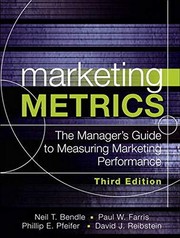
The authoritative reference on quantifying marketing performance — from CLV and ROI to brand equity scores. Equips you to defend and optimize every decision with data.

Teaches challenger-brand strategy: how to compete against dominant incumbents through bold positioning and cultural intelligence. The perfect capstone, synthesizing creativity, strategy, and competitive thinking at the highest level.
Discussion
Keep reading
Paths that share books, cover the same subject, or open a related topic.