Best Books on Product Marketing (in Order)
This curriculum builds a rigorous, end-to-end product marketing mastery path starting from the strategic foundations of positioning and messaging, then advancing through go-to-market execution, launch mechanics, and finally the systems-level thinking needed to drive sustained adoption. Because the learner starts at an intermediate level, early stages sharpen strategic vocabulary before later stages demand synthesis across positioning, sales alignment, and growth.
Strategic Foundations: Positioning & Messaging
IntermediateDevelop a rigorous mental model for market positioning and craft clear, differentiated messaging that resonates with target customers.
▸ Study plan for this stage
Pace: 8–10 weeks, ~25–30 pages/day (with 2–3 days/week for exercises and reflection)
- Positioning as owning a unique place in the customer's mind, not just market differentiation
- The primacy of perception: how customers' existing mental categories shape what messages they'll accept
- The positioning ladder: understanding competitive context and where your brand fits relative to alternatives
- Messaging architecture: translating positioning into clear, memorable language that cuts through noise
- The customer's journey and worldview: why storytelling and narrative structure matter more than feature lists
- Differentiation through meaningful contrast: identifying what makes your offering genuinely distinct and why it matters
- Positioning as a constraint: how a clear position forces strategic choices and prevents brand dilution
- Testing and refining positioning: validating that your positioning resonates with actual target customers
- What is the difference between positioning and differentiation, and why does Ries argue that positioning is fundamentally about the customer's mind rather than the product itself?
- How does the concept of the 'positioning ladder' help you understand your competitive landscape, and what does it mean to own a rung on that ladder?
- According to Dunford, what are the five key components of positioning, and how do they work together to create a coherent market position?
- Why does Miller argue that customers don't buy products—they buy solutions to problems—and how should this insight shape your messaging?
- How can you craft a positioning statement that is both differentiated and credible, and what makes some positioning claims fail in the market?
- What role does narrative and storytelling play in making positioning memorable and emotionally resonant with customers?
- Map the positioning ladder for your product or a competitor: identify the market leader, the #2 player, and where your offering sits. Write a one-sentence positioning statement for each rung.
- Conduct a positioning audit: collect 5–10 pieces of messaging (website copy, ads, pitch decks) from your company or a competitor and identify the implicit positioning. Is it consistent? Does it match the intended position?
- Interview 3–5 target customers and ask them, unprompted, how they would describe your product to a friend. Compare their language to your intended positioning—where are the gaps?
- Write three different positioning statements for the same product, each emphasizing a different customer problem or competitive contrast. Test which one resonates most with a small group of potential customers.
- Build a positioning canvas (using Dunford's framework): define the target customer, the problem they face, your category, the key differentiators, and the reason to believe. Identify any gaps or contradictions.
- Create a customer journey map for your target persona and identify the key moments where messaging needs to reinforce your positioning. Draft messaging for 2–3 of these touchpoints.
- Deconstruct the positioning and messaging of a brand you admire (e.g., Apple, Slack, Warby Parker). Identify their positioning ladder rung, their narrative structure, and the core problem they're solving.
Next up: This stage equips you with a clear, defensible positioning and messaging framework; the next stage will teach you how to operationalize this positioning across channels, campaigns, and customer touchpoints to drive awareness and conversion.

The canonical text on positioning — it establishes the core vocabulary (ladders, categories, differentiation) that every subsequent book in this curriculum assumes you know. Read this first to anchor all strategic thinking.

Dunford modernizes Ries for today's B2B and SaaS products, offering a practical, repeatable positioning process. Read immediately after Ries to see how classic theory translates into a hands-on workshop method.

Bridges positioning into customer-facing messaging by using narrative structure — once you know what you stand for, this teaches you how to say it so customers instantly understand and care.
Understanding the Market & the Buyer
IntermediateDeeply understand how markets adopt new products and how to segment, target, and speak to the right buyers at the right moment.
▸ Study plan for this stage
Pace: 6–7 weeks, ~25–30 pages/day (Crossing the Chasm: 3–4 weeks; The Mom Test: 2–3 weeks)
- The Technology Adoption Lifecycle and the chasm between early adopters and the early majority
- Positioning strategy: how to define a beachhead market and dominate it before expanding
- The role of pragmatists vs. visionaries in product adoption and how to win each segment
- Talking to customers without bias: asking questions that reveal truth rather than validate assumptions
- The Mom Test framework: how to get honest feedback by focusing on customer behavior and problems, not your idea
- Segmentation and targeting: identifying and reaching the right buyer persona at the right stage of the adoption curve
- Messaging and narrative: how to speak to different buyer archetypes in their language and context
- What is the 'chasm' in Crossing the Chasm, and why do many promising products fail to cross it?
- How does the Technology Adoption Lifecycle (innovators, early adopters, early majority, late majority, laggards) explain different buyer behaviors, and why is the gap between early adopters and early majority so critical?
- What is a beachhead market, and why is it essential to dominate one segment before attempting to expand to adjacent markets?
- How do pragmatists differ from visionaries in their buying criteria and decision-making processes, and why is this distinction crucial for product marketing?
- What are the core principles of the Mom Test, and how do they help you avoid confirmation bias when gathering customer feedback?
- How can you use the Mom Test framework to validate whether a customer problem is real and worth solving, versus simply validating your own assumptions?
- Map your target product or service onto the Technology Adoption Lifecycle. Identify which segment you're currently serving, which segment you need to reach next, and what the 'chasm' looks like for your specific market.
- Define a beachhead market for a product you're familiar with: specify the customer segment, their primary pain point, and why this segment is winnable before expanding to adjacent markets.
- Conduct 5–10 customer interviews using the Mom Test framework. Record the interviews (with permission), then review them to identify moments where you asked leading questions vs. open-ended questions, and note what you learned from behavior vs. stated preferences.
- Create two positioning statements for the same product: one for visionaries/early adopters and one for pragmatists/early majority. Show how the messaging, language, and value proposition differ for each buyer archetype.
- Analyze a failed product launch or a product that struggled to cross the chasm. Using concepts from both books, diagnose what went wrong in their market segmentation, positioning, or customer research approach.
- Write a customer research plan for a new product idea. Include: the specific questions you'll ask (framed as Mom Test questions), the customer segments you'll interview, and how you'll avoid leading questions that confirm your bias.
Next up: This stage equips you with a deep understanding of *who* to target and *why* they buy, setting the foundation for the next stage, which will focus on *how* to reach them through messaging, positioning, and go-to-market strategy.
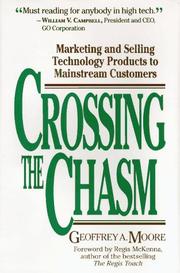
The definitive framework for technology adoption lifecycles and the deadly gap between early adopters and the mainstream — essential context for any go-to-market strategy targeting growth.

Teaches product marketers how to conduct customer conversations that yield honest, actionable insight rather than flattery — a critical skill for validating messaging and ICP assumptions before a launch.
Go-to-Market Execution & Launches
IntermediateDesign and execute a structured go-to-market motion — from launch planning and sales enablement to channel strategy and driving initial adoption.
▸ Study plan for this stage
Pace: 4–5 weeks, ~40–50 pages/day. Start with "Loved" (2 weeks), then "Launch" (2–3 weeks). Allocate 2–3 days per book for review and integration exercises.
- Product-market fit validation through customer love and emotional connection (Loved framework)
- The psychology of customer desire and how to build products people genuinely want
- Structured launch sequences and the Product Launch Formula (PLF) phases: pre-launch, launch, and post-launch
- Building anticipation and scarcity through strategic communication and audience segmentation
- Sales enablement and equipping your team with messaging, positioning, and proof points
- Channel strategy and multi-touch customer journey orchestration
- Measuring adoption velocity and momentum to sustain post-launch growth
- Integrating customer feedback loops into launch execution for continuous optimization
- What are the core components of the 'Loved' framework, and how do you assess whether your product has achieved genuine customer love versus mere satisfaction?
- How does Jeff Walker's Product Launch Formula structure a go-to-market motion, and what are the key phases you must execute sequentially?
- What role does pre-launch audience building and segmentation play in creating momentum for a product launch?
- How do you design sales enablement materials and messaging that align with your target customer's emotional drivers and objection points?
- What metrics and signals indicate that your launch is driving real adoption, and how do you adjust your strategy based on early performance data?
- How can you use scarcity, urgency, and social proof strategically during a launch without compromising long-term brand trust?
- Conduct a 'Loved' audit on a real product (yours or a competitor's): map customer testimonials, NPS feedback, and usage patterns against the Loved framework to identify gaps in emotional connection.
- Design a 3-phase launch sequence (pre-launch, launch, post-launch) for a product using Walker's PLF, including specific tactics, timeline, and success metrics for each phase.
- Create a customer segmentation and messaging matrix: identify 3–4 distinct audience segments and craft differentiated positioning and value propositions for each based on their emotional drivers.
- Build a sales enablement toolkit (1-pager, email templates, objection-handling guide, case study) that equips your sales team to communicate the product's value and address common concerns.
- Map your go-to-market channel strategy: identify which channels (email, social, partnerships, paid, organic) you'll activate in each launch phase and define success criteria for each.
- Run a mini-launch simulation: execute a 2-week compressed version of your launch plan with a small audience segment, measure adoption and feedback, and document learnings for full-scale execution.
Next up: This stage equips you with the tactical frameworks and execution discipline to bring products to market with momentum and customer love; the next stage will deepen your ability to scale adoption, optimize pricing and packaging, and build sustainable growth engines beyond the initial launch window.

Written by a Silicon Valley product marketing veteran, this is the most comprehensive modern guide to the PMM role — covering launches, GTM strategy, and cross-functional alignment in one cohesive framework. Read here after positioning is solid.

Provides a battle-tested, sequenced launch playbook focused on building anticipation and driving conversion — complements Lauchengco's strategic view with concrete launch mechanics and timing.
Sales Alignment & Revenue-Driven GTM
ExpertMaster the intersection of product marketing and revenue — enabling sales teams, building competitive intelligence, and aligning GTM motions to pipeline and growth metrics.
▸ Study plan for this stage
Pace: 8–10 weeks, ~25–30 pages/day (alternating between both books in parallel, with 1–2 weeks per book for deep review and exercises)
- Jobs to be Done (JTBD) framework: understanding what customers are actually trying to accomplish, not just their demographics or stated needs
- Competitive positioning through customer context: how to differentiate by understanding the job customers are hiring your product to do
- The Challenger Sale methodology: teaching, tailoring, and taking control to shift customer perspective and create new value
- Insight-driven selling: leveraging unique market intelligence and provocative perspectives to move deals forward and build pipeline
- Aligning product narrative with sales conversations: translating JTBD insights into compelling, revenue-focused messaging that resonates with buyers
- Building sales enablement materials grounded in customer jobs and competitive insights: equipping teams with research-backed tools to win deals
- Measuring GTM effectiveness: connecting product marketing activities (positioning, messaging, competitive intelligence) to sales velocity and revenue outcomes
- What is the Jobs to be Done framework, and how does it differ from traditional customer segmentation? How would you apply it to your product?
- How can understanding the 'job' your customer is trying to accomplish inform your competitive positioning and messaging strategy?
- What are the three core principles of the Challenger Sale, and how do they shift the dynamic between seller and buyer?
- How should product marketing use market insights and provocative perspectives to enable sales teams to move deals through the pipeline?
- What metrics and KPIs would you track to measure whether your product marketing and sales alignment efforts are driving revenue growth?
- How would you design a sales enablement program that bridges JTBD insights with Challenger Sale tactics to improve win rates?
- Map your top 3 customer segments using the Jobs to be Done framework: identify the core job, the emotional and functional dimensions, and the competing alternatives customers consider.
- Conduct 3–5 customer interviews focused on uncovering the job your product helps customers accomplish; document the context, constraints, and desired outcomes.
- Analyze your top 3 competitors through a JTBD lens: what job are they positioning themselves to solve, and where is the gap in their narrative?
- Create a 'Challenger Insight' brief: identify a provocative, research-backed perspective about your market that would surprise and reframe a prospect's thinking.
- Develop a sales conversation guide (or 'battle card') for your top 2 use cases that weaves together JTBD context, competitive differentiation, and Challenger Sale teaching moments.
- Interview 2–3 sales reps about their biggest objections and lost deals; map these back to JTBD and Challenger principles to identify gaps in enablement.
- Build a competitive intelligence dashboard or brief that tracks how competitors are positioning against your JTBD narrative; update monthly.
- Design a 30-day sales enablement pilot: equip a small sales team with JTBD-informed messaging and Challenger tactics; measure deal velocity and win rate before/after.
Next up: This stage equips you with a deep, customer-centric framework for positioning and selling—grounding GTM strategy in the jobs customers are trying to accomplish and arming sales teams with insights and conversation tactics that drive revenue; the next stage will build on this foundation by scaling these insights across channels, campaigns, and customer lifecycle to create a cohesive, metrics-driven

The Jobs-to-Be-Done framework reframes how customers 'hire' products, giving product marketers a powerful lens for competitive differentiation and sales narrative — essential before tackling full revenue alignment.
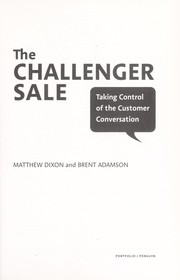
Reveals how top B2B sales reps teach, tailor, and take control — product marketers who understand this model build far more effective sales enablement content and competitive messaging that actually moves deals.
Systems Thinking: Sustained Adoption & Growth
ExpertThink at the systems level — connecting product marketing strategy to long-term category creation, brand authority, and compounding adoption loops.
▸ Study plan for this stage
Pace: 4–5 weeks, ~40–50 pages/day (accounting for dense strategic frameworks and case studies requiring reflection)
- Category creation as a strategic lever: how to define and own a new market category rather than competing in existing ones
- The 'category king' advantage: why the category leader captures disproportionate value and how to position for that role
- Narrative and meaning-making: using storytelling and mental models to shape how customers perceive the category and your product's role in it
- The 'big game' framework: aligning product, positioning, and go-to-market strategy around a unifying vision that resonates across stakeholders
- Compounding adoption loops: how early adopters, influencers, and network effects create self-reinforcing growth when the category narrative is strong
- Systems-level thinking in marketing: understanding how product features, messaging, pricing, partnerships, and culture all reinforce a coherent category story
- Brand authority through category leadership: establishing credibility and trust by shaping the conversation, not just participating in it
- What is the difference between competing in an existing category versus creating a new one, and why does category creation lead to sustained competitive advantage?
- How does the 'category king' concept relate to long-term market dominance, and what are the key conditions that allow a company to achieve and maintain this position?
- What role does narrative and storytelling play in category creation, and how can you craft a compelling category story that influences customer perception?
- How do you identify and activate early adopters and influencers to create compounding adoption loops within a new category?
- What are the key elements of the 'big game' framework, and how do you align your product, positioning, and go-to-market strategy around it?
- How does systems-level thinking change the way you approach product marketing strategy compared to traditional product-focused marketing?
- Analyze a category creation case study from the book (e.g., Salesforce, Workday, or another example): map out the narrative they created, the early adopters they mobilized, and how they achieved category king status. Document the timeline and key inflection points.
- Conduct a 'category audit' for your own product or a product you know well: identify whether it's competing in an existing category or has the potential to create a new one. Write a 2–3 page strategic assessment with recommendations.
- Draft a category narrative for a hypothetical or real product: define the problem the category solves, the customer mindset shift required, and the positioning that makes your product the natural leader. Test this narrative with 3–5 people and iterate based on feedback.
- Map the adoption loop for a category creator: identify the early adopters, influencers, and network effects that drove growth. Propose how you would intentionally design these loops for a product you're familiar with.
- Create a 'big game' strategy document: articulate the unifying vision, the category you're creating or owning, the narrative you're building, and how product, positioning, and go-to-market align. Include 90-day and 12-month milestones.
- Identify and interview 2–3 category leaders in different industries: ask them about their category creation journey, the role of narrative, and how they sustained adoption. Synthesize insights into a brief report.
Next up: This stage equips you with the strategic frameworks to think beyond individual product launches and instead architect entire market categories and adoption systems—preparing you to integrate these systems-level insights with execution disciplines, metrics, and organizational alignment in the next stage.

Introduces category design as the highest-leverage product marketing move — shows how the most successful companies don't just win markets, they define them. The capstone strategic lens for the entire curriculum.
Discussion
Keep reading
Paths that share books, cover the same subject, or open a related topic.