The Best Books for 9-Year-Olds: What to Read Next, in Order
Nine is where children's fiction gets strange. An eight-year-old wants a story that ends well; a nine-year-old will accept a book that is eerie, unresolved or openly sad, and will read a five-hundred-page fantasy to find out what happens. This ladder starts with short, odd, unclassifiable books, moves to novels that let something genuinely bad happen, then opens the door to the first proper fantasy and the first long series — and finishes with a reference shelf, because nine is the age at which children start reading around a subject rather than through a story. Reading age and interest age are furthest apart at this point in the ladder: a nine-year-old who reads slowly still wants The Iron Man, not an easier book about an easier thing.
Strange, short and completely gripping
BeginnerRead books that do not behave like the ones before them — short, tonally odd, and impossible to predict.
▸ Study plan for this stage
Pace: Six to eight weeks if the child is reading these alone, less if some are read aloud. The Iron Man is under 70 pages and works best read aloud across four or five nights, one part per night — Hughes wrote it in five parts and they are almost exactly bedtime-sized. Stig of the Dump and The Firework-Ma
- These four books are chosen for tonal oddness rather than for reading level — the aim is to break the expectation that a story will behave itself
- The Iron Man is written by a poet and its rhythm is the point: the sentences are short, repetitive and incantatory, and it is the one book here that changes noticeably when read aloud
- Stig of the Dump never confirms whether Stig is real, and that unresolved ending is the specific new thing being offered rather than an oversight
- The Firework-Maker's Daughter is a full quest structure in around 110 pages, which makes it an efficient way to meet the shape before committing to a long fantasy
- Varjak Paw carries much of its atmosphere in Dave McKean's illustrations, so the physical edition matters more here than in the others
- Reading age and interest age come apart at this point on the ladder — a slower reader still wants The Iron Man, not an easier book about an easier subject
- Short books are doing real work at this stage: a child who finishes four books in six weeks acquires an identity as a reader that a single long book does not supply
- What is the Iron Man made of, where does he come from, and does the book ever say? Notice how comfortable Hughes is leaving that unanswered.
- Does Stig exist? Track what evidence the book gives on each side, and consider what the child is likely to conclude and whether it matters.
- Where is the frightening part of The Firework-Maker's Daughter, and how many pages does it last? Knowing the answer lets you judge the timing rather than guess.
- What do McKean's illustrations in Varjak Paw contribute that the prose does not? Look at three of them without reading the facing page.
- Which of these four would you hand to a child who says they do not like reading, and why that one rather than the shortest?
- Read the first part of The Iron Man aloud to yourself before reading it to anyone. The repetitions look flat on the page and are the whole effect out loud; hearing them once in advance changes how you deliver them.
- Read the burial sequence in The Iron Man yourself first so you know exactly how long it runs and where it lifts. It is two or three pages and it is the passage most likely to need you in the room.
- Read The Firework-Maker's Daughter yourself in one sitting — it takes about ninety minutes — so you can answer questions about the middle without stalling.
- Time one part of The Iron Man aloud. Knowing it runs eight or nine minutes lets you offer it on a night when there is no time for a chapter of anything else.
- Look through Varjak Paw's illustrations before handing it over. A few are genuinely eerie and it is better to have seen them than to be shown one.
Next up: Having accepted books that refuse to explain themselves, the reader is in the right position for the next stage, where the thing left unresolved is a loss rather than a mystery.

A poet's short novel about a metal giant who eats farm machinery and then saves the world, written in prose with a rhythm nothing else here has. Start with it: it is under a hundred pages and it resets a nine-year-old's idea of what a book can sound like.
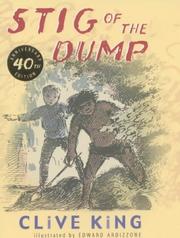
A boy falls into a chalk pit and befriends a caveman living in it, and the book never explains whether any of it happened. That refusal to resolve is exactly the new thing nine-year-olds can now tolerate.
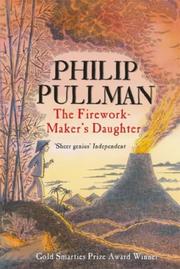
A short, fast quest story with a genuinely frightening middle, and the best possible introduction to Pullman before Northern Lights next year. Read it after the two above, when the child has the appetite for a proper journey.

A pedigree kitten leaves the house and learns a martial art from ancestral dreams — much darker and more stylish than the premise suggests, with Dave McKean's illustrations doing half the atmosphere. It is the modern book on this stage and often the one that sticks.
Books that let something sad happen
BeginnerRead a novel where loss is not repaired by the ending, and meet a beloved classic that has aged badly.
▸ Study plan for this stage
Pace: Six to eight weeks. Because of Winn-Dixie is around 180 pages of very short chapters and is the easiest reading here despite being the saddest premise; a week or two alone, or a fortnight of bedtime chapters. Kensuke's Kingdom is a similar length and reads fast because it is a survival story. The In
- The specific move being introduced: a novel where the central loss is not fixed by the ending, only survived
- Because of Winn-Dixie makes that survivable by being funny and warm on nearly every page, which is why it comes first rather than second
- Kensuke's Kingdom looks like a desert-island adventure for its first half and reveals itself as a book about a war survivor in its second — the genre switch is the design
- The Indian in the Cupboard's real question is the ethics of owning a living person, which the book raises deliberately, and its handling of Native American characters, which it does not
- Naming the problem in The Indian in the Cupboard out loud is better than either dropping the book or handing it over unremarked; a nine-year-old can hold both facts at once
- Grief written at child scale — DiCamillo gives the narrator a list of ten things about her mother, which is a technique rather than a sentiment and worth noticing
- All three books put an adult with a hidden history beside the child protagonist, which is the recurring shape of fiction at this level
- In Because of Winn-Dixie, what does the preacher eventually tell his daughter, and what does he still withhold? The book is precise about the difference.
- At what point does Kensuke's Kingdom stop being an adventure, and how many pages of Nagasaki material are there once it turns?
- In The Indian in the Cupboard, what does Omri realise about what he has done, and how far does the book follow that realisation through?
- Where does The Indian in the Cupboard's portrayal of Little Bear come from — what conventions is it borrowing, and would a child recognise them as conventions without being told?
- Which of these three would you want to be nearby for, and at which specific chapter?
- Read the last two chapters of Because of Winn-Dixie yourself before starting the book. Knowing that the mother does not return lets you decide in advance how you want to answer the question that follows.
- Read the Nagasaki chapter of Kensuke's Kingdom on your own first. It arrives suddenly and it is short, and having read it means you can be in the room for it rather than surprised by it.
- Read the first three chapters of The Indian in the Cupboard yourself and note the specific phrases used for Little Bear. Deciding what you want to say is easier with two or three actual examples to hand.
- Write yourself two sentences, in advance, saying plainly what is wrong with how the book draws its Native American character. Having the words ready is the whole exercise; improvising it mid-chapter rarely goes well.
- Leave a week after Because of Winn-Dixie before starting the next book. The gap is doing something the next title cannot.
Next up: A reader who has finished a book that does not fix its own sadness is ready to commit to a long invented world, because the willingness to keep going without a guaranteed happy resolution is exactly what a series demands.
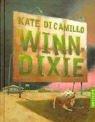
A girl, a stray dog and a small town of damaged adults, and the missing mother never comes back. It is short and easy to read, and it is the gentlest way into a book whose central problem is not solved.
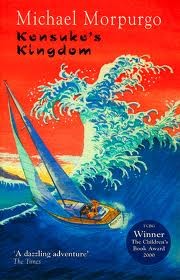
A boy washed overboard survives on an island shared with a Japanese soldier still hiding from the war. Read it after Winn-Dixie: it is a survival adventure on the surface and a book about Nagasaki underneath.
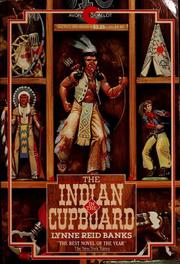
A plastic figure comes to life in a bathroom cupboard, and the book is really about the ethics of owning a person. Say plainly what is in it: the Iroquois character Little Bear speaks in broken English and is written through 1980 stereotypes of Native Americans, and the cowboy is worse. It remains widely read and a nine-year-old is old enough to be told why it is uncomfortable rather than handed it unremarked.
The first proper fantasy, and the first long series
IntermediateCommit to an invented world and to a series that will run for several books — the reading appetite that defines the next three years.
▸ Study plan for this stage
Pace: Two to three months, and the longest commitment on the ladder so far. The Lion, the Witch and the Wardrobe is around 185 pages of short chapters and is the fastest of the three. Harry Potter and the Philosopher's Stone is around 300 pages; a child reading alone will take three or four weeks, and it
- Secondary-world fantasy as a specific contract: the reader agrees to learn rules that do not apply outside the book, which is a new demand and the reason Narnia is a good first one — its rules are few and stated early
- Read The Lion, the Witch and the Wardrobe first regardless of the numbering on modern boxed sets, which order the series by internal chronology and put a later-written prequel at position one
- The Christian allegory in Narnia is deliberate and unmissable to an adult, and a matter for the family rather than for the book to settle
- Book one of Harry Potter is genuinely a children's book while the later volumes are not, so the year the series is started determines what the child meets at eleven and twelve
- The two titles for the same first Harry Potter book — Philosopher's Stone in Britain, Sorcerer's Stone in the United States — cause real confusion when children compare copies
- Series reading as a distinct habit: the pleasure is continuity and accumulation rather than resolution, and it is the appetite that carries most readers through the next three years
- Joan Aiken's prose is the step up in grain — longer sentences, older vocabulary, and a Victorian melodrama's relish for villainy, which is why it comes third rather than first
- Which order does your edition of the Narnia books use, and does it place The Magician's Nephew first? Check the spines before the child does.
- How does Lewis explain Narnia's rules, and how many pages does it take? The economy is worth noticing if you are judging what else a child could manage.
- Which Harry Potter book is the point at which the series stops being written for this age, and what is your plan for the gap between the reader's appetite and that shift?
- The Wolves of Willoughby Chase is harder than the two before it. What specifically makes it harder — vocabulary, sentence length, or the assumption of period knowledge?
- If a child finishes the first Harry Potter and wants the whole shelf immediately, what do you say?
- Read the stone table chapter of The Lion, the Witch and the Wardrobe yourself before it comes up. It is longer and more explicit than adults remember and is the passage most likely to want you nearby.
- Check which Narnia edition you own and, if it is chronologically ordered, physically move the wardrobe book to the front of the shelf. It is a thirty-second job that prevents a bad first encounter.
- Read the first chapter of Harry Potter yourself. It is the one that describes the parents' deaths and it sets the register for everything after.
- Read two pages of The Wolves of Willoughby Chase aloud at normal speed and see how it lands. Aiken's sentences are long and a read-aloud test tells you quickly whether the child should meet this now or in six months.
- Decide in advance what you will say about the Christian material in Narnia if you are asked, including the option of saying that Lewis meant it and leaving it there.
Next up: A child who has read three hundred pages for pleasure will now read almost anything that interests them, which is the moment to put a reference shelf and a poetry book within reach.
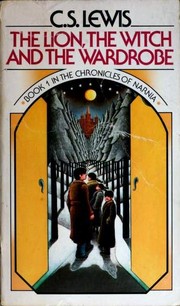
Short, fast and still the cleanest introduction to secondary-world fantasy — a wardrobe, a war, and a talking lion. Read this one first regardless of what the numbering on modern boxed sets says.

The obvious nine-year-old book and the right year for it: book one is genuinely a children's book, while books four onward are not. Published in the United States as Harry Potter and the Sorcerer's Stone — same book, different title.
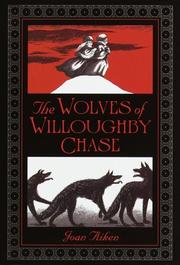
A Victorian melodrama in an alternate England overrun by wolves, with a wicked governess and a workhouse. It is harder prose than the two above and the right thing to hand a nine-year-old who has finished a series and wants something with more grain to it.
The shelf they dip into
BeginnerBuild the habit of reading around a subject and of reading a poem for its own sake.
▸ Study plan for this stage
Pace: Ongoing rather than scheduled — these two are not read through and finished, and treating them as a task defeats them. The Way Things Work is a large-format book of nearly 400 pages meant to be opened at random and left out on a table; a year of intermittent dipping is a normal use. A Poem for Every
- Reading around a subject rather than through a story is a separate habit from novel-reading, and it is acquired at this point on the ladder or not for a long while afterwards
- The Way Things Work explains mechanisms by cutaway drawing rather than by paragraph, so a child who does not yet enjoy dense text can still read it at full depth
- Macaulay's running woolly mammoth joke is structural rather than decorative — it gives a reference book a continuous thread, which is what makes cover-to-cover reading possible
- Non-fiction at this age is best left visible and unassigned; the book's job is to be picked up, not to be finished
- A dated daily anthology removes every decision from poetry — no choosing, no context, no expectation of a response — which is precisely why it gets read
- The anthology mixes nonsense verse with Shakespeare and twentieth-century poets, so difficulty varies wildly day to day and that variation is the design rather than a flaw
- Neither book needs to be understood completely, and saying so out loud once is often what makes a child willing to open them
- Which section of The Way Things Work does the child return to? The answer is more useful for choosing the next non-fiction book than any list.
- Does your edition of The Way Things Work include the digital and electronic sections, and how dated do they read now?
- What time of day actually works for a daily poem in your household — is it breakfast, the car, or bedtime?
- Which poems in the anthology are clearly written for adults, and are you comfortable reading those on the day they fall?
- Is the child dipping into these books unprompted? If not, where are they shelved, and would moving them change that?
- Leave The Way Things Work open at a spread on a table rather than shelving it. An open large-format book is picked up; a closed one on a shelf usually is not.
- Read one week of the poetry anthology yourself, ahead of the date. You will find one poem you want to skip and one you want to make sure lands, and knowing which is worth the fifteen minutes.
- Read the mammoth pages of The Way Things Work on your own so you can point out the joke once. It is easy to miss and it is what turns a reference book into a book.
- Pick one poem from the anthology and learn it yourself. A child hearing an adult recite something from memory is a stronger argument for poetry than any amount of explaining it.
Next up: This is the end of the ladder for this year. The reader who has finished it can handle a long fantasy, a book that ends sadly, and a reference shelf, which between them cover almost everything the next rung will offer.
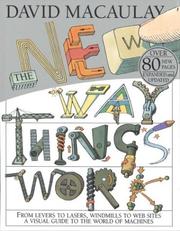
Cutaway drawings explaining everything from a zip to a nuclear reactor, held together by a running woolly-mammoth joke. Nine is the age at which a child will read a reference book cover to cover for pleasure, and this is the one that earns it.

One poem a day, dated, ranging from nonsense verse to Shakespeare and Angelou. The daily format means a nine-year-old meets grown-up poetry in doses small enough not to be intimidating.
Discussion
Keep reading
Paths that share books, cover the same subject, or open a related topic.