Start an eleven-year-old on Rooftoppers. A girl found in a cello case searches the rooftops of Paris for her mother, and Katherine Rundell writes better line by line than almost anyone else working in this age band. It is an adventure with a happy ending, so nothing is being asked of the reader emotionally — the work it does is quieter than that. It raises what they expect a sentence to sound like.
Eleven is not simply ten with bigger words. Ten is the year of the long fantasy and the big emotional novel; eleven is the year a reader starts noticing how a book is made, will accept an ending that offers no comfort at all, and is one step from the young adult shelf — where the content jumps considerably faster than the reading level does. That is why the content notes below matter more than the page counts. A confident eleven-year-old can read almost anything on a technical level, which makes what is inside the book the only question left worth asking.
Adventure with real prose
After Rooftoppers, The Girl of Ink & Stars asks for slightly more patience — a cartographer's daughter maps a forbidden part of her island, with the mythology folded in rather than explained. It was published in the United States as The Cartographer's Daughter, so check which title you are ordering. It contains a friend's death and some frightening underground sequences.
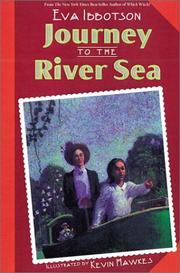
Journey to the River Sea is the most old-fashioned and the most purely enjoyable book here: an orphan sent to relatives on the Amazon in 1910 who finds them appalling and the river magnificent. Its Europeans hold the attitudes of that time and place; the book criticises them but never stops to flag it. Then Millions, in which two brothers find a bag of money weeks before the pound is abolished. It is very funny, and its engine is the recent death of the boys' mother, which can arrive as a surprise partway through.
Books that unsettle on purpose
Coraline is the least demanding way into a book whose whole purpose is dread — a door into a copy of home, where the other mother has buttons sewn where her eyes should be. It is short and it is properly frightening, and some readers stop.
Skellig comes next, when ambiguity has stopped feeling like a mistake: a boy finds a filthy, arthritic creature in the garage while his baby sister is critically ill in hospital, and the book never says what the creature is. The possibility of the baby dying is held open for most of it. The Giver is the first dystopia most readers meet, revealing one horror at a time, including what the community does to the infants it does not keep. Its ending is unresolved by design, which is the argument to have rather than the flaw to warn about.
Grief, war, and the edge of young adult
These two mark the boundary, and both carry substantial content. Private Peaceful is narrated across one night by a soldier in the First World War waiting for dawn; the frame makes the ending inevitable from page one, and it ends in a military execution for cowardice. It also contains bullying, a sexually predatory sergeant, and a father's death the narrator blames himself for.
A Monster Calls is about a boy whose mother is dying of cancer, the treatment failing over the course of the book, and its climax is the boy admitting he wants it to be over. Siobhan Dowd conceived it and died before she could write it; Patrick Ness wrote it from her outline. This is the top of the children's ladder. There is nothing gentler on the other side of it, only different.
Non-fiction and poetry that hold their own
I am Malala describes the Taliban taking the Swat Valley, public floggings and killings, girls' schools closing, and the author being shot in the head on a school bus at fifteen. Note that two versions are in print — the original written with Christina Lamb and a young readers' edition — and they differ in political detail as well as length, so check which one you have.
Finish with The Lost Words: acrostic spells for nature words dropped from a children's dictionary, in a format so large it looks like a picture book and is not one. Include it deliberately. Leaving picture books behind was never the goal.
The full path lays all of this out stage by stage, with page counts and the content notes gathered in one place.
Follow the full ordered path here: Books for 11-Year-Olds: What to Read Before the Teen Shelf.