Start a four-year-old on Owl Babies. Three owlets wait for their mother and slowly panic, and then she comes back. It is short, the fear is real, and the ending resolves it completely — one clean emotional arc a four-year-old recognises immediately, which is the thing that separates this year from the one before it.
Four is where the picture book grows a plot. A three-year-old will sit for a pattern and a rhythm; a four-year-old can hold a character who wants something, fails, and gets it — which is why almost nothing from the three-year-old ladder reappears here. This is still overwhelmingly read-aloud territory. Interest at four runs miles ahead of decoding, so judge these by whether your child sits through them, not by whether they can read a word of them, and take the order as a suggestion rather than a sequence anyone is behind on.
Picture books with an actual plot
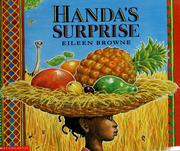
Handa's Surprise lets the reader see the animals stealing the fruit while Handa cannot, so the child spends the whole book knowing more than the character. That is dramatic irony, and four is roughly when it starts landing.
Each Peach Pear Plum is an I-spy rhyme threaded through nursery-rhyme and fairy-tale characters, so it rewards a child who has already met Jack, Jill and the Three Bears. It sits here rather than at three because the joke depends on knowing them.
The unit at this stage is not the book but the repeat. Each of these takes five minutes and will be requested again immediately; plan on a fortnight of Owl Babies before anything else gets a look in, and let one book be thoroughly over-read rather than rotating three at once.
The rhyming books they will demand nightly
The Gruffalo is so metrically reliable that a four-year-old learns to predict the rhyme word, which is real pre-reading work disguised as a bedtime story. Read Room on the Broom second: it is longer, more plotted, and the first book here in which a child has to keep track of four separate characters.
Oi Frog! is a rhyming argument about which animal sits on what, and it does something the Donaldson books do not — a child who has spotted the rule can generate the next rhyme themselves. A Great Big Cuddle is nonsense-heavy poetry built for noise rather than for the page; one or two poems at bedtime works better than a sitting.
Longer stories, stranger feelings, and the first non-fiction
The Tiger Who Came to Tea has noticeably more text per page than anything above it and never explains the tiger. Save it for when your child can last a full ten minutes.
Not Now, Bernard is a boy who is eaten by a monster while his parents fail to notice. It is the first genuinely unsettling book here, and four-year-olds tend to find it hilarious rather than upsetting — the discomfort belongs to the adult reading it aloud, which is worth knowing in advance rather than discovering on the last page.
The Snowy Day has almost no plot at all: a small boy in a red snowsuit has a day, told in collage. Include it as the counterweight to the rhyming books, because it teaches that a story can be made of noticing rather than events. The Story of Ferdinand is a bull who would rather smell flowers than fight — a book with a clear point of view, which is new at this level, and the longest read-aloud here, so keep it for last.
Finish with The Big Book of Bugs, which is non-fiction behaving like a picture book: huge illustrated spreads with a bug hidden on each. It is not read cover to cover; it is opened at a spread and grazed, and a session might be one page. Four-year-olds who resist story books will often sit for this, which is why every ladder needs at least one.
The full path groups these into three stages with read-aloud times and content notes, and it is built to be dipped into rather than worked through in order.
Follow the full ordered path here: Books for 4-Year-Olds: What to Read Aloud, in Order.