Ted Hughes Reading Order: Where to Start
Hughes wrote for forty years in at least four modes — the early animal poems, the mythic experiments, the farming and river books, and finally the confessional Birthday Letters — and reading him in publication order without a guide means hitting the hardest material second. This order starts with the debut and the book most readers arrive for, then works through the mythic middle, then the late nature books, and ends with the translations, the children's classic and the prose. It is a shorter path than a novelist's because poetry collections are short and dense, not because there is less to read.
Start Here
BeginnerGet the two Hugheses that need no preparation: the young poet who wrote the best animal poems in English, and the old one who finally wrote about his marriage.
▸ Study plan for this stage
Pace: 4 weeks for about 260 pages, which sounds slow and is not. The Hawk in the Rain (52pp) over one week — four or five poems a night, read aloud, since these poems are built out of consonants and are half-dead when read silently. Birthday letters (208pp) over three weeks; it is 88 poems and they should
- The biography is unavoidable here, so take it plainly before you start. Hughes married the American poet Sylvia Plath in 1956. They separated in 1962 and she died by suicide in February 1963. As her husband he inherited and controlled her estate and her papers, edited the posthumous Ariel and the Co
- The Hawk in the Rain, his 1957 debut, contains the best animal poems in modern English — The Thought-Fox, The Jaguar, the title poem — and needs no preparation at all
- Hughes's early line is stressed and physical: heavy consonant clusters, verbs doing the work, weather and mud and muscle. Read a stanza aloud and you can feel where the stresses land
- The Thought-Fox is a poem about writing the poem, and it is the single best entry point to his whole method. Learn how it works and the rest of the animal poems open
- Birthday letters is addressed directly to Plath in the second person, across forty years, in a much looser and more conversational line than anything else he wrote
- The two books are placed together here on purpose: the poet who arrives fully formed at twenty-seven, and the same man at sixty-eight writing the one book everyone had been waiting for and nobody expected
- Hughes was appointed Poet Laureate in 1984 and held the post until his death. His official verse is not in this path and you are not missing anything
- In The Thought-Fox, at what exact line does the fox stop being an animal and become the poem? Point at it
- What do the animals in The Hawk in the Rain give Hughes that a human subject would not?
- Birthday letters is written to a dead person who cannot answer. What does the second person do to the reader, who is effectively reading someone else's mail?
- Compare a line from 1957 with a line from 1998. What has happened to the stress pattern, and is it a gain or a loss?
- Several Birthday letters poems answer specific Plath poems. When you can spot one, what changes about how you read the earlier poem?
- Does Birthday letters ask you to reach a verdict, and does it matter whether you refuse?
- Read The Thought-Fox aloud, then write down the six words in it that carry the most physical weight. That list is a decent summary of early Hughes
- Take one animal poem and mark every stressed syllable by hand. The metre is doing something odd and you will only find it by marking it
- Read four Birthday letters poems a night for three weeks and keep a one-line note on each: what event it describes, and what it declines to say
- Pick two Birthday letters poems and find the Plath poems they respond to. Read the pair in both orders
- Write half a page on what you think Birthday letters is for — testimony, elegy, self-defence, or something that will not sort into those categories
Next up: Having heard the young formalist and the old confessor, you are ready for the middle period, where Hughes deliberately broke the well-made poem and lost half his readers doing it.

The 1957 debut that made his name overnight, and still the cleanest introduction: The Thought-Fox, the title poem, a voice already fully formed. Start here because everything later is a reaction to this register.
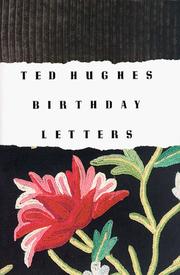
Eighty-eight poems addressed to Sylvia Plath, published months before he died after thirty-five years of public silence. Read it second, not last: it is plain-spoken, narrative and gripping, and it buys you the goodwill to get through the difficult middle books.
The Mythic Middle
IntermediateFollow Hughes as he abandons the well-made lyric for something rawer — folk tale, creation myth and deliberate ugliness — and understand why Crow is the book that divides his readers.
▸ Study plan for this stage
Pace: 6 weeks for roughly 330 pages. Lupercal over ten days, Wodwo over two weeks — it is a mixed book of poems, stories and a radio play, so read the prose in separate sittings from the verse. Crow needs three weeks on its own and you should stop after five or six poems each time. It is relentless by des
- Lupercal, from 1960, is the last of the well-made Hughes: Hawk Roosting, View of a Pig, Pike. If you only ever read one Hughes poem, most people would send you to Hawk Roosting, which is spoken by the hawk and is either a poem about nature or a poem about fascism depending on who you ask
- Wodwo, from 1967, is the transitional book and it is deliberately a mess of forms — poems, short stories, and a play. Hughes said it should be read as a single work in that order
- Crow, published in 1970, is where the readership splits. The lyric is abandoned for a flat, brutal, folk-tale voice; God is incompetent, creation is a series of accidents, and Crow survives everything by refusing to be improved by it
- Crow is unfinished and openly so. Hughes stopped work on the sequence in 1969 and published what existed, subtitled From the Life and Songs of the Crow. The book you hold is a fragment of a planned epic
- The ugliness of Crow is a technique rather than a failure of care. Short declarative sentences, repetition, no music, no consolation. Judge it as an experiment in stripping poetry of its comforts
- Reading Lupercal directly before Crow shows you exactly what was given up, which is the reason this stage runs in this order
- Hughes read widely in anthropology, folklore and Trickster figures, and Crow belongs with those rather than with English lyric tradition. If it feels like a translated oral text, that is intended
- In Hawk Roosting, who is speaking, and is the poem endorsing that voice, exhibiting it, or refusing to say?
- Wodwo mixes three forms in one book. What does the short fiction do that the poems do not, and does the mixture cohere?
- Name the specific things Crow gives up that Lupercal has — metre, image, consolation, closure — and say what it gets in return
- Crow was left unfinished. Does the book read as a fragment, and would a completed version necessarily be better?
- The God of Crow is incompetent rather than cruel. What kind of argument is that, and is it a theological one?
- Which of these three books do you think Hughes considered his real breakthrough, and does the evidence in the poems support you?
- Read Pike and then a Crow poem back to back aloud. The gap between them is the whole subject of this stage
- Read Wodwo in the printed order rather than dipping. Hughes asked for this specifically and it changes the book
- Limit yourself to five Crow poems a sitting for three weeks and write one line on each. If you break the rule you will start reporting boredom rather than reading
- Take a single Crow poem and rewrite four of its lines in Lupercal's register. The exercise makes the technique visible faster than any commentary
- Look up one Trickster figure from any oral tradition and note the three features Crow shares with it
Next up: After Crow's deliberate scorched earth, the next stage shows what Hughes could build once he came back down out of myth into an actual Devon field.
The second collection, containing Hawk Roosting and View of a Pig. Still formally controlled, but the violence has stopped being decorative — read it as the last book before the break.

Poems, stories and a radio play in one volume, and audibly a poet dismantling his own technique. Read it before Crow: it is the transition, and Crow makes far more sense as a destination than as a surprise.

The trickster sequence, written after Plath's death, in a stripped and brutal anti-poetry that is either his masterpiece or his dead end depending on who you ask. This is the hardest book on the path and the reason to have done the preceding two.
The Farmer and the River
IntermediateSee Hughes come back out of myth into observed Devon weather, livestock and water — the mode that most influenced the nature writing of the last twenty years.
▸ Study plan for this stage
Pace: 3 weeks for around 145 pages. Season songs over a week and a half — they are short, seasonal, and reward being read at roughly the time of year they describe. Moortown diary over a week and a half, and read the notes at the back as you go rather than saving them, because they identify the animals an
- Season songs began as poems for children and Hughes then let them grow up. They are simpler than Crow and much stranger than they first look
- Moortown diary is a farming journal in verse, written fast and barely revised, recording lambing, calving, injury and death on the Devon farm Hughes worked with his father-in-law Jack Orchard
- The composition method is the point. These were written on the spot, in the field, without going back — which is close to the opposite of the compressed early lyrics
- Nothing is aestheticised here. Difficult births, dead lambs, maggots, mud. Hughes's claim is that attention rather than arrangement is what the poem owes an animal
- This is the mode that most obviously seeded the last twenty years of British nature writing, and reading it explains a whole contemporary shelf
- Coming after Crow, these books answer an obvious question: what does a poet do once he has stripped everything out? The answer here is that he goes and looks at something
- Hughes was also a river and fishing writer, and the water poems in this period are where his ear is most relaxed
- What does Moortown diary gain from being unrevised, and where can you see it losing something?
- Season songs were first aimed at children. Which poems still betray that origin, and which have entirely outgrown it?
- Compare a dead animal in Crow with a dead animal in Moortown diary. What is the difference in what the poem asks you to feel?
- Does the farming verse make a claim about how a poem should be written, and would that claim have been possible before Crow?
- Where does Hughes's attention become uncomfortable, and is the discomfort his subject or a side effect?
- Read Moortown diary with the notes open. Half the obscurity is agricultural vocabulary, not difficulty
- Pick one poem and try to date it by season from internal evidence alone, then check
- Write a 150-word field note of your own about something you actually watched today, unrevised, and then read three Moortown poems again. The method becomes legible instantly
- Read one Season songs poem in the month it describes and again six months later
- List the verbs in a single farming poem. Hughes's whole grip on the physical world is in the verbs
Next up: The core career is now behind you, and the last stage picks up the four books that reach the largest audience — the translation, the children's classic and the short book on how any of this is done.

Written for children and then quietly not just for children: a year of English weather in poems that are as good as anything he wrote. The right decompression after Crow.

Verse journals of a working sheep and cattle farm, lambing and dying included, written fast and left unpolished on purpose. Read it for the argument that unrevised attention beats craft — an argument he only earned the right to make this late.
Translations, Children and Prose
IntermediateRound out the shelf with the work that reaches the widest audience — a great translation, a children's classic, and the best short book on how poems get made.
▸ Study plan for this stage
Pace: 3 weeks for roughly 310 pages. The Iron man in a single sitting, ideally aloud to someone. Poetry in the making over a week, one chapter at a time with the writing exercise done before you move on. Tales from Ovid across a week and a half, one tale per sitting.
- Tales from Ovid is Hughes's version of twenty-four passages from the Metamorphoses, published in 1997, and it is the most immediately enjoyable book he wrote. The violence and transformation of Ovid suits the poet of Crow exactly
- An honest note on our catalogue record: the Tales from Ovid entry here has resolved to the Royal Shakespeare Company stage adaptation credited to Tim Supple, not to the 1997 collection of poems. The adaptation is a real and good book, but if you want the verse rather than the play text, look for the
- The Iron man, from 1968, is a children's story of about sixty pages, written for his own children after Plath's death. It is one of the best-known children's books in English and it takes an hour to read
- Poetry in the making began as BBC broadcasts for schools and is the most useful short book on writing poems that exists. Each chapter is a lesson with an exercise, and the chapter on capturing animals is the key to everything in the first two stages of this path
- These four books are where Hughes is least defended and most direct, which is why they belong at the end rather than the start — you can now hear how much of the mature technique is being handed over plainly
- Ovid was a lifelong presence for Hughes, and the transformations in the Tales rhyme with the animal poems of 1957 in a way that closes the career neatly
- Read this stage with the beginning of the path in reach; Poetry in the making explicitly explains what The Thought-Fox was doing
- What does Hughes's Ovid keep from the Latin and what does he obviously import from his own poetry?
- The Iron man was written for children in a specific year of his life. Does knowing that change the book, and should it?
- Poetry in the making claims a poem can be caught the way an animal is caught. Test the claim against The Thought-Fox — does it hold?
- Which of the writing exercises in Poetry in the making actually worked when you tried it, and what did it produce?
- Having read the whole path, which Hughes is the real one — the animal poet, the mythmaker, the farmer, or the man writing to his dead wife?
- Do every exercise in Poetry in the making as you reach it. Reading the book without writing anything wastes it
- Read The Iron man aloud to a child, or to yourself in a child's hearing register. The rhythm is written for the voice
- Take one tale from the Ovid and find a literal prose translation of the same passage. Mark the three biggest departures
- Write your own animal poem using only the technique from the Poetry in the making chapter, then compare it to a Lupercal poem without flinching
- Lay out the whole path as a timeline from 1957 to 1998 and write two sentences on what changed and what never did
Next up: That is the working shelf of Ted Hughes, and the natural next step is the Sylvia Plath path, which covers the same forty years and the same 1963 from the other side of the marriage.
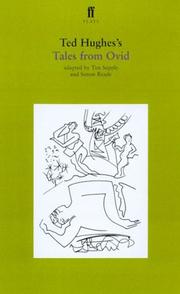
Twenty-four passages from the Metamorphoses, and the book that convinced people Hughes was a major translator rather than a difficult poet. Placed here because it reads as a summary of everything the mythic phase was reaching for.

The children's story he wrote to comfort his own children, and the single most-read thing he produced. Short, strange, and unmistakably by the author of Crow.
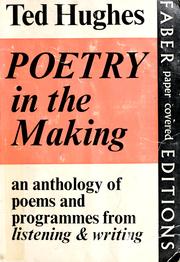
His BBC schools talks on how to write, and the best statement of his method: capture the animal, do not describe it. End here — it retroactively explains the whole path.
Discussion
Keep reading
Paths that share books, cover the same subject, or open a related topic.