The Best Books for 7-Year-Olds: Chapter Books in Reading Order
A six-year-old is learning that a book can have chapters; a seven-year-old already knows and is now reading for length. The books here run from about sixty pages to nearly two hundred, and the ladder is ordered by exactly that — short and funny first, then the first real novels, then a full-length book and one that is not primarily a joke. Seven is also the year Roald Dahl takes over a bookshelf, so this path works through him in order of difficulty rather than fame. Reading age and interest age come apart hard at seven: a fluent seven-year-old can decode books whose content is aimed at nine-year-olds, and a slower one is still a perfectly normal reader who needs shorter chapters, not easier stories.
Short, funny, finished in two sittings
BeginnerBuild reading stamina on books whose whole appeal is speed and nastiness — the fastest route to a child who reads voluntarily.
▸ Study plan for this stage
Pace: Four to six weeks. The Enormous Crocodile is around 36 illustrated pages and is a single sitting either read aloud or read alone. The Twits is around 96 pages of very short chapters and takes a week at a chapter or two a night. Ottoline and the Yellow Cat looks the longest at around 175 pages and is
- Stamina is what is being built at this rung, not comprehension — the aim is a child who finishes books, and short nasty funny ones are the fastest route to that
- The Enormous Crocodile is one joke repeated with escalating relish, which is the correct structure for a first chapter-adjacent book and why it works even for a child who could read something longer
- Dahl's contract with the reader: adults are grotesque, the weak win by cunning, and nobody is reformed at the end — children find this reassuring rather than bleak
- The Twits as the cruelty test, and worth treating as diagnostic: how a particular child takes it tells you a great deal about the rest of this ladder
- Ottoline as the modern counterweight — same reading speed, entirely different flavour, and a detective plot rather than a revenge one
- Riddell's illustrations carry plot rather than decorate it, so a child who lingers on the pictures is reading rather than stalling
- Reading age and interest age come apart hard at seven: a fluent reader can decode books aimed at nine-year-olds, and a slower one needs shorter chapters rather than easier stories
- Two sittings per book is the target here — a finished book is worth more to a seven-year-old's sense of themselves than a better book abandoned
- How many tricks are there in The Enormous Crocodile, and does the repetition tire before the book ends? Counting tells you why it works.
- Which prank in The Twits would you rather a particular child did not meet? Name it specifically rather than in general.
- How much of Ottoline's plot is in the drawings rather than the text? Look at three spreads without reading the words.
- Does the child come back to these books, or finish and move on? Rereading at seven is a good sign, not a stall.
- If The Twits lands badly, what is your next book? Having the answer ready is worth more than choosing well the first time.
- Read The Twits yourself in one sitting before offering it. It takes under an hour and it is the book on this stage where knowing the contents in advance matters most.
- Time The Enormous Crocodile read aloud. It runs around twenty minutes, which makes it the whole-book option for an evening with no time for a chapter of something longer.
- Look at Ottoline's spreads yourself and find the two places where the picture tells you something the text does not. Being able to point at one, once, is enough.
- Check whether your Dahl copies are revised or unrevised editions — his publisher has issued altered texts alongside the classic ones, and two copies of the same book on a shelf may not read the same.
Next up: A child who has finished three books quickly and enjoyed it has the appetite for a plot that runs over a hundred pages, which is the only new demand the next stage makes.
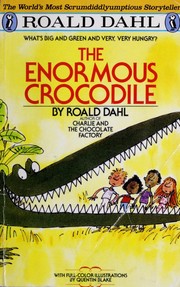
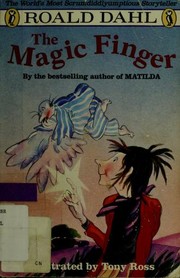
Barely longer than a picture book, illustrated throughout, and about a crocodile who wants to eat children. It is the right first Dahl for a seven-year-old who has only met The Magic Finger.
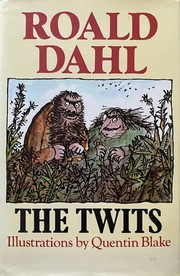
A step up in length and considerably crueller — the whole book is two horrible people playing tricks on each other. Read it second, when the child already trusts that Dahl will not be sentimental.
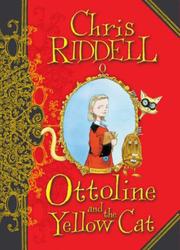
A detective story told half in Riddell's dense line drawings, so the page count is misleadingly high and the reading is fast. Include it as the modern counterweight to Dahl: same speed, entirely different flavour.
The first real novels
BeginnerSustain a plot over a hundred-plus pages, including one told without illustrations to lean on.
▸ Study plan for this stage
Pace: Eight to ten weeks. My Father's Dragon is around 86 pages with one obstacle per chapter and is the gentlest introduction to a sustained plot; a week. Ramona the Pest is around 190 pages and is the longest here — two to three weeks at a chapter a night, and it is the first book on this ladder with al
- My Father's Dragon's structure is a sequence of solvable problems with a rucksack of specific objects, which gives a child a reason to keep reading that is not only plot momentum
- The rucksack device is worth noticing as craft: the reader can anticipate the solution, which is enormously satisfying at this age and rare in books this short
- Ramona the Pest as the first book here about ordinary life rather than adventure, where the comedy comes from a real child's point of view being taken completely seriously
- Ramona is five in this book, which is precisely why seven-year-olds enjoy it — the pleasure is feeling superior to a younger child while recognising themselves
- Cleary's technique of writing an adult misunderstanding from inside the child's certainty, so the reader knows more than Ramona and less than her teacher
- The Worst Witch as the first proper series novel on this ladder — a boarding school for witches, written long before the obvious comparison, and much shorter than any of it
- Series reading as its own habit: the appeal is continuity and knowing the cast, and a child who finishes one will usually want the next within days
- Fantastic Mr Fox as the best-built of the short Dahls — three farmers, one plan, real escalation — and the step up in length before the full-length book in the next stage
- What is in the rucksack in My Father's Dragon, and does the book plant each item before it is needed? The answer is the whole technique.
- In Ramona the Pest, what does Ramona misunderstand about school, and how long does the book let the misunderstanding run?
- Where in Ramona the Pest does the comedy stop being funny for Ramona herself? Locating it tells you what Cleary is actually doing.
- Is The Worst Witch going to start a series habit? If so, do you have the next volume to hand?
- Fantastic Mr Fox is noticeably longer than The Twits. Did the child notice, and did it slow them down?
- Read the first chapter of Ramona the Pest yourself before offering it. It has no pictures, and knowing how the page looks tells you whether this is the right month for it.
- For My Father's Dragon, note the rucksack contents on a scrap of paper and keep it. Being able to say what is left is a small pleasure a child will take up.
- Read Fantastic Mr Fox's opening two pages yourself so you know exactly how the tail scene is written. It is brief and matter-of-fact and it is the passage adults most often misremember as worse.
- Time one chapter of The Worst Witch read aloud. Most run five or six minutes, which is why it goes down so fast, and knowing the number makes an evening schedulable.
- Decide in advance which of these four you would offer a child who says they do not want to read tonight. The answer should be immediate.
Next up: A reader who has sustained a hundred-page plot without pictures can take a full-length novel, which is what the last stage offers alongside one book that asks for something other than laughter.

A boy rescues a baby dragon by outwitting a series of animals with items from his rucksack, and each obstacle is one chapter. The problem-solving structure gives a seven-year-old a reason to keep going that is not just plot momentum.
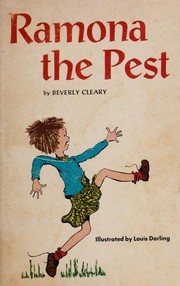
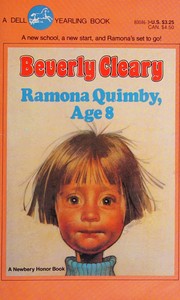
The first book here about ordinary life rather than an adventure, and the first where the funny thing is a real child's point of view. Ramona is five in this book, which is why seven-year-olds enjoy feeling superior to her.
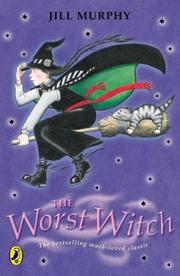
A boarding school for witches, written decades before Hogwarts and much shorter. It is the first proper series novel on this ladder and gets read at a gallop by anyone who liked it.
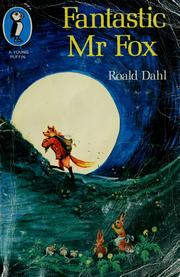
The best-built of the short Dahls — three farmers, one plan, and a genuine escalation — and noticeably longer than The Twits. Read it third in the Dahl sequence, once the shorter two have gone down easily.
A full-length book, and one that isn't only funny
BeginnerFinish a substantial novel, and read something that asks the reader to feel guilty rather than amused.
▸ Study plan for this stage
Pace: Six to eight weeks. Charlie and the Chocolate Factory is around 175 pages and is the longest Dahl a seven-year-old will usually manage; two to three weeks at a chapter a night, and it is the payoff for the three shorter ones. The Hundred Dresses is only around 80 pages and takes two or three sitting
- Charlie's countdown structure — four children removed in sequence, each by the vice they display — which a seven-year-old can predict and enjoys predicting
- The Oompa-Loompa songs as the moral commentary the narration declines to supply, written in verse and noticeably flat when read silently
- Poverty as the book's opening register rather than a background detail, and the cabbage-soup chapters as the reason the factory lands as it does
- The Hundred Dresses is told by a bystander rather than by the victim or the bully, which is the specific new thing being introduced — the reader is implicated rather than entertained
- The book's ending does not repair what happened, and the girl does not come back, which is the first time on this ladder a story declines to fix itself
- That seven is not too early for a book that makes a child feel uncomfortable, provided an adult is nearby and the discomfort is the book's subject rather than an accident
- Ahlberg's school poems as the stage's third register: funny, short, about tell-tales and dinner ladies and being bored in class, and written to be read a few at a time
- Poetry's practical function at this rung — it keeps a slower reader in the game while fluent readers tear through novels, and nobody has to finish anything
- Which of Charlie's four punished children is treated most harshly, and does the punishment fit? The book invites the arithmetic and children do it.
- How many chapters pass before Charlie reaches the factory? The proportion is deliberate and it is what makes the factory work.
- In The Hundred Dresses, what does Maddie do and not do, and what does the book conclude about her?
- The Hundred Dresses does not put things right. What do you want to say if you are asked why not?
- Which of Ahlberg's poems does the child ask for again? That poem is a better guide to the next book than any list.
- Read the Oompa-Loompa songs aloud yourself before you reach them. They are verse with a meter and delivered flatly they fall over.
- Read The Hundred Dresses yourself in one sitting — it takes forty minutes — before offering it. Knowing that the girl does not return lets you decide in advance how you want to handle the question.
- Write yourself one plain sentence about the Oompa-Loompas' publishing history, in case you are asked. Having the words ready is the exercise; improvising it mid-chapter rarely goes well.
- Leave a week between Charlie and The Hundred Dresses. The gap is doing work the second book cannot do for itself.
- Learn one poem from Please Mrs Butler by heart. A child hearing an adult recite something from memory is a stronger argument for poetry than any amount of explaining it.
Next up: This is the end of the ladder for this year. A reader who has finished a full-length novel, a book that made them uncomfortable and a poetry collection has all three of the appetites the next rung is built on.
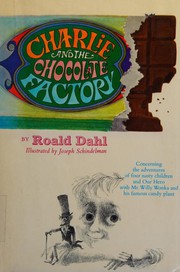
The longest Dahl a seven-year-old will usually manage and the payoff for the three shorter ones. Worth knowing before you hand it over: Dahl's original Oompa-Loompas were African pygmies brought to the factory to work for cocoa beans, which he rewrote after criticism in 1972 — current editions carry the revised version, but the book's history is part of the conversation about it.

A short book about a girl mocked for wearing the same dress every day, told from the point of view of a classmate who watched and said nothing. It is the first book on the ladder where the reader is implicated, and seven is not too early for that.
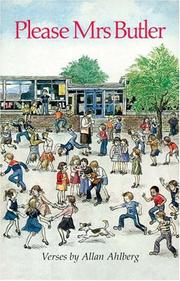
School poems about tell-tales, dinner ladies and being bored in class — funny, but written to be read straight through as a collection. Poetry at this age keeps a slower reader in the game while the fluent ones tear through novels.
Discussion
Keep reading
Paths that share books, cover the same subject, or open a related topic.