The Black Death: the best books on plague and pandemics in history
This curriculum traces the history of pandemics from the medieval Black Death to modern outbreaks, building from vivid narrative histories to rigorous social and economic analysis, and finally to comparative and epidemiological perspectives. Each stage deepens the reader's conceptual toolkit — beginning with storytelling and accessible context, then moving into scholarly interpretation, and finally into the big-picture frameworks that explain how disease has repeatedly remade human civilization.
Foundations: The Story of the Black Death
BeginnerGain a vivid, accessible understanding of what the Black Death was, how it spread, and what it felt like to live through it — building core vocabulary and historical context.
▸ Study plan for this stage
Pace: 4–5 weeks, ~40–50 pages/day (approximately 280–350 pages total across both books)
- The Black Death as a biological, social, and economic catastrophe that killed 30–60% of Europe's population between 1347–1353
- The mechanism of plague transmission: fleas, rats, and the three forms of plague (bubonic, pneumonic, septicemic)
- How medieval trade routes (especially Genoese merchant networks) spread the plague from Asia to Europe
- The collapse of feudal labor systems and the resulting shift in power toward surviving peasants and workers
- The psychological and spiritual crisis the plague created: flagellant movements, scapegoating of Jews, and the search for divine meaning
- How the plague devastated urban centers differently than rural areas, reshaping medieval society's structure
- The role of medieval medicine's failures and the competing explanations for the plague (miasma, astrology, divine punishment)
- The long-term demographic, economic, and cultural consequences that reshaped European civilization
- What were the three forms of plague, and how did each spread differently among medieval populations?
- Trace the geographical path of the Black Death from its origins to Europe, and explain the role of trade networks in its transmission
- How did the massive death toll fundamentally alter the feudal labor system and peasant power in the decades following 1353?
- What were the major social and psychological responses to the plague, and why did scapegoating and religious fervor intensify?
- Why did medieval medicine fail to stop or explain the plague, and what competing theories did people use to make sense of it?
- How did the Black Death's impact differ between urban and rural areas, and what were the long-term consequences for European society?
- Create a detailed timeline of the plague's spread from 1347–1353, marking key cities, dates, and mortality rates using evidence from both Cantor and Ziegler
- Write a 500-word first-person account from the perspective of a medieval merchant, physician, or peasant experiencing the plague, incorporating specific details from the books
- Map the trade routes that carried the plague westward, annotating them with the biological mechanism of transmission (flea-rat-human) explained in the texts
- Compile a comparative chart of medieval explanations for the plague (miasma, astrology, divine punishment, Jewish conspiracy) and analyze why each gained traction despite being scientifically wrong
- Research and present one specific medieval city's experience during the plague (e.g., Florence, Venice, London) using Cantor and Ziegler as your primary sources, then find one secondary source to verify details
- Create a visual or written comparison of pre-plague and post-plague feudal society, showing how labor scarcity, wages, and peasant mobility changed in the plague's aftermath
Next up: This foundation equips you with vivid, concrete knowledge of the Black Death's human and structural impact, preparing you to examine how subsequent pandemics—and societies' responses to them—either repeated or learned from these medieval patterns.
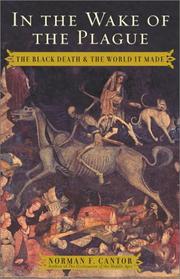
A highly readable, narrative-driven introduction to the Black Death written for a general audience. It establishes the basic timeline, geography, and human drama of the plague, making it the perfect starting point.
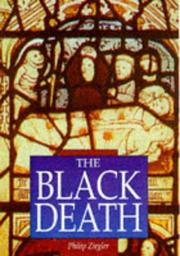
The classic popular history of the 1347–1351 plague in Europe. Read second to deepen the narrative with more detail on regional impact, social breakdown, and eyewitness accounts, building on Cantor's overview.
Society Transformed: How Plague Reshaped the Medieval World
BeginnerUnderstand the profound social, economic, religious, and cultural upheavals the Black Death triggered — from labor markets to the Church — and begin thinking analytically about disease and society.
▸ Study plan for this stage
Pace: 6–7 weeks, ~40–50 pages/day (approximately 280–350 pages/week across both books)
- The Black Death as a demographic catastrophe: mortality rates, geographic spread, and the scale of population loss across Europe and Asia
- Labor market transformation: the shift in power from landowners to workers, wage increases, and the breakdown of feudal labor systems
- Religious and spiritual crisis: the challenge to Church authority, the rise of flagellant movements, and changing attitudes toward salvation and suffering
- Economic restructuring: inflation, trade disruption, the decline of serfdom, and the emergence of new merchant classes
- Scapegoating and social violence: the persecution of Jews, lepers, and other marginalized groups as explanations for plague
- Disease as a historical force: how pandemics shape societies, migration patterns, and long-term institutional change
- The interconnectedness of Eurasian trade networks: how disease traveled along the Silk Road and maritime routes
- Cultural and artistic responses: the memento mori tradition, danse macabre, and shifts in medieval worldview
- What were the primary mechanisms by which the Black Death spread across Europe and Asia, and what role did trade networks play in its transmission?
- How did the massive mortality from the plague fundamentally alter labor markets and the relationship between peasants and landowners?
- What theological and spiritual crises did the Black Death provoke within medieval Christianity, and how did the Church's authority respond?
- Why did plague outbreaks lead to the persecution of specific groups like Jews and lepers, and what does this reveal about medieval scapegoating?
- How did McNeill's concept of disease as a historical force help explain long-term patterns of social and economic change beyond the medieval period?
- What cultural and artistic changes emerged in the aftermath of the plague, and how do they reflect shifts in medieval consciousness?
- Create a detailed timeline mapping the Black Death's spread from Central Asia to Western Europe (1347–1353), noting key trade routes and population centers affected; annotate with mortality estimates from Kelly's account
- Write a comparative character sketch of two medieval figures from Kelly's narrative (e.g., a bishop, a physician, a merchant) showing how the plague transformed their worldview and social position
- Construct a before-and-after economic analysis: map feudal labor systems pre-1348 and post-1360 using evidence from both books; calculate wage increases for surviving workers where data is provided
- Design a visual infographic or poster illustrating one scapegoating mechanism (Jewish persecution, leper accusations, flagellant movements) using specific examples from Kelly; explain the psychological/social logic behind it
- Read and annotate McNeill's chapters on disease ecology and Eurasian connectivity; write a 2–3 page analytical essay connecting his framework to Kelly's narrative of the Black Death
- Conduct a close reading of Kelly's descriptions of artistic and religious responses (danse macabre, flagellantism, plague saints); create an annotated visual collection with your own interpretive captions
Next up: This stage equips you with a concrete historical case study and analytical framework for understanding how pandemics reshape societies, preparing you to examine other epidemics (smallpox, cholera, influenza) and their long-term institutional and cultural legacies in subsequent stages.
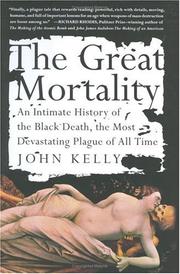
A richly researched narrative that goes beyond death tolls to examine how the plague dismantled feudalism, transformed the Church, and altered European psychology. Its accessible prose bridges storytelling and analysis.

A landmark work that places the Black Death within the sweep of all human history, introducing the concept of 'microparasitism.' Reading it here gives the learner their first big-picture, cross-civilizational framework.
Pandemics Across Time: From Antiquity to the 20th Century
IntermediateTrace how epidemic disease — from the Plague of Justinian to the 1918 flu — repeatedly disrupted empires, trade networks, and belief systems, and recognize recurring patterns across centuries.
▸ Study plan for this stage
Pace: 8–10 weeks, ~40–50 pages/day (approximately 2 weeks per book with time for reflection and note-taking)
- Epidemic disease as a force that reshapes political power, economic systems, and social hierarchies across centuries
- The Plague of Justinian's role in destabilizing the Byzantine Empire and reshaping Mediterranean trade and settlement patterns
- How epidemic disease interacts with existing inequalities: poverty, malnutrition, and social marginalization amplify disease impact
- The 1918 influenza pandemic as a modern case study in how global interconnection, warfare, and public health infrastructure shape pandemic outcomes
- Recurring patterns across pandemics: denial and scapegoating by authorities, breakdown of social trust, and unequal burden on vulnerable populations
- The role of scientific understanding and medical authority in pandemic response, from miasma theory to germ theory to modern epidemiology
- Trade networks, migration, and urbanization as vectors that spread disease and create conditions for epidemic emergence
- How pandemics expose and exacerbate existing belief systems, religious interpretations, and social divisions
- What were the major social, economic, and political consequences of the Plague of Justinian, and how did it differ from later pandemics in its scale and impact?
- How do Snowden and Spinney demonstrate that epidemic disease does not affect all populations equally? What structural factors determine who suffers most?
- What recurring patterns of human behavior and institutional response appear across the pandemics discussed in both books, from antiquity to 1918?
- How did scientific understanding of disease transmission evolve across the time periods covered, and what impact did this have on public health responses?
- What role did global trade networks, urbanization, and warfare play in spreading the 1918 influenza, and how does this compare to earlier pandemics?
- How did authorities and societies use scapegoating and denial during pandemics, and what were the consequences for public trust and social cohesion?
- Create a timeline of 6–8 major pandemics discussed across both books, noting for each: date, disease, geographic spread, estimated mortality, and one major social consequence. Compare how the speed and scale of spread changed over time.
- Select two pandemics from different time periods (e.g., Plague of Justinian and 1918 flu) and write a comparative analysis (2–3 pages) examining how trade networks, urbanization, and communication technology shaped their spread differently.
- Track one recurring theme (e.g., scapegoating, denial, or inequality) through at least three pandemics discussed in the books. Write a short essay (2–3 pages) explaining why this pattern repeats and what it reveals about human societies.
- Create a visual chart showing the relationship between scientific understanding of disease (miasma theory → germ theory → epidemiology) and the public health measures authorities implemented during different pandemics. What gaps do you notice?
- Research one modern pandemic (COVID-19, Ebola, etc.) and write a 2–3 page reflection on which historical patterns from the books you see repeated, and which are new or different.
- Conduct a close reading of 2–3 passages from each book where Snowden or Spinney describe the lived experience of people during pandemics (fear, loss, social breakdown). Write a short analytical response (1–2 pages) on how these narratives shape your understanding of epidemic disease as a historical force.
Next up: This stage establishes the long historical arc of pandemics and their recurring social patterns, preparing you to examine the Black Death specifically as the most transformative pandemic in European history and to analyze how it accelerated social, economic, and cultural change in ways that reshaped the medieval and early modern world.

A comprehensive scholarly survey of pandemics from antiquity to the present, based on Snowden's celebrated Yale course. It provides the analytical vocabulary — vectors, quarantine, public health — needed for the rest of the curriculum.

The definitive popular history of the 1918 influenza pandemic. Placed here to show how the patterns established in the medieval era — social panic, scapegoating, institutional failure — recurred in the modern world.
Economics, Power & the Long Shadow of Disease
IntermediateAnalyze the deep economic and political consequences of mass death events, and understand how historians use quantitative and structural methods to measure plague's long-term legacy.
▸ Study plan for this stage
Pace: 8–10 weeks, ~40–50 pages/day (Scott first: 2–3 weeks; Tuchman second: 5–7 weeks, accounting for denser narrative and longer length)
- Quantitative methods in plague history: using mortality data, tax records, and archaeological evidence to reconstruct demographic collapse and recovery patterns
- Labor scarcity as an economic engine: how mass death triggered wage inflation, social mobility, and peasant empowerment in the 14th–15th centuries
- Structural inequality and plague vulnerability: the relationship between poverty, malnutrition, housing, and differential mortality rates across social classes
- Political fragmentation and state capacity: how plague weakened feudal authority, destabilized monarchies, and created power vacuums exploited by nobles and merchants
- Long-term economic restructuring: the shift from labor-surplus to labor-scarce economies, the rise of merchant capitalism, and the transformation of land values
- Scapegoating and social breakdown: how societies responded to plague through persecution (Jews, lepers, outsiders) and how disease narratives shaped political power
- Continuity and change: understanding plague not as a rupture but as an accelerant of existing trends (urbanization, commercialization, state centralization)
- What quantitative evidence does Scott use to estimate plague mortality, and what are the limitations of these methods?
- How did labor scarcity following the Black Death reshape wage structures, peasant bargaining power, and social hierarchy in 14th–15th century Europe?
- According to Tuchman, how did plague contribute to the political instability and military conflicts of the 14th century, particularly in France and England?
- What role did plague play in the rise of merchant capitalism and the decline of feudal economic structures?
- How did medieval societies explain and respond to plague, and what does Tuchman reveal about the relationship between disease narratives and political authority?
- What evidence suggests that plague's effects were not uniform across social classes, and what does this tell us about pre-existing structural inequalities?
- Create a timeline mapping Scott's demographic data (mortality rates, recovery timelines) alongside major political events from Tuchman (wars, succession crises, peasant revolts) to identify correlations between economic disruption and political instability
- Build a comparative table of wage data from Scott: track real wages for laborers, craftspeople, and servants before, during, and after plague in different regions; analyze what this reveals about labor market tightening
- Write a 2–3 page analytical essay: 'How did plague accelerate the transition from feudalism to merchant capitalism?' Use specific examples from both texts (e.g., land abandonment, urban growth, merchant guild power)
- Examine Tuchman's accounts of plague responses (flagellants, Jewish persecution, medical theories) and write a short analysis of how political leaders weaponized disease narratives to consolidate power or deflect blame
- Create a visual diagram showing the causal chains Scott and Tuchman identify: mass death → labor scarcity → wage inflation → peasant mobility → social unrest → political fragmentation. Add specific examples from the texts at each node
- Conduct a close reading of Tuchman's chapters on the Hundred Years' War and peasant revolts; annotate passages showing how plague-induced economic stress fueled conflict and social upheaval
Next up: This stage equips you with the analytical tools and historical evidence to move beyond plague as a biological event toward understanding how pandemics reshape institutions, power structures, and long-term social trajectories—preparing you to examine how these patterns recur in later epidemics and inform modern pandemic response.

Challenges conventional assumptions about the plague's biology and transmission, introducing the reader to how historians and scientists debate evidence — a key step toward more critical, advanced reading.
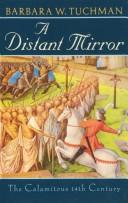
A masterwork of narrative history covering 14th-century Europe in full, with the plague as a central thread. Its broad social canvas — war, religion, chivalry, economics — shows how disease interacted with every other force of the era.
Modern Outbreaks & the Future of Pandemics
ExpertConnect historical patterns to modern and emerging pandemics (HIV, SARS, COVID-19), evaluate public health responses, and develop a sophisticated, evidence-based view of humanity's ongoing relationship with infectious disease.
▸ Study plan for this stage
Pace: 8–10 weeks, ~40–50 pages/day (alternating between both books; ~2 weeks per book with overlap)
- Zoonotic spillover as the primary mechanism for emerging infectious diseases: how pathogens jump from animals to humans and the ecological/behavioral conditions that enable this
- The role of human behavior, urbanization, and environmental disruption in pandemic emergence: deforestation, industrial agriculture, global travel networks, and poverty as accelerants
- Surveillance gaps and early warning systems: why outbreaks are detected late and how real-time monitoring could improve pandemic preparedness
- Public health infrastructure failures and institutional weaknesses: underfunded disease detection, weak laboratory networks, and coordination problems across borders
- The distinction between natural disease emergence and deliberate bioweapon creation: assessing evidence and implications for biosecurity
- Viral evolution and adaptation: how RNA viruses mutate rapidly and how this shapes transmission, severity, and vaccine development timelines
- Global interconnectedness as both vulnerability and opportunity: how modern travel accelerates spread but also enables rapid information sharing and coordinated response
- The economics and politics of pandemic response: why prevention is cheaper than crisis management, yet prevention remains chronically underfunded
- What is zoonotic spillover, and what specific ecological and human behavioral factors does Garrett and Quammen identify as increasing the frequency of spillover events?
- How do Garrett and Quammen explain the relationship between environmental destruction (deforestation, habitat loss) and pandemic emergence? Provide concrete examples from the texts.
- What systemic weaknesses in global disease surveillance and public health infrastructure do these authors document, and what consequences did these weaknesses have for early outbreak detection?
- Compare the public health responses to different outbreaks discussed in both books (e.g., Ebola, Hantavirus, SARS). What worked, what failed, and why?
- According to Quammen and Garrett, what is the likelihood of a naturally emerging pandemic more severe than COVID-19 in the next 20 years, and what evidence do they cite?
- How do Garrett and Quammen distinguish between natural viral emergence and the risk of engineered pathogens? What biosecurity concerns do they raise?
- Create a detailed spillover timeline: Map 5–6 major zoonotic spillover events from the books (e.g., Ebola, Hantavirus, SARS) with the animal reservoir, geographic origin, human behavioral trigger, and outcome. Annotate with quotes from the texts.
- Surveillance gap analysis: Identify 2–3 outbreaks described in the books where early detection failed. For each, write a 1-page memo explaining what surveillance systems were missing and how a modern real-time monitoring network could have changed the outcome.
- Ecological risk assessment: Select one region discussed in the books (e.g., Central Africa, Southeast Asia) and research its current deforestation/urbanization trends. Write a 2–3 page analysis connecting environmental change to spillover risk using evidence from Garrett and Quammen.
- Comparative outbreak response: Create a matrix comparing the public health response to 3 different outbreaks from the books (rows: outbreak name; columns: detection speed, containment strategy, international coordination, outcome). Write a 1-page synthesis of what determined success vs. failure.
- Biosecurity debate prep: Using evidence from both books, prepare a 5-minute argument addressing: 'Is natural pandemic emergence or engineered bioweapons the greater threat to humanity in the next decade?' Support your position with specific citations.
- Modern case study application: Choose a recent real-world outbreak (post-2020) not extensively covered in the books. Write a 2–3 page analysis applying the frameworks and concerns from Garrett and Quammen to explain its emergence and spread.
Next up: This stage equips you with a sophisticated understanding of how pandemics emerge from ecological and social systems, positioning you to evaluate policy solutions, biosecurity strategies, and long-term pandemic prevention frameworks in the final stage.
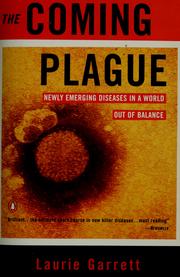
A sweeping, authoritative account of emerging infectious diseases in the late 20th century. It bridges historical pandemic patterns and modern virology, showing how ecological disruption and globalization create new plague conditions.
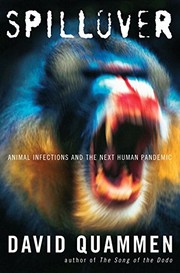
The capstone of the curriculum: a deeply reported investigation into zoonotic diseases — those that jump from animals to humans — that explains the origins of HIV, Ebola, SARS, and COVID-19 through the same ecological and historical lens built across all prior stages.
Discussion
Keep reading
Paths that share books, cover the same subject, or open a related topic.