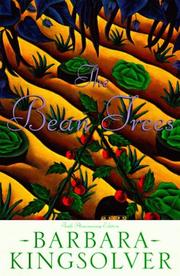
Start with The Bean Trees, catalogued here as The Bean Trees Anniversary Edition. It is short, it is funny, and it does in 230 pages what Kingsolver spends whole careers arguing: a young woman leaves rural Kentucky, ends up in Tucson with a child she did not ask for, and the political argument arrives through people rather than instead of them. If the voice works for you here, it will work everywhere.
The obvious alternative is The Poisonwood Bible, which is her masterpiece and the reason most people know the name. It is also a 550-page novel narrated by five members of a missionary family in the Congo, structured around colonial history you may not have, and readers who start there and stall conclude that Kingsolver is heavy going. Start with the small book and arrive at the large one already trusting her. If you have no patience for warm-ups, go straight to The Poisonwood Bible — it genuinely is the best thing she has written.
The Tucson sequence
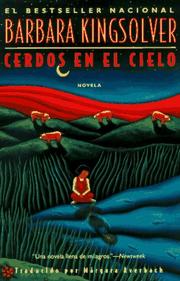
The Bean Trees has a direct sequel, Pigs in heaven, which revisits the adoption at the heart of the first book from the perspective of the Cherokee Nation and asks whether the ending you enjoyed was actually just. It is the only real continuity in her catalogue, and reading it immediately after is the one place order genuinely matters.
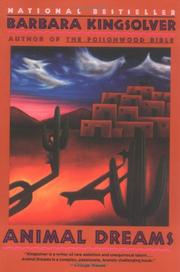
Animal Dreams, catalogued as Animal Dreams Cloth Signed, belongs to the same southwestern territory: a woman returns to the Arizona town she grew up in, to a father losing his memory and a sister in Nicaragua. It is the most quietly constructed of the early novels.
The major work
The Poisonwood Bible is the centre of the path. Five narrators, thirty years, Belgian and American interference in the Congo, and a preacher whose certainty destroys his family. The five voices are unevenly successful — Rachel, the shallow eldest daughter, is a comic device some readers find grating — but the ambition is real and the last third is extraordinary.
Demon Copperhead is the other peak and the more recent one. It transposes David Copperfield to the opioid epidemic in southern Appalachia, narrated by a boy in foster care, and it won the Pulitzer. It is the most propulsive book she has written; if The Bean Trees did not convince you, this one might.
The middle novels, honestly assessed
Prodigal Summer, catalogued as Prodigal Summer Display, braids three stories about a Appalachian valley and is the most openly didactic of the novels — the ecology lectures are delivered by characters rather than integrated into them, and a lot of readers bounce off it. It also contains her best nature writing.
The lacuna follows an American caught between Mexico and the McCarthy-era United States, in the households of Diego Rivera, Frida Kahlo and Trotsky. It has a slow first third and a superb second half; it is the novel most worth persisting with.
Flight behavior uses a displaced monarch butterfly migration to write about climate change in rural Tennessee, and is the most divisive book here. Some readers find the class portraiture sharp; others find the frame schematic.
The nonfiction
Animal, Vegetable, Miracle is the year-of-eating-locally memoir, and it aged into a period document of the mid-2000s food movement — some of its claims about food systems have been argued over since. It is still the most companionable book she has written.
High tide in Tucson collects essays on the desert, on writing, on raising a child, and it is the best short introduction to how she thinks.
Where to stop
Three books is a complete reading: The Bean Trees Anniversary Edition, The Poisonwood Bible and Demon Copperhead. That is the early voice, the ambitious peak and the late one. Add Pigs in heaven only if you want the argument the first novel started to be finished properly, and add High tide in Tucson if you would rather have Kingsolver reasoning directly than through a character.
Browse more author reading orders on Discover.
Follow the full reading path →