The Century Trilogy Reading Order and Guide
This curriculum guides a beginner through Ken Follett's Century Trilogy in the correct sequence, while building the historical and contextual knowledge needed to fully appreciate each novel. The path starts with a brief orientation to 20th-century history, moves through the three novels in order, and closes with a look at how Follett's earlier Kingsbridge series connects to the same storytelling universe.
Historical Foundations
BeginnerGain a accessible, engaging overview of the 20th century's major events — WWI, WWII, and the Cold War — so the novels' historical backdrops feel vivid and grounded rather than unfamiliar.
▸ Study plan for this stage
Pace: 8–10 weeks total: Spend the first 4–5 weeks on "The Guns of August" (~30 pages/day, ~5 days/week), then 4–5 weeks on "The Second World War" (~35 pages/day, ~5 days/week). Reserve the final 3–4 days of each book for review and reflection before moving on.
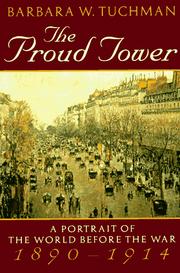
- The web of European alliances and mobilization timetables that made WWI's outbreak feel 'inevitable' — Tuchman's central argument in The Guns of August
- The role of miscalculation, hubris, and institutional momentum in turning a political crisis into a continental catastrophe (Tuchman)
- The Schlieffen Plan: what it was, why Germany staked everything on it, and why it failed in the opening weeks of the war (Tuchman)
- The human and political dimensions of military command — how individual leaders shaped (and misread) events in August 1914 (Tuchman)
- The nature of 'total war' in WWII: the mobilization of entire economies, civilian populations, and ideologies, as analyzed by Keegan
- The distinct theaters of WWII — Western Europe, the Eastern Front, the Pacific, and North Africa — and how Keegan shows their interconnection (Keegan)
- The relationship between technology, logistics, and battlefield outcome: tanks, airpower, and naval warfare as decisive factors (Keegan)
- The Cold War's shadow: how WWII's end created the ideological and geographic fault lines that defined the post-war world (Keegan)
- According to Tuchman, what specific decisions made in August 1914 locked the major powers into a war none of them fully intended or controlled?
- How does Tuchman use the Schlieffen Plan to illustrate the danger of rigid military planning — and what does its failure reveal about the gap between strategy and reality?
- Keegan argues that WWII was fundamentally different in character from WWI — what are the key distinctions he draws, and do you find them convincing?
- How does Keegan explain the turning points on the Eastern Front, and why does he treat that theater as central rather than peripheral to the war's outcome?
- Both Tuchman and Keegan write narrative history aimed at general readers — how do their styles and methods differ, and which do you find more effective for understanding this period?
- After reading both books, how would you describe the through-line from the outbreak of WWI in 1914 to the Cold War divisions that emerged after 1945?
- Timeline mapping: As you read each book, build a single running timeline (on paper or a digital tool like Notion or Miro) marking every major event, battle, and political decision. At the end of Stage 1, connect the two timelines to visualize the 1914–1945 arc.
- Character/leader dossiers: For each major figure Tuchman or Keegan profiles (e.g., von Moltke, Joffre, Churchill, Hitler, Zhukov), write a 3–5 sentence dossier covering their role, key decision, and the consequence. This directly prepares you to recognize these figures when Follett fictionalizes them.
- Map work: Obtain a blank map of Europe (printable from online). After finishing The Guns of August, shade the front lines of August–September 1914. After finishing The Second World War, add WWII front lines and the post-1945 Iron Curtain. Seeing geography change across decades is a powerful anchor.
- Argument summary cards: After each major section or chapter cluster, write a single index card answering: 'What is the author's main argument here, and what evidence supports it?' This builds the analytical habit needed for the more complex novels ahead.
- Comparative reflection journal: After finishing both books, write a 1–2 page personal reflection comparing how Tuchman and Keegan each answer the question: 'Who or what was most responsible for the suffering of the 20th century?' Note where they agree, where they diverge, and where your own view lands.
- Pre-novel prediction exercise: Before moving to Stage 2, skim the back-cover summaries of the Century Trilogy novels (Fall of Giants, Winter of the World, Edge of Eternity). Jot down 5–8 specific historical events or figures from your reading that you now expect to appear in the fiction — this primes active reading from page one.
Next up: The vivid factual grounding in real events, real leaders, and real turning points built in this stage gives you the historical 'skeleton' onto which Ken Follett's fictional characters and storylines will be layered in the next stage — making the novels feel like inhabited history rather than invented drama.
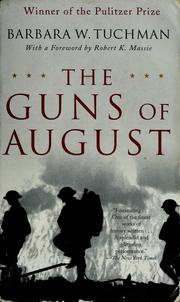
A Pulitzer Prize-winning, highly readable account of the outbreak of WWI — the exact setting of the first Century Trilogy novel. Reading this first gives you the real political tensions and military blunders that Follett fictionalizes.
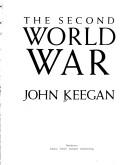
A concise, authoritative single-volume overview of WWII, preparing you for the middle novel's sweeping wartime drama across multiple continents and ideologies.
The Century Trilogy — Novel 1
BeginnerExperience the first act of Follett's multigenerational saga, following five families across Europe and America through WWI, the Russian Revolution, and the interwar years.
▸ Study plan for this stage
Pace: 8–10 weeks, ~25–30 pages/day (Fall of Giants is ~985 pages); read 5 days/week with 2 days for reflection, journaling, and exercises
- Multigenerational Saga Structure: How Follett weaves five interconnected family storylines — Welsh, English, Russian, German, and American — across a single sweeping historical canvas
- WWI as a Catalyst: The war's role not just as backdrop but as the engine that reshapes class, politics, and personal destiny for every character in Fall of Giants
- Class and Social Mobility: The tension between the rigid Edwardian class hierarchy and the forces (war, revolution, labor movements) that begin to crack it open, especially through characters like Billy Williams and Ethel
- The Russian Revolution: Follett's dramatization of the Bolshevik rise to power through the Peshkov brothers (Grigori and Lev), illustrating how ideology, poverty, and violence collide
- Parallel Lives Across Borders: The technique of showing the same historical events — Passchendaele, the Treaty of Versailles, the Easter Rising — from multiple national perspectives simultaneously
- Love, Loyalty, and Moral Compromise: How characters repeatedly face choices between personal desire and duty, and how those choices define their arcs across decades
- Political Idealism vs. Reality: The contrast between characters who hold firm ideological convictions (socialism, suffragism, pacifism) and the brutal pragmatism of the world they inhabit
- Historical Authenticity and Fiction: How Follett blends real historical figures (Woodrow Wilson, Lenin, Lloyd George) with fictional characters to make history feel lived-in and personal
- Who are the five family groups at the center of Fall of Giants, and what does each one represent in terms of nationality, class, and political outlook?
- How does the outbreak of WWI affect each major character differently, and what does Follett suggest about who bears the greatest cost of the war?
- What role does the Welsh mining community play in establishing the novel's themes of class inequality and labor rights, and how does Billy Williams embody those themes?
- How does Follett portray the Russian Revolution through the Peshkov brothers, and what is the novel saying about the gap between revolutionary ideals and revolutionary violence?
- In what ways do the female characters — particularly Ethel Williams and Maud — challenge the gender norms of the Edwardian era, and how does the war accelerate or complicate their progress?
- By the end of Fall of Giants, which family relationships or alliances have formed across national lines, and what do those connections foreshadow for the next generation?
- Family Tree Journal: From the very first chapter, maintain a hand-drawn or digital family tree for all five families. Update it after every 100 pages, noting births, deaths, marriages, and key alliances — this will be essential scaffolding for the later novels in the trilogy.
- Historical Timestamp Log: Each time a real historical event appears in the novel (e.g., the assassination of Archduke Franz Ferdinand, the Battle of the Somme, the Bolshevik Revolution), pause and write 3–5 sentences in your own words about what actually happened, then note how Follett fictionalizes or dramatizes it.
- Perspective Swap Exercise: Choose one major scene that is shown from a single character's point of view (e.g., a battle scene from Billy's perspective) and write a short paragraph (150–200 words) imagining the same scene from an opposing character's viewpoint — a German soldier, a Russian officer, or an aristocrat.
- Character Motivation Tracker: For each of the five main family lines, identify one core want and one core fear for the lead character. Revisit and revise your answers at the novel's midpoint and again at the end to see how Follett develops or subverts them.
- Map It Out: Using a blank map of Europe (printable online), trace the physical journeys of at least three characters across the novel. Mark key locations — the Welsh valleys, the Western Front, Petrograd, Washington D.C. — and annotate each with a one-line note about what happens there.
- Thematic Reflection Essay: After finishing Fall of Giants, write a 400–500 word personal response to this prompt: 'Follett argues that ordinary people shape history as much as leaders do. Do you agree based on what you have read? Use at least two specific characters as evidence.'
Next up: Fall of Giants ends with the next generation being born or coming of age — children shaped by WWI's trauma and the Russian Revolution's upheaval — laying the exact human foundation that Winter of the World will build on as it carries those same families into the rise of fascism and WWII.

The first book in the Century Trilogy, set from 1911 to 1924. Start here — it introduces the five core families (Welsh, English, Russian, German, and American) whose descendants carry the story across the entire trilogy.
The Century Trilogy — Novel 2
IntermediateFollow the next generation of the same families through the rise of fascism, WWII, and its immediate aftermath, seeing how Follett deepens character complexity across generations.
▸ Study plan for this stage
Pace: 6–8 weeks, ~25–30 pages/day (the novel runs ~950 pages in most editions); aim to finish one of the five main character storylines per week, then spend the final week on review and synthesis
- Generational continuity and change: how the children and grandchildren of the Pillars of the Earth / Fall of Giants families inherit, reject, or transform the values of their parents
- The rise of fascism in Europe: Follett's ground-level portrayal of how ordinary people experienced and enabled — or resisted — the Nazi takeover in Germany and the Falangist movement in Spain
- World War II as a multi-front, multi-perspective event: the novel's five interwoven storylines (German, British, American, Russian, Welsh) force the reader to hold competing national loyalties simultaneously
- Moral ambiguity and complicity: characters who are neither pure heroes nor pure villains, forced into collaboration, silence, or compromise under totalitarian pressure
- The role of ideology vs. personal loyalty: how characters choose between political conviction (communism, fascism, democracy) and love, family, and friendship
- Women's agency in wartime: female characters navigating restricted social roles while making consequential decisions in resistance, espionage, and domestic survival
- Follett's narrative architecture: parallel plotting, dramatic irony (the reader knows historical outcomes the characters do not), and the use of real historical events as structural anchors
- The immediate postwar order: the Berlin occupation, the beginning of the Cold War divide, and how 'victory' is experienced differently across the five family lines
- How does Follett use the children of the Fall of Giants characters to show that ideological conflicts are not resolved but inherited — and what specific scenes in Winter of the World best illustrate this?
- Compare the experiences of at least two characters from different nations (e.g., Carla Werner in Berlin and Lloyd Williams in Britain/Spain). How does Follett use their contrasting vantage points to give a fuller picture of the war than any single national narrative could?
- In what ways does Winter of the World portray ordinary citizens as complicit in the rise of fascism, and which characters serve as counterexamples of active resistance? What does Follett suggest about the conditions that make resistance possible?
- How does Follett handle the tension between romantic/personal plotlines and the weight of historical atrocity? Does the love-story structure feel earned or does it undercut the gravity of events — and why?
- By the novel's end, the Cold War is beginning to take shape. Which characters and plot threads most clearly foreshadow the conflicts that will define the next generation, and how does Follett signal this transition?
- How does Follett's portrayal of women's roles in Winter of the World differ from — or echo — the female characters in Fall of Giants, and what does this evolution say about changing social expectations across the two decades separating the novels?
- Storyline tracker: Create a one-page chart with the five main character threads (Carla, Lloyd, Daisy, Volodya, Woody). For each chapter block, note the location, year, and the single most important decision each character makes. At the end, look for the moments where their paths intersect and annotate what the intersection reveals thematically.
- Generational comparison essay (500–700 words): Choose one parent–child pair that spans Fall of Giants and Winter of the World. Write a short essay arguing whether the child represents continuity or rupture with the parent's values, using at least three specific scenes as evidence.
- Historical context pause: Each time Follett anchors the plot to a real event (the Reichstag fire, the Spanish Civil War, D-Day, Hiroshima, the Berlin occupation), stop and spend 15 minutes reading a short external source (encyclopedia article, documentary clip). Then write two sentences on what Follett gets right and one sentence on what he simplifies or omits.
- Ideology mapping: Make a simple spectrum chart (far-left ↔ far-right) and place each major character on it at the novel's opening and again at its close. Note who shifts, who hardens, and who becomes disillusioned — then write a paragraph on what pattern you notice.
- Dramatic irony journal: Keep a running list of at least 8 moments where you, as a reader with historical knowledge, know something terrible is coming that the characters do not. For each entry, write one sentence on how Follett uses your foreknowledge to create tension or pathos.
- Postwar reflection: After finishing the final section, write a one-page personal response to this question: 'Which character's experience of the war's end felt most emotionally true to you, and why?' Then compare your response with a review or reader discussion online to see whether your reading aligns with or diverges from the broader reception.
Next up: Winter of the World closes with the Cold War just beginning and a new generation of characters poised to inherit a divided world, setting up the third novel to explore how the ideological and personal fault lines established here — East vs. West, freedom vs. security, individual conscience vs. state power — play out across the second half of the twentieth century.

The second book, spanning 1933–1949, picks up with the children of the first novel's characters. Reading Fall of Giants first makes the family connections and emotional stakes immediately resonant.
The Century Trilogy — Novel 3
IntermediateComplete the saga by following the grandchildren of the original families through the Cold War, the civil rights movement, and up to the fall of the Berlin Wall in 1989.
▸ Study plan for this stage
Pace: 8–10 weeks, ~35–40 pages/day (Edge of Eternity spans ~1,100 pages; adjust pace around major historical turning points such as the Cuban Missile Crisis, JFK assassination, and the fall of the Berlin Wall)
- The Cold War as a lived experience: how ordinary families on both sides of the Iron Curtain navigate nuclear anxiety, espionage, and ideological pressure in Edge of Eternity
- The civil rights movement in America: the March on Washington, Freedom Riders, and legislative milestones seen through the eyes of the Williams family and their allies
- The Berlin Wall as a physical and symbolic divide: its construction in 1961 and its fall in 1989 bookend the novel and represent the arc of 20th-century geopolitics
- Generational inheritance: how the grandchildren of Maud, Ethel, Gus, and Lev carry forward — and sometimes break from — the values and traumas of their ancestors
- Soviet repression and dissidence: life inside the USSR under Khrushchev, Brezhnev, and Gorbachev, including the Prague Spring of 1968 and the Solidarity movement
- The role of music and popular culture (rock and roll, protest songs) as vehicles of political resistance and personal liberation across the Iron Curtain
- Détente, arms control, and the Reagan–Gorbachev era: how diplomacy and internal Soviet reform converge to end the Cold War
- Narrative closure for the trilogy: how Follett resolves the interwoven family storylines and delivers thematic payoff for the entire Century Trilogy arc
- How does Edge of Eternity use its multigenerational cast to show that the Cold War was not a single event but a decades-long atmosphere of fear, compromise, and resistance — and which character best embodies this tension for you?
- In what ways does Follett portray the American civil rights movement as both a moral triumph and an unfinished project, and how do the African-American characters in the novel reflect that complexity?
- How does the Berlin Wall function as more than a plot backdrop — what does its construction and eventual fall reveal about the novel's central themes of freedom, family, and historical change?
- Compare the experiences of characters living under Soviet rule (e.g., in East Germany or the USSR) with those living in the West: what does Follett suggest about the costs of ideological certainty on both sides?
- How does Edge of Eternity bring the thematic threads of Fall of Giants and Winter of the World to a close — which earlier characters' legacies feel most fully resolved, and which feel deliberately left open?
- What role does individual moral courage play in the novel's depiction of large-scale historical change, and which single act of defiance or conscience do you find most historically resonant?
- Create a dual-timeline map: draw a single horizontal timeline from 1961 to 1989 and mark, in two parallel tracks, (1) the major historical events Follett depicts and (2) the key personal milestones of at least three main characters — then annotate where personal and public history collide most dramatically.
- Write a 500-word 'family dossier' for one of the multigenerational families (e.g., the Williamses or the von Ulrichs), tracing how their values, traumas, and social positions evolved across all three novels of the trilogy, using only evidence from the text.
- Conduct a close-reading comparison: choose one scene set in the East (Soviet Union or East Germany) and one set in the West (USA or UK) that occur in roughly the same year. Write a one-page analysis of how Follett's prose style, character interiority, and use of historical detail differ — or deliberately mirror each other.
- Research exercise: pick one real historical event depicted in Edge of Eternity (e.g., the March on Washington, the Prague Spring, or the fall of the Berlin Wall) and read one short primary source (a speech, a news report, or a memoir excerpt) from that moment. Write a paragraph on what Follett captures accurately and what he fictionalizes for narrative effect.
- Trilogy synthesis essay (600–800 words): argue for or against the following claim — 'Across Fall of Giants, Winter of the World, and Edge of Eternity, Ken Follett suggests that ordinary people, not great leaders, are the true engines of historical progress.' Use at least one piece of evidence from each novel.
- Host or simulate a book-club discussion using these two questions as anchors: (1) 'Which character's journey across the trilogy felt most complete to you, and why?' and (2) 'Does the optimistic ending of Edge of Eternity feel earned, or does it oversimplify the cost of the 20th century?' — take notes on your own evolving answers as you progress through the novel.
Next up: Completing Edge of Eternity — and with it the full Century Trilogy — equips the reader with a panoramic, character-grounded understanding of 20th-century history that serves as an ideal foundation for tackling more analytically demanding historical fiction or primary-source histories of the Cold War, civil rights era, or European unification.
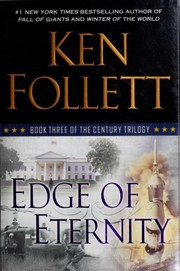
The trilogy's conclusion, covering 1961–1989. Having read the first two novels, you will feel the full emotional weight of watching three generations of families reach the end of a century of upheaval.
The Kingsbridge Connection — Going Deeper
ExpertDiscover how Follett's earlier Kingsbridge series shares his signature multigenerational, location-anchored storytelling DNA, and read them in their internal chronological order to appreciate the full scope of his craft.
▸ Study plan for this stage
Pace: 10–12 weeks total (~3–4 weeks per book); aim for 25–35 pages per day. Suggested breakdown: Weeks 1–3 for The Pillars of the Earth (~1,000 pp), Weeks 4–6 for World Without End (~1,000 pp), Weeks 7–10 for A Column of Fire (~900 pp), with Weeks 11–12 reserved for cross-book reflection, re-reading key p
- Multigenerational saga structure: how Follett spans decades and generations within a single narrative, using family dynasties (the Builderss, the Woolers, the Willards) to anchor continuity across centuries
- Location as protagonist: Kingsbridge Cathedral and the town itself function as a living, evolving character across all three novels, reflecting the social and political climate of each era (12th-century medieval England, 14th-century plague and wool trade, 16th-century Reformation and religious wars
- The power struggle triad: Follett consistently pits the Church, the Crown/nobility, and the common people against one another — each book reconfigures this triangle within its historical moment
- Architectural and material culture as metaphor: the building of the cathedral in Pillars, the bridge and priory economy in World Without End, and the printing press/spy networks in A Column of Fire all serve as symbols of human ambition, progress, and fragility
- Gender and agency: Follett's female protagonists (Ellen, Aliena, Caris, Margery, Sylvie) consistently challenge the constraints of their eras — tracking how the scope of female agency evolves across the three books reveals Follett's thematic arc
- Religious conflict as historical engine: from the struggle between church factions in Pillars, to the Black Death challenging faith in World Without End, to the Catholic-Protestant wars of A Column of Fire, religion drives plot and character motivation throughout the trilogy
- Follett's narrative craft — the villain-hero binary: each novel features clearly drawn antagonists (William Hamleigh, Godwyn, Bishop Bonner's world) whose cruelty creates the dramatic tension that propels multigenerational plots forward
- Continuity and change — reading the Kingsbridge DNA: identifying recurring structural patterns (the outsider builder/visionary, the corrupt authority figure, the resilient woman, the loyal friend) prepares the reader to recognize these same patterns in The Century Trilogy
- How does Follett use the construction and stewardship of Kingsbridge Cathedral across all three novels to mirror the broader ambitions and failures of each historical period?
- Compare the female protagonists of each book — Aliena and Ellen (Pillars), Caris (World Without End), and Margery and Sylvie (A Column of Fire) — how does the nature of their resistance to patriarchal and religious authority evolve across the centuries Follett depicts?
- In what ways does the power struggle between the Church, the nobility, and the common people manifest differently in each of the three novels, and what does this reveal about Follett's view of institutional power?
- How does Follett deploy recurring character archetypes (the visionary builder/reformer, the corrupt clergyman, the ruthless noble) across all three books, and what effect does this consistency have on the reader's experience of the Kingsbridge world?
- A Column of Fire is set roughly 400 years after The Pillars of the Earth — in what ways has Kingsbridge changed, and in what ways has it stayed the same? What does this continuity suggest about Follett's thematic intentions?
- How do the specific historical crises in each novel — the Anarchy and cathedral politics in Pillars, the Black Death and wool trade collapse in World Without End, and the Wars of Religion in A Column of Fire — shape the personal destinies of the main characters, and how does this technique connect to the approach Follett takes in The Century Trilogy?
- Architectural timeline map: Create a visual timeline of Kingsbridge Cathedral's physical changes across all three books (construction, damage, renovation, expansion). Annotate each change with the historical event that caused or enabled it, then write a one-page reflection on what the cathedral's physical history says about Follett's themes.
- Character archetype grid: Build a three-column table (one per book) and populate it with characters who fill the same structural roles — the visionary, the villain, the resilient woman, the loyal ally, the corrupt clergyman. Write a paragraph analyzing what stays constant and what evolves.
- Close-reading comparison: Select one scene of religious conflict from each of the three novels. Write a 500-word comparative analysis of how Follett's prose style, pacing, and character interiority shift (or don't) across the three books when depicting faith under pressure.
- Historical context research sprint: For each novel, identify one real historical event or figure that Follett fictionalizes (e.g., the Anarchy for Pillars, the Black Death for World Without End, the St. Bartholomew's Day Massacre for A Column of Fire). Write a one-page 'fact vs. fiction' comparison for each, then reflect on how Follett's choices serve his narrative.
- Female agency essay: Write a 750–1,000 word essay tracing the evolution of female agency across the three Kingsbridge novels, using specific scenes and quotes. Conclude with a paragraph predicting how this theme will appear in The Century Trilogy.
- Bridge journal — Kingsbridge to the Century: After finishing A Column of Fire, write a journal entry (1–2 pages) cataloguing every narrative technique, character type, and thematic concern from the Kingsbridge series that you expect to find in The Century Trilogy, with a brief explanation of why. Return to this journal after completing the Century Trilogy stage to see how accurate your predictions
Next up: By mapping Follett's multigenerational storytelling architecture, recurring archetypes, and location-anchored historical drama across the Kingsbridge novels, the reader now has a precise analytical lens to recognize — and critically evaluate — how Follett scales and adapts these same techniques to the 20th century's global stage in The Century Trilogy.
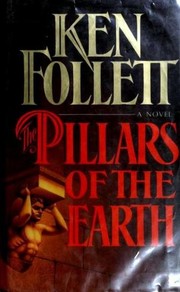
Follett's beloved masterpiece set in 12th-century England, centered on the building of a cathedral in the fictional town of Kingsbridge. Reading it after the trilogy reveals how Follett has always used architecture, place, and generations as narrative engines.
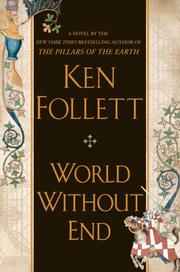
The sequel to Pillars, set 200 years later in the same Kingsbridge, during the Black Death. It deepens your understanding of Follett's recurring themes — ordinary people caught in the machinery of history — that also define the Century Trilogy.

The third Kingsbridge novel, set in the 16th century during the wars of religion. Reading all three Kingsbridge books in order after the Century Trilogy shows how Follett's entire body of work forms one vast, continuous meditation on human resilience across the centuries.
Discussion
Keep reading
Paths that share books, cover the same subject, or open a related topic.