The Best Books on Acoustics and the Science of Sound, In Order
This curriculum builds a rigorous, deep understanding of acoustics and the science of sound, starting from a solid intermediate foundation and advancing through wave physics, psychoacoustics, architectural acoustics, and professional audio engineering. Each stage sharpens the conceptual vocabulary and mathematical intuition needed for the next, guiding the learner from core principles to specialist-level mastery.
Core Foundations
IntermediateEstablish a firm physical intuition for sound as a wave phenomenon — how sound is produced, propagates, reflects, and is measured — using accessible but rigorous treatments.
▸ Study plan for this stage
Pace: 8–10 weeks, ~40–50 pages/day (accounting for technical density and re-reading of equations)
- Sound as a mechanical wave: oscillations in elastic media (air, water, solids) and the distinction between particle motion and wave propagation
- Wave equation and its solutions: plane waves, spherical waves, and the relationship between frequency, wavelength, and wave speed
- Acoustic impedance and intensity: how energy flows through media and the role of impedance mismatch in reflection and transmission
- Reflection, refraction, and diffraction: how sound behaves at boundaries and around obstacles, with emphasis on the role of wavelength relative to object size
- Measurement and quantification: sound pressure level (SPL), decibels, and the logarithmic scale; how to measure and interpret acoustic quantities in practice
- Resonance and standing waves: normal modes in enclosed spaces and how boundary conditions shape acoustic behavior
- Doppler effect and moving sources: the physical mechanism and practical implications for frequency shifts
- Absorption and damping: how sound energy is dissipated in real materials and environments
- Explain the physical difference between particle velocity and wave velocity in a sound wave, and why this distinction matters for understanding acoustic energy transfer.
- Derive or explain the wave equation for sound in a fluid medium, and describe what plane wave and spherical wave solutions represent physically.
- What is acoustic impedance, how is it calculated, and why does impedance mismatch at a boundary lead to partial reflection and transmission?
- How do reflection, refraction, and diffraction differ, and under what conditions (relative to wavelength) does each dominate the behavior of sound at a boundary or obstacle?
- Convert between sound pressure level (SPL) in decibels and absolute pressure in pascals; explain why the logarithmic scale is used and what the reference pressure represents.
- Describe the formation of standing waves in a closed or open-ended tube, identify the frequencies of normal modes, and explain how boundary conditions determine which modes can exist.
- Explain the Doppler effect for a moving source and a stationary observer, derive the frequency shift formula, and predict the direction and magnitude of frequency change in a given scenario.
- Work through Rossing's derivations of the wave equation from first principles (using Newton's second law and the continuity equation); then solve simple boundary value problems (e.g., plane wave in a tube) to build fluency.
- Calculate acoustic impedance for common materials (air, water, steel) and predict reflection coefficients at interfaces; verify predictions with published data or simple experiments (e.g., ultrasound through different media).
- Measure sound pressure levels using a smartphone app or simple microphone setup at various distances from a known source; plot the inverse-square law and compare to theory.
- Set up standing wave patterns in a tube (open, closed, or mixed boundary conditions) using a speaker and microphone; measure resonant frequencies and compare to theoretical predictions from Kinsler's formulas.
- Perform a Doppler shift experiment: record a sound source moving toward and away from a stationary microphone (e.g., a siren or whistle), measure frequency shifts, and compare to predicted values.
- Read and work through Kinsler's chapters on reflection and transmission at boundaries; solve 3–4 textbook problems involving oblique incidence and mode conversion to solidify understanding of impedance mismatch effects.
Next up: This stage builds the physical intuition and mathematical tools needed to understand how sound interacts with real environments and structures, preparing you to explore room acoustics, architectural design, and the behavior of sound in complex geometries in the next stage.
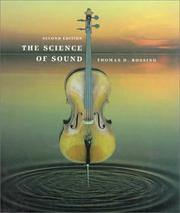
A canonical, comprehensive undergraduate-level text covering vibration, wave motion, hearing, musical acoustics, and room acoustics. Reading this first builds the full conceptual map of the field.

The standard engineering-oriented reference for wave equations, radiation, and transmission. Read after Rossing to formalize the mathematics behind the intuitions already built.
Hearing and Psychoacoustics
IntermediateUnderstand how the human auditory system perceives sound — pitch, loudness, timbre, and spatial hearing — bridging physical acoustics with human perception.
▸ Study plan for this stage
Pace: 8–10 weeks, ~40–50 pages/day. Start with Fastl's foundational chapters (weeks 1–3), then transition to Moore's deeper psychological treatment (weeks 4–7), with final review and integration (weeks 8–10).
- Loudness perception and equal-loudness contours (phons and sones) — how perceived loudness differs from physical sound pressure level
- Pitch perception and the role of frequency, harmonics, and temporal cues in determining pitch sensation
- Timbre and spectral analysis — how the auditory system decomposes complex sounds into perceptual dimensions
- Auditory masking (simultaneous and temporal) — how one sound can obscure the perception of another
- Frequency selectivity and the cochlear filter — the mechanical and neural basis of frequency discrimination
- Spatial hearing and binaural cues (ITD, ILD) — how the brain localizes sound sources in 3D space
- Temporal resolution and gap detection — the auditory system's ability to resolve rapid changes in sound
- Hearing impairment and individual differences — how pathological and normal variation affect perception
- What is the difference between sound pressure level (dB SPL) and loudness (phons/sones), and why do equal-loudness contours curve as they do?
- How do the auditory system's frequency selectivity and cochlear filtering explain pitch perception and frequency discrimination thresholds?
- What are the main cues (spectral, temporal, binaural) the auditory system uses to perceive timbre, and how do they interact?
- Explain simultaneous masking and temporal masking: what are the mechanisms, and how do they constrain auditory perception in real-world environments?
- How do interaural time differences (ITD) and interaural level differences (ILD) enable sound localization, and what are their frequency-dependent limitations?
- What does temporal resolution tell us about the auditory system's ability to detect gaps, onsets, and rapid spectral changes?
- Create a detailed summary table comparing loudness in dB SPL vs. phons vs. sones for common sounds (whisper, conversation, traffic); verify predictions against equal-loudness contours from Fastl.
- Conduct a pitch-matching experiment: listen to complex tones with missing fundamentals and predict the perceived pitch using harmonic relationships; compare your predictions to the virtual pitch concept in Moore.
- Design and perform a masking experiment (using audio software or online tools): measure how a narrowband masker affects detection of a probe tone at different frequencies and intensities; relate results to auditory filter bandwidth.
- Analyze a piece of music or speech spectrogram and identify which spectral and temporal cues carry timbre information; listen critically and describe how timbre changes when these cues are filtered or removed.
- Perform a binaural localization task: listen to sounds panned across a stereo field and estimate azimuth; measure your accuracy and relate errors to ITD/ILD cues and frequency content.
- Measure your own temporal resolution: use gap-detection or onset-detection tasks (online or DIY) to estimate your threshold; compare to literature values and discuss individual variation.
Next up: This stage establishes the perceptual foundations—loudness, pitch, timbre, spatial hearing, and temporal resolution—that are essential for understanding how these percepts are encoded in the auditory nerve and brainstem, setting up the next stage's focus on neural mechanisms and central auditory processing.

The definitive scientific treatment of auditory perception, covering masking, loudness, pitch, and roughness with quantitative models. Placed here because it requires the wave-physics vocabulary built in Stage 1.
A highly readable and authoritative account of auditory neuroscience and perception. Complements Fastl by focusing on the biological and perceptual mechanisms rather than engineering models.
Musical Acoustics and Vibrating Systems
IntermediateApply acoustical principles to musical instruments and the voice, deepening understanding of resonance, radiation, and timbre in real physical systems.
▸ Study plan for this stage
Pace: 8–10 weeks, ~40–50 pages/day (approximately 2–3 hours of focused study per day, including active note-taking and concept review)
- Vibrating systems as the foundation of sound production: understanding free and forced vibrations, damping, and the equation of motion for oscillators
- Resonance and natural frequencies: how instruments exploit resonant modes to amplify and shape sound, and the role of quality factor (Q) in determining bandwidth and decay
- Radiation of sound from vibrating surfaces: how acoustic impedance, directivity, and radiation resistance determine the efficiency and frequency-dependent radiation patterns of instruments
- Timbre and harmonic content: the relationship between an instrument's physical structure, its vibrational modes, and the resulting spectrum of overtones that define its characteristic sound
- Instrument-specific acoustics: applying general principles to strings, air columns, membranes, and plates to understand how design choices (material, geometry, tension) affect acoustic output
- The voice as an acoustic system: the source-filter model, vocal tract resonance, and how the larynx generates and the vocal tract shapes the acoustic signal
- Coupling and interaction effects: how different parts of an instrument interact (e.g., soundboard and strings, vocal folds and tract), leading to non-linear behavior and complex tonal characteristics
- Explain the physical mechanism by which a vibrating string or air column radiates sound, and why radiation efficiency varies with frequency.
- What is resonance in the context of musical instruments, and how do natural frequencies and damping determine the response of an instrument to excitation?
- How does the harmonic content (timbre) of a musical note relate to the vibrational modes of the instrument that produces it?
- Describe the source-filter model of voice production and explain how the vocal tract shapes the acoustic output of the larynx.
- Compare and contrast the acoustic principles underlying sound production in at least two different instrument families (e.g., strings vs. wind, or percussion vs. voice).
- How do material properties, geometry, and boundary conditions of an instrument affect its resonant frequencies and radiation patterns?
- Measure the natural frequencies of simple vibrating systems (tuning forks, strings, or air columns) using a smartphone app or audio interface, and compare measured values to theoretical predictions from Fletcher's equations.
- Build or analyze a simple resonator (e.g., a Helmholtz resonator from a bottle, or a tube with variable length) and experimentally determine its resonant frequency; plot the frequency response and measure the quality factor Q.
- Record the acoustic output of a musical instrument (or voice) using a microphone and audio software; perform a spectral analysis (FFT) to identify the fundamental frequency and overtones, then relate the observed harmonic content to the instrument's physical structure.
- Construct a simple vibrating membrane (e.g., a drum head or plastic sheet) and experimentally map its vibrational modes using sand or water droplets; compare observed mode patterns to theoretical predictions for circular or rectangular membranes.
- Analyze the radiation pattern of a speaker or instrument by measuring sound pressure level at various angles and distances; create a polar plot and discuss how directivity changes with frequency.
- Perform a vocal tract resonance experiment: record your voice while humming at different pitches, then use spectral analysis to identify formant frequencies; relate these to the dimensions and shape of your vocal tract.
Next up: This stage establishes the physical foundation for understanding how instruments and the voice produce sound; the next stage will extend these principles to room acoustics, concert hall design, and how acoustic spaces interact with and transform the sound of instruments.
A rigorous, mathematically thorough treatment of how strings, winds, and percussion instruments produce sound. Builds directly on the wave and vibration theory from Stage 1.
Bridges the gap between the technical depth of Fletcher and the broader audience, offering clear physical explanations of scales, tuning, and instrument families in a logical sequence.
Architectural and Environmental Acoustics
ExpertMaster how sound behaves in enclosed and outdoor spaces — room modes, reverberation, noise control, and the design of listening environments.
▸ Study plan for this stage
Pace: 8–10 weeks, ~40–50 pages/day. Start with Long's "Architectural Acoustics" (weeks 1–5, ~250 pages), then transition to Everest's "Master Handbook of Acoustics" (weeks 6–10, focusing on chapters on room acoustics, noise control, and environmental sound). Allow 1–2 weeks for overlap and review of overl
- Room modes and standing waves: how enclosed spaces create resonances at specific frequencies and how to predict and control them using geometry and materials
- Reverberation time (RT60) and decay: measuring how long sound persists in a room and designing spaces for optimal reverberation based on use (speech vs. music)
- Absorption and diffusion: selecting and positioning materials to control reflections, understanding absorption coefficients across frequency bands, and the difference between absorptive and diffusive treatments
- Noise control strategies: source isolation, path interruption (barriers, distance, enclosures), and receiver protection in both architectural and environmental contexts
- Acoustic design of listening environments: principles for concert halls, studios, classrooms, and open-plan spaces, including early reflections, flutter echo, and sound reinforcement
- Outdoor and environmental acoustics: sound propagation in open air, ground effects, weather impacts, and mitigation of environmental noise (traffic, industrial)
- Acoustic measurements and standards: using sound level meters, frequency analysis, and industry standards (ISO, ASTM) to evaluate and design spaces
- Psychoacoustics in space: how humans perceive sound in rooms, including loudness, clarity, envelopment, and listener comfort
- What are room modes, how do they form in rectangular spaces, and what design strategies (geometry, damping, placement) can minimize their negative effects?
- How do you calculate or measure reverberation time (RT60), and what target RT60 values are appropriate for different room types (concert hall, classroom, office)?
- Explain the difference between absorption and diffusion: when would you use each, and how do absorption coefficients vary across the frequency spectrum?
- What are the primary noise control strategies in architectural and environmental contexts, and how do isolation, barriers, and enclosures reduce sound transmission?
- How do early reflections and flutter echo degrade acoustic quality, and what design or treatment solutions address these problems?
- Describe how sound propagates outdoors and what environmental factors (ground, weather, distance) affect sound levels in open spaces.
- What acoustic measurements and standards are used to evaluate room acoustics and environmental noise, and how do you interpret the results?
- How do principles of psychoacoustics (loudness, clarity, envelopment) inform the design of listening environments?
- Calculate room modes for a rectangular space (e.g., a classroom or studio) using the formula f = (c/2) × √[(nx/Lx)² + (ny/Ly)² + (nz/Lz)²]; predict which frequencies will resonate and sketch mitigation strategies.
- Measure or estimate RT60 in a real room using a sound level meter and a sharp noise source (clap, starter pistol); compare results to target values in Long and Everest for that room type.
- Create an absorption coefficient chart for common materials (foam, fiberglass, wood) across octave bands (125 Hz–4 kHz) from manufacturer data or tables in the books; design a treatment plan for a room with excessive reverberation.
- Design a noise barrier or enclosure for a noise source (HVAC unit, machinery, traffic); calculate expected noise reduction using path and barrier principles from Everest.
- Analyze a floor plan or photograph of a real room (concert hall, classroom, office) and identify potential acoustic problems (modes, reflections, noise paths); propose design or treatment solutions.
- Conduct a frequency analysis of ambient noise in an outdoor location using a smartphone app or sound level meter; document how distance, barriers, and weather affect sound levels.
- Build a simple scale model of a room and perform impulse response or reverberation measurements; compare results to full-scale predictions from Long's design principles.
- Interview an acoustic consultant or architect about a real project; document how they applied concepts from Long and Everest to solve acoustic challenges in design.
Next up: This stage equips you with the practical knowledge to design and evaluate real acoustic spaces; the next stage will likely deepen your expertise in specialized domains (e.g., electroacoustics, sound reinforcement systems, or advanced measurement and modeling techniques) or apply these principles to specific industries (recording, live sound, industrial noise control).

A comprehensive, professional-level reference on room acoustics, noise control, and building design. The prior stages supply all the physics needed to engage with its advanced treatment.

A practical, widely used guide to room acoustics and audio-space design. Read after Long to see how theoretical principles translate into real-world studio and listening-room decisions.
Advanced Wave Theory and Signal Processing
ExpertAchieve specialist-level command of acoustic wave theory, transducer physics, and digital signal processing as applied to audio and acoustics.
Widely regarded as the most authoritative and mathematically complete graduate-level acoustics text. Reading it last allows the learner to engage fully with its rigorous derivations and broad scope.

Grounds the advanced theory in practical digital signal processing and audio plugin implementation, connecting acoustic science to modern audio engineering practice.
Discussion
Keep reading
Paths that share books, cover the same subject, or open a related topic.