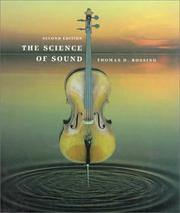
Vinyl records and hi-fi: the best books to build a great-sounding setup
This curriculum takes a beginner from zero knowledge of vinyl and hi-fi all the way to confident, discerning collector and audiophile. It starts with the culture and joy of records, builds practical knowledge of turntables and cartridges, then dives into the science and craft of speaker and amplifier selection, and finally reaches the advanced art of system-building and serious collecting.
Foundations: The World of Vinyl
BeginnerUnderstand why vinyl sounds the way it does, learn essential vocabulary (stylus, cartridge, gain, tracking force, etc.), and develop a feel for the culture and joy of record collecting before spending a penny on gear.
▸ Study plan for this stage
Pace: 4–5 weeks, ~25–30 pages/day (approximately 150–180 pages total for "Dust & Grooves")
- The physics of vinyl: how grooves encode sound and the stylus reads them
- Essential hi-fi vocabulary: stylus, cartridge, tracking force, gain, impedance, and signal path
- Vinyl's sonic characteristics: warmth, harmonic distortion, and why listeners prefer it despite technical limitations
- The culture and psychology of record collecting: curation, discovery, and the ritual of listening
- Turntable anatomy and how each component (tonearm, platter, motor) affects sound quality
- The relationship between record condition, playback equipment, and listening experience
- Vinyl as a gateway to intentional, focused listening versus passive consumption
- Why do vinyl records produce a warmer, more 'analog' sound compared to digital formats, and what role does the stylus play in this?
- What is tracking force, and how does it affect both the sound quality and the lifespan of your records?
- Explain the signal path from the stylus to your speakers: what are the key components and how do they interact?
- What distinguishes a cartridge from a stylus, and why does the choice of cartridge matter for your listening experience?
- How does the culture of record collecting differ from passive music consumption, and what psychological or emotional benefits does it offer?
- What are the main factors that degrade vinyl records, and how can a listener minimize damage without expensive equipment?
- Visit a local record store (or browse online) and spend 30 minutes exploring different genres and eras; note which albums catch your eye and why, then research one artist's discography to understand how vinyl collecting builds narrative and discovery
- Create a glossary of at least 15 hi-fi and vinyl-specific terms from the book (stylus, cartridge, tracking force, gain, impedance, etc.) with your own explanations in simple language
- Listen to a song on both digital (Spotify, Apple Music) and vinyl (at a friend's house, record store listening station, or YouTube vinyl rip) and write a detailed comparison of what you hear—focus on warmth, detail, and emotional impact
- Examine a vinyl record under magnification (phone macro lens, jeweler's loupe, or microscope) and sketch or photograph the groove structure; reflect on how the stylus must navigate this microscopic landscape
- Interview a record collector (in person or online) about their first purchase, their curation philosophy, and what draws them to vinyl; document 5–7 key insights about the psychology of collecting
- Write a short personal manifesto (300–500 words) on why you want to enter the vinyl hobby: what are you seeking, and how does intentional listening align with your values?
Next up: Understanding vinyl's physics, culture, and sonic character prepares you to evaluate and select your first turntable and cartridge with informed criteria rather than brand hype or price alone.

A stunning photographic deep-dive into the homes and stories of serious collectors worldwide — builds passion and vocabulary for genres, formats, and storage before tackling gear.
Getting Started: Turntables & Playback Basics
BeginnerChoose, set up, and correctly operate a turntable; understand cartridges, stylus alignment, tracking force, and anti-skate; and connect a turntable to an amplifier and speakers without making expensive mistakes.
▸ Study plan for this stage
Pace: 4–5 weeks, ~25–30 pages/day, focusing on Chapters 1–6 and relevant sections on turntables, cartridges, and system setup
- Turntable anatomy and how each component (platter, tonearm, motor) affects sound quality
- Cartridge types (moving magnet vs. moving coil) and their role in converting groove vibrations to electrical signals
- Stylus alignment, tracking force, and anti-skate: why these adjustments matter and how they prevent groove damage and distortion
- The signal chain from turntable through preamp to amplifier and speakers, and why impedance matching and proper connections are critical
- Common setup mistakes that damage records or degrade sound, and how to avoid them
- How to evaluate turntables and cartridges for your budget and listening environment
- Maintenance basics: cleaning records, stylus care, and routine checks to preserve equipment longevity
- What are the key differences between moving magnet and moving coil cartridges, and which is better suited for a beginner setup?
- Why is stylus alignment critical, and what happens to records and sound quality if it is misaligned?
- How do tracking force and anti-skate work together to protect records and ensure accurate playback?
- What is the correct signal chain from turntable to speakers, and what role does a preamp play?
- What are the three most common turntable setup mistakes, and how do you prevent them?
- How do you choose a turntable and cartridge combination that matches your budget and listening goals?
- Visit a local hi-fi shop or online retailer and compare three turntables in your budget range; document their motor type, tonearm design, and included cartridge specifications
- Read the setup section of a turntable manual (even if you don't own one yet) and create a checklist of calibration steps: stylus alignment, tracking force, anti-skate, and azimuth
- Using a straightedge and protractor (or a digital alignment tool), practice measuring stylus overhang and alignment on a turntable at a shop or friend's system
- Trace the signal path in your current or target system on paper: turntable → preamp → amplifier → speakers, labeling impedance and connection type at each stage
- Clean a record using proper technique (brush, vacuum, or wet cleaning) and listen for the difference in surface noise before and after
- Set up or adjust tracking force and anti-skate on an available turntable using a stylus force gauge, documenting the correct values for that cartridge
Next up: Mastering turntable setup and playback fundamentals equips you to make informed purchasing decisions and operate equipment safely; the next stage will deepen your understanding of how room acoustics, speaker placement, and amplifier characteristics shape the sound you hear from those records.

The single most recommended beginner-to-intermediate hi-fi reference book; introduces amplifiers, DACs, speakers, and analog playback in a logical, jargon-busting order that makes later technical reading much easier.
Going Deeper: Cartridges, Phono Stages & Room Acoustics
IntermediateUnderstand the differences between moving-magnet and moving-coil cartridges, select and load a phono stage correctly, and grasp how room acoustics shape what you actually hear from your speakers.
▸ Study plan for this stage
Pace: 4–5 weeks, ~25–30 pages/day (focusing on Chapters 1–6, 8–10, and 12–13 of the Handbook)
- Sound propagation fundamentals: how sound waves behave in enclosed spaces, including reflection, absorption, and diffraction
- Room modes and standing waves: why certain frequencies boom or disappear in your listening room, and how room dimensions create acoustic problems
- Frequency response and acoustic measurement: understanding how to measure and interpret room acoustics using simple tools and techniques
- Absorption and diffusion strategies: practical methods to control reflections and improve acoustic balance without over-damping the room
- Speaker placement and listening position: how to position speakers and seating to minimize room mode effects and achieve optimal stereo imaging
- Acoustic treatment materials and their properties: how different materials (foam, fiberglass, bass traps) affect sound at different frequencies
- Listening room design principles: balancing liveness and deadness to create a neutral, accurate listening environment for vinyl playback
- What are the primary ways sound behaves differently in a room compared to open space, and why do certain frequencies seem to boom while others disappear?
- How do room modes form, and what is the relationship between room dimensions and the frequencies most affected by standing waves?
- What practical steps can you take to measure and diagnose acoustic problems in your listening room without expensive equipment?
- How do absorption and diffusion differ, and when should you use each technique to treat your listening space?
- Where should you position your speakers and listening seat relative to room boundaries to minimize the impact of room modes?
- How do the acoustic properties of your room directly affect the sound quality you hear from your turntable and cartridge?
- Map your listening room's dimensions and calculate the first three room modes using the formula provided in the Handbook; identify which frequencies will be problematic
- Perform a simple clap test: clap in your listening room and listen for flutter echo and dead spots; note where problems occur and relate them to room geometry
- Measure frequency response at your listening position using a smartphone app or simple sine-wave sweep; document peaks and dips across the audible spectrum
- Create a basic acoustic treatment plan for your room: identify 3–4 problem areas and specify absorption or diffusion solutions using materials discussed in the Handbook
- Experiment with speaker placement: move speakers and your listening seat in small increments and listen for changes in bass response and stereo imaging; document the best positions
- Build or acquire one simple acoustic treatment (bass trap, absorption panel, or diffuser) and measure its effect on room response before and after installation
Next up: Mastering room acoustics establishes the foundation for understanding how your cartridge, phono stage, and entire playback chain actually perform—because no matter how accurate your equipment is, a poorly treated room will mask or distort the signal, preparing you to make informed decisions about cartridge selection and phono-stage loading in the next stage.

The canonical reference for understanding how sound behaves in rooms — essential reading before making any speaker placement or room treatment decisions, and it rewards re-reading as your system improves.
Advanced Listening: Speakers, Amplifiers & System Synergy
ExpertEvaluate loudspeakers and amplifiers critically, understand the science behind measurements vs. listening tests, and build a coherent, synergistic hi-fi system rather than a collection of expensive individual components.
▸ Study plan for this stage
Pace: 8–10 weeks, ~40–50 pages/day (alternating between both books; start with Toole's foundational chapters, then layer in Winer's practical applications)
- Loudspeaker directivity, frequency response, and room interaction as primary determinants of sound quality—not brand prestige or price
- The critical role of amplifier power, impedance matching, and damping factor in controlling speaker behavior and preventing coloration
- How to interpret objective measurements (THD, frequency response, impedance curves) and reconcile them with subjective listening impressions
- Room acoustics and speaker placement as equally important as component selection; the concept of system synergy over component chasing
- Psychoacoustics and listening bias: how expectation, placebo, and confirmation bias distort our perception of audio quality
- The science of loudspeaker design trade-offs: cabinet resonance, crossover design, driver integration, and their audible consequences
- Measurement methodology and its limitations: why some measurements correlate with listening preference and others do not
- Building a coherent system: matching amplifier output impedance to speaker impedance, choosing speakers for your room, and avoiding component incompatibility
- What is directivity in loudspeaker design, and why does it matter more than raw frequency response flatness for perceived sound quality?
- How do room modes and speaker placement interact to color the bass response, and what practical steps can you take to mitigate these effects?
- Explain the relationship between amplifier damping factor, speaker impedance, and the control of speaker cone movement. Why does this matter for sound quality?
- When is a measurement-based approach to audio evaluation valid, and when can measurements mislead you about listening preference? Give specific examples from the books.
- Design a simple listening test protocol that accounts for bias and expectation. What controls would you implement, and why?
- You have a budget for a speaker-amplifier pairing in a small room with untreated acoustics. How would you prioritize: speaker choice, amplifier power, or room treatment? Justify your answer using concepts from both books.
- What is the difference between a loudspeaker's on-axis and off-axis frequency response, and why do both matter for real-world listening?
- Describe three common listening biases that can lead you to misjudge audio equipment, and how would you design a test to control for them?
- Measure your own listening room: use a smartphone app or basic SPL meter to plot frequency response at multiple listening positions. Identify room modes and predict where bass will boom or cancel. Then listen critically and confirm your predictions.
- Conduct a blind A/B listening test comparing two amplifiers or speakers (if available) with a friend as a control. Use a protocol from Winer's chapters on bias; document your predictions beforehand and compare them to your blind results.
- Read the impedance and frequency response curves of three different speakers from manufacturer specs. For each, predict how a low-damping-factor amplifier (damping factor < 50) would interact with the speaker, and explain the likely sonic consequences.
- Build a simple speaker placement experiment: position a speaker in three different locations in your room (corner, wall, center) and listen to the same recording at each position. Document changes in bass response, imaging, and tonal balance. Correlate your observations with room mode theory from Toole.
- Attend a loudspeaker demo at a dealer or audio show and conduct a structured listening test: listen to the same recording on two different systems, take notes on specific sonic attributes (bass extension, midrange clarity, treble smoothness), then ask the dealer for the technical specs. Analyze whether your impressions correlate with the measurements.
- Create a system synergy checklist for a hypothetical speaker-amplifier pairing: list the speaker's impedance curve, sensitivity, and directivity; the amplifier's power output, damping factor, and output impedance; and the room dimensions. Identify potential incompatibilities and propose solutions.
Next up: This stage equips you with the critical thinking tools and measurement literacy to evaluate any hi-fi component claim objectively, preparing you to explore specialized topics like digital audio, analog playback, or room correction technologies with a foundation in how sound actually reaches your ear.

The definitive scientific treatment of how loudspeakers and rooms interact — Toole's research underpins modern speaker design and is essential for anyone serious about what 'good sound' actually means.

A rigorous, myth-busting technical reference covering amplifiers, cables, room acoustics, and measurements; pairs perfectly with Toole to give a complete, evidence-based picture of high-fidelity audio.
Mastery: Serious Collecting & the Art of the Pressing
ExpertGrade, identify, and value original pressings vs. reissues; understand how mastering and lacquer-cutting affect sound quality; and develop a personal, informed collecting philosophy.
▸ Study plan for this stage
Pace: 8–10 weeks, ~40–50 pages/day (alternating between both books; start with Goldmine for 3–4 weeks, then Making Records for 4–5 weeks, with 1–2 weeks of overlap for synthesis)
- Pressing identification: how to read matrix numbers, labels, and catalog codes to distinguish original pressings from reissues and bootlegs
- Grading standards and condition assessment: using the Goldmine scale (M, NM, VG+, VG, G, F, P) to evaluate records and sleeves accurately
- Pricing logic: understanding how rarity, pressing plant, year, condition, and demand drive market value in the secondary market
- Mastering and lacquer-cutting fundamentals: how cutting engineers shape the master lacquer and how different techniques affect frequency response, dynamics, and surface noise
- Pressing plant variations: how different facilities, vinyl formulations, and equipment produce audible sonic differences between original and reissue pressings
- The relationship between technical production and sonic character: why original pressings often sound different from reissues due to mastering choices and manufacturing tolerances
- Developing a collecting philosophy: balancing sonic quality, historical significance, rarity, and budget constraints into a coherent personal strategy
- How do you identify an original pressing versus a reissue using matrix numbers, label design, and catalog information from the Goldmine guide?
- What are the key differences between the Goldmine grading scale categories (M through P), and how do condition variations affect both playability and resale value?
- Explain how a lacquer-cutting engineer's choices during mastering affect the final sound of a vinyl record, and why original master lacquers often produce superior pressings
- What are three major pressing plant variations that can cause sonic differences between an original pressing and a later reissue of the same album?
- How would you construct a personal collecting philosophy that balances sonic fidelity, rarity, historical importance, and your budget constraints?
- Why might a record graded VG+ with an original pressing designation command a higher price than a NM reissue of the same title, and when might the reissue be the better purchase?
- Grade 5–10 records from your own collection using the Goldmine scale, documenting condition of both vinyl and sleeve; compare your assessments with online listings to calibrate your eye
- Research the pressing history of one classic album (e.g., a Miles Davis or Beatles title) using matrix numbers and Goldmine data; create a timeline showing original vs. reissue pressings and note any sonic differences you can hear
- Visit a used record store and identify at least three original pressings vs. reissues of the same album; document the matrix codes, label variations, and price differences
- Read the mastering and cutting sections of Making Records and listen to a before/after comparison (original master tape vs. final pressing) if available; write a 1-page analysis of what you hear
- Build a mock collecting budget (~$500–$1,000) and create a prioritized want-list of 10 albums, justifying each choice based on pressing rarity, sonic quality, and personal significance
- Interview or correspond with an experienced collector about their philosophy; ask how they decide between original pressings and reissues, and synthesize their approach into your own framework
Next up: This stage equips you with the technical knowledge and market literacy to make informed, defensible collecting decisions; the next stage will likely focus on building a curated collection and understanding how to preserve, maintain, and optimize playback of your records to maximize their sonic potential.

The industry-standard reference for grading condition, identifying pressings, and understanding market values — no serious collector should be without it.
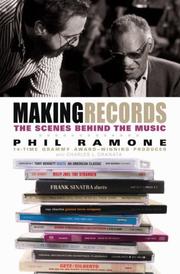
A legendary producer's inside account of the recording and mastering process; reading this last gives you the full chain from microphone to groove, completing your understanding of why some pressings sound better than others.
Discussion
Keep reading
Paths that share books, cover the same subject, or open a related topic.