Time series analysis trips people up because it violates the assumption most statistics courses lean on: that observations are independent. Here each point leans on its neighbors, trends drift, seasons repeat, and a model that ignores that structure will forecast confidently and wrongly. The trap is jumping straight to the dense theory before you have watched a real series behave.
The order that works starts with hands-on practice, adds the classical theory that explains why the methods work, and finishes with the machine-learning tools that now dominate applied forecasting. Each stage answers a question the last one raised.
Get hands-on first
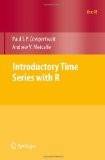
Begin with Introductory time series with R, which teaches decomposition, autocorrelation, and ARIMA by having you run and plot real series rather than derive them. Forecasting by Rob Hyndman is the modern classic here: free online, deeply practical, and the single best guide to producing and evaluating forecasts you can trust. Forecasting with Exponential Smoothing goes deeper on the state-space methods behind those tools, giving you a principled account of a family that quietly powers a lot of production forecasting.
Build the classical core
With intuition in place, the reference texts stop being intimidating. Time Series Analysis forecasting and control revised edition by Box and Jenkins is the foundational work that named the ARIMA methodology and still repays careful study. Time Series Analysis by James Hamilton is the rigorous graduate reference, strong on the econometric and state-space theory that underpins everything else. Bayesian data analysis sits alongside them as the bridge to probabilistic forecasting, teaching you to reason about uncertainty rather than report a single number.
Move to modern methods
The final arc is machine learning, where most new forecasting work now happens. Machine Learning for Time-Series with Python shows how to frame forecasting as a supervised problem and apply feature engineering and gradient-boosted models. Hands-On Machine Learning with Scikit-Learn, Keras, and TensorFlow is the broad practical reference for the tooling, and its coverage of RNNs and sequence models transfers directly. Deep Learning by Goodfellow is the theory reference for those architectures, and Time Series Forecasting in Python ties the thread together with an end-to-end tour from ARIMA to deep models in one consistent codebase.
Read in this order and forecasting stops feeling like a bag of tricks and becomes a coherent craft. Follow the full path to go from your first autocorrelation plot to production-grade models.
Follow the full reading path →
Ready to learn something deeply?
Build a reading path — free