The Best Books to Build a Home Theater
This curriculum takes a complete beginner from zero knowledge of home theater all the way to confidently designing, wiring, and tuning a cinema-quality AV system. Each stage builds on the last — starting with the language and concepts of audio/video, moving through speaker and projector selection, then tackling room acoustics and treatment, and finally mastering the wiring, calibration, and integration that tie everything together.
Foundations: How Sound and Video Work
BeginnerUnderstand the core vocabulary and principles of audio and video — how sound travels, what specs mean, and how a home theater system fits together as a whole.

The ideal starting point: plain-language explanations of every component in a home theater system — receivers, speakers, projectors, screens, and cabling — with no assumed knowledge.

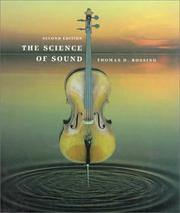
Builds on the Dummies foundation by explaining how audio components actually work, introducing critical listening vocabulary and the science behind sound reproduction before you spend a dollar.
Speakers and Acoustics: The Heart of the Experience
BeginnerLearn how to choose, position, and evaluate speakers for a surround-sound setup, and grasp the fundamental relationship between a room and its sound.
▸ Study plan for this stage
Pace: 6–8 weeks, ~25–30 pages/day (alternating between both books in parallel)
- How human hearing perceives sound: frequency response, loudness, spatial cues, and the role of room reflections in shaping what we hear
- Speaker selection criteria: directivity, frequency response, impedance matching, and how a speaker's design affects its interaction with room acoustics
- The critical relationship between room dimensions, modes, and standing waves—and how they color the sound you actually hear
- Speaker placement strategies: optimal positioning for surround systems, nearfield vs. farfield listening, and the impact of boundary proximity on bass response
- Acoustic treatment fundamentals: absorption, diffusion, and bass trapping as practical tools to control room reflections and modal problems
- Measurement and evaluation: using listening tests, frequency response curves, and basic acoustic metrics to assess speaker and room performance
- The interdependence of speaker design and room acoustics: why no speaker sounds the same in every room, and how to optimize the pairing
- What are the key factors in human hearing perception that make some speakers sound better than others, and how do room reflections influence these factors?
- How do speaker directivity and frequency response specifications help you predict how a speaker will perform in your specific room?
- What are room modes and standing waves, and why do they matter more for bass frequencies than for midrange and treble?
- Given a room's dimensions and your listening position, how would you position speakers to minimize the negative effects of room modes and maximize surround-sound immersion?
- What are the practical differences between absorption and diffusion, and when would you use each type of acoustic treatment?
- How would you measure or listen critically to evaluate whether a speaker-and-room combination is working well, and what adjustments could you make?
- Map your listening room's dimensions and calculate its primary room modes using online calculators; identify which frequencies will be problematic and note where pressure peaks occur
- Listen critically to a speaker in your room at different positions (corners, wall-mounted, freestanding center); document how bass response, imaging, and timbre change with placement
- Measure or estimate your room's reverberation time by clapping and listening to decay; compare untreated vs. treated areas to hear the effect of absorption
- Create a simple bass trap using rockwool and fabric in a corner; measure or listen for changes in low-frequency response before and after installation
- Use a smartphone app (e.g., REW, Audacity) to generate a frequency sweep and record it in your room at your listening position; compare the recorded response to the speaker's published specs
- Read the frequency response curves and directivity plots in Toole's book for 2–3 different speaker designs; predict how each would sound in your room based on its polar patterns and response shape
Next up: This stage equips you with the acoustic literacy and hands-on skills to make informed speaker choices and room optimizations; the next stage will build on this foundation by teaching you how to integrate multiple speakers into a cohesive surround-sound system and calibrate them for seamless playback.

The definitive science-backed guide to how speakers and rooms interact — written by one of the world's leading acoustics researchers; read this before buying a single speaker.

Deepens your understanding of room acoustics — standing waves, reflections, absorption, and diffusion — giving you the technical grounding to treat your room properly.
Projection and Video: Building the Picture
IntermediateUnderstand projector technology, screen selection, image calibration, and how to match video components to your room size and lighting conditions.
▸ Study plan for this stage
Pace: 4–5 weeks, ~40–50 pages/day. "Video Demystified" is dense and technical; allocate extra time for chapters on projector technology, color spaces, and signal standards. Plan review sessions after each major section.
- Video signal fundamentals: analog vs. digital, resolution standards (480p, 720p, 1080p, 4K), frame rates, and refresh rates
- Color theory and color spaces: RGB, YCbCr, color gamut, and how projectors reproduce color accurately
- Projector technology: lamp vs. LED vs. laser light sources, DLP, LCD, and LCoS imaging technologies, and brightness/contrast specifications
- Video interfaces and standards: HDMI, DisplayPort, component video, and compatibility with modern AV sources
- Image calibration fundamentals: gamma correction, white balance, black levels, and how to measure and adjust for your room
- Room-dependent factors: ambient light control, screen gain and viewing angles, throw distance calculations, and keystone correction
- Video processing and scaling: how projectors handle different input resolutions and the importance of native resolution matching
- Signal flow and impedance: understanding how video signals degrade and the role of quality cabling in maintaining image integrity
- What are the key differences between DLP, LCD, and LCoS projector technologies, and how do these differences affect image quality and maintenance?
- How do color spaces like RGB and YCbCr differ, and why is understanding color gamut important when selecting a projector for your room?
- What is gamma correction, and how does adjusting gamma impact perceived brightness and shadow detail in your projected image?
- How do you calculate the required throw distance for a projector given your screen size, and what role does lens shift play in installation flexibility?
- What are the practical differences between HDMI and DisplayPort for home theater, and how do you ensure proper signal integrity with cabling?
- How should ambient light levels and screen gain influence your projector and screen selection for your specific room?
- Create a projector specification comparison chart for three models in your budget range, documenting brightness (lumens), contrast ratio, native resolution, light source type, and color gamut—then justify which best fits a room with moderate ambient light
- Calculate the throw distance and screen size for your actual room dimensions using projector throw ratio formulas; verify the calculation with at least two different projector models' specs
- Measure and document your room's ambient light levels at different times of day using a light meter app or lux meter; map out where blackout treatments are most critical
- Study the color gamut specifications (DCI-P3, Rec. 709, etc.) for two projectors and explain how gamut differences would affect color accuracy for movies vs. sports content
- Trace a complete video signal path from a source device through cables, a receiver, and to a projector; identify potential points of signal degradation and specify appropriate cabling standards
- Set up a test pattern (using a calibration disc or online tool) and practice adjusting gamma, brightness, and contrast on a projector or display; document the visual differences at each step
Next up: This stage equips you with the technical foundation to evaluate and configure projectors and screens; the next stage will apply this knowledge to room acoustics and speaker placement, completing the integrated AV system design.

A thorough technical reference for video signals, formats, and interfaces (HDMI, 4K, HDR) that ensures you understand exactly what is flowing between your source devices and display.
Calibration and the Reference-Quality Finish
ExpertCalibrate audio and video to professional standards, tune room acoustics with treatments, and dial in every parameter so the system performs at true cinema quality.
▸ Study plan for this stage
Pace: 4–5 weeks, ~25–30 pages/day, with 2–3 days per week dedicated to practical calibration work
- Psychoacoustics and how the human ear perceives frequency, loudness, and spatial cues in a home theater environment
- Critical listening skills and training your ear to detect tonal imbalances, phase issues, and room modes
- The relationship between mixing philosophy and playback calibration—applying studio-grade thinking to consumer equipment
- Frequency response tuning and EQ strategies to achieve neutral, reference-quality sound across the listening area
- Room acoustics interaction: identifying standing waves, reflections, and absorption placement for optimal sound propagation
- Loudness standards (SMPTE, ITU, cinema reference levels) and how to calibrate SPL and dynamic range accurately
- Mental models for troubleshooting audio problems by understanding the chain from source to ear
- Practical measurement and listening validation—using both instruments and trained perception to verify calibration
- How does the human ear's frequency response curve (Fletcher-Munson curves) influence your calibration targets, and why is this relevant to home theater setup?
- What are the key differences between mixing for studio monitors and calibrating a home theater system, and how do Stavrou's mixing principles translate to playback?
- How do standing waves and room modes affect bass response, and what practical steps would you take to identify and mitigate them in your listening room?
- What is the relationship between reference loudness levels (SMPTE, ITU-R BS.1770) and how you set your system's master volume and subwoofer level?
- How would you use critical listening techniques from 'Mixing with Your Mind' to validate that your calibration is truly neutral and not colored by room acoustics or equipment limitations?
- Describe the signal chain from source to ear in your home theater and identify three potential points where tonal or spatial problems could arise—and how you'd diagnose each.
- Conduct a critical listening session using familiar reference tracks (well-mixed films, music mixes) and document what you hear before any calibration; repeat after each major adjustment to track improvements
- Measure your room's frequency response using a calibrated microphone and measurement software (REW, Audyssey, or similar); identify peaks and dips, and correlate them with standing wave predictions based on room dimensions
- Perform a manual SPL calibration at your main listening position using a sound pressure level meter, setting your center channel to 75 dB (SMPTE reference) and verifying surround and subwoofer levels match the standard
- Create a detailed acoustic treatment plan for your room: map reflection points, identify absorption vs. diffusion needs, and implement at least one treatment (bass trap, absorption panel, or diffuser) while measuring the before/after impact
- Practice Stavrou's mental listening exercises (e.g., focusing on individual frequency bands, spatial imaging, phase coherence) during playback of test tones and known-good mixes to sharpen your critical ear
- Build a calibration logbook documenting every adjustment (EQ settings, speaker distances, levels, room treatments) with before/after measurements and listening notes, creating a reference for future troubleshooting
Next up: This stage grounds you in the science and art of achieving neutral, reference-quality playback through calibration and room treatment, preparing you to move into advanced topics like immersive audio formats, high-resolution playback optimization, or custom system design where these foundational calibration skills become the baseline for further refinement.

Trains your ears to hear what is actually happening in a room — a cult classic among audio professionals that sharpens the critical listening skills needed to make final calibration decisions by ear.
Discussion
Keep reading
Paths that share books, cover the same subject, or open a related topic.