Biostatistics rewards a careful reading order because the stakes are unusual: the same misread p-value or mishandled dropout can distort a drug approval or a public-health guideline. It is easy to memorize a test and apply it to the wrong design. What you actually need first is judgment about what the numbers can and cannot say.
The path below builds that judgment before the specialized tools, moving from statistical reasoning to the regression and survival methods that dominate medical research, then to the study designs and causal thinking that give the analysis its meaning. These books complement formal training and clinical supervision; they do not replace them.
Build the reasoning
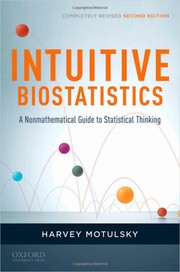
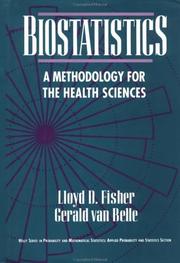
Start with Intuitive biostatistics, Harvey Motulsky's uncommonly clear guide to what statistical results mean and how they mislead, written for people who analyze data rather than derive it. Medical statistics at a glance workbook gives you compact, worked practice across the standard tests so the concepts stick. Biostatistics by Fisher and van Belle then provides the fuller textbook treatment, connecting the intuition to the underlying methods with medical examples throughout.
Master the core methods
Most real analyses are regression and survival models, so they deserve dedicated study. Regression methods in biostatistics is the definitive practical guide to linear, logistic, and Cox models as they are actually used in health research. Survival Analysis: A Self-Learning Text teaches time-to-event methods step by step, the single most characteristic tool of the field. Applied Longitudinal Analysis extends the same thinking to repeated-measures and correlated data, which describes most clinical datasets once you look closely.
Design and inference
The last arc is about where the data comes from and what it can prove. Fundamentals of clinical trials is the standard reference on designing and running the randomized experiments that anchor medical evidence. Modern epidemiology by Rothman is the deep text on study design, bias, and confounding across observational research. Causal Inference: What If by Hernán and Robins makes the logic of causation explicit and rigorous, and Bayesian Methods In Health Economics shows how these tools feed the cost-effectiveness decisions that shape real policy.
Read in this order and biostatistics becomes a coherent way of reasoning under uncertainty rather than a checklist of tests. Follow the full path to go from intuition to trial design and causal inference.
Follow the full reading path →
Ready to learn something deeply?
Build a reading path — free