Impressionism: an ordered reading list to appreciate the art
This curriculum takes you from your first encounter with Impressionism all the way to a nuanced understanding of its techniques, key artists, historical forces, and enduring legacy. Each stage builds on the last — starting with vivid, image-rich introductions, moving through artist-focused deep dives, then arriving at scholarly analysis of light, color theory, and the movement's global influence.
First Impressions: Foundations
BeginnerBuild a vivid, accessible overview of what Impressionism is, when and why it emerged, and who its central figures were — establishing the vocabulary and visual intuition needed for everything that follows.
▸ Study plan for this stage
Pace: 4–5 weeks, ~25–30 pages/day (approximately 150–180 pages total across all three books)
- Impressionism as a reaction against academic tradition and salon conventions, emphasizing light, color, and immediate perception over historical narrative or idealized forms
- The historical context of 1870s–1880s France: industrialization, urbanization, and the rise of photography as catalysts for artistic change
- The centrality of light and color theory to Impressionist practice, including the use of broken brushwork and optical mixing rather than blending on the palette
- Key figures and their distinct contributions: Monet's serial paintings and water lilies, Renoir's figure work, Degas's unusual compositions and pastels, Cézanne's structural approach, and others
- The shift from studio-based, carefully composed work to plein air (open-air) painting and the embrace of contemporary subjects—railways, gardens, leisure scenes, urban landscapes
- The role of dealers, collectors, and independent exhibitions (especially the 1874 exhibition that gave Impressionism its name) in establishing the movement outside the official Salon
- The vocabulary of Impressionism: terms like 'impression,' 'tone,' 'broken color,' 'optical mixing,' and 'luminosity' as distinct from traditional art-historical language
- What were the main reasons Impressionism emerged when it did, and what artistic and social conditions made it possible?
- How did Impressionist painters' approach to light, color, and brushwork differ fundamentally from academic painting traditions?
- Who were the central figures of Impressionism, and what were their individual artistic signatures or contributions?
- What role did plein air painting and contemporary subject matter play in defining the Impressionist aesthetic?
- How did the independent exhibition system and dealer support help establish Impressionism despite rejection by the official Salon?
- What is 'optical mixing' and why was it important to Impressionist technique?
- Create a visual timeline: Collect or sketch 8–10 Impressionist paintings (from the books or online) and arrange them chronologically, noting how light, color palette, and subject matter evolve across the 1870s–1880s
- Comparative analysis: Select one painting by Monet and one by Degas; write a 1–2 page analysis of how their approaches to light, composition, and subject differ despite both being 'Impressionist'
- Vocabulary practice: Create a glossary of 10–12 key terms (impression, plein air, broken color, optical mixing, luminosity, etc.) with visual examples from the three books
- Sketch or paint a simple scene (landscape, garden, water, or urban street) using broken brushwork and attention to light effects, mimicking the Impressionist approach rather than photorealistic detail
- Timeline and context map: Chart the major historical events (Franco-Prussian War, industrialization, photography's rise, Salon rejections) alongside key Impressionist exhibitions and works to see the connections
- Close reading: Select one chapter from Gombrich on Impressionism and one from Herbert; compare how each author explains the 'why' behind the movement—what do they emphasize differently?
Next up: This stage equips you with the foundational vocabulary, historical context, and visual literacy to recognize Impressionist work and understand its revolutionary character, preparing you to explore deeper technical analysis, regional variations, and the movement's influence on subsequent modern art movements.

An anthology of primary sources — letters, diaries, and criticism from the artists themselves — giving beginners an immediate, human feel for the movement before any theory is introduced.
The world's most-read art history book provides essential context for where Impressionism fits in the sweep of Western art, making the movement's radical break from tradition genuinely legible.
A richly illustrated, accessible survey that grounds Impressionist paintings in the social world of 19th-century Paris — cafés, racetracks, riverbanks — showing why the artists painted what they painted.
The Artists Up Close: Monet, Renoir & Their Circle
BeginnerDevelop an intimate understanding of the movement's two most iconic painters — their lives, obsessions, and individual techniques — so that later readings about style and theory feel personally grounded.
▸ Study plan for this stage
Pace: 4–5 weeks, ~40–50 pages/day (approximately 200–250 pages total for White's "Renoir")
- Renoir's evolution from early Impressionist experimentation to his later 'Ingrist' period and the tensions between spontaneity and classical form
- The role of light, color, and brushwork in Renoir's distinctive approach to capturing fleeting moments and human warmth
- Renoir's relationships with key figures in Impressionism (Monet, the Impressionist circle, dealers, and patrons) and how these shaped his artistic development
- The biographical context of Renoir's life—his working-class origins, travels, health struggles, and personal relationships—as drivers of his artistic choices
- Renoir's subject matter preferences: intimate domestic scenes, portraits, and the human figure as central to his vision (contrasting with Monet's landscape focus)
- The commercial and critical reception of Impressionism through Renoir's career, including the movement's gradual acceptance and his own strategic positioning
- Renoir's technical mastery: how he built compositions, mixed pigments, and developed his signature feathery brushstroke
- How did Renoir's working-class background and early training shape his artistic philosophy and subject matter choices?
- What were the key differences between Renoir's early Impressionist period and his later classical or 'Ingrist' period, and what prompted this stylistic shift?
- How did Renoir's relationships with Monet and other Impressionists influence his artistic development, and where did they diverge in their approaches?
- What role did portraiture and the human figure play in Renoir's work, and how did this distinguish him from other Impressionists?
- How did Renoir's personal life—including his travels, health issues, and romantic relationships—influence the themes and execution of his paintings?
- What was Renoir's relationship with commercial success and critical acceptance, and how did he navigate the market for Impressionist art?
- Create a visual timeline of Renoir's major life events and artistic periods (early Impressionism, mature period, Ingrist phase) using White's biographical details; annotate with 2–3 key paintings from each period
- Select 3–4 paintings discussed in the book and write a 200-word analysis of each, focusing on Renoir's use of light, color, and brushwork as described by White
- Sketch or photograph your own study of light and shadow on a human face or figure, experimenting with Renoir's approach to capturing warmth and immediacy
- Compile a 'relationship map' showing Renoir's connections to Monet, Pissarro, Cézanne, dealers, and patrons; note how each relationship influenced his work or career
- Write a fictional letter from Renoir to a patron or fellow artist (e.g., to Monet or a collector) reflecting on his artistic choices and the tension between innovation and tradition
- Compare two reproductions of Renoir paintings from different periods (e.g., one early Impressionist, one later classical) and write a 300-word comparative analysis of technique and subject matter
Next up: This intimate portrait of Renoir's life, obsessions, and evolving technique provides the personal and biographical foundation needed to understand Impressionist style and theory in the next stage, grounding abstract concepts like color theory and brushwork in the lived experience of one of the movement's most human-centered painters.

The definitive English-language biography of Renoir, showing how his warmth, sensuality, and social ease produced a distinctly different Impressionism from Monet's — perfect for understanding the movement's range.
Seeing the Light: Technique, Color & Perception
IntermediateUnderstand the scientific and perceptual principles — color, light, brushwork, and optics — that gave Impressionism its visual power, enabling you to look at any Impressionist canvas with analytical confidence.
▸ Study plan for this stage
Pace: 4–5 weeks, ~20–25 pages/day, with 2–3 days per week dedicated to color experiments and visual exercises
- Color relativity: how colors are perceived in relation to their surrounding context, not in isolation
- Simultaneous contrast: the optical phenomenon where adjacent colors intensify or modify each other's appearance
- Color temperature and spatial illusion: how warm and cool colors create depth and movement on a flat surface
- Optical mixing and vibration: how juxtaposed hues create visual energy without physical blending
- Afterimage and color perception: the physiological basis of how the eye processes and responds to color
- Transparency and layering: creating spatial depth through color interaction rather than linear perspective
- The psychology of color: emotional and perceptual responses to hue, saturation, and value relationships
- How does the principle of color relativity explain why the same color can appear different depending on its surroundings?
- What is simultaneous contrast and how does it create visual vibration in Impressionist paintings?
- How do warm and cool colors function to create spatial depth and movement on a two-dimensional canvas?
- What is optical mixing, and how does it differ from physical color mixing on a palette?
- How does understanding afterimage and physiological color response deepen your analysis of Impressionist color choices?
- How can you use transparency and layering principles to understand the spatial construction of an Impressionist work?
- Complete Albers's foundational color-matching exercises (Part I): match a given color by surrounding it with different hues to understand relativity
- Create a simultaneous contrast study: place a single hue against five different background colors and document how it appears to shift
- Paint or collage a landscape study using only warm colors, then cool colors, observing how each temperature palette affects perceived depth and mood
- Conduct an optical mixing experiment: create a small composition using only two complementary colors applied in small adjacent strokes (no blending), stepping back to observe the visual vibration
- Document your own afterimage experiences: stare at a saturated color for 30 seconds, then look at white paper and sketch what you see; repeat with different hues
- Analyze 3–4 Impressionist paintings (Monet water lilies, Renoir portraits, or Pissarro landscapes) and annotate them with notes on color relativity, temperature shifts, and optical effects you now recognize
Next up: This foundation in color perception and optical principles equips you to move beyond technique into the historical and cultural context of Impressionism, understanding not just *how* these artists saw, but *why* their radical approach to light and color was revolutionary for their time.
The classic hands-on study of how colors behave relative to one another; reading this transforms how you see the Impressionists' broken-color technique and their radical rejection of black shadows.
The Full Movement: History, Politics & Rivals
IntermediateSituate Impressionism within the broader art-historical and political landscape of 19th-century France, understanding the Salon system, critical battles, and the full cast of artists beyond the famous names.
▸ Study plan for this stage
Pace: 6–7 weeks, ~25–30 pages/day. Moffett (approximately 200 pages) over 3 weeks, then Broude (approximately 150–180 pages) over 3–4 weeks, with 1 week for synthesis and review.
- The Salon system as gatekeeper: how the official Salon's jury, aesthetic standards, and rejection of Impressionist works shaped the movement's identity and forced alternative exhibition strategies
- The 1874 Independent Exhibition and its legacy: the founding moment of Impressionism as a self-organized, anti-Salon movement and how subsequent exhibitions (1876–1886) evolved the group's coherence and fractures
- Critical reception and the role of hostile reviews: how critics weaponized terms like 'Impressionism' as insult, and how the movement's reputation shifted from ridicule to grudging acceptance
- The full cast of Impressionist painters: beyond Monet and Renoir—understanding Pissarro, Sisley, Morisot, Cassatt, Caillebotte, and others' distinct contributions and positions within the movement
- Gender and exclusion in Impressionism: how women artists navigated the Salon, exhibition opportunities, and critical discourse differently than male counterparts, and their central (not peripheral) role in the movement
- The political and social context of the Third Republic: how Franco-Prussian War aftermath, modernization, and class anxieties shaped both the art and its reception
- Impressionism's relationship to Realism and academic tradition: how the movement both rejected and selectively inherited from preceding movements, and why this positioning mattered for legitimacy
- The economics of Impressionism: dealer networks (especially Durand-Ruel), patronage patterns, and how artists survived outside the Salon system
- What was the Salon system, and how did its rejection of Impressionist works directly lead to the creation of the 1874 Independent Exhibition?
- Name at least five Impressionist painters beyond Monet and Renoir, and describe one distinctive aspect of each artist's practice or subject matter as discussed in Moffett.
- How did critical language—particularly the term 'Impressionism' itself—function as both weapon and eventual badge of identity for the movement?
- According to Broude, how did the experiences and contributions of women Impressionists (such as Morisot and Cassatt) differ from those of male artists, and why have they been historically marginalized?
- What role did dealers like Durand-Ruel play in sustaining Impressionism outside the Salon system, and how did this alternative economy reshape the art world?
- How did the political and social upheaval of the Third Republic (post-1870) influence both the aesthetics of Impressionism and public reception of the movement?
- Create a timeline of the eight Independent Exhibitions (1874–1886) using Moffett's account: note which artists exhibited in each, which withdrew or joined, and what this reveals about the movement's internal dynamics and fractures.
- Select three hostile contemporary reviews of Impressionist works (cited in Moffett) and annotate them: identify the specific aesthetic objections, trace the language used, and note how these critiques reveal the Salon's values.
- Compile a comparative chart of at least six Impressionist painters (including at least two women): list their primary subjects, technical innovations, exhibition history, and critical reception. Use both Moffett and Broude as sources.
- Read Broude's analysis of Morisot and Cassatt in detail, then compare their exhibition strategies and critical treatment to those of a male contemporary (e.g., Renoir or Sisley) using both texts—write a 500-word reflection on the gendered differences.
- Map the dealer-artist relationships described in Moffett: create a diagram showing how Durand-Ruel, other dealers, and collectors connected to specific Impressionists, and analyze how this network functioned as an alternative to the Salon.
- Identify three works by women Impressionists discussed in Broude, research their current locations, and write brief analyses of how subject matter, technique, or composition might reflect the particular constraints and opportunities available to women artists of the period.
Next up: This stage equips you with the historical, political, and social scaffolding needed to understand Impressionism not as a monolithic style but as a contested, internally diverse movement—preparing you to examine individual artists' innovations, regional variations, and the movement's technical and aesthetic legacy in depth.
The scholarly catalogue of all eight Impressionist exhibitions, reconstructing exactly what was shown and how critics responded — the definitive account of the movement as a historical event.
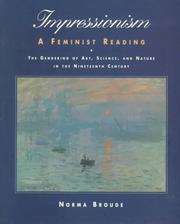
Expands the canon to include Berthe Morisot, Mary Cassatt, and other women artists, revealing how gender shaped both who could paint Impressionist subjects and how the movement has been remembered.
Legacy & Beyond: Post-Impressionism and Global Influence
ExpertTrace how Impressionism shattered the conventions of Western painting and set in motion the chain of movements — Post-Impressionism, Fauvism, abstraction — that define modern art to this day.
▸ Study plan for this stage
Pace: 8–10 weeks, ~40–50 pages/day (with 2–3 days per week for reflection and exercises)
- Post-Impressionism as a deliberate rejection of Impressionist immediacy: how Van Gogh, Gauguin, Cézanne, and Seurat moved beyond optical sensation toward structure, emotion, and symbolic meaning
- The role of individual artistic vision and personal expression in Post-Impressionism, contrasting with Impressionism's focus on shared visual experience and light effects
- How the 1874 Salon des Refusés and subsequent independent exhibitions (particularly the 1886 Eighth Impressionist Exhibition) became battlegrounds for artistic ideology and market competition
- The geographic and social networks connecting Post-Impressionist artists: Paris as the epicenter, the influence of Japanese prints, and the role of dealers like Durand-Ruel and Vollard in shaping artistic careers
- Cézanne's systematic approach to form and color as a bridge between Impressionism and Cubism; Gauguin's primitivism and symbolic color as precursors to Fauvism
- The critical reception and public scandal surrounding Post-Impressionist works, and how controversy became a catalyst for artistic legitimacy and modernism
- Post-Impressionism as the foundational rupture that enabled subsequent avant-garde movements: the conceptual and formal innovations that made abstraction and Fauvism inevitable
- How did Post-Impressionist artists fundamentally differ from Impressionists in their approach to color, form, and subject matter? What specific works by Van Gogh, Gauguin, and Cézanne exemplify these differences?
- What role did the Paris art market, dealers, and independent exhibitions play in the emergence and acceptance of Post-Impressionism? How did artists navigate rejection and scandal?
- How did Japanese prints and non-Western art influence Post-Impressionist aesthetics, particularly in the work of Van Gogh and Gauguin?
- Explain the significance of Cézanne's approach to form and structure. Why is he considered a bridge between Impressionism and Cubism?
- How did Gauguin's use of color and symbolism anticipate Fauvism? What conceptual shifts did he introduce?
- Trace the chain of artistic influence from Post-Impressionism to the early 20th-century avant-garde movements. What specific innovations made abstraction and Fauvism possible?
- Create a comparative visual timeline: select 3–4 Impressionist works (e.g., Monet's Water Lilies) and 3–4 Post-Impressionist works (Van Gogh's Starry Night, Gauguin's Where Do We Come From?, Cézanne's Mont Sainte-Victoire). Annotate each with notes on color use, brushwork, and compositional intent.
- Write a 500-word critical response to a Post-Impressionist work as if you were a contemporary 1880s–1890s art critic. Capture both the scandal and the innovation—use specific formal analysis from Rewald's discussions.
- Map the social and professional networks described in King's The Judgment of Paris: create a diagram showing connections between artists, dealers, collectors, and critics. Identify key moments of alliance and conflict.
- Analyze Cézanne's Mont Sainte-Victoire series (multiple versions): write a short essay explaining how his systematic exploration of form and perspective differs from Impressionist approaches and anticipates modernism.
- Select one work by Gauguin (e.g., Tahitian Women on the Beach or The Spirit of the Dead Watching) and one by Van Gogh (e.g., The Night Café or Irises). Compare their use of color, symbolism, and emotional intensity. How do these works signal the move toward Fauvism and Expressionism?
- Create a 'before and after' visual essay: choose one artist (Van Gogh, Gauguin, or Cézanne) and trace their stylistic evolution from early work through their mature Post-Impressionist period, annotating the shifts in technique and philosophy
Next up: This stage establishes Post-Impressionism as the conceptual and formal rupture that made all subsequent modernist movements inevitable, positioning you to understand how Fauvism, Cubism, and abstraction are not radical departures but logical extensions of the innovations Van Gogh, Gauguin, and Cézanne set in motion.
By the foremost Impressionism scholar of the 20th century, this magisterial work shows exactly how Cézanne, Van Gogh, and Gauguin absorbed and then exploded the Impressionist inheritance.

A gripping narrative history of the 1863 Salon des Refusés that reads like a novel, synthesizing everything you have learned into a dramatic story of how Impressionism was born in controversy and changed art forever.
Discussion
Keep reading
Paths that share books, cover the same subject, or open a related topic.