Paint landscapes in acrylics or oils
This curriculum takes a beginner landscape painter from foundational seeing and mark-making all the way to a sophisticated command of color, light, and compositional design. Each stage builds on the last: you must learn to see before you can mix, and you must understand value and color before compositional structure becomes meaningful. By the end you will have both the conceptual vocabulary and practical tools to paint landscapes that hold together visually.
Learning to See
BeginnerDevelop the fundamental habit of observing nature as a painter — reading value, shape, and light before touching color or composition theory.
▸ Study plan for this stage
Pace: 6–8 weeks total. Week 1–3: "Keys to Drawing" by Bert Dodson (~20–25 pages/day, reading actively with sketchbook open). Week 4–8: "Carlson's Guide to Landscape Painting" (~15–20 pages/day, slower pace to absorb Carlson's dense observational theory and re-read key chapters on angles and values).
- Contour drawing and the 'follow the edge' habit (Dodson) — training the eye to move slowly and continuously along observed edges before the hand moves
- Symbol vs. perception: recognizing and suppressing learned visual symbols (e.g., a generic 'tree shape') in favor of what is actually seen (Dodson)
- Negative space awareness: reading the shapes around and between objects as carefully as the objects themselves (Dodson)
- Value structure over color: seeing the world first as a pattern of lights and darks, independent of hue (Dodson & Carlson)
- Carlson's Angle Theory: understanding how the angle of a plane relative to the light source determines its value — sky is lightest, ground is next, upright planes (walls/tree trunks) are darkest
- The four value planes of landscape: sky, ground/flat planes, slanting planes (hills/roofs), and upright planes — each occupying a distinct, consistent value zone (Carlson)
- Squinting as a tool: collapsing detail to read the large value masses of a scene, a technique reinforced by both Dodson's exercises and Carlson's observational method
- Edges and lost-and-found: noticing where edges are hard (high contrast, in focus) versus soft or lost (similar values, atmosphere) as a guide to what the eye actually perceives (Dodson, with application to Carlson's landscapes)
- After reading Dodson, can you explain in your own words the difference between drawing a 'symbol' of a tree and drawing the tree you actually see — and give a concrete example of how the two differ on the page?
- What does Carlson mean by 'the angle of the plane determines its value,' and how would you apply this rule to predict the relative darkness of a barn roof versus its vertical side wall on a sunny day?
- Using Carlson's four-plane value system, how would you arrange — from lightest to darkest — the sky, a flat meadow, a hillside, and a stone wall in a typical midday outdoor scene?
- Dodson introduces the concept of negative space. How would you use negative-space observation to draw the gaps between the branches of a tree more accurately than drawing the branches themselves?
- What is the purpose of squinting at a landscape before painting it, and what specific visual information does squinting reveal that normal focused vision hides?
- How do Dodson's contour-drawing exercises directly prepare you to apply Carlson's instruction to 'read the landscape in planes' before mixing a single color?
- Pure contour drawing outdoors (Dodson Ch. 1–2): Sit in front of any natural scene — a single tree, a fence line, a hillside — and do a 15-minute blind or semi-blind contour drawing. Do not look at the paper more than necessary. Repeat 3×/week throughout the Dodson reading.
- Symbol-busting value study (Dodson): Draw a familiar landscape element (a cloud, a rock, a bush) twice — once from memory (your symbol), once from direct observation. Write one sentence noting every place the observed version surprised you.
- Negative-space silhouette (Dodson): Choose a tree or shrub against open sky. Draw ONLY the sky-shapes (negative spaces) between and around the branches, never the branches themselves. Check whether the positive shape that results looks more accurate than your usual approach.
- Squint-and-map value exercise (Carlson): Go outside or use a landscape photo. Squint until detail disappears. Identify and label exactly four value zones (sky, ground plane, slanting plane, upright plane) by lightly shading a thumbnail sketch in pencil — no color allowed. Do this for five different scenes or photos.
- Carlson Angle Theory test (Carlson): On a sunny day, photograph or sketch a simple structure (a shed, a house, a hillside with a retaining wall). Using only a 2B pencil, render each visible plane in its 'correct' value according to Carlson's angle rule. Compare your result to the photo — note any planes you got wrong and re-read the relevant Carlson passage.
- Two-week observational journal: Every day for two weeks (spanning the transition from Dodson to Carlson), spend 10 minutes outside making a single small (3"×3") value thumbnail of whatever landscape is in front of you — backyard, street, park. No color. Date each entry and write one observation about light or plane angles beneath it.
Next up: Mastering value-plane reading and perceptual observation here gives the student the visual grammar they need to tackle color temperature, atmospheric perspective, and compositional design — concepts that build directly on the ability to see in planes and values rather than in local color or symbolic shapes.
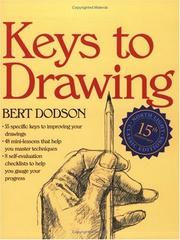
Trains the eye to translate three-dimensional reality into two-dimensional marks — an essential perceptual skill before any painting begins. Its exercises build the visual confidence every beginner needs first.
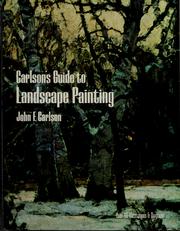
A timeless, practical manual written by a working landscape painter. Carlson explains how light behaves on planes of earth, sky, and foliage in plain language, giving beginners an immediate framework for understanding what they see outdoors.
Value, Light, and the Painter's Eye
BeginnerMaster value relationships and understand how light creates form and mood — the single most important skill for landscapes that read convincingly.
▸ Study plan for this stage
Pace: 6–8 weeks total: Weeks 1–3 cover Schmid's "Alla Prima" (~20–25 pages/day, focusing on his chapters on value, edges, and seeing); Weeks 4–6 cover Albala's "Landscape Painting" (~15–20 pages/day, with deliberate pauses at each value and light chapter for sketching exercises); Week 7–8 reserved for rev
- Value is the single most powerful element of a painting — Schmid repeatedly demonstrates that correct value relationships matter more than accurate color or precise drawing in making a landscape read convincingly.
- The value scale and squinting — both Schmid and Albala teach the habit of squinting at a scene to collapse detail and reveal the underlying pattern of lights and darks, the essential first act of seeing like a painter.
- Massing: grouping values into large, simplified shapes rather than rendering every leaf or rock individually — Albala's concept of 'value massing' is central to landscapes that have visual clarity and impact.
- Light logic and the light family vs. shadow family — Schmid explains that all lights in a scene belong to one family and all shadows to another, and mixing across families destroys the illusion of unified light.
- How light creates form: the progression from light through halftone to shadow to reflected light to cast shadow, and how understanding this sequence lets you model any landform, tree mass, or cloud convincingly.
- Mood and atmosphere through value key — Albala introduces the concept of high-key, mid-key, and low-key value schemes and how choosing a key before painting locks in the emotional temperature of a landscape.
- Edges as a value tool — Schmid's nuanced treatment of hard, soft, and lost edges shows how controlling edge quality (itself a value-contrast phenomenon) guides the viewer's eye and suggests depth and atmosphere.
- Translating observed value into paint — both authors address the practical challenge that paint cannot match nature's full value range, requiring the painter to compress and re-map values intelligently rather than copy them literally.
- After squinting at a landscape scene, can you identify no more than 4–5 distinct value masses, and can you assign each a number on a 1–10 value scale as Schmid describes?
- What does Schmid mean by the 'light family' and 'shadow family,' and why does he insist that lights and shadows must never share the same value?
- How does Albala define 'value massing,' and how does simplifying values into large shapes before adding detail change the way a landscape is constructed?
- What is a 'value key' (high, mid, or low) as Albala presents it, and how would you consciously choose one to express a specific mood — say, a foggy morning versus a blazing midday?
- How does Schmid use edge quality (hard, soft, lost) as an extension of value control, and where in a landscape would you typically find each type of edge?
- Why can't a painter simply copy the values seen in nature, and what compression or re-mapping strategy do Schmid and Albala each recommend to stay within the limited range of paint?
- Value thumbnail grid (Schmid-based): Before each painting session, fill a 3×3 grid of 2-inch thumbnails of the same landscape scene using only a pencil or single neutral paint color. Force yourself to use no more than 4 values per thumbnail. Compare thumbnails and identify which value pattern reads most powerfully at arm's length.
- Squint-and-map drill (both books): Stand before a landscape (or photograph) and squint until detail disappears. On a small notepad, quickly map the resulting value masses as flat shapes — no outlines, just filled tones. Label each shape with a value number (1–10). Do this for 5 different scenes over the course of the stage.
- Light-family vs. shadow-family study (Schmid): Paint or draw a simple outdoor scene — a tree in sunlight is ideal — and physically separate your palette into a 'light side' and a 'shadow side.' Commit to never letting a light-family value appear in the shadow and vice versa. Photograph the result and compare it to a version painted without the rule.
- Value-key mood exercise (Albala): Choose one landscape reference photo and paint it three times in grayscale only — once in a high key, once in a mid key, once in a low key. Write two sentences after each version describing the mood it evokes. Notice how the same composition tells three different emotional stories.
- Edge inventory exercise (Schmid): Take a finished painting (your own or a reproduction) and mark every edge as H (hard), S (soft), or L (lost) using a printed copy or tracing paper overlay. Then ask: do the hard edges cluster around the focal point? Do lost edges appear where forms recede or enter shadow? Rewrite any edges that violate the logic.
- Value compression translation (both books): Find a high-contrast outdoor photograph (bright sun, deep shadows). Using a value scale strip made from paint chips or a printed gray scale, identify the lightest light and darkest dark in the photo, then re-map the entire scene so it fits within a compressed range (e.g., values 3–8 instead of 1–10). Paint the compressed version and compare its luminosit
Next up: Mastering value relationships and light logic as established by Schmid and Albala gives the reader a stable perceptual foundation — a trained eye that sees in masses and tones — which is the essential prerequisite for the next stage, where color temperature, atmospheric perspective, and chromatic mixing are introduced without the distraction of unresolved value problems.

Schmid's masterwork covers seeing, value, edges, and color with unusual depth and honesty. Reading it after Carlson gives the beginner a richer, more personal account of how a professional actually looks at and paints a landscape.
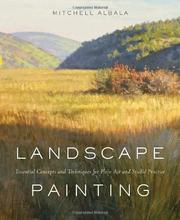
Focused entirely on the landscape genre, this book addresses simplification, value structure, and light in a step-by-step way that bridges the gap between general painting principles and the specific challenges of painting outdoors.
Color — Mixing, Temperature, and Harmony
IntermediateBuild a reliable, intuitive color practice: mixing clean colors, reading temperature shifts in light and shadow, and creating harmonious palettes for landscape.
▸ Study plan for this stage
Pace: 8–10 weeks total. Weeks 1–6: "Color and Light" by James Gurney (~20–25 pages/day, 3–4 sessions/week), pausing frequently to sketch and observe. Weeks 7–10: "Blue and Yellow Don't Make Green" by Michael Wilcox (~15–20 pages/day, 3 sessions/week), with dedicated mixing sessions alongside each reading
- Color temperature: how warm light creates cool shadows and vice versa, as Gurney systematically demonstrates through natural and artificial lighting conditions
- Gamut mapping: Gurney's method of defining a limited, scene-specific color gamut before painting to keep all color decisions internally consistent
- The color of light vs. the color of objects: distinguishing local color from the color cast imposed by the prevailing light source
- Simultaneous contrast and chromatic grays: how surrounding colors shift the perceived hue and temperature of any given color
- Pigment behavior and subtractive mixing: Wilcox's core argument that most pigments are biased toward one side of the color wheel, making 'pure' primaries a myth
- The two-primary mixing system: Wilcox's practical solution of using a warm and a cool version of each primary to mix clean, unsullied secondaries and avoid muddy color
- Color bias identification: learning to read whether a pigment leans warm or cool before mixing, and predicting the result of any combination
- Palette harmony through temperature control: combining Gurney's temperature logic with Wilcox's mixing discipline to build landscape palettes that feel unified and luminous
- According to Gurney, why does the shadow side of an object in sunlight typically appear cooler in temperature than the lit side, and how should this shift your mixing decisions on location?
- What does Gurney mean by 'gamut mapping,' and how would you construct a gamut for a golden-hour landscape versus an overcast midday scene?
- Why does Wilcox argue that 'blue and yellow don't make green' — what is the underlying principle about pigment bias, and what practical problem does it solve?
- How would you use Wilcox's warm/cool primary pairs to mix a clean, vibrant orange versus a muted, earthy orange, and when would you choose each for a landscape?
- How can you combine Gurney's concept of color temperature in light and shadow with Wilcox's bias-aware mixing to paint a convincing sunlit rock face with a shadowed underside?
- What is the difference between a harmonious palette and a merely limited palette, and what strategies from both books help you achieve harmony rather than just restriction?
- Gurney Temperature Studies: Paint or sketch the same simple outdoor subject (a tree, a wall, a hillside) three times under different lighting conditions — direct sun, open shade, and overcast — deliberately exaggerating the warm/cool temperature shifts Gurney describes. Label each area with its temperature bias before applying color.
- Gamut Mapping Practice (Gurney): Before starting any landscape study, draw Gurney's gamut map for that scene: plot your lightest light, darkest dark, and most saturated warm and cool, then mix only within that shape. Complete at least four studies using different gamuts (golden hour, storm light, midday, dusk).
- Pigment Bias Chart (Wilcox): Using your own palette, make a systematic bias chart — mix each of your pigments with a neutral white and place them on a hand-drawn color wheel to identify whether they lean warm or cool. Annotate each pigment tube with its bias as a permanent reference.
- Clean Secondary Mixing Grid (Wilcox): Following Wilcox's two-primary method, mix a full grid of secondaries using warm + warm, warm + cool, cool + warm, and cool + cool primary pairs. Observe and record which combinations produce clean, vibrant secondaries and which produce muted, gray-shifted results. Repeat with your actual landscape pigments.
- Integrated Shadow Mixing Exercise: Choose a single landscape photo or plein-air scene. Using Wilcox's bias-aware mixing to avoid mud, mix a shadow color for each major element (sky, foliage, ground, rock) that is both darker AND cooler (or warmer, depending on your light source) than the local color, as Gurney prescribes. Paint a small study and evaluate whether the shadows feel luminous rather th
- Two-Book Synthesis Palette: Design a 'landscape master palette' of 6–8 pigments that satisfies both books' demands: include a warm and cool version of each primary (Wilcox), and verify that the palette can produce both a warm-light gamut and a cool-light gamut (Gurney). Test it in two back-to-back plein-air or photo-reference studies.
Next up: Mastering clean mixing and temperature-aware color logic gives you the technical control needed to tackle the next stage's focus on atmospheric perspective, value structure, and the specific chromatic challenges of painting skies, water, and foliage in full landscape compositions.
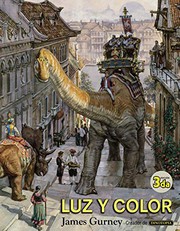
The most accessible and visually rich modern guide to how color and light actually behave in nature. It directly addresses the problems landscape painters face — sky light, reflected light, atmospheric color — and should be read before more abstract color theory.
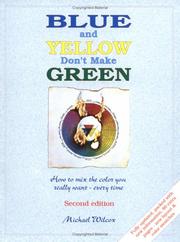
Demystifies pigment mixing with a practical, no-nonsense system. After Gurney's observational approach, Wilcox gives you the palette mechanics to actually mix the colors you now know you need to see.
Composition and Design
IntermediateUnderstand how to organize a landscape into a picture that guides the eye, creates mood, and holds together as a unified design.
▸ Study plan for this stage
Pace: 8–10 weeks total. Weeks 1–4: Read "The Painter's Secret Geometry" at ~20–25 pages/day, pausing to sketch geometric overlays on master landscape reproductions. Weeks 5–9: Read "Composition of Outdoor Painting" at ~15–20 pages/day, applying each chapter's principle in the field or from photo reference
- Hidden geometric armatures (diagonals, root rectangles, the 'rabatment') that underlie classical and Renaissance compositions, as revealed in Bouleau's analysis of master paintings
- The role of the picture plane as an active design field — how dividing it with lines, shapes, and intervals creates visual rhythm and tension (Bouleau)
- Payne's nine fundamental compositional plans for landscape (L-shape, S-curve, steelyard, tunnel, radiating lines, etc.) and when each is appropriate to a given scene
- Notan — the massing of light and dark shapes into a bold, readable two-value design before color or detail are introduced (Payne)
- Eye-path and focal-point control: how line direction, value contrast, edges, and color temperature funnel the viewer's gaze to the center of interest (Payne)
- The steelyard (asymmetric balance) principle: balancing a large, low-value mass against a small, high-contrast accent to achieve dynamic equilibrium (Payne)
- Skies, foregrounds, and middle grounds as distinct compositional zones with specific design responsibilities — not merely descriptive passages (Payne)
- Mood as a product of design decisions: how the dominant line direction (horizontal = calm, vertical = grandeur, diagonal = energy) and value key set emotional tone (both books)
- After studying Bouleau, can you identify and draw the underlying geometric armature (e.g., diagonal, rabatment, root-2 rectangle) in at least three landscape reproductions from different historical periods?
- What is Payne's concept of Notan, and why does he insist on resolving it in a small thumbnail before committing to a full painting?
- Describe four of Payne's compositional plans in your own words — what visual problem does each solve, and what mood or subject matter suits each best?
- How do Bouleau's geometric structures and Payne's compositional plans complement rather than contradict each other — what does each book contribute that the other does not?
- How can the placement of the horizon line alone alter the emotional character of a landscape, and which passages in Payne support your answer?
- What design strategies from either book would you apply to prevent a landscape with a strong center-of-interest from feeling static or symmetrical?
- Geometric overlay study (Bouleau): Select 5 landscape reproductions from any era. Using tracing paper or a digital layer, draw the picture's diagonals, rabatment lines, and any root rectangles. Annotate where the artist placed the horizon, focal point, and major masses relative to these lines.
- Notan thumbnail drill (Payne): Before your next 10 painting or drawing sessions, spend 5 minutes doing a 2-inch black-and-white thumbnail that reduces the scene to only two values. Do not proceed to the full work until the Notan reads clearly as a design.
- Compositional plan inventory (Payne): Go outdoors or use 10 photo references and, for each, identify which of Payne's named plans the scene naturally suggests. Sketch a quick line diagram labeling the plan. Note any scenes that resist easy categorization and explain why.
- Mood-through-line exercise (both books): Paint or draw the same simple landscape motif (a tree, a hill, a shoreline) three times, changing only the dominant line direction — once horizontal, once vertical, once diagonal. Write two sentences per version describing the mood produced and link it to principles from Payne.
- Steelyard balance study (Payne): Create three small compositions in which a large, quiet mass is balanced by a small, high-contrast element. Vary the subject (water, sky, land) across the three. Evaluate each against Payne's steelyard description before considering them finished.
- Full synthesis painting (both books): Plan a landscape painting entirely on paper before touching a canvas. Step 1 — establish the geometric armature (Bouleau). Step 2 — choose a named compositional plan (Payne). Step 3 — resolve the Notan. Step 4 — identify the dominant line direction and intended mood. Document each step in a sketchbook and compare the finished work to your plan.
Next up: Mastering composition and design gives the reader a structural skeleton onto which the next stage's concerns — color, value, light, and atmosphere — can be purposefully hung, ensuring those expressive tools serve a pre-planned design rather than obscuring its absence.

Reveals the underlying compositional armatures used by master painters across centuries. Reading this after color study shows how structure and design operate beneath the surface of any successful landscape.
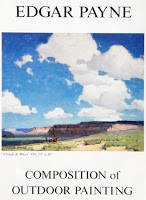
Written by a plein air master, this is the most landscape-specific composition book available. It covers sky patterns, land masses, water, and figures in landscape with diagrams drawn directly from painting practice.
Synthesis — The Artist's Vision
ExpertIntegrate color, light, and composition into a personal artistic vision, learning how master landscape painters have solved these problems and how to develop your own voice.
▸ Study plan for this stage
Pace: 6–8 weeks total: ~3 weeks on "The Art Spirit" (read ~8–10 pages slowly and reflectively per session, journaling responses — this is an aphoristic text meant to be absorbed, not rushed), then ~3 weeks on "Hawthorne on Painting" (read one or two thematic sections per session, pausing to paint between
- The Art Spirit's core thesis: technique is a servant of expression, never the goal — Henri insists that the artist's personality and emotional truth must drive every mark
- Henri's concept of 'the big idea' — every painting must be organized around a single dominant feeling or impression, not a catalogue of observed facts
- Hawthorne's 'color as light' principle — he teaches students to see masses of color-tone before line or detail, training the eye to perceive the landscape as patches of warm and cool light relationships
- Hawthorne's mud-to-jewel progression — starting with low-chroma, closely-valued masses and refining toward luminous color, avoiding the beginner's trap of local color copying
- The unity of vision: both Henri and Hawthorne argue that a landscape painting fails when the painter loses the original impression that motivated the work — sustaining that vision through execution is the advanced challenge
- Developing a personal artistic voice: Henri's letters and notes frame artistic development as a lifelong philosophical project, not a technical checklist — the painter must know *why* they paint
- The role of memory and selectivity — Henri and Hawthorne both emphasize that the master painter edits ruthlessly, choosing what to omit as much as what to include
- Influence vs. imitation: studying the masters (as both books encourage) should liberate the student's own vision, not produce copies of style
- According to Henri in 'The Art Spirit,' what is the relationship between technical mastery and genuine artistic expression — and what danger does he warn against when technique becomes the primary focus?
- How does Hawthorne's method of teaching color differ from simply matching the 'local color' of objects in the landscape, and what practical painting habit does he prescribe to correct this?
- Both Henri and Hawthorne discuss the importance of the painter's initial impression or 'big idea.' How do their approaches to preserving that impression throughout a painting's execution compare or contrast?
- What does Henri mean when he says that art is not a thing apart from life — and how should this philosophy change the way a landscape painter chooses their subject and their moment?
- Hawthorne repeatedly addresses the problem of 'muddiness' in student work. What are the root causes he identifies, and what does his solution reveal about his broader theory of light and color?
- After reading both books, how would you articulate your own current artistic vision for landscape painting — what do you want a viewer to feel, and which specific ideas from Henri or Hawthorne support or challenge that vision?
- 'One Impression' plein air studies: Before each outdoor painting session, write one sentence in your sketchbook stating the single emotional impression you want to capture (Henri's 'big idea'). After the session, evaluate whether the finished work communicates that sentence — if not, identify the exact moment you lost the thread.
- Hawthorne's color-mass exercise: Complete 5–8 small studies (4×6" or smaller) in which you are forbidden from using line or detail — lay in the entire landscape as flat, massed patches of color-tone only, focusing exclusively on warm/cool and light/shadow relationships as Hawthorne prescribes.
- Henri aphorism painting journal: Select 10 aphorisms or passages from 'The Art Spirit' that resonate most strongly. For each, produce a small landscape sketch that is a direct visual response to the idea — not an illustration, but a painting made *in the spirit* of that passage.
- Master study with written analysis: Choose one landscape painting by an artist Henri or Hawthorne references or admires. First, write a one-page analysis of how it embodies the principles from these two books. Then, produce your own original landscape painting of a different subject that consciously applies the same principles — not copying the master, but learning from their solutions.
- The editing exercise: Paint a landscape from observation, then repaint the same scene from memory 24 hours later without reference. Compare the two: the memory version will reveal what your eye and mind considered essential — use Henri's and Hawthorne's frameworks to evaluate which version is more unified and expressive.
- Personal vision statement: After completing both books, write a one-to-two page artistic statement answering Henri's implicit challenge — Why do you paint landscapes? What do you want your work to do in the world? Revisit and revise this statement after every major painting completed going forward.
Next up: By internalizing Henri's demand for personal expression and Hawthorne's discipline of seeing color as light, the reader has built the philosophical and perceptual foundation needed to engage seriously with historical and contemporary landscape traditions — making them ready to study specific movements, master works, and technical lineages with a critical, independent eye rather than passive admira
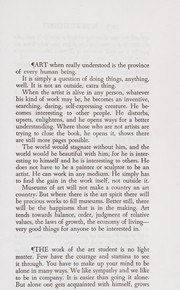
Henri's collected teachings push the painter beyond technique into artistic intention and personal expression. At this stage, after mastering the mechanics, this book asks the essential question: what do you want to say with a landscape?
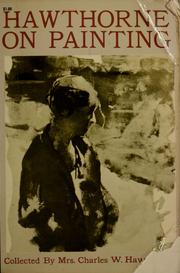
Short, aphoristic, and profound — Hawthorne's lessons on color spots, simplicity, and seeing complete the curriculum by reinforcing that all the technical knowledge must ultimately serve a direct, felt response to nature.
Discussion
Keep reading
Paths that share books, cover the same subject, or open a related topic.