White-Collar Crime: The Best Books on Corporate Fraud and Who Pays, in Order
Large frauds are rarely clever. They are usually simple lies that nobody with the power to stop them wanted to check, sustained by the fact that respectable institutions extend trust by default. This path starts with three modern frauds told as narrative, because that is the fastest way to see the pattern, then gives you the analytical vocabulary — the taxonomy of fraud, the accounting red flags, the psychology of the people who do it — then works back through Wall Street's defining scandals, and finishes on the hardest question, which is why so few executives are ever charged.
Three Frauds, Told as Stories
BeginnerSee how a large fraud is actually built and sustained, and notice how much of it depends on ordinary people declining to ask an obvious question
▸ Study plan for this stage
Pace: 4 weeks. Carreyrou's Bad Blood is around 350 pages and reads like a thriller — five days. McLean and Elkind's The Smartest Guys in the Room is longer and harder because the fraud is an accounting fraud; give it ten days. Wright and Hope's Billion Dollar Whale takes ten days.
- The common structure across all three: a claim nobody with authority to check it wanted to check, sustained by institutions that extend trust by default
- Theranos as a fraud about a physical product — the machines did not work, which is the simplest possible falsifiable claim, and it survived for over a decade anyway
- Enron as a fraud built out of accounting: mark-to-market recognition of future profits and special purpose entities used to move debt off the balance sheet, both of which had auditor sign-off
- The role of the gatekeepers in each case — Theranos's board and its investors, Arthur Andersen at Enron, and the banks, auditors and law firms in 1MDB — and the pattern that gatekeepers fail as a class rather than individually
- 1MDB as the international case: money moving through jurisdictions and correspondent banking, so no single regulator had the whole picture
- Whistleblowers and journalists as the actual detection mechanism in all three, and what that says about the formal detection mechanisms
- Legal retaliation as a fraud-preservation tool: Carreyrou was pursued by Theranos's counsel while reporting the story
- In each of the three cases, name the specific person or institution that could have stopped it early, and say what stopped them. The three answers are not the same
- Enron's accounting had auditor approval. Which of its practices were actually illegal at the time, and which were legal and merely catastrophic? The boundary is the point
- 1MDB moved money through regulated banks in several countries. Which regulatory mechanisms were supposed to catch it, and at which specific step did each fail?
- Theranos raised enormous sums without the usual venture due diligence on the technology. What features of the funding round structure made that possible?
- All three were exposed by journalists or insiders rather than by regulators. Is that a fact about these three cases or about the enforcement system? Hold the question — the last stage answers it
- For each of the three frauds, write a single sentence naming the lie at its centre. If a sentence is hard to write, that tells you which fraud was structurally more complex, and why Enron is the step up from Theranos
- Take Enron's special purpose entities as McLean and Elkind describe them and draw the structure: what sat where, what obligation was moved, who bore the risk. Then say which accounting rule made it permissible
- Carreyrou describes specific due diligence failures by named investors. List them, then check whether the same failure appears in Billion Dollar Whale in a different institutional form
- Write down the point in each story at which the fraud became unrecoverable — where the participants could no longer stop without collapse. Compare the three dates against when each was exposed
Next up: Three cases give you pattern recognition; the next stage supplies the taxonomy and the detection signals that turn recognition into analysis.
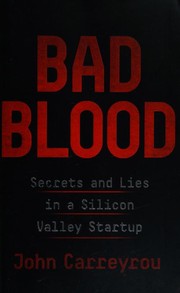
Theranos, by the Wall Street Journal reporter who broke it and was threatened for doing so. The best possible first book: a fraud you can hold entirely in your head, with the mechanics of intimidation and board capture laid out plainly.
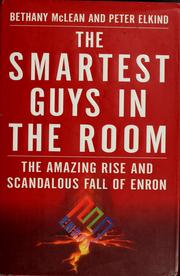
Enron, by McLean and Peter Elkind. More complicated than Theranos and worth the step up, because it introduces the idea that a fraud can be built out of accounting treatments that were arguably legal at the time.

The 1MDB scandal, written with Bradley Hope: a sovereign wealth fund looted through banks, auditors and a Hollywood film. Third because it adds the international dimension — the professionals who processed the money were not in the same country as the crime.
The Shapes Fraud Takes
BeginnerAcquire the analytical toolkit — a working taxonomy of fraud types, the accounting signals that precede collapse, and a realistic account of why offenders do it
▸ Study plan for this stage
Pace: 4 weeks. Davies's Lying for Money is short, dense and the spine of the path — ten days, read slowly and take notes on the taxonomy. Schilit's Financial Shenanigans is a technical manual and should be worked through rather than read; a week, with a real set of financial statements open beside it. Sol
- Davies's central economic claim: fraud is the equilibrium cost of a high-trust economy, so the optimal amount of fraud is not zero, and any economy with no fraud is spending too much on checking
- Davies's structural taxonomy — the long firm, the counterfeit, the control fraud, the market crime — and the observation that each type is a different answer to the question of what is being falsified
- The 'Canadian paradox': high-trust societies are efficient and therefore attractive to fraud, and the enforcement problem is how much verification to buy
- Schilit's earnings manipulation signals: revenue recognised too early, one-time gains presented as recurring, expenses capitalised rather than expensed, and cash flow diverging from reported earnings
- The cash-flow-versus-earnings divergence as the single most durable red flag, and why it is hard to fake for long
- Soltes's interview finding: convicted executives largely do not describe a cost-benefit calculation, which undermines the rational-deterrence model that most white-collar sentencing policy rests on
- What follows for policy if deterrence does not work the way the model assumes — and why that argument is uncomfortable for both the enforcement and the leniency positions
- Place each of the three frauds from stage one into Davies's taxonomy. If one resists classification, say which category it strains and why
- Davies argues the optimal amount of fraud is not zero. Reconstruct that argument, then state the strongest objection to it as a basis for regulatory policy
- Schilit's signals are detectable from public filings. Given that, why do frauds of the kind he catalogues persist for years? Name at least two mechanisms
- Soltes finds that offenders were not calculating deterrence. If that is right, which enforcement tools still work, and by what mechanism — incapacitation, norm-setting, or something else?
- Which of Schilit's signals were visible in Enron's public filings before the collapse, and who was in a position to see them?
- Take Schilit's list of manipulation techniques and apply the relevant ones to Enron as McLean and Elkind describe it. Write down which of his signals would have fired, and in which reporting period
- Pick a real public company's most recent annual report and run Schilit's cash-flow-versus-net-income comparison on it. You are not looking for fraud; you are learning what the normal relationship looks like so an abnormal one is legible
- Soltes and Davies give incompatible accounts of the offender: Davies's frauds are structural and Soltes's offenders are largely not calculating. Trace this disagreement by taking one case both discuss and writing each author's explanation of why it happened
- Write a paragraph applying Davies's high-trust argument to a specific regulatory rule — auditor rotation, or the requirement for a signed certification of financial statements. Does the rule buy more verification than it costs?
Next up: With a taxonomy and a detection toolkit, the last forty years of financial scandal become a series of variations rather than a list of events.

The spine of the path. Davies classifies frauds into a handful of structural types and argues that fraud is the equilibrium cost of a high-trust economy. After three narratives, this is the book that turns them into a pattern.
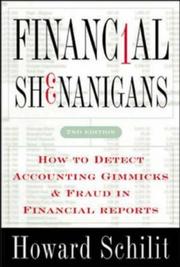
The practical manual: the specific accounting manipulations that inflate earnings and hide debt, with real cases. Read it after Davies for the concrete detection skills his framework implies.

A Harvard Business School researcher's interviews with convicted executives, which mostly demolish the calculating-rational-criminal model. It answers the question every previous book raises and none of them settle.
Wall Street and the Eras That Made It
IntermediateWork through the defining financial scandals of the last forty years and see how each era's dominant fraud reflects that era's dominant instrument
▸ Study plan for this stage
Pace: 6 weeks. Stewart's Den of Thieves takes ten days. Barbarians at the Gate is long and propulsive — ten days, and read it as the legal control case rather than as a digression. Lewis's The Big Short is short and fast, five days. Kolhatkar's Black Edge takes ten days.
- The 1980s: insider trading and the junk bond market — Boesky, Levine, Milken — and the prosecutorial tools that made the cases, particularly cooperation agreements and the use of RICO against securities defendants
- Why Barbarians at the Gate belongs in a path about fraud despite containing none: the RJR Nabisco buyout is the same era's legal behaviour, and the comparison is what defines where the line actually sat
- The 2008 crisis as the case where the boundary between fraud and incompetence is genuinely contested, and why almost no criminal cases followed from it
- The structural credit instruments Lewis makes comprehensible — mortgage-backed securities, collateralised debt obligations, the synthetic CDO — and where in that chain misrepresentation could occur
- Black edge as a term of art: information with an edge sufficient to be actionable and sufficiently sourced to be illegal, and the evidentiary difficulty of proving what a portfolio manager knew and when
- The SAC Capital outcome — a firm convicted, enormous penalties, and the founder never charged — as a case study in why individual liability is harder to establish than corporate liability
- The pattern across four decades: each era's characteristic fraud is shaped by its characteristic financial instrument, and the enforcement tools always lag the instrument
- What made the 1980s insider trading prosecutions winnable that made the 2008 cases largely unwinnable? Answer in terms of the evidence each requires, not the will to prosecute
- Stewart wrote Den of Thieves from prosecutors' perspective and Milken's defenders have disputed it for decades. Identify one contested claim and say what evidence would settle it
- Barbarians at the Gate describes legal conduct. Which specific behaviours in it would be illegal today, and which rule changed?
- In the SAC Capital case, what did the government have to prove against an individual that it could not, and what did it have to prove against the firm that it could?
- Lewis's investors profited from seeing the fraud. Does that make them a detection mechanism or a symptom of the same market failure? Argue both
- For each of these four eras, name the dominant instrument and the dominant fraud shape. Use Davies's taxonomy from the previous stage
- Take one Milken transaction described in Den of Thieves and one RJR Nabisco transaction from Barbarians at the Gate and write out the mechanics of each side by side. Then mark the specific element that makes one a crime and the other a deal
- Trace the securities law question of what constitutes material non-public information across Stewart and Kolhatkar. Write down how the standard was applied in the 1980s and in the SAC prosecutions, and note whether the law changed or its application did
- Check one statistic against its source: the total penalties paid by SAC Capital, or the total losses in the subprime market. Find the figure in the book, find where the author says it came from, and note whether it is a settlement amount, an estimate, or an aggregate
- Kolhatkar and Stewart both narrate a cooperation-driven investigation. Write a paragraph on what cooperation agreements do to the evidentiary record — what they produce and what they make unavailable
- Write the opposing case in a paragraph: that the absence of 2008 prosecutions reflects an honest assessment that the conduct was not criminal rather than a failure of will. Use Lewis's own account of what the participants understood
Next up: The recurring question across four decades — why so few individuals are charged — is the subject of the final stage, and it has a documented institutional answer.
The insider trading and junk bond prosecutions of the late 1980s — Boesky, Milken, Levine. The founding text of modern financial crime journalism and the right place to start the chronological sweep.
The RJR Nabisco buyout, written with John Helyar. Not a fraud, which is the point of including it: it shows the legal behaviour of the same era, so you can see where the line was and how thin it was.
The subprime mortgage crisis through the few investors who saw it coming. Lewis makes structured credit comprehensible, and 2008 is the case where the boundary between fraud and incompetence is genuinely hard to draw.
The SAC Capital insider trading investigation, and a firm the government could convict without ever charging its founder. The natural bridge into the final stage's question.
Why Nobody Goes to Prison
IntermediateUnderstand the enforcement machinery — deferred prosecution agreements, corporate settlements, the revolving door — and why individual executives so rarely face charges
▸ Study plan for this stage
Pace: 5 weeks. Henriques's The Wizard of Lies takes ten days. Markopolos's No One Would Listen is short and should be read immediately after it, in under a week, while the Madoff facts are fresh. Eisinger's The Chickenshit Club is the stage's argument and deserves ten days read closely. Keefe's Empire of
- The Madoff fraud's simplicity: a Ponzi scheme with no investment operation at all, which is the least sophisticated fraud in the path and the largest by dollar value
- The SEC's repeated failures on Madoff — multiple examinations, multiple referrals, no discovery — and Henriques's account of why an institution can look and not see
- Markopolos's analysis, which derived the fraud from published return figures alone, and what it means that the mathematics were available to anyone who ran them
- Feeder funds and the incentive structure that made intermediaries uninterested in verifying: they were paid on assets placed, not on diligence performed
- Eisinger's institutional argument: the Justice Department's shift from prosecuting individuals to negotiating corporate settlements, and the specific mechanisms — deferred prosecution agreements, non-prosecution agreements, monitorships — that made it possible
- The Chickenshit Club itself as a cultural diagnosis: prosecutors avoiding cases they might lose, and the career incentives on both sides of the revolving door that reinforce it
- Empire of Pain as the endpoint: conduct that was mostly lawful, a body count in the hundreds of thousands, and a bankruptcy settlement that released the family from personal liability while preserving the fortune
- The distinction the path ends on — between conduct that is criminal, conduct that is lawful and catastrophic, and an enforcement system that struggles with both
- Markopolos told the SEC repeatedly for nine years. Walk through what he submitted, to whom, and what each recipient did. Then say which failure was analytical, which was procedural, and which was institutional
- Eisinger names the mechanisms that replaced individual prosecution. Explain how a deferred prosecution agreement works, and identify who bears the cost of one
- Why did the Sacklers and Purdue face a bankruptcy settlement rather than criminal charges? Distinguish the conduct that was unlawful from the conduct that was lawful and lethal
- Markopolos is self-aggrandising in places. Which of his claims about his own role are corroborated by Henriques, and which are not?
- Take Enron, Theranos, SAC and Purdue. In each case say whether an individual was convicted, and identify the specific legal obstacle where none was
- Having read the whole path: which single reform — to enforcement, disclosure, auditing or liability — would you argue for, and which book supplies the evidence for it?
- Reconstruct the SEC's Madoff examinations from Henriques as a timeline: date, examiner, scope, finding. Then set Markopolos's submissions against it on the same timeline. The overlaps are the failure
- Markopolos derived the fraud from return figures. Take the return series he describes and work out what a consistent monthly return with almost no negative months implies about the strategy claimed. This is the arithmetic that nine years of regulators did not do
- Eisinger's argument is that the shift was institutional rather than about individual prosecutors. Find the evidence he offers — case statistics, named policy memoranda, career trajectories — and write a paragraph on whether it establishes causation or correlation
- Trace the concept of corporate criminal liability across Eisinger and Keefe: what a company can be charged with, what a settlement extinguishes, and what a bankruptcy release does that a settlement cannot. Write it as three sentences
- Write the opposing case in a paragraph: that corporate settlements are a rational enforcement tool given the evidentiary difficulty of individual cases, and that Eisinger underweights that difficulty. Use the SAC case from the previous stage as your evidence, then decide
Next up: This is the final stage: you can now read any new corporate scandal as a fraud type, a detection failure and an enforcement decision, rather than as a story about one bad executive.

Madoff, by the reporter who interviewed him in prison. The definitive account of the largest Ponzi scheme on record, and of how many regulators and feeder funds had reason to know.

The analyst who worked out the Madoff fraud from public numbers and told the SEC repeatedly for nine years. Self-aggrandising in places and still the sharpest available portrait of regulatory failure from the outside.
The core argument of this stage: why the Justice Department stopped prosecuting executives and started settling with companies instead. Eisinger names the institutional incentives that produced the change.

The Sacklers and Purdue Pharma — mostly lawful conduct with a catastrophic body count, ending in a settlement that preserved the family fortune. The last book because it poses the sharpest version of the question: what if the real problem is what remains legal?
Discussion
Keep reading
Paths that share books, cover the same subject, or open a related topic.