The Best Books on Corporate Governance and Boards
This curriculum is designed for expert-level practitioners—seasoned executives, directors, or governance professionals—who want to move from strong functional knowledge to genuine mastery of corporate governance theory, board dynamics, and boardroom leadership. The path begins by stress-testing foundational frameworks through a critical lens, then advances into the behavioral and power dynamics of boards, and finally reaches the frontier of governance reform, activist challenges, and the evolving duties of directors in a complex world.
Canonical Frameworks Revisited
ExpertSharpen and stress-test your existing mental models of governance structure, directors' legal duties, and the principal-agent relationship by engaging with the definitive scholarly and practitioner texts that define the field's vocabulary.
▸ Study plan for this stage
Pace: 6–8 weeks, ~40–50 pages/day, with 2–3 days per week reserved for synthesis and note-taking. Monks first (2 weeks), then Bainbridge (3–4 weeks), then 1–2 weeks for comparative analysis and framework integration.
- The evolution of the principal-agent problem in corporate structures and how Monks frames the historical and institutional roots of governance failure
- Fiduciary duties of directors (care, loyalty, good faith) and their legal enforceability as articulated in both texts, with attention to the business judgment rule
- The stakeholder vs. shareholder primacy debate and how each author positions the corporation's purpose and accountability
- Board composition, independence, and structural reforms: what makes a board effective according to canonical frameworks
- The role of institutional investors, proxy voting, and market-based governance mechanisms as alternatives or complements to legal duties
- Agency costs, monitoring, and incentive alignment—the economic logic underlying governance design choices
- Comparative governance models (Anglo-American, German, Japanese) and their institutional trade-offs
- The limits of law and regulation: when and why governance frameworks fail despite formal compliance
- How does Monks explain the historical emergence of the principal-agent problem in the modern corporation, and what institutional failures does he identify as its root causes?
- What are the three core fiduciary duties of directors, and how do Bainbridge's legal analysis and Monks's practical critique differ in their assessment of these duties' enforceability?
- According to Bainbridge, what is the business judgment rule, and why does Monks argue it may be insufficient to prevent governance failures?
- How do Monks and Bainbridge each address the stakeholder vs. shareholder primacy question, and what are the implications for board accountability?
- What structural and market-based mechanisms do these authors propose to reduce agency costs, and which ones does each author prioritize?
- How do the governance models discussed in these texts account for the role of institutional investors and activist shareholders in shaping corporate behavior?
- Create a side-by-side comparison table of Monks's and Bainbridge's definitions of fiduciary duty, including their views on enforceability and the business judgment rule. Annotate with page references.
- Map the principal-agent problem as Monks describes it: identify the key stakeholders, the conflicts of interest, and the mechanisms he proposes to mitigate each. Then compare to Bainbridge's economic framework.
- Write a 2–3 page memo analyzing a real-world governance failure (e.g., Enron, Wells Fargo, or a case study from either book) through the lens of both authors' frameworks. Which author's model better explains the failure?
- Construct a governance design proposal for a hypothetical company: specify board composition, director duties, incentive structures, and monitoring mechanisms, citing specific recommendations from both texts. Justify each choice.
- Debate the stakeholder vs. shareholder primacy question in writing: synthesize Monks's and Bainbridge's positions, then articulate your own reasoned position with reference to their arguments.
- Identify and critique one assumption or limitation in each author's framework (e.g., Monks's optimism about reform, Bainbridge's reliance on market discipline). What evidence would challenge or support each?
Next up: This stage equips you with the canonical vocabulary and theoretical scaffolding of governance—the principal-agent framework, fiduciary law, and structural design principles—that you will now apply to contemporary challenges (regulatory evolution, ESG mandates, digital disruption, global complexity) in the next stage.

Monks and Minow's foundational text is the field's most cited practitioner-scholar synthesis; starting here ensures a shared, rigorous vocabulary for accountability, ownership, and board structure before moving to more contested terrain.

Bainbridge's director-primacy theory directly challenges shareholder-primacy orthodoxy, forcing an expert reader to articulate and defend their own governance philosophy before proceeding to behavioral and strategic layers.
Inside the Boardroom: Dynamics and Behavior
ExpertUnderstand how boards actually function—group psychology, information asymmetries, CEO-chair relationships, and the social forces that cause governance failures—moving from formal structure to lived reality.
▸ Study plan for this stage
Pace: 6–7 weeks, ~25–30 pages/day (approximately 180–210 pages total across both books)
- The three modes of board engagement: taking charge, partnering, and staying out of the way—and how to recognize which mode is appropriate in different business contexts
- CEO-chair relationship dynamics and power distribution: how personal chemistry, trust, and role clarity shape board effectiveness
- Information asymmetries between management and boards: why boards struggle to access timely, accurate information and how to bridge the gap
- Group psychology and decision-making pathologies: groupthink, deference to authority, and social pressure that undermine critical board judgment
- The accountability gap: why boards often fail to own their decisions and how personal accountability culture transforms governance
- Board composition and interpersonal dynamics: how director selection, tenure, and relationship patterns affect board cohesion and independence
- The lived reality of board conversations: unspoken hierarchies, informal influence networks, and the gap between formal procedures and actual deliberation
- What are the three modes of board engagement Charan describes, and how do you determine which mode is appropriate for a given situation or business challenge?
- How do information asymmetries between the CEO and board create governance risks, and what specific mechanisms can boards use to reduce them?
- What role does the CEO-chair relationship play in board effectiveness, and what are the warning signs of a dysfunctional dynamic?
- How do group psychology and social dynamics (groupthink, deference, conformity pressure) undermine board independence, and what practices mitigate these risks?
- What does 'owning up' mean in a board context, and how does personal accountability culture differ from formal compliance-based governance?
- How do informal power structures and unspoken hierarchies in the boardroom differ from the formal governance structure, and why does this gap matter?
- Read 'Boards that Lead' and create a case study matrix: for 3–4 real companies (or fictional scenarios), identify which mode (taking charge, partnering, staying out) the board should adopt, and justify your reasoning with specific business conditions
- Analyze a board decision from a company you know or research: map the information flows—what did the board know, what did management withhold or filter, and how did asymmetries influence the outcome?
- Conduct a 'board dynamics audit' of a real board (using public proxy statements, annual reports, or news): assess CEO-chair relationship health, director tenure patterns, and signs of groupthink or independence challenges
- Write a personal reflection: describe a group decision you've witnessed (work, volunteer, or academic) where social pressure or hierarchy distorted judgment; apply Charan's framework to explain what happened and how accountability could have changed the outcome
- Role-play a board conversation: with 3–4 peers, simulate a contentious board discussion (e.g., CEO succession, major acquisition, or strategic pivot); afterward, debrief on what social dynamics emerged and how they shaped the 'decision'
- Create a board accountability charter: draft specific, behavioral commitments that would embed personal ownership into a real board's culture (e.g., how directors speak up, how dissent is handled, how decisions are documented and owned)
Next up: This stage moves you from understanding board mechanics and psychology to applying that knowledge to real governance crises, regulatory environments, and institutional pressures—preparing you to analyze why boards fail in practice and how to design resilient governance systems.
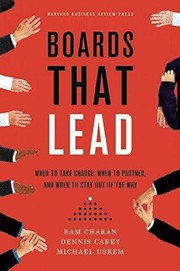
Charan draws on decades of boardroom advising to map the shift from passive oversight to active leadership; read first in this stage to establish the normative model of a high-performing board.
Bowen's empirically grounded account of board composition, culture, and decision-making provides the behavioral counterweight to Charan's prescriptive model, highlighting where boards systematically fall short.

This shorter, sharper companion focuses on the eight questions every director must confront personally—ideal third in the stage because it translates structural and behavioral insights into individual director accountability.
Governance Failures and the Anatomy of Scandal
ExpertAnalyze real-world governance collapses to extract durable lessons about oversight failure, audit committee dysfunction, risk blindness, and the limits of compliance-based governance.
▸ Study plan for this stage
Pace: 8–10 weeks, ~40–50 pages/day. "The Smartest Guys in the Room" (~400 pages) over 4–5 weeks, then "Power Failure" (~400 pages) over 4–5 weeks. Allocate 1 week for synthesis and comparative analysis.
- Tone at the top and its erosion: how charismatic leadership (Skilling, Lay at Enron; Grubman at WorldCom) created cultures that normalized fraud and silenced dissent
- Audit committee capture and auditor conflicts of interest: how Arthur Andersen's dual role as auditor and consultant created incentives to overlook red flags
- The special purpose entity (SPE) trap: how off-balance-sheet structures obscured debt and inflated earnings, defeating traditional financial statement analysis
- Risk blindness in boards: how complexity, overconfidence, and inadequate technical expertise left directors unable to ask hard questions about business model sustainability
- The compliance theater fallacy: why robust internal controls and regulatory sign-offs failed to prevent fraud when the underlying culture incentivized deception
- Analyst conflicts and information asymmetry: how equity research (Grubman at Salomon Smith Barney) and credit ratings became tools of marketing rather than truth-telling
- The role of short-term incentives and stock-based compensation: how equity grants and bonus structures created perverse motivations for aggressive accounting
- Whistleblower suppression and retaliation: how organizations systematically silenced internal warnings (Sherron Watkins at Enron; internal critics at WorldCom)
- How did the leadership culture at Enron (and later WorldCom) systematically undermine the effectiveness of formal governance structures, and what role did the board play in enabling or failing to challenge this culture?
- Explain the mechanics of how Arthur Andersen's conflict of interest as both auditor and consultant compromised its independence, and what specific red flags it missed or rationalized away.
- What were the key off-balance-sheet accounting tricks used in these scandals, and why did traditional financial statement analysis and audit procedures fail to catch them?
- Describe the role of equity analysts (particularly Jack Grubman) in perpetuating the myths that sustained these companies, and how their conflicts of interest distorted market pricing.
- What early warning signs were present in each company that an effective board and audit committee should have detected, and why were they missed or ignored?
- How did stock-based compensation and short-term performance targets drive the accounting aggressiveness and risk-taking that led to collapse?
- Create a detailed timeline of governance failures at Enron (from McLean's book), marking key moments when the board could have intervened: identify the specific decisions, people, and structural weaknesses at each juncture.
- Reconstruct the Arthur Andersen audit trail: map out the conflicts of interest, the consulting fees, and the specific accounting judgments that favored Enron; write a memo from a hypothetical independent auditor identifying what should have been flagged.
- Analyze the SPE structures described in McLean's account: draw diagrams of how cash and debt were moved off-balance-sheet, then explain what financial ratios or footnote disclosures would have revealed the scheme.
- Compare the board composition, audit committee charter, and director expertise at Enron and WorldCom (as described in both books): identify gaps in technical knowledge, independence, and skepticism that enabled the scandals.
- Write a critical analysis of Jack Grubman's equity research on WorldCom (referenced in Cohan's book): identify the logical fallacies, unsupported assumptions, and conflicts of interest embedded in his bullish calls.
- Conduct a hypothetical board meeting simulation: given the information available to directors in 2000–2001 (pre-collapse), what questions should have been asked about business model sustainability, accounting policies, and risk concentration?
Next up: By dissecting how governance structures failed in real time—despite the existence of audit committees, auditors, analysts, and regulators—this stage reveals the limits of compliance-based governance and prepares you to explore proactive governance design: what structural, cultural, and incentive reforms can actually prevent such failures.

The definitive account of Enron's collapse is essential reading for any governance expert; it reveals precisely how a board can be technically compliant yet catastrophically ineffective at oversight.

Cohan's exhaustive GE post-mortem shows how a legendary board culture can calcify into deference and insularity—a modern case study that updates the Enron lessons for the era of long-tenured superstar CEOs.
Shareholder Activism, Institutional Power, and the Contested Board
ExpertMaster the external forces reshaping boards—activist hedge funds, index-fund stewardship, proxy advisors, and ESG mandates—and understand how directors must navigate legitimacy, capital markets, and stakeholder pluralism.
▸ Study plan for this stage
Pace: 6–7 weeks, ~40–50 pages/day (approximately 280–350 pages total across both books)
- Activist hedge fund strategies: how activists identify targets, build stakes, and deploy pressure campaigns to force board and strategic changes
- The mechanics of proxy contests and shareholder proposals: how activists use voting mechanisms to challenge incumbent boards and drive governance reform
- Index funds and stewardship capitalism: how passive institutional investors (BlackRock, Vanguard) wield governance influence without activist tactics
- Proxy advisors (ISS, Glass Lewis) as gatekeepers: their role in shaping voting outcomes and the power asymmetries they create
- ESG mandates and stakeholder capitalism: how environmental, social, and governance demands reshape board priorities and director accountability
- Director legitimacy under siege: how boards must balance shareholder primacy, activist pressure, and broader stakeholder expectations
- Capital markets discipline vs. long-term value creation: the tension between short-term activist demands and sustainable board strategy
- Defensive tactics and board preparedness: how directors anticipate, prepare for, and respond to activist campaigns and external pressure
- What are the core tactics activist hedge funds use to identify targets and build pressure campaigns, and how do they differ from traditional institutional investor engagement?
- How do proxy contests and shareholder proposals function as mechanisms for activist influence, and what are the key decision points for boards in responding?
- What is the role of index funds and stewardship capitalism in reshaping board governance, and how does their power differ from activist hedge funds?
- How do proxy advisors influence voting outcomes, and what governance risks and power imbalances does their gatekeeping role create?
- How are ESG mandates and stakeholder capitalism redefining director duties and board accountability, and what tensions arise between shareholder and stakeholder interests?
- What strategies can boards use to prepare for and respond to activist campaigns while maintaining legitimacy with multiple constituencies?
- Case study analysis: Select a real activist campaign (e.g., Pershing Square at Allergan, Elliott at Twitter) and map the activist's strategy, board response, and outcome using frameworks from both books
- Proxy fight simulation: Role-play a board response to a shareholder proposal or proxy contest, including preparation of proxy materials, messaging strategy, and stakeholder communication
- Stewardship engagement exercise: Draft a stewardship letter from an institutional investor (index fund perspective) to a company board on ESG or governance concerns, then compare to activist pressure tactics
- Proxy advisor impact analysis: Analyze how ISS or Glass Lewis recommendations would likely influence voting on a contested board proposal; assess the power asymmetry
- Director preparation playbook: Create a pre-emptive governance checklist for a board anticipating activist interest, covering composition, compensation, disclosure, and engagement strategy
- Stakeholder mapping exercise: For a company facing multiple external pressures (activist, index fund stewardship, ESG mandates), map competing interests and develop a board communication strategy that addresses legitimacy with all constituencies
Next up: This stage equips you to understand how external forces—activists, institutions, and stakeholder movements—reshape board composition and strategy; the next stage will deepen your ability to design boards that are both responsive to these pressures and strategically effective in creating long-term value.

Gramm traces shareholder activism from Benjamin Graham to modern hedge funds through primary documents; reading it first in this stage gives the historical arc needed to contextualize today's activist campaigns.

Millstein—arguably the dean of American corporate governance—argues that directors themselves must be the primary agents of reform, synthesizing legal duty, institutional pressure, and board leadership into a coherent activist-director philosophy.
The Frontier: Purpose, Stakeholders, and the Future of the Board
ExpertEngage with the most contested and forward-looking questions in governance: stakeholder capitalism, board diversity, long-termism, and the director's role in an era of systemic risk and societal expectation.
▸ Study plan for this stage
Pace: 8–10 weeks, ~40–50 pages/day (accounting for dense conceptual material and reflection time)
- Stakeholder capitalism as an alternative to shareholder primacy: definition, rationale, and implementation challenges
- The business case for board diversity (cognitive, demographic, experiential) and its measurable impact on governance quality and firm performance
- Long-termism in corporate strategy: how boards can resist short-term market pressures and align incentives with sustainable value creation
- Systemic risk and the director's fiduciary duty: recognizing interconnected risks (climate, social, geopolitical) that transcend traditional financial metrics
- The evolving director's role: from compliance monitor to strategic steward navigating competing stakeholder interests and societal expectations
- The myth of shareholder value maximization: empirical evidence that shareholder primacy does not optimize firm performance or social welfare
- Talent and risk management as integrated board functions: how human capital and enterprise risk inform strategic decision-making
- Governance innovation: mechanisms (voting structures, compensation design, stakeholder representation) that operationalize stakeholder-oriented boards
- What is stakeholder capitalism, and how does it differ from shareholder primacy in terms of board accountability and strategic priorities?
- What does Lynn Stout argue about the empirical relationship between shareholder value maximization and actual firm performance or social outcomes?
- How can board diversity (in its multiple dimensions) strengthen governance quality, and what specific mechanisms does McNabb identify?
- What is long-termism, and what structural or incentive-based changes must boards implement to prioritize it over quarterly earnings?
- How should directors understand and integrate systemic risks (climate, social, geopolitical) into their fiduciary duties and strategic oversight?
- What is the director's role in mediating between shareholder, employee, customer, and community interests, and how does this reshape board composition and decision-making?
- Comparative board audit: Select two public companies (one with high stakeholder orientation, one shareholder-focused). Map their board composition, committee structure, and disclosed priorities against the frameworks in McNabb and Stout. Identify governance gaps and design improvements.
- Stakeholder mapping exercise: For a case-study company, create a stakeholder matrix identifying key constituencies (employees, suppliers, communities, customers, shareholders). Develop a board-level governance mechanism that would give each group meaningful voice without paralyzing decision-making.
- Long-termism incentive design: Redesign a company's executive compensation and board evaluation metrics to reward 5–10 year value creation over quarterly results. Justify each change using evidence from McNabb's talent and risk framework.
- Systemic risk scenario analysis: Identify three systemic risks relevant to a chosen industry (e.g., climate transition, labor market disruption, geopolitical fragmentation). Draft a board-level risk governance protocol that integrates these into strategic planning and director accountability.
- Shareholder value myth deconstruction: Critique a recent investor presentation or earnings call using Stout's empirical evidence. Document instances where shareholder primacy rhetoric masks suboptimal long-term strategy or social harm.
- Board diversity impact assessment: Analyze a board's diversity profile (demographic, cognitive, experiential) and correlate it with governance outcomes (decision quality, risk identification, strategic innovation) using case studies or public data. Propose targeted recruitment or development changes.
Next up: This stage equips you to recognize the philosophical and practical tensions reshaping governance—stakeholder vs. shareholder, short-term vs. long-term, compliance vs. strategy—preparing you to design and implement governance structures that operationalize these contested principles in real organizational contexts.

Written by Vanguard's former CEO alongside two governance scholars, this book reframes the three core board jobs for the modern era—read first to get the practitioner-institutional investor perspective on where boards must evolve.

Stout's rigorous legal and economic demolition of shareholder primacy is the essential intellectual counterpoint to close the curriculum, equipping the expert reader to lead boardroom debates about corporate purpose with both theoretical depth and practical conviction.
Discussion
Keep reading
Paths that share books, cover the same subject, or open a related topic.