Financial Crime and Money Laundering: The Best Books, in Order
Money laundering is a plumbing problem. Cash from a crime is useless until it can be spent openly, so it has to be moved through enough jurisdictions, shell companies and respectable intermediaries that its origin becomes unprovable — and every stage of that journey is performed by lawyers, accountants, company formation agents, estate agents and correspondent banks who are usually operating within the letter of the law. That is the thing to understand before anything else: the system is not a criminal underworld running parallel to the legitimate economy, it is a service industry sold by professionals in London, Delaware, Zurich and the British Virgin Islands. This path starts with the books that explain the architecture, moves to the case files where it can be seen working, then to the enablers, then to where the money originates, and ends with why almost nobody is prosecuted.
Start Here: The Architecture
BeginnerLearn the machinery — offshore centres, shell and shelf companies, beneficial-ownership secrecy, trusts, and the difference between hiding money and cleaning it. After this stage you should be able to describe a laundering chain from cash to a London flat.
▸ Study plan for this stage
Pace: 4–5 weeks, roughly ten days a book. Note the publication dates as you go, because this subject dates faster than almost any other: Treasure Islands is 2011 and predates the Common Reporting Standard, the UK's people-with-significant-control register and the Panama Papers entirely; Moneyland is 2018,
- Placement, layering and integration as the standard description of a laundering chain, and why practitioners find it a poor description of how professional structuring actually works
- Beneficial ownership versus legal ownership, and why registers of the second do nothing about the first
- Shell companies, shelf companies, nominee directors and the trust — what each hides, and from whom
- Secrecy jurisdictions as competitors selling a product, rather than as pirate islands outside the system
- The City of London and its network of dependencies as the structural centre of Shaxson's account
- Golden passports and residence-by-investment as the personal-mobility layer above the corporate one
- The distinction Bullough insists on: hiding money is not the same operation as cleaning it
- What each of these books could not know at the time of writing, given the regulatory dates above
- Describe one complete chain, from cash generated by a crime to a legally owned London flat, naming the intermediary at every step.
- Why does Shaxson argue that Britain and its dependencies, rather than Switzerland or Panama, sit at the centre of the offshore system?
- What is a Scottish limited partnership, why was it useful, and what did the 2017 reform actually change?
- Bullough is an advocate as well as a reporter. Which of his claims rest on documents, which on interviews, and which on inference?
- Which arguments in Treasure Islands have been overtaken by automatic information exchange, and which have not?
- Build a timeline with two rows: the publication date of each of these three books, and the regulatory milestones — FATF's 2012 recommendations, FATCA, the Common Reporting Standard, the UK PSC register in 2016, 4AMLD and 5AMLD, the Corporate Transparency Act in 2021, the EU package of 2024. Mark, for each book, what it could not have known.
- Take one structure Bullough describes in Moneyland and redraw it as a diagram — jurisdiction, entity type, nominee, bank, end asset. Then annotate each node with which specific reform since 2018 would or would not have caught it.
- Pick a single claim from Butler to the World about a named British professional service, and trace Bullough's sourcing for it back through the book: court filing, leak, interview, or inference. Write down which.
- Read Shaxson's account of the eurodollar market and write a paragraph explaining, to someone who has not read it, how an offshore market can exist without anyone leaving London.
Next up: With the machinery drawn, the next stage lets you watch three fully documented cases run through it and check whether the architecture holds up against the details.

The best single introduction to the subject and the correct first book: Bullough's Moneyland is the virtual country the very rich move their assets into, assembled from the most convenient law of every jurisdiction at once. It explains beneficial ownership, offshore structures and golden passports through cases rather than through theory.

Read second, for the geography Bullough assumes: how the offshore system was built, why the City of London and its network of dependencies sit at its centre, and how tax havens compete by selling secrecy. Shaxson's later book The Finance Curse extends the argument to what an oversized financial sector does to its host economy.

Bullough's follow-up, narrowed to one question: how Britain specifically became the service provider of choice — Scottish limited partnerships, libel law, English company formation, the enablers in Mayfair. Read it third; it turns the general architecture into a specific national business model.
The Case Files
BeginnerWatch the machinery run at full scale in three documented cases, and see how the same techniques appear whether the source is state capture, a sovereign wealth fund or a compliance department that stopped asking.
▸ Study plan for this stage
Pace: 5–6 weeks. Kleptopia and Billion Dollar Whale are both long-form narrative and take a fortnight each; Dark Towers is a similar length. Dates matter again: Billion Dollar Whale is 2018 and Goldman Sachs's deferred prosecution agreement over 1MDB came in October 2020, after publication, as did Najib R
- Correspondent banking as the point where a small jurisdiction's institutions gain access to the dollar system
- Mirror trades and other apparently legitimate transactions used purely to move value across a border
- State capture as a source of funds, distinguishable from ordinary theft by the fact that the money is originally lawful
- The role of the reputable intermediary — the auditor, the law firm, the investment bank — in making funds bankable
- Compliance failure as an incentive problem inside an institution rather than a technical one
- How a single case is stitched together from wire records, leaked documents and interviews, and what each source type can and cannot show
- That reporting of this kind operates against libel exposure, which shapes what is printed and how it is phrased
- In the 1MDB case, at which specific point did the funds become spendable in the United States, and who signed off?
- What did Deutsche Bank's Moscow mirror trades achieve that a simple transfer could not, and why did internal controls not stop them?
- Burgis traces flows out of Kazakhstan, Zimbabwe and Russia. What is the common Western institution in all three chains?
- Where does each of these three books rely on a document you could in principle obtain, and where on an anonymous source?
- Goldman's DPA and Najib's conviction both post-date Billion Dollar Whale. Does anything in the book's argument change in light of them?
- Draw the 1MDB flow as a single diagram from the bond issuance to the Hollywood production company and the art purchases, using only Wright and Hope's own account, and mark each jurisdiction crossed.
- Take the Deutsche Bank chapters of Dark Towers and list every internal control that should have flagged the mirror trades, then write one line each on why it did not. That list is a better compliance primer than most compliance material.
- For any one chain in Kleptopia, map it onto the architecture from stage one: which entity type, which jurisdiction, which enabler at each hop. Note the steps the architecture books did not prepare you for.
- Look up what has happened in each of the three cases since its book was published — enforcement actions, convictions, settlements, reversals — and write a two-page epilogue to each. This is the habit the subject requires, because every book here is a snapshot.
Next up: The cases keep pointing at the same professionals, so the next stage goes to the people who perform the work and asks why they are so much harder to regulate than banks.

The best narrative on this list: Burgis traces dirty money out of Kazakhstan, Zimbabwe and Russia into Western institutions, and the reporting cost him a libel action that he won. Read it first here — it shows the human cost at the origin end, which the architecture books necessarily abstract.

Wright and Bradley Hope on the 1MDB scandal — several billion dollars taken from a Malaysian development fund and spent on Hollywood films, art and property, with Goldman Sachs collecting the fees. The clearest single end-to-end illustration of a laundering chain that anyone has written.

One bank, seen from the inside: Deutsche Bank's compliance failures, its Russian mirror trades, and the internal culture that produced them. Read it after 1MDB — where Billion Dollar Whale shows the criminal side of the transaction, this shows the institution on the other end of the wire and why it did not stop.
The Professional Enablers
IntermediateMeet the people who actually do the work — wealth managers, offshore law firms and company agents — and understand why regulating them is much harder than regulating banks.
▸ Study plan for this stage
Pace: 5 weeks. Capital Without Borders is academic sociology and the most demanding book on the path — its methods and theory chapters repay slow reading, about two weeks. Secrecy World and The Panama Papers are journalistic and can be read in a week each; they cover the same 2016 leak from two sides and
- Wealth management as a profession with its own training, credentialing body and ethics — Harrington's central finding, and the reason enforcement struggles
- The trust as the enabler's core instrument, and why splitting legal from beneficial ownership defeats registers
- Client loyalty and fiduciary framing as the practitioner's self-understanding: a servant of a family, not a facilitator
- Professional secrecy and legal privilege as structural obstacles to supervising lawyers and accountants the way banks are supervised
- The mechanics of a mass leak: 2.6 terabytes, a secure channel, and a four-hundred-reporter international consortium
- The difference between a firm doing something illegal and a firm doing something lawful that produces the same result
- That Harrington is a participant-observer who trained and qualified in the profession she studies, and says so — a methodological choice with both strengths and blind spots
- What does Harrington identify as the wealth manager's actual skill, and why is it not primarily tax knowledge?
- Why is a trust harder for a regulator to see through than a company, even a company with nominee directors?
- What did Mossack Fonseca do that was clearly illegal, and what did it do that was merely lawful and effective? Keep the two lists separate.
- How did the Süddeutsche Zeitung journalists verify a leak of that size, and what would have happened to the story if they had published without the consortium?
- Harrington interviewed practitioners in eighteen countries. What did that comparison show that a single-country study could not?
- Which of the two Panama Papers books would you recommend to someone who will read only one, and on what grounds?
- From Capital Without Borders, write out the profession's own account of what it does — in its language, sympathetically — then write the critics' account of the same activity. Holding both is the exercise.
- Take one structure described in Secrecy World and identify which professional performed each step: the company agent, the nominee, the bank, the lawyer. Then check which of those roles is regulated as an obliged entity in your own jurisdiction.
- Read the two leak books' accounts of the same episode — the initial contact from the source is the clearest overlap — and note the differences. Where the accounts diverge, say what kind of difference it is rather than deciding who is right.
- Using the timeline you built in stage one, add the professions: for each reform, mark whether it reached banks only, or also lawyers, accountants and company formation agents. The pattern is the finding.
Next up: Having met the people who move the money, the path now turns back to where the money is generated, because the form the cash arrives in determines the laundering method.
Harrington trained and qualified as a wealth manager in order to study the profession from inside, and interviewed practitioners in eighteen countries. The most rigorous book here, and the one that explains the enabler's own self-understanding — as a loyal servant of a family, not as a facilitator. Read it first in this stage.

The inside account of Mossack Fonseca, the Panamanian firm at the centre of the Panama Papers, by one of the reporters who worked the leak. Note it was reissued as The Laundromat for the film adaptation and that edition is a separate catalogue record here — this is the same book, so buy only one.

The other half of the story: Obermayer and Frederik Obermaier were the Sueddeutsche Zeitung journalists who received the leak, and this is their account of handling 2.6 terabytes of documents and coordinating four hundred reporters. Read it alongside Bernstein for how such stories are actually made.
Where the Money Comes From
IntermediateFollow the chain back to the predicate crime — organised crime, drug trafficking and resource extraction — because the laundering methods are shaped by what generated the cash and in what form.
▸ Study plan for this stage
Pace: 5–6 weeks. McMafia is a wide global survey and takes a fortnight; Gomorrah is shorter but relentless; The Looting Machine is around ten days. Date these carefully: McMafia is 2008, written before the financial crisis reshaped capital flows and before cryptocurrency existed as a laundering channel at
- The predicate offence, and why laundering law makes the underlying crime a legal element rather than background
- How the form of the proceeds — bulk cash, commodity, digital balance, invoice — dictates the laundering route
- Trade-based laundering and transfer mispricing, which is where extractive-industry money mainly moves
- Organised crime as ordinary industry with logistics, margins and labour costs, which is Saviano's central claim
- Glenny's argument that post-Cold War deregulation and open capital markets created the conditions for the growth he documents
- The resource curse and the offshore intermediary that stands between a mine and a national treasury
- That Burgis, Glenny and Saviano occupy different positions — reporter at distance, reporter travelling, and witness embedded in the place he is describing
- Why does bulk cash from street-level drug sales present a different laundering problem from a mispriced mining licence?
- What does Saviano show about the Camorra's waste-disposal and textile operations that a purely criminal frame would miss?
- Which of Glenny's regional chapters has aged best and which worst, and what does the difference tell you about his method?
- In The Looting Machine, at what point does resource wealth leave the producing country, and which document records that moment?
- How would each of these three flows connect to the London and Delaware end described in stage one?
- Take three specific flows — one from McMafia, one from Gomorrah, one from The Looting Machine — and for each write the full route to a Western asset, using the entity types and jurisdictions from stage one. Where the books stop short, mark the gap rather than filling it in.
- Read one Gomorrah chapter as a business case: work out the cost structure, the margin, the labour supply and the competitive advantage. Then write down what the ordinary-industry framing makes visible and what it flattens.
- For one mineral deal in The Looting Machine, list the intermediaries between the state and the buyer and mark which of them appear in the Panama Papers material from the previous stage.
- Update McMafia: choose two of its chapters and write a page each on what has changed since 2008 — sanctions regimes, crypto, the specific groups named. The exercise is dating a book, which is the skill this whole subject demands.
Next up: You now have origin, movement and enabler; what remains is why so little of it results in a prosecution, which is a question about institutions rather than about money.
The global survey: Glenny traces organised crime across the Balkans, Russia, Japan, Brazil and Nigeria after the end of the Cold War, and shows how deregulation and open capital markets created the conditions for it. Read it first here for the scale of the underlying economy.
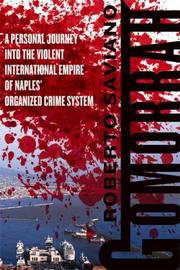
The close-range counterpart to Glenny: the Camorra's business operations in and around Naples — waste disposal, textiles, construction, the port — reported from inside at the cost of Saviano's personal safety. It shows organised crime as an ordinary industry with margins and logistics, which is what makes its money bankable.
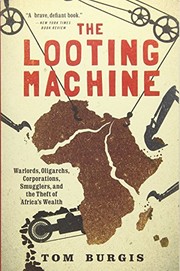
Burgis's earlier book, on how African resource wealth is extracted through opaque offshore intermediaries that leave the producing country with nothing. Read it last in this stage — it is the origin end of exactly the flows the first two stages tracked into London and Delaware.
Why Almost Nobody Goes to Prison
BeginnerUnderstand the enforcement problem — deferred prosecution agreements, corporate liability, and the argument that corruption is a national-security issue rather than a moral one.
▸ Study plan for this stage
Pace: 4 weeks. Too Big to Jail is empirical legal scholarship built on a dataset Garrett assembled himself; read the methodology before the conclusions, about a fortnight. Thieves of State is shorter and more argumentative, around ten days. Both are American-centred and both date: Too Big to Jail is 2014
- The deferred and non-prosecution agreement: what a company concedes, what it pays, and what it never admits
- The monitorship as a remedy, and the evidence on whether monitorships change conduct
- Corporate criminal liability and respondeat superior, and why individual prosecutions are so much harder to bring
- The fine as a cost of business: Garrett's data on penalty size relative to revenue and relative to the gain
- Why proving individual knowledge inside a large institution is the binding constraint, not the absence of statutes
- Chayes's reframing: acute corruption as a driver of insurgency and state failure rather than as a moral or accounting problem
- That Garrett built his dataset because no official one existed, which is itself a finding about enforcement transparency
- What does Garrett's data show about how often individuals were charged alongside a corporate resolution, and how does that compare with the rhetoric at the time?
- What is a company actually agreeing to in a DPA, and what does it preserve by not pleading guilty?
- Which of Garrett's conclusions would you expect to have changed after 2015, and how would you check?
- Chayes argues corruption is a security threat. What evidence does she offer beyond her own field experience, and is it enough for the strength of the claim?
- Across this whole path, which single intervention would have interrupted the most chains you have studied — a register, a professional obligation, a prosecution, or a sanction?
- Nothing on this path is a compliance manual. Name three things a regulated firm must actually do that you still could not describe.
- Take Garrett's dataset chapters and pull out the five largest resolutions he covers. For each, look up whether any individual was subsequently convicted, and add the outcome. That is the book's central claim, tested by you.
- Write the deferred prosecution agreement you would draft for the bank in Dark Towers or the underwriter in Billion Dollar Whale: the admitted facts, the penalty, the undertakings. Then compare it with the real one, which is public.
- Apply Chayes's security framing to one country from stage four and write a page arguing the case, then a page against it. The against page is the harder and more useful one.
- Close the path with a one-page reading map of your own: for each of the five stages, the single book you would keep, its publication year, and the one development since that year a reader must be told about before they start it.
Next up: This closes the path — the architecture, three documented cases, the professions, the origin economies and the enforcement gap — leaving the reader ready for primary material: FATF evaluations, enforcement actions and the leak databases themselves.

The empirical study of how American prosecutors actually handle corporate crime: deferred and non-prosecution agreements, monitorships, fines that are absorbed as a cost of business, and almost no individual convictions. Garrett built the underlying dataset himself, which is why this is the reference rather than a polemic.

The right closing book, and the widest frame: Chayes argues from field experience in Afghanistan that acute corruption is a primary driver of violent extremism and state collapse, which reframes everything in the previous stages as a security problem rather than an accounting one.
Discussion
Keep reading
Paths that share books, cover the same subject, or open a related topic.