Best Books on Drug Development and Clinical Trials, in Reading Order
A clinical trial is a machine for producing a reliable answer from noisy human data, and drug development is what happens when that machine meets an industry with billions riding on the result. This path builds up in that order: first why randomised comparison is necessary at all, then the commercial reality of discovering and selling a drug, then the actual design of a study, then the well-documented ways the published evidence base gets distorted, and finally the methodological literature. It is about how evidence is made and evaluated, not about any particular medicine or treatment decision.
Why Controlled Trials Exist
BeginnerUnderstand randomisation, control groups, blinding and placebo well enough to see why uncontrolled clinical experience is systematically misleading.
▸ Study plan for this stage
Pace: Four to five weeks. Testing Treatments is only 116 pages and can be finished in two evenings — do that first and do not skip it because it looks slight. Bad Science (338 pages) goes at roughly a chapter a sitting over two weeks. The Emperor of All Maladies is 582 pages and is the long pole here; giv
- The fair test, as Evans and colleagues define it in Testing Treatments: like compared with like, allocated by chance, assessed without knowing which arm the patient was in. Everything else in the path is elaboration on those three requirements
- Regression to the mean, which Goldacre hammers in Bad Science — most people seek treatment at their worst, so most people improve afterwards regardless of what was done to them. This one mechanism accounts for the apparent efficacy of an enormous amount of medicine
- The placebo effect as a real, measurable, and routinely overstated phenomenon. Bad Science is careful about the distinction between placebo response and natural history, and the distinction is where most popular writing goes wrong
- Surrogate endpoints: measuring a blood marker instead of whether the patient lived. Goldacre introduces the problem and Prasad returns to it in stage four; note it now
- Halsted's radical mastectomy in The Emperor of All Maladies as the central cautionary case — decades of increasingly mutilating surgery justified entirely by uncontrolled clinical experience and surgical authority, overturned only when Fisher ran randomised trials
- The cooperative-group model that Mukherjee traces: how oncologists built multi-centre randomised trials because no single hospital saw enough patients, and how that infrastructure became the template for modern trials
- Why clinical experience is not merely weak evidence but systematically misleading evidence — the biases all point the same direction, toward believing the intervention worked
- What are the three components of a fair test as Testing Treatments defines them, and which one does an unblinded trial fail?
- A patient improves after treatment. List every explanation other than the treatment working — Bad Science gives you at least four
- Why did the radical mastectomy survive for so long despite being wrong, and what specifically ended it in Mukherjee's account?
- What is a surrogate endpoint, and why does using one make a trial cheaper, faster, and less trustworthy at the same time?
- Mukherjee shows trial methodology being invented under enormous pressure to treat dying patients. Where in his account does that pressure produce bad methodology, and where does it produce good?
- Find one health claim in this week's news and run it through the Bad Science checklist: what was compared, who was randomised, who was blinded, what outcome was measured. Write down which of the four you cannot determine from the reporting — that number is usually three.
- Write 200 words explaining to a non-medical friend why testimonials cannot establish that a treatment works. If you have to use the phrase regression to the mean without explaining it, you have not got it yet.
- In The Emperor of All Maladies, find the passage where Fisher's trial results contradict decades of surgical consensus, and note how the profession responds. Summarise the resistance in one paragraph — it is a pattern you will see again in Goldacre and Prasad.
- Take any single chapter of Bad Science and write out the study design that would be needed to properly test the claim it debunks. This is the first rehearsal of the skill stage three teaches formally.
Next up: You now know why a trial has to be built the way it is; the next stage shows you the industry that builds them and what it wants out of the answer.

A short, deliberately accessible book on why fair tests of treatments are necessary and what makes one fair. It is the cleanest possible starting point and assumes no statistics whatsoever.
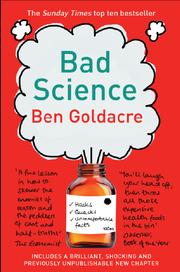
Teaches you to read a health claim critically — regression to the mean, the placebo effect, surrogate endpoints, bad statistics — using accessible worked examples. Read second: it gives you the reflexes that the rest of the path assumes.

A history of cancer that is, in large part, a history of how oncologists learned to run trials — from uncontrolled radical surgery to randomised cooperative-group studies. It shows the methodology being invented under pressure rather than presented as settled.
How a Drug Gets Made and Sold
BeginnerUnderstand the commercial pipeline — discovery, patents, phase progression, marketing, generic manufacture — and the incentives it creates at each step.
▸ Study plan for this stage
Pace: Six to eight weeks — this is the longest stage in the path by page count, at roughly 1,680 pages across three books. The Billion-Dollar Molecule (445 pages) takes two weeks. Empire of Pain is 720 pages of narrative that reads faster than its length suggests; give it three weeks. Bottle of Lies (512
- Structure-based drug design as Werth documents it at Vertex — the ambition to design a molecule from the target protein outward rather than screening compounds and hoping. This is the preclinical stage that every other book in the path takes as already finished
- The financing cycle in The Billion-Dollar Molecule: the science is real but the company runs on raised money, and the pressure to announce is generated by the funding round, not by the data
- The patent clock. A molecule is protected from filing, not from approval, so every year spent in trials is a year of exclusivity burned — this single fact explains most of the industry behaviour in all three books
- Empire of Pain's central mechanism: OxyContin's approval was not the fraud. The fraud was in the promotion — the pseudoaddiction concept, the claim of low addictive potential resting on a one-paragraph letter, and the sales force built around both
- Regulatory capture and the revolving door, which Keefe documents specifically in the FDA examiner who approved OxyContin's label and later joined Purdue
- Bottle of Lies on the generic pipeline: bioequivalence is the standard a generic must meet, and Eban shows how data fabrication at Ranbaxy made that standard unverifiable in practice
- The inspection problem — announced foreign inspections, prepared plants, and what Eban's whistleblowers describe happening between the announcement and the visit
- The through-line across all three: a valid trial result is one link in a chain that also includes discovery, patenting, promotion and manufacture, and it can be undone at any of the others
- What is Vertex actually trying to do differently in The Billion-Dollar Molecule, and by the end of the book has it worked?
- Trace the OxyContin patent-and-reformulation timeline in Empire of Pain. What did the abuse-deterrent reformulation accomplish commercially as opposed to medically?
- What was the Porter and Jick letter, and how did a five-sentence correspondence item come to underwrite a marketing campaign?
- What does bioequivalence require a generic manufacturer to demonstrate, and which specific parts of that demonstration were being fabricated in Eban's account?
- Across these three books, at which point in the pipeline is the incentive to distort the data strongest — and is it the point you would have guessed before reading?
- Draw the pipeline as a single diagram — target identification, lead compound, preclinical, phases I through III, filing, approval, promotion, patent expiry, generic entry — and mark which of the three books covers each segment. The gaps in your diagram are what stage three fills.
- From Empire of Pain, write a 200-word summary of Purdue's marketing argument as Purdue itself made it, stated as sympathetically as you can manage. Steelmanning it is the only way to see why it worked on prescribers.
- Take one specific claim from Bottle of Lies about a fabricated dataset and write down what a real bioequivalence study would have had to show instead. This forces the abstract fraud into concrete terms.
- Compare Werth's scientists with Keefe's executives on one axis: what each group believes it is doing. Two paragraphs. The books were written 27 years apart and the contrast is the argument of this stage.
- List three points in the pipeline where a regulator could have intervened in the OxyContin story and did not. Keep the list — Goldacre's reform proposals in stage four should be checked against it.
Next up: With the commercial pressures in view, you are ready to learn the actual machinery — how a research question becomes a protocol and a protocol becomes a defensible result.
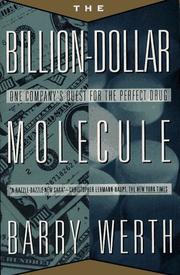
An embedded account of a biotech startup trying to design a drug from first principles, which is the best available picture of what preclinical discovery actually looks like day to day. Start the stage here because it covers the part of the pipeline the later books take for granted.

The Sackler family and OxyContin: approval, promotion, and the manufacture of demand for an approved product. It is the strongest single case study of how marketing and regulation interact after a drug clears its trials.
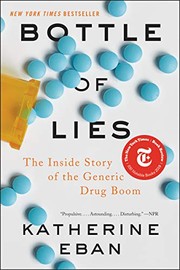
Generic manufacturing and data fraud in overseas plants, and the limits of inspection. It closes the stage by showing that a valid trial result is only as good as the manufacturing that follows it — a link most accounts of drug development skip.
Designing a Study
IntermediateBe able to read a trial protocol: understand research questions, sampling, endpoints, sample size, phases, blinding, randomisation schemes and analysis plans.
▸ Study plan for this stage
Pace: Eight to ten weeks, and this is the stage where the path stops being reading and starts being work. Designing Clinical Research is 352 pages and Fundamentals of Clinical Trials is 332, but textbook pages are not narrative pages — plan on 10 to 15 pages per sitting with a pen. Do Hulley first and com
- Hulley's anatomy-versus-physiology framing: the anatomy of a study is its concrete components, the physiology is how error and bias flow through it. Nearly every design decision in the book is presented as a trade between the two
- The research question and the FINER criteria — feasible, interesting, novel, ethical, relevant — which is Hulley's tool for turning a vague clinical curiosity into something answerable
- Sampling: target population, accessible population, intended sample, actual sample. Hulley's whole treatment of generalisability lives in the gaps between those four, and this is where most trials quietly lose external validity
- The distinction Hulley draws between observational and experimental designs, and precisely which causal claims each can support. Stage four's arguments all turn on this
- Friedman's phase structure — I for safety and dose, II for preliminary efficacy and further safety, III for definitive comparison, IV for post-marketing — and why each phase is powered and populated the way it is
- Randomisation schemes in Friedman: simple, blocked, stratified, and adaptive allocation. Blocked randomisation exists to prevent imbalance; stratification exists to prevent it in variables you already know matter
- Sample size and power. Friedman's chapter is the one to work rather than read: the four quantities (effect size, variance, alpha, power) determine the fifth, and understanding which one investigators fudge is worth more than the arithmetic
- Interim monitoring, stopping rules and data monitoring committees — Friedman's treatment of why looking at your data repeatedly inflates the false-positive rate, and what group-sequential boundaries do about it
- State a clinical question you care about, then apply Hulley's FINER criteria to it. Which criterion does it fail, and can you reformulate to fix it?
- What is the difference between the accessible population and the intended sample, and give a concrete example where that gap would make a trial result inapplicable to real patients
- Why is a phase II trial not simply a small phase III? Answer in terms of what each is powered to detect
- You have a trial with an expected effect size that halves. What happens to the required sample size, and why is that relationship the single most important fact in trial budgeting?
- Why does peeking at accumulating data inflate the type I error rate, and what mechanism does Friedman propose to control it?
- Blinding is impossible for a surgical intervention. Working from both texts, what design features can partially substitute for it?
- Take Hulley's chapter on research questions and write a full one-page study outline for a question of your own — population, predictor, outcome, design. Then go back after Friedman and mark everything you got wrong.
- Work every numerical example in Friedman's sample-size chapter by hand before looking at the answers. Reading the formulas without using them produces the illusion of understanding and nothing else.
- Pull an actual published trial protocol from a registry and annotate it against Friedman's chapter headings — randomisation scheme, blinding, primary endpoint, sample size justification, monitoring plan. Note which sections the protocol is vague about.
- Design a blocked, stratified randomisation scheme on paper for a 200-patient trial with two stratification variables. Doing it manually once makes clear why the scheme exists.
- Write 200 words on why Hulley must be read before Friedman, using a specific decision that Friedman assumes has already been made. If you cannot name one, reread Hulley's opening chapters.
Next up: Knowing what a properly designed and reported trial looks like is the prerequisite for the next stage, which is entirely about what happens when the results of one never reach you.
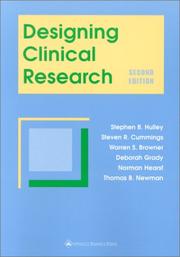
The standard first methods text, covering how a research question becomes a study design across observational and experimental work. Read it before the trials-specific book because it teaches the framing decisions that come earlier than trial mechanics.
The canonical trials textbook: phases, randomisation, sample-size calculation, monitoring, adherence and reporting. This is the reference practitioners actually use, and Hulley makes it readable.
Where the Evidence Base Breaks
IntermediateUnderstand publication bias, selective outcome reporting, surrogate endpoints and medical reversal, and know what reforms have and have not been adopted.
▸ Study plan for this stage
Pace: Four to five weeks. Bad Pharma is 437 pages and is structured as an accumulating indictment — read it in chapter-sized pieces rather than in long sittings, because the cumulative effect can tip into cynicism if you take it all at once. Ending Medical Reversal is 280 pages and much drier; two weeks.
- Publication bias, Goldacre's central charge: trials with negative results are disproportionately unpublished, so the literature systematically overstates efficacy. Everything downstream — meta-analyses, guidelines, prescribing — inherits the distortion
- Selective outcome reporting, which is the subtler version: the trial is published, but the primary endpoint quietly becomes whichever endpoint reached significance. This is why prospective registration of the protocol matters
- Ghostwriting and the seeding trial, both documented in Bad Pharma — studies designed as marketing exercises whose scientific content is incidental to their purpose
- The comparator problem: a new drug beaten against placebo, or against a competitor at an unfair dose, tells you nothing about whether it should be prescribed. Goldacre's clearest and most actionable complaint
- Prasad and Cifu's definition of medical reversal — a practice adopted on weak evidence and then contradicted by a properly conducted trial, meaning patients were harmed by the adoption itself, not merely unhelped
- Their key argument, which distinguishes them from Goldacre: the failure is often not corporate malfeasance but premature adoption on plausible mechanism and surrogate endpoints. Stenting for stable angina is their canonical case
- Why reversal is worse than never having adopted: the practice must now be un-taught, against physicians' own clinical experience of it appearing to work
- What has actually changed since these books: mandatory registration, results-reporting requirements, and the substantial gap between those rules existing and being complied with
- State the difference between publication bias and selective outcome reporting, and explain why prospective registration addresses one more completely than the other
- Goldacre's arguments should be checked, not adopted. Take one of his claims about trial design and verify it against Friedman's chapter on the same topic. Does it hold?
- What is medical reversal as Prasad and Cifu define it, and how is it different from a practice simply falling out of fashion?
- Why do Prasad and Cifu locate more of the blame in evidentiary standards than in industry conduct, and where do they and Goldacre genuinely disagree?
- A drug is approved on a surrogate endpoint. Using the stage-three material, describe the trial that would be needed to establish it actually helps patients — and explain why that trial is rarely run
- Take a drug you or someone you know has been prescribed. Find its registered trials, then find which of them were published. Write down the ratio. This is Goldacre's argument reproduced at a scale of one and it lands harder than the book does.
- Pick one chapter of Bad Pharma and write a one-paragraph counterargument to it as an industry statistician would. Goldacre is largely right and this exercise is still worth doing — knowing where the defensible objections are is what separates a critic from a cynic.
- Take a reversal case from Prasad and Cifu and reconstruct the original evidence that justified adoption. Write 200 words on whether you would have adopted it at the time with the information then available.
- Reread your list from stage two of the points where a regulator could have intervened in the OxyContin story. Mark which of Goldacre's proposed reforms would have caught each one. Several will not be covered by any of them.
- Write out, in one page, what you would now require before believing that a newly approved drug works. Keep it — stage five will make you revise it.
Next up: You can now say what is wrong with the evidence base; the last stage gives you the technical vocabulary to argue about specific trials rather than about the system.

The systematic case that missing trial results, ghostwriting and biased design corrupt the published literature. Read it only after the design stage — the argument depends on knowing what a well-run trial should have reported, and its claims are best checked against Friedman rather than taken on faith.

Documents practices adopted on weak evidence and later reversed by better trials, and argues for higher evidentiary bars before adoption. It is the constructive counterpart to Goldacre's indictment, written by working physicians.
Trial Methodology at Depth
IntermediateWork through the statistical and design controversies that determine whether a trial result means what it appears to mean.
▸ Study plan for this stage
Pace: Three to six months, and treat that estimate as honest rather than discouraging. Piantadosi's Clinical Trials is 720 pages of graduate-level methodology and Senn's Statistical Issues in Drug Development is 498 pages of dense argument. Neither is read cover to cover by most people who use them. A wor
- Piantadosi's framing of a trial as an experimental design problem rather than a procedure to follow, which is the difference between his book and Friedman's
- Dose-finding designs — the 3+3 rule and its continual-reassessment-method successors — and Piantadosi's argument about why the conventional escalation scheme performs poorly despite near-universal use
- Adaptive designs: response-adaptive randomisation, sample-size re-estimation, seamless phase II/III. Piantadosi is careful about which adaptations preserve type I error control and which only appear to
- Estimation versus hypothesis testing as competing goals of a trial, and Piantadosi's case that the field's fixation on p-values obscures the quantity clinicians actually need
- Senn on baseline adjustment: why adjusting for a baseline covariate is right, why testing for baseline imbalance is wrong, and why almost every published trial does the second. This is the clearest single argument in either book
- Multiplicity — multiple endpoints, multiple looks, multiple subgroups — and Senn's distinction between adjustments that are logically required and those that are ritual
- Equivalence and non-inferiority testing: Senn's treatment of why absence of a significant difference is not evidence of equivalence, and how the non-inferiority margin is chosen (and gamed)
- Meta-analysis, its fixed-versus-random-effects choice, and Senn's scepticism about combining trials that were not designed to be combined — the technical underside of the reforms Goldacre argued for
- Why does Piantadosi consider the standard 3+3 dose-escalation design inadequate, and what does a continual reassessment method do differently?
- State Senn's argument against significance-testing baseline imbalance in a randomised trial. Why is the test logically incoherent given that allocation was random?
- Under what conditions does an adaptive design preserve type I error control, and under what conditions does it silently inflate it?
- How is a non-inferiority margin chosen, and what makes that choice the most contestable number in the entire trial?
- Take a claim from Bad Pharma in stage four and reassess it using Senn's framework. Does the statistical objection survive? Some do and some do not
- Piantadosi and Senn disagree in emphasis about how much of a trial's validity is design and how much is analysis. Where do you land, and on what evidence?
- Work through Piantadosi's dose-finding chapter and simulate a 3+3 escalation by hand on paper with an assumed true dose-toxicity curve. Seeing it select the wrong dose once is more persuasive than the chapter's argument.
- Take a recently published trial, find its baseline characteristics table, and check whether the authors significance-tested it. Then write a paragraph explaining to those authors, using Senn, why that table should have no p-values in it.
- Read Senn's chapter on equivalence testing and then find a non-inferiority trial in your area of interest. Write down the margin the investigators chose and reconstruct their justification for it. Judge whether it is defensible.
- Return to the one-page standard you wrote at the end of stage four for believing a new drug works. Revise it with Piantadosi and Senn in hand. The revision will be shorter and more technical, and comparing the two drafts is the clearest measure of what this path did.
- Choose a single methodological controversy — adaptive randomisation, subgroup analysis, or meta-analysis of heterogeneous trials — and write 500 words setting out both sides using Piantadosi and Senn as sources. The goal of the whole path is being able to do this rather than to hold an opinion.
Next up: This is the end of the path: you can now read a protocol, evaluate a published result, and locate the specific methodological point on which a disagreement actually turns.

Piantadosi's methodological treatment goes well past the introductory texts into estimation, adaptive designs, dose-finding and the logic behind each choice. Read it as the graduate-level successor to Friedman.
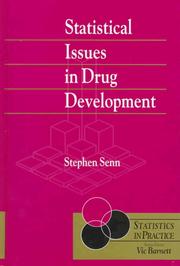
Senn works through the genuine statistical disagreements — baseline adjustment, multiplicity, equivalence testing, meta-analysis — with unusual clarity about what is contested and why. It is the right last book because it leaves you able to evaluate arguments rather than adopt positions.
Discussion
Keep reading
Paths that share books, cover the same subject, or open a related topic.