Business Ethics: Best Books on Ethical Decision-Making at Work
This curriculum builds a rigorous, practical understanding of business ethics across four progressive stages. Starting from intermediate-level ethical frameworks, it moves through corporate responsibility and real-world case studies, into the psychology of moral failure, and finally into advanced gray-area navigation and systemic thinking — equipping the reader to reason and act with integrity in complex professional environments.
Ethical Foundations for Business
IntermediateEstablish the core moral frameworks (consequentialism, deontology, virtue ethics) and understand how they apply specifically to business decisions and professional life.
▸ Study plan for this stage
Pace: 6–8 weeks, ~25–30 pages/day (alternating between Ferrell and Aristotle; Ferrell first 3–4 weeks, then Aristotle 3–4 weeks, with 1 week for integration)
- Consequentialism (utilitarianism): evaluating ethical decisions by outcomes and stakeholder impact, as applied to business cases in Ferrell
- Deontology: duty-based ethics, rules, and obligations in professional contexts; understanding absolute principles vs. situational ethics
- Virtue ethics: character development, practical wisdom (phronesis), and the cultivation of virtues in business leadership, grounded in Aristotle's Nicomachean Ethics Book V
- The relationship between individual virtue and organizational ethics: how personal moral character translates to ethical business decisions
- Ethical decision-making frameworks: Ferrell's systematic approach to analyzing business dilemmas using multiple moral lenses
- Justice and fairness in commerce: Aristotle's treatment of distributive and reciprocal justice as foundational to ethical business relationships
- The role of habit and practice in developing ethical competence: how repeated ethical choices build moral character over time
- Reconciling competing ethical frameworks: recognizing when consequentialist, deontological, and virtue-based approaches conflict in real business scenarios
- What are the three primary ethical frameworks (consequentialism, deontology, virtue ethics), and how does each framework approach a single business dilemma differently?
- How does Ferrell's ethical decision-making model help you systematically analyze a business case, and which framework(s) does it emphasize?
- What is practical wisdom (phronesis) according to Aristotle, and how does it apply to ethical decision-making in professional contexts?
- How does Aristotle's concept of justice in Book V of the Nicomachean Ethics (distributive and reciprocal justice) relate to fair business practices and stakeholder treatment?
- How can virtue ethics address the limitations of purely consequentialist or deontological approaches in complex business situations?
- What role does habit and character development play in becoming an ethical business leader, according to Aristotle and Ferrell?
- Work through 3–4 case studies from Ferrell's text, applying each of the three ethical frameworks (consequentialism, deontology, virtue ethics) to the same case and documenting how each framework leads to different conclusions
- Create a personal ethical decision-making checklist based on Ferrell's model; test it on a real or hypothetical workplace dilemma you've encountered or researched
- Read and annotate 2–3 key passages from Aristotle's Book V on justice and phronesis; write a 2–3 page reflection connecting Aristotle's ideas to a contemporary business ethics issue (e.g., fair wages, stakeholder equity)
- Conduct a 'virtue audit' of a business leader or organization: identify which virtues (courage, temperance, justice, practical wisdom) they demonstrate or lack, and explain how this affects their ethical decisions
- Debate exercise: pair up and argue opposite sides of a business ethics dilemma using different frameworks (one person uses consequentialism, the other deontology or virtue ethics); record insights on which framework was most persuasive and why
- Design a hypothetical corporate ethics training program that integrates Ferrell's decision-making framework with Aristotle's virtue ethics; explain how you would help employees develop practical wisdom in their roles
Next up: This stage establishes the foundational moral languages and reasoning tools needed to evaluate complex business decisions; the next stage will likely apply these frameworks to specific functional areas (finance, marketing, HR, etc.) and organizational systems, requiring you to move from theory to systemic implementation.

A canonical, widely-used text that maps major ethical theories directly onto business scenarios — gives you the vocabulary and analytical toolkit every subsequent book assumes you have.

Virtue ethics is the backbone of integrity-based leadership; reading Aristotle here grounds your intuitions in the oldest and most enduring framework for character and practical wisdom before moving into modern applications.
Corporate Responsibility & Stakeholder Thinking
IntermediateUnderstand the obligations of organizations — not just to shareholders but to employees, communities, and society — and learn how responsible companies are built and governed.
▸ Study plan for this stage
Pace: 4–5 weeks, ~25–30 pages/day. Week 1–2: "Stakeholder Theory" (approx. 200–250 pages); Week 3–5: "The Responsible Company" (approx. 200–250 pages), with overlap for reflection and integration.
- Stakeholder theory fundamentals: the idea that corporations have obligations to all stakeholders (employees, customers, suppliers, communities, environment) not just shareholders
- The distinction between shareholder primacy and stakeholder governance models and their practical implications
- How Freeman's stakeholder mapping and engagement framework helps identify and prioritize organizational relationships
- The business case for responsibility: how Patagonia demonstrates that profitability and social/environmental responsibility are compatible and mutually reinforcing
- Governance structures and decision-making processes that embed responsibility into corporate operations and culture
- Balancing competing stakeholder interests while maintaining ethical integrity and long-term value creation
- The role of leadership and organizational culture in institutionalizing responsible business practices
- What is stakeholder theory and how does it differ from the shareholder primacy model? What are the practical consequences of each approach?
- How would you map and prioritize stakeholders for a specific organization? What framework does Freeman provide for this?
- Using Patagonia as a case study, explain how corporate responsibility can drive business success rather than hinder it.
- What governance structures and decision-making processes does Chouinard describe as essential for building a responsible company?
- How do you balance competing interests among different stakeholders when they conflict? What principles guide these decisions?
- What role does organizational culture and leadership play in embedding responsibility into daily operations?
- Stakeholder mapping exercise: Select a real company and create a comprehensive stakeholder map (employees, customers, suppliers, communities, environment, etc.). Identify their interests, power, and influence using Freeman's framework.
- Comparative analysis: Choose a company known for responsibility and one criticized for poor stakeholder management. Analyze how their governance structures and decision-making processes differ.
- Patagonia case study deep dive: Research Patagonia's specific policies (e.g., environmental initiatives, employee benefits, supply chain practices). Document how each reflects stakeholder responsibility and impacts business outcomes.
- Stakeholder interview simulation: Conduct 3–4 interviews (or detailed research-based personas) with different stakeholders of a company you know well. Synthesize their perspectives on the company's responsibilities.
- Governance redesign project: Take a traditional shareholder-focused company and redesign its governance structure, decision-making processes, and metrics to reflect stakeholder thinking. Justify your changes.
- Personal responsibility audit: Identify an organization you work for or know well. Assess its current stakeholder engagement practices against Freeman's and Chouinard's frameworks. Propose 2–3 concrete improvements.
Next up: This stage establishes the foundational philosophy and governance models for responsible business; the next stage will likely explore how to implement these principles through specific ethical frameworks, decision-making tools, and real-world dilemmas that test stakeholder thinking in practice.

Freeman's stakeholder model is the dominant framework for corporate responsibility; reading this establishes the intellectual foundation for why businesses owe duties beyond profit maximization.

A grounded, real-world companion to stakeholder theory — Patagonia's founders show what corporate responsibility looks like in practice, making abstract principles concrete and actionable.
Moral Failure, Corruption & the Psychology of Wrongdoing
IntermediateUnderstand why good people and good companies make unethical choices — through self-deception, organizational pressure, and rationalization — so you can recognize and resist these forces.
▸ Study plan for this stage
Pace: 8–10 weeks, ~40–50 pages/day (mix of narrative and dense psychological analysis)
- The Enron case as a masterclass in institutional corruption: how smart people rationalized fraud through incremental ethical compromises and cultural enablement
- Cognitive biases and blind spots: confirmation bias, motivated reasoning, and self-serving bias that allow people to see themselves as ethical while acting unethically
- The role of organizational pressure, incentive structures, and group dynamics in normalizing wrongdoing and suppressing dissent
- Self-deception mechanisms: how people construct narratives that allow them to deny or reframe their own unethical behavior
- The psychology of rationalization: how humans justify lies and misconduct through euphemism, diffusion of responsibility, and moral disengagement
- The distinction between lying as intentional deception versus self-deception, and why both undermine trust and integrity
- Systemic vs. individual accountability: recognizing that corruption often emerges from flawed systems, not just bad actors
- How did Enron's organizational culture, incentive structures, and leadership enable smart, talented people to commit fraud? What specific mechanisms normalized unethical behavior?
- What are the main cognitive biases Bazerman identifies that allow people to act unethically while maintaining a positive self-image? How do these biases differ from intentional lying?
- How does self-deception differ from deliberate lying, and why is understanding this distinction important for preventing corporate wrongdoing?
- What role does rationalization play in moral failure? Give examples from the Enron case of how executives rationalized their behavior to themselves and others.
- How can you recognize when you are experiencing a blind spot or engaging in motivated reasoning in your own decision-making?
- What systemic and cultural changes would be needed to reduce the likelihood of another Enron-like scandal?
- Case study analysis: Map out the key decision points in the Enron scandal where individuals could have stopped or reported wrongdoing. For each, identify the cognitive bias, organizational pressure, or rationalization that likely prevented action.
- Bias audit: Identify one recent decision you made (professional or personal) where you might have been subject to confirmation bias or motivated reasoning. Write down what evidence you ignored and what narrative you used to justify your choice.
- Rationalization inventory: List 3–5 lies or ethical shortcuts you've witnessed (or been tempted by) in a workplace. For each, write out the rationalization used and identify which self-deception mechanism it reflects.
- Organizational pressure simulation: In a small group, role-play a scenario where a team member suggests cutting corners to meet a deadline. Practice identifying the pressure tactics and rehearse how you would resist or escalate.
- Personal blind spot reflection: Interview a trusted colleague or friend about a decision or behavior of yours they think you might be blind to. Document their feedback and reflect on what cognitive bias might be at play.
- Lie audit: For one week, track every lie you tell (white lies, exaggerations, omissions). Categorize each as intentional deception or self-deception, and reflect on the consequences and your justification.
Next up: This stage equips you to recognize the psychological and systemic roots of unethical behavior, preparing you to move forward into frameworks for ethical decision-making, institutional reform, and building cultures of integrity that actively resist these pressures.
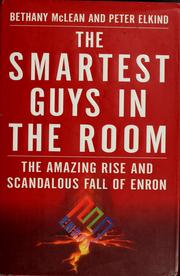
The definitive account of Enron's collapse; reading it as a case study reveals how culture, incentives, and ego systematically erode ethical judgment inside organizations.
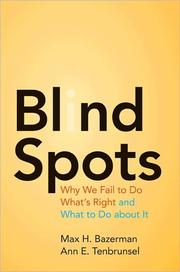
Bazerman's behavioral-ethics research explains the cognitive biases and motivated reasoning that cause ethical failures — essential for understanding why awareness alone is not enough.

A short, sharp philosophical argument for radical honesty in professional and personal life; it sharpens your thinking on deception and integrity before tackling gray areas.
Navigating Gray Areas & Leading with Integrity
ExpertApply sophisticated ethical reasoning to ambiguous, high-stakes real-world dilemmas — whistleblowing, conflicts of interest, leadership under pressure — and develop a personal ethical framework for your career.
▸ Study plan for this stage
Pace: 8–10 weeks, ~40–50 pages/day (mix of dense theoretical sections and case studies; allow extra time for reflection on personal scenarios)
- Co-production of technology and values: how ethical frameworks are embedded in technological design and institutional choices, not separate from them
- Values-driven voice: identifying your core values and practicing articulating ethical concerns in real organizational contexts without isolation or retaliation
- Moral disengagement mechanisms: recognizing how intelligent, ordinary people rationalize unethical behavior through euphemism, diffusion of responsibility, and distortion of consequences
- Ethical reasoning under pressure: applying systematic frameworks (stakeholder analysis, consequence mapping, virtue assessment) when stakes are high and time is short
- Organizational complicity and individual agency: understanding how systems enable harm while maintaining accountability for personal choices and leadership influence
- Pathways to ethical voice: distinguishing between internal advocacy, external whistleblowing, and strategic silence—and when each is appropriate
- The role of imagination in ethics: using narrative and perspective-taking to understand impacts on stakeholders you'll never meet
- How does Jasanoff's concept of 'co-production' challenge the idea that ethics can be bolted onto technology after it's designed? What are the implications for your role in organizational decisions?
- What are the core values you would 'give voice to' under pressure, and what specific language or strategies would you use to raise concerns without being dismissed or sidelined?
- How do the moral disengagement mechanisms Stone describes (moral justification, euphemistic labeling, diffusion of responsibility) show up in your industry or organization? Can you identify one you're vulnerable to?
- Walk through a real or hypothetical high-stakes ethical dilemma from your field: Who are the stakeholders? What are the competing values? What would each ethical framework (consequentialist, deontological, virtue-based) suggest?
- What is the difference between being complicit in a system and being responsible for changing it? Where does your personal agency begin and end?
- Under what conditions is internal whistleblowing more effective than external reporting, and when is strategic silence the most ethical choice?
- Personal values audit: List 5–7 core values (integrity, transparency, fairness, etc.). For each, write a specific scenario where you'd be willing to speak up or risk your position. Share one with a trusted mentor and get feedback on feasibility.
- Moral disengagement inventory: Identify a recent decision in your organization you found ethically questionable. Map which of Stone's disengagement mechanisms (moral justification, euphemism, diffusion of responsibility, distortion of consequences) were used by decision-makers—and by you, if you stayed silent.
- Co-production case study: Choose a technology or policy from your industry. Trace how values (profit, speed, convenience, privacy, safety) were embedded in its design. What values were excluded? What would change if different stakeholders had been involved earlier?
- Voice rehearsal: Write out 2–3 specific scenarios where you'd need to raise an ethical concern in your organization. Draft what you'd actually say (not what you wish you'd say). Practice with a peer or coach; refine based on feedback.
- Stakeholder impact mapping: Take a high-stakes decision from your field (real or hypothetical). Create a detailed map of who is affected, how, and what they stand to lose or gain. Write a 1-page narrative from the perspective of someone most harmed.
- Ethical framework comparison: Take one complex dilemma from your work. Analyze it through three lenses: consequentialist (outcomes), deontological (duties/rules), and virtue ethics (character). Where do they conflict? Which framework feels most true to your values?
Next up: This stage equips you with both the conceptual tools (understanding how values are embedded in systems) and the practical skills (articulating and advocating for ethics under pressure) needed to move into implementation—designing ethical governance structures, building accountability mechanisms, and leading organizational change from a position of integrity.

Examines how technology and innovation create genuinely new ethical dilemmas with no clear precedent — trains the reader to reason carefully in novel, ambiguous situations.

Shifts from 'what is right?' to 'how do I actually act on what is right?' — a practical, script-based methodology for voicing ethical concerns and navigating pushback in real workplaces.

A challenging capstone that examines the far end of moral failure, deepening your understanding of how character, environment, and rationalization interact — sharpening your judgment about integrity at every level.
Discussion
Keep reading
Paths that share books, cover the same subject, or open a related topic.