Corporate Fraud and Business Scandals: The Best Books, in Order
Large frauds are not clever; they are slow, and they run for years because the people positioned to stop them have good reasons not to look. This path starts with the taxonomy — the small number of structural shapes almost every big fraud takes — so that the case studies afterwards read as instances rather than as anecdotes. Then it works through the corporate collapses, the Ponzis and bank frauds, and finally the frauds that were substantially legal, which are the ones that say most about how the system works.
The Taxonomy First
BeginnerLearn the four basic fraud structures and the concept of the optimal amount of fraud, so the case studies become recognisable patterns rather than a parade of villains.
▸ Study plan for this stage
Pace: About four weeks for roughly 1,180 pages. Lying for Money (320 pp) first, ten days, and take notes - it is the only genuine framework on this path and everything after is a case study of one of its categories. Davies worked as a regulatory economist and analyst rather than as a reporter, so this is
- Davies's four fraud types: the long firm, the counterfeit, the control fraud, and the market crime - and the discipline of assigning any new case to one of them
- The optimal amount of fraud: verifying everything costs more than the fraud does, so a low-trust economy is poorer than one that accepts some losses - which makes fraud a feature of an efficient trust network rather than a failure of one
- Fraud as an attack on a trust network rather than on an individual, and why that reframes who the victim is
- The Canadian paradox and the correlation between high-trust commercial environments and large frauds
- Soltes's finding that most convicted executives performed no cost-benefit calculation at all, and what that does to the deterrence assumptions underneath sentencing policy
- The distinction between fraud that begins as fraud and fraud that begins as a shortfall someone intended to cover by next quarter
- Mackay's structural insight - the shape of a bubble - held apart from Mackay's unreliable particulars
- State Davies's four fraud types and give a defining feature of each. Which is hardest to detect and why?
- Why does Davies argue that some fraud is economically optimal, and what would a zero-fraud economy have to look like?
- What does Soltes conclude about the mental state of most convicted white-collar offenders, and how did he obtain that evidence?
- If offenders do not calculate, what happens to the case for deterrence through longer sentences?
- What has modern scholarship established about the accuracy of Mackay's tulip mania account, and does the correction damage his general thesis?
- Write out Davies's four categories on one page with two defining tests for each. Keep the page and classify every case study in the remaining three stages against it as you read. Any case that resists classification is the interesting one.
- Take a fraud currently in the news, apply the four-type test, and write two hundred words on which category it falls into and what that predicts about how it will unravel.
- For three of Soltes's subjects, write down the point at which each first crossed a line and what they told themselves at the time. The pattern across the three is the book's actual argument.
- Read Mackay's tulip chapter, then look up a modern economic history of the Dutch tulip trade. List the specific claims that do not survive. Doing this once establishes the habit of checking a famous account against its scholarship.
Next up: With a taxonomy in hand, the next stage watches a control fraud run inside a real company, and asks why the people paid to notice did not.

The book to read first, and the only one here that is genuinely a framework: frauds are long firms, counterfeits, control frauds or market crimes, and every one of them is an attack on a trust network that exists because checking everything would be more expensive than the fraud. Everything after this is a case study of one of his four types.

A Harvard Business School professor's correspondence with dozens of convicted white-collar criminals, arguing that most did not perform a cost-benefit calculation at all. Read it second because it undercuts the deterrence assumption that the rest of the literature quietly relies on.

The 1841 original on the South Sea Bubble, tulip mania and the Mississippi scheme. Read it third and read it sceptically — modern historians have shown Mackay embellished, particularly on tulips — but the shape he describes recurs in every later book on this list.
The Corporate Collapses
BeginnerSee a control fraud run from inside a real company, and understand the role of auditors, boards and business journalists in not noticing.
▸ Study plan for this stage
Pace: About five weeks for roughly 1,560 pages. Bad Blood (352 pp) first, a week - it is investigative journalism by the Wall Street Journal reporter who broke the Theranos story, so it is written from documents and sources he developed himself. The Smartest Guys in the Room (464 pp) next, two weeks: also
- Control fraud in Davies's sense: the person best positioned to detect the fraud is the person committing it, which is why the auditor and the board are structurally useless against it
- The Theranos board as a specific failure mode - eminent people with no relevant expertise, selected for reputational cover rather than for oversight
- Litigation and non-disclosure agreements as an operational tool for suppressing detection, not merely as a legal defence
- A product no customer can independently verify: the common thread between a blood test and a mark-to-market energy contract
- Enron's mechanism precisely - mark-to-market accounting on long-dated contracts, and the off-balance-sheet partnerships that moved debt off the visible balance sheet
- Auditor independence and the consulting-revenue conflict that made Andersen's position untenable
- Sarbanes-Oxley as the regulatory response, and what it actually requires
- The role of business journalism in both cases - as the mechanism that eventually broke the story and as the mechanism that flattered both companies for years first
- Why is a control fraud unusually resistant to detection by an auditor, and what would have to change for the audit to work?
- What did the Theranos board contribute, and what would a board that could have stopped it have looked like?
- Explain mark-to-market accounting on a long-dated contract and show how it converts an assumption into reported earnings.
- What did the Enron off-balance-sheet partnerships accomplish, and which accounting rule permitted them?
- McLean explains the mechanism and Eichenwald reconstructs the rooms. Which is more useful for understanding how it happened, and which for understanding why nobody stopped it?
- Does Sarbanes-Oxley address the failures that produced Enron? Name one it fixes and one it does not.
- Classify Theranos and Enron against your Davies taxonomy page. Both are control frauds, but they attack different trust networks; write down which, in each case.
- Build a detection timeline for Theranos: for each year, who knew something was wrong, what stopped them acting, and what would have had to be different. The column of blockers is the book's real subject.
- Reconstruct one Enron special purpose entity from McLean and Elkind's description - what went in, what came out, whose balance sheet it sat on - and draw it. If you cannot draw it, you have not understood it, which was largely the point of the structure.
- Read the same forty-eight hours of the Enron collapse in McLean and in Eichenwald and note what each includes that the other does not. The difference is the difference between explanatory and reconstructive journalism.
- Find a laudatory magazine profile of Theranos or Enron from before the collapse and mark every claim that a journalist could have checked at the time. The count is usually higher than the retrospective consensus admits.
Next up: Corporate collapses are complicated; the next stage takes the simplest fraud structure of all and shows why simplicity makes it harder, not easier, to stop.
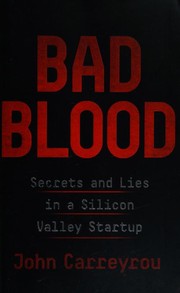
Theranos, written by the reporter who broke it. The clearest single illustration of how a fraud survives: a board of statesmen with no scientific expertise, aggressive litigation against critics, and a product no customer could independently test. Start the case studies here.
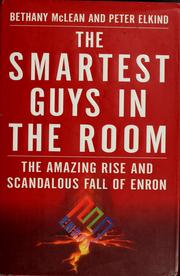
McLean and Elkind on Enron — mark-to-market accounting, the off-balance-sheet partnerships, and an auditor with more revenue from consulting than from auditing. The definitive account of the fraud that produced Sarbanes-Oxley.
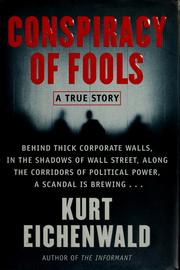
The same collapse told as narrative reconstruction, scene by scene, from thousands of hours of interviews. Read it after McLean if Enron interests you: she explains the mechanism, he shows you the rooms it happened in.
Ponzis and Bank Frauds
IntermediateUnderstand why the simplest fraud structure is the hardest to stop, and how regulators repeatedly received the answer and did nothing.
▸ Study plan for this stage
Pace: Five to six weeks for roughly 1,600 pages. The Wizard of Lies (448 pp) first, two weeks - Henriques is a New York Times journalist and the only reporter to interview Madoff in prison, so it is investigative journalism with a primary interview at its centre. No One Would Listen (354 pp) next, a week,
- The Ponzi as the pure long firm: it requires no product, no accounting trickery and no accomplices, and it can only end one way
- Why the simplest structure is the hardest to stop - there is nothing to audit, and the returns are the only evidence, so scepticism has to precede investigation
- Madoff's split-strike conversion story and the specific quantitative impossibility Markopolos identified from published returns alone
- Feeder funds and the outsourcing of diligence: every intermediary assumed someone else had checked
- Regulatory failure as a process rather than a moment - what the SEC examined, what it did not, and why the wrong questions were asked
- 1MDB as the modern cross-border structure: shell companies, correspondent banking, private banks, auditors and law firms, each performing a limited role that was individually defensible
- Deutsche Bank in Dark Towers as institutional rather than individual wrongdoing - the harder and far more common case, where no single person holds the whole picture
- Anti-money-laundering controls and why they fail on the largest transactions rather than the smallest
- Why does a Ponzi scheme necessarily collapse, and what determines when?
- What exactly did Markopolos compute, and why was it sufficient to establish the fraud without access to any internal document?
- The SEC examined Madoff more than once. What did it look at, and what would it have had to look at instead?
- How did money physically move in 1MDB, and which institutions had to fail to check for that to work?
- Dark Towers describes an institution rather than a villain. What does that change about assigning responsibility, and about prevention?
- Markopolos is telling his own story. Which of his claims would you want corroborated from another source, and which are documented independently?
- Reproduce Markopolos's core argument from Madoff's published return series: plot the returns, compute the volatility, and compare against the strategy he claimed to be running. The impossibility is visible in a spreadsheet in under an hour, which is the entire point of the book.
- Map the 1MDB money flow from Wright and Hope's account as a diagram - jurisdiction by jurisdiction, account by account - and mark at each step which institution had a duty to ask a question.
- Classify all four cases against your Davies taxonomy. Madoff and 1MDB fall in different categories despite both being thefts of enormous sums; state why.
- Read Henriques's account of one SEC examination and Markopolos's account of the same period, and list where the journalist and the participant disagree. Then note which version the documentary record supports.
- Take one control failure from Dark Towers and write down what the compliance procedure required, what actually happened, and who would have had to escalate. Institutional fraud is a chain of people each doing slightly less than their job.
Next up: Every case so far was illegal; the final stage takes the cases where enormous harm was done substantially within the law, which is where the framework is genuinely tested.

The authoritative Madoff account, by the only journalist to interview him in prison. Read it first here — it is the textbook long firm from Davies's taxonomy, run for decades at enormous scale.
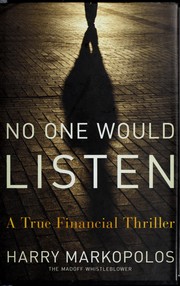
The same fraud from the perspective of the analyst who worked out it was mathematically impossible in 1999 and spent nine years failing to get the SEC to act. Self-serving in places and worth reading anyway; it is the primary document on regulatory failure.

Wright and Hope on 1MDB — the looting of a Malaysian sovereign wealth fund, and the banks, auditors and celebrities who took the money without asking. The best book on how a modern cross-border fraud actually moves cash.

Deutsche Bank across three decades of money laundering, mispricing and regulatory settlement. Included because it is the one book here about an institution rather than an individual, which is the harder and more common case.
When the Fraud Is Legal
IntermediateConfront the cases where enormous harm was done within the law, and be able to say why so few executives are prosecuted.
▸ Study plan for this stage
Pace: About six weeks for roughly 1,930 pages. Empire of Pain (720 pp) first, two and a half weeks - investigative journalism by Patrick Radden Keefe, built on litigation discovery and internal documents. The Chickenshit Club (377 pp) next, ten days: Eisinger is a ProPublica reporter and the book is repor
- The central discomfort of this stage: almost everything in Empire of Pain was legal at the time - the marketing, the regulatory engagement, the corporate structure that insulated the family - which means legality is a poor proxy for harm
- Regulatory influence as a legitimate activity that produces illegitimate outcomes, and where the line actually falls
- Corporate structure as insulation: how ownership can be arranged so that liability attaches to an entity and not to the people who directed it
- Eisinger's account of why individual executive prosecutions stopped after Enron - deferred prosecution agreements, the shift to corporate settlements, and a professional culture that treats a lost trial as a career risk
- Black Edge and the evidentiary problem of proving criminal intent at the top of a firm designed so that the top never receives the incriminating detail
- WeWork as the case that tests the framework: a company never charged with fraud, that lost billions, whose founder left enriched - and the honest possibility that the framework cannot always distinguish fraud from delusion
- The difference between a fraud, a bad business and a business model that externalises its costs, and why the legal system draws that line where it does
- What all four books share: they are journalism, not law, and each is arguing a case as well as reporting one
- Which specific Purdue Pharma practices were legal at the time, and which of them have since been restricted?
- How did the Sackler corporate and ownership structure limit liability, and what did the eventual settlements actually reach?
- What changed at the Department of Justice after Enron, and what does Eisinger identify as the cause?
- In Black Edge, what was the specific evidentiary gap that prevented a case against the principal?
- Was WeWork a fraud? Argue it both ways using your Davies taxonomy, and say what the ambiguity reveals about the taxonomy.
- Having read all four stages, what would you change - in law, in regulation, or in professional practice - and which of these books supports the change?
- List the Purdue marketing practices Keefe documents and mark each as legal at the time, illegal at the time, or legally contested. The size of the first column is the argument of the book.
- Diagram the Sackler ownership structure from Keefe's account and mark where liability stopped. Then compare it with the Enron special purpose entity you drew in stage two - both are structures designed so that no single entity holds the whole exposure.
- Take one case Eisinger describes where prosecutors declined to charge individuals and write out the decision as they would have framed it internally. The exercise is to make the reasoning legible rather than to condemn it.
- Apply your Davies taxonomy page to WeWork and to Theranos side by side. They look similar and one led to a criminal conviction; identify the specific factual difference that separates them.
- Write a final two pages classifying every case in this path by fraud type, by whether anyone was prosecuted, and by whether the harm was legal at the time. The three columns do not line up, which is the conclusion the path exists to produce.
Next up: This closes the path: a working taxonomy, a dozen cases classified against it, and a clear view of where the law stops matching the harm.

The Sacklers and Purdue Pharma. The essential book on this list, because almost everything in it was legal at the time: the marketing, the influence over regulators, the corporate structure that insulated the family. Read it first in this stage.
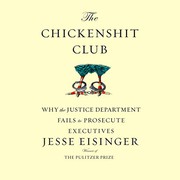
Why the Department of Justice stopped prosecuting individual executives after Enron, told through the internal culture of the Southern District of New York. The direct answer to the question Empire of Pain leaves you with.
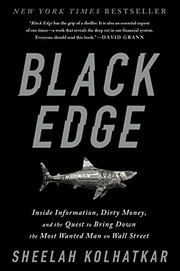
SAC Capital, insider trading, and a seven-year investigation that convicted employees but not the principal. The clearest illustration of why the structure of a firm can make criminal intent unprovable at the top.

Brown and Farrell on WeWork — a company that was never accused of fraud, that lost billions, and whose founder left with a fortune. Read it last: it is the case that tests whether your framework can distinguish fraud from delusion, and the honest answer is that it sometimes cannot.
Discussion
Keep reading
Paths that share books, cover the same subject, or open a related topic.