What to Read Before The Wealth of Nations: How to Read Adam Smith, in Order
Almost everyone who quotes The Wealth of Nations has not read it, and the ones who try usually stop somewhere in the hundred pages on the price of silver in medieval Europe. It is a nine-hundred-page eighteenth-century treatise, most of it empirical, and its famous doctrines occupy a small fraction of it. This path is not a survey of Adam Smith; it is the preparation that makes the Wealth readable and the reader honest about it — the moral philosophy Smith thought was his more important book, the life, and the modern guides — with the Wealth itself last. If you want the argument rather than the book, stop after Fleischacker; that is a defensible place to get off.
Where Smith sits, and what problem he was solving
BeginnerPlace Smith among the economists who came after him and the eighteenth-century argument he was intervening in
▸ Study plan for this stage
Pace: Five to six weeks. Heilbroner's Smith chapter can be read in an evening but the whole book is worth three weeks and gives you the after-history you will need. Hirschman is short and dense — a week, read slowly. Roberts is light and takes a few evenings; read it last in the stage as the bridge into S
- Heilbroner's framing of economics as a succession of worldly philosophers responding to their own moment, which is the corrective to reading Smith as the origin of a technical discipline
- What was actually new in Smith on Heilbroner's account, and which of his ideas were later borrowed, distorted or quietly dropped by successors
- Hirschman's argument that the Enlightenment case for commerce was that it would tame the destructive passions — interest as a civilising counterweight to glory and rage
- That this was the argument Smith inherited rather than invented, which is why an eighteenth-century moral philosopher was writing about pin factories at all
- The doux commerce thesis and its critics, which puts the Wealth in a conversation running well before 1776
- Roberts's route in through The Theory of Moral Sentiments rather than the Wealth, and the claim that the moral book is the one that changes how a reader lives
- The single most useful thing this stage establishes: Smith is a moral philosopher writing about commerce, not an economist writing about morals
- From Heilbroner, what did Smith's successors take from him and what did they leave? Name three of each.
- State Hirschman's thesis in one sentence. What would it predict about how a defender of commerce in the 1750s would argue?
- Why does an argument about the passions produce a book about the division of labour? Trace the connection as Hirschman gives it.
- Roberts builds his introduction on the moral book. What does he claim it offers that the Wealth does not?
- Before reading a word of Smith, write down what you think he argued. Date it — the stage exists to make that document embarrassing later.
- Read Heilbroner's Smith chapter twice: once before Hirschman and once after. Note in writing what the second reading added.
- Summarise Hirschman's argument in 200 words without using the word capitalism. The constraint forces you to state the eighteenth-century version rather than the modern one.
- List every claim about Adam Smith you have heard quoted in public argument. You will check each against the text in the final stage, and most will not survive.
- After Roberts, write one paragraph on what you now expect The Theory of Moral Sentiments to be about. Keep it.
Next up: With the eighteenth-century argument in view and the caricature identified, you can read the book Smith himself thought was the more important of the two.

The standard narrative history of economic thought, and its Smith chapter is the clearest short account of what was new in him. Read it first so you know which of Smith's ideas were later borrowed, distorted or discarded.
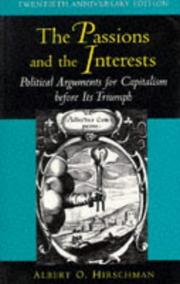
A short book on the Enlightenment argument that commerce would civilise the passions — the case Smith inherited rather than invented. Included because it explains why an eighteenth-century moral philosopher was writing about pin factories at all.
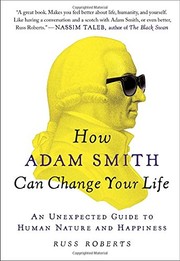
An unintimidating popular introduction, built around The Theory of Moral Sentiments rather than the Wealth. Read it as the bridge into Smith's own prose; it is the book that most reliably makes people want to read the next one.
Smith's own philosophy, and his life
IntermediateRead the book Smith considered his best, and understand the man who spent seventeen years on the Wealth
▸ Study plan for this stage
Pace: Nine to ten weeks. The Theory of Moral Sentiments is around 400 pages of eighteenth-century prose and needs five to six weeks at ten to fifteen pages a sitting — it is not difficult, but it is unhurried and rewards being read at its own pace. Phillipson's biography takes three to four weeks and can
- Sympathy in Smith's technical sense: not pity but the imaginative act of putting yourself in another's position and feeling a diminished version of what they feel
- The impartial spectator — the internalised judge we construct from others' responses, and the mechanism by which Smith derives conscience from social experience rather than from reason or revelation
- Propriety, merit and duty as the three parts of Smith's moral architecture, and the way each is built from the same sympathetic mechanism
- That Smith revised this book across his whole life, including a substantial revision in the year of his death, which is the strongest evidence for how he ranked his two works
- The invisible hand appearing here as well as in the Wealth, in a different argument, which is worth noticing before anyone tells you what the phrase means
- Phillipson on the Scottish Enlightenment and the friendship with Hume, and the intellectual milieu that made a science of human nature the obvious project
- The unwritten system: Smith intended a larger scheme of which the two books were parts, and burned his remaining manuscripts before he died
- That reading the moral book first is what stops a reader mistaking Smith for an apologist for selfishness — the single practical reason for this stage's placement
- Define sympathy as Smith uses it, and say how it differs from the ordinary modern sense. The whole book depends on the distinction.
- How does the impartial spectator get built? Reconstruct the developmental story Smith tells, and say what it requires about a person's upbringing.
- Smith uses the phrase invisible hand in both books, in different arguments. What is it doing here, and does that constrain how it should be read in the Wealth?
- From Phillipson, what was the larger system Smith planned, and what does its absence mean for how we read the two surviving books?
- Compare your paragraph from the last stage predicting what this book would be about with what it actually is. What surprised you most?
- Read Part I of The Theory of Moral Sentiments twice before continuing. Almost everything later in the book is an application of the machinery set out there.
- Write 300 words explaining the impartial spectator to someone who has not read Smith, using an example of your own rather than his.
- Track every appearance of self-interest in the moral book and note what Smith says about its limits. This is the direct preparation for reading the Wealth honestly.
- From Phillipson, build a one-page chronology of Smith's life — Glasgow, the tutorship in France, the seventeen years on the Wealth, the customs post. You will want it for context on the digressions.
Next up: With Smith's moral foundation and his life in hand, the remaining preparation is purely practical: knowing the Wealth's structure before you enter it.
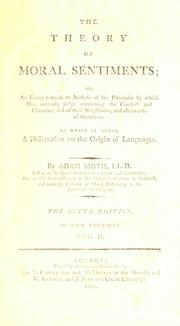
Smith revised this until the year he died and thought it the more important of his two books. Sympathy and the impartial spectator are the foundation the Wealth stands on, and reading it first is what stops you mistaking Smith for an apologist for selfishness.
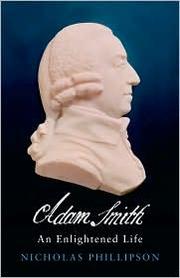
The modern biography, placing Smith in the Scottish Enlightenment beside Hume. It explains the project the two books were meant to be halves of, which is the single most useful thing to know before opening the Wealth.
The guides through the Wealth itself
IntermediateLearn the structure of the five books, which parts to read closely and which to skim, before starting
▸ Study plan for this stage
Pace: Five to six weeks. Norman's reassessment reads quickly and takes two to three weeks. Fleischacker's companion should be read straight through once here — two to three weeks — and then kept open beside the Wealth for months. Do not skip the straight-through reading; the map is what makes the territor
- The five-book structure of the Wealth and what each is for: division of labour and value, stock and accumulation, the historical progress of opulence, the systems of political economy, and the revenue of the sovereign
- Which parts reward close reading — book one and book four above all — and which are reference material for a first pass
- Norman's reconstruction of what Smith actually argued, and his separation of that from the free-market caricature built on selected sentences
- Norman's honesty about where Smith was wrong, which is a better test of a guide than its enthusiasm
- Smith on the merchants and manufacturers who conspire against the public, and on the labourer whose condition he treats as the measure of a society — passages routinely left out of the popular Smith
- Fleischacker's section-by-section organisation, which is why he functions as apparatus rather than as commentary to be read afterwards
- The digression on the value of silver as the standard place readers abandon the book, and the practical decision to treat it as reference
- That stopping after Fleischacker is a defensible outcome: if you want the argument rather than the book, you now have it
- Draw the five books and their subject matter from memory. If you cannot, reread Fleischacker's overview before going further.
- Which claims commonly attributed to Smith does Norman say he did not make? Check them against the list you wrote in stage one.
- Where does Norman think Smith was wrong? Do you find the criticisms internal to Smith's argument or external to it?
- Fleischacker is a philosopher writing about an economic text. What does that let him see, and what might it lead him to underweight?
- Decide now, in writing, whether you will read the Wealth itself. Give reasons. The path is designed so that stopping here is a real choice rather than a failure.
- Make a reading plan for the Wealth on one page: chapter ranges to read closely, to skim, and to consult. Fleischacker gives you everything you need to build it.
- Take five sentences of Smith commonly quoted in public argument and find, via Norman or Fleischacker, where each sits and what surrounds it. At least three will not mean what the quotation implies.
- Write 400 words on what Norman thinks Smith's project was, and mark where that differs from Heilbroner's account in stage one.
- Read Fleischacker's treatment of book one's chapters on value before you read Smith on value. It is the section where first readers most often decide the book is beyond them.
Next up: With a map, a companion and a decision made, the nine hundred pages become a project with a schedule rather than an obstacle.

A readable modern reassessment that reconstructs what Smith actually argued and separates it from the free-market caricature. Read it for the summary of the Wealth's argument and for its honesty about where Smith was wrong.
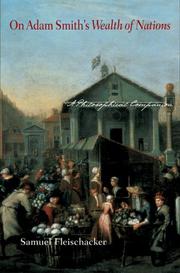
A philosophical companion organised to follow the Wealth's own structure, so it can be read section by section alongside. This is the apparatus of the path: keep it open, and use it to decide which of the historical digressions to read in full.
The Wealth of Nations
IntermediateRead the Wealth itself with a plan for its length, at a pace that assumes a few months
▸ Study plan for this stage
Pace: Four to six months. Ten to fifteen pages a sitting, four sittings a week, always with Fleischacker's corresponding section afterwards. Read book one and book four closely — allow six weeks each. Skim book three. Treat the digression on the value of silver as reference and consult rather than read it
- The division of labour and the pin factory, and Smith's less-quoted point that it is limited by the extent of the market
- Smith's theory of value and the distinction between natural and market price, which is book one's hardest stretch and the one Fleischacker is most needed for
- Book two on stock, capital and the distinction between productive and unproductive labour — the part later economists took most and modified most
- Book four's sustained attack on the mercantile system, which is the polemical heart of the work and the reason it was written
- Smith on merchants and manufacturers as a class whose interest is not the public's, and his warnings about combinations against the consumer
- Book five on the duties of the sovereign — defence, justice, public works, education — and the taxation principles that close the work
- Smith on the effects of the division of labour on the labourer, in book five, which sits uneasily beside the enthusiasm of book one and which he does not attempt to reconcile away
- The empirical bulk of the book: most of the nine hundred pages are historical evidence, and the doctrines occupy a small fraction of it
- State the argument of book four in three sentences. What was Smith arguing against, and who benefited from the system he attacked?
- Read the butcher-brewer-baker passage in place. What is the surrounding argument, and how does the popular use of it differ?
- In book five, Smith describes what the division of labour does to a worker's mind. Set that beside book one's account. Does Smith reconcile them, and should he have?
- Which of Smith's positions in book five would surprise a reader who knows him only from quotation? Name three, with page references.
- Return to the list of quoted claims you made in stage one. Which survived contact with the text, which did not, and which turned out to be half-right?
- Read each section against Fleischacker's corresponding chapter, always in that order. This is the discipline that makes the length survivable, and it is the same method used for any long primary text.
- Keep a running note of every empirical digression and mark whether you read, skimmed or skipped it. Being deliberate about that is what stops the silver chapters ending the project.
- After book four, write 500 words on Smith's case against mercantilism in your own words, then note which parts of it are about economics and which are about who captures a government.
- At the end, rewrite the paragraph you wrote in stage one predicting what Smith argued. Set the two versions side by side; the difference is what the months bought.
- Any complete edition serves. The Glasgow text is the scholarly standard, but a well-annotated paperback is the better first reading, and the annotations do the work an eighteenth-century reader would not have needed.
Next up: This is the end of the path. The natural next step is the readers who took Smith up and turned him — Ricardo, Malthus and Marx — where you can watch the argument you have just read being rebuilt into something Smith would not recognise.
The destination. Read book one and book four closely — the division of labour, value and the attack on mercantilism — skim book three, and treat the digression on silver as reference rather than reading. Any complete edition works; the Glasgow text is the scholarly standard, but a well-annotated paperback serves a first reading better.
Discussion
Keep reading
Paths that share books, cover the same subject, or open a related topic.