Understanding Adam Smith: The Best Books to Read, in Order
This curriculum builds a deep, layered understanding of Adam Smith — his life, his moral philosophy, his economics, and his contested legacy as the "founder of modern economics." Starting at an intermediate level, the path moves from accessible biography and context, through Smith's own foundational texts, and finally into serious scholarly debate about what Smith really meant and why it still matters today.
The Man Behind the Ideas
IntermediateUnderstand who Adam Smith was, the intellectual world he inhabited, and why his ideas were revolutionary — before tackling his primary texts.
▸ Study plan for this stage
Pace: 4–5 weeks, ~40–50 pages/day. Phillipson's biography (~400 pages) takes 2–3 weeks; Roberts' shorter work (~300 pages) takes 1–2 weeks. Build in time for reflection between books.
- Smith's formative years in Kirkcaldy and Glasgow: how his Scottish Enlightenment context shaped his thinking about human nature and society
- The intellectual ecosystem Smith inhabited: his relationships with Hume, the Glasgow literati, and the broader philosophical debates of his era
- Smith's dual intellectual project: moral philosophy (Theory of Moral Sentiments) and political economy (Wealth of Nations) as interconnected rather than contradictory
- The concept of sympathy as Smith's foundational answer to how humans understand each other and form moral judgments
- Smith's revolutionary insight that self-interest and social harmony are compatible through markets and the 'invisible hand'
- How Smith's ideas were radical departures from mercantilist and feudal economic thinking of his time
- The practical wisdom Smith advocated: how his philosophy applies to individual character, relationships, and life choices beyond economics
- Why Smith's ideas remain relevant: how his framework for understanding human motivation and social order applies to modern life
- What were the key intellectual influences on Adam Smith during his formative years, and how did the Scottish Enlightenment shape his worldview?
- How did Smith's concept of sympathy function as the cornerstone of his moral philosophy, and why was it revolutionary for his time?
- What is the relationship between Smith's Theory of Moral Sentiments and his Wealth of Nations—are they contradictory or complementary, and why?
- How did Smith's ideas about self-interest and the market challenge the prevailing economic and social assumptions of 18th-century Europe?
- What does Roberts mean by 'how Adam Smith can change your life,' and what practical wisdom does Smith offer beyond economics?
- Why were Smith's ideas considered dangerous or radical by some of his contemporaries, and what made them ultimately influential?
- Create a timeline of Smith's life (birth to death) alongside major historical and intellectual events of the 18th century. Identify 3–4 pivotal moments that shaped his thinking.
- Read Phillipson's account of Smith's relationship with David Hume and write a 1-page reflection on how their friendship influenced Smith's intellectual development.
- Identify and summarize 3–4 key passages from Phillipson where Smith's Scottish context directly shaped a specific idea. Explain the connection.
- After finishing Roberts' book, list 5 practical life lessons from Smith's philosophy and write a short paragraph on how each applies to a real situation in your own life (relationships, work, decision-making).
- Compare Smith's view of human motivation (from both books) with one modern economic or psychological theory you're familiar with. Write 2–3 pages on where they align and diverge.
- Create a visual map (concept map or diagram) showing how sympathy, self-interest, moral judgment, and market behavior interconnect in Smith's thought according to both Phillipson and Roberts.
Next up: This stage establishes Smith as a historical figure embedded in a specific intellectual tradition and reveals the coherence of his thought across moral and economic domains, preparing you to engage directly with his primary texts (Theory of Moral Sentiments and Wealth of Nations) with deeper understanding of his intentions and the revolutionary nature of his arguments.
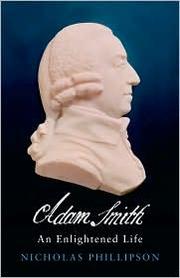
The definitive modern biography of Smith, placing him squarely in the Scottish Enlightenment. Reading this first gives you the intellectual and personal context needed to understand why Smith wrote what he wrote and in what order.
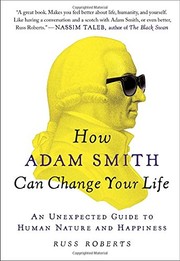
A highly readable introduction to The Theory of Moral Sentiments that distills Smith's ethical ideas into modern language. It builds the moral vocabulary you'll need before reading Smith's own prose.
Smith's Moral Foundation
IntermediateMaster The Theory of Moral Sentiments — Smith's first and, by his own account, most important book — understanding sympathy, the impartial spectator, and the moral psychology underpinning all his later economics.
▸ Study plan for this stage
Pace: 8–10 weeks, ~40–50 pages/day (TMS is ~600 pages; allow time for re-reading dense passages and reflection)
- Sympathy as imaginative projection: the mechanism by which we enter others' emotional states and form moral judgments
- The impartial spectator: the internalized observer who evaluates our conduct from a detached, universal perspective
- Moral sentiments vs. natural sentiments: how propriety, merit, and demerit emerge from our capacity to sympathize with others' motivations
- The role of imagination and self-deception: how we rationalize our own conduct while judging others' more harshly
- Virtue as the alignment of our passions with what the impartial spectator would approve
- The social origin of morality: how moral rules and judgments arise from human interaction, not from reason alone
- Resentment and gratitude as foundational moral emotions that structure justice and beneficence
- What does Smith mean by sympathy, and how does it differ from modern notions of empathy or pity?
- How does the impartial spectator function as an internal moral authority, and what role does imagination play in its operation?
- Why does Smith argue that we judge our own conduct differently from others' conduct, and what does this reveal about moral psychology?
- What is the relationship between propriety (the suitability of a response) and merit (the worthiness of reward or punishment)?
- How do natural sentiments (like anger or grief) become moral sentiments through the lens of sympathy?
- What is Smith's account of how moral rules and virtues arise from social interaction rather than from abstract reason?
- Close-read Part I, Section 1 (on sympathy) multiple times, pausing to apply Smith's framework to a recent interpersonal conflict you witnessed—identify the spectator's perspective vs. the agent's perspective
- Keep a 'sympathy journal' for 2–3 weeks: daily record moments when you successfully (or failed to) sympathize with someone else's situation, noting what Smith's theory predicts about your judgment
- Debate exercise: argue both sides of a moral disagreement (e.g., justified anger, fair punishment) using Smith's framework—how would the impartial spectator evaluate each party's sentiments?
- Map the impartial spectator's operation in your own moral decision-making: write a case study of a time you felt internal conflict, identifying how you internalized external judgment
- Comparative analysis: choose one modern moral dilemma (social media callout, workplace conflict, political disagreement) and analyze it through Smith's sympathy and propriety framework
- Teach-back exercise: explain to someone unfamiliar with Smith why he thinks moral judgments arise from sympathy rather than reason, using concrete examples from TMS
Next up: This stage establishes the psychological and moral foundations that underpin Smith's economic theory—understanding sympathy and the impartial spectator as the roots of human motivation prepares you to see how self-interest, division of labor, and market exchange operate within a framework of moral constraint and social interdependence.
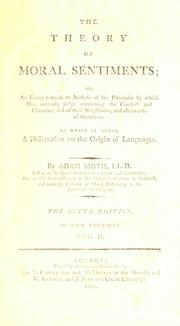
Smith's own masterwork on ethics and human motivation. Reading it before The Wealth of Nations is essential: it establishes the 'impartial spectator' and the social nature of human beings that make his economics coherent rather than coldly self-interested.
The Economics Itself
IntermediateRead and genuinely understand The Wealth of Nations — its arguments about the division of labor, markets, value, and the role of government — armed with the moral framework from Stage 2.
▸ Study plan for this stage
Pace: 8–10 weeks, ~40–50 pages/day (Heilbroner: 2–3 weeks; Wealth of Nations: 5–7 weeks)
- The division of labor as the engine of productivity and wealth creation—how specialization increases output and enables markets
- The invisible hand: how self-interest, competition, and market mechanisms coordinate economic activity without central direction
- Value theory: the distinction between use-value and exchange-value, and how labor determines price in a market economy
- The role of capital accumulation and investment in driving economic growth and the wealth of nations
- Smith's nuanced view of government: where markets fail (public goods, education, infrastructure) and where state intervention is justified
- How Smith reconciles self-interest with moral sentiments—the merchant pursuing profit can serve the public good through competition
- The historical progression of economic systems (hunting, pastoral, agricultural, commercial) and what drives transitions
- The critique of mercantilism and monopoly: how trade restrictions and exclusive privileges harm consumers and economic efficiency
- How does the division of labor increase productivity, and what are its limits according to Smith?
- What does Smith mean by the 'invisible hand,' and how does it operate in markets for labor, goods, and capital?
- How does Smith distinguish between use-value and exchange-value, and what role does labor play in determining exchange-value?
- Where does Smith believe government intervention is necessary, and where does he argue markets should be left alone?
- How does Smith's moral philosophy (from Stage 2) inform his economic arguments—particularly regarding self-interest and the common good?
- What is Smith's critique of mercantilism, and why does he argue free trade benefits all trading nations?
- Map the division of labor in a modern industry (e.g., smartphone manufacturing, coffee production): identify each specialized step and calculate how output would differ without specialization.
- Find three real-world examples of the invisible hand at work—where individual profit-seeking produces unintended public benefits—and explain the mechanism in each case.
- Analyze a modern price dispute (e.g., why do nurses earn less than software engineers?): use Smith's labor theory of value to explain the wage difference, then identify where his theory breaks down.
- Identify a market failure in your own economy (e.g., pollution, education access, infrastructure): explain why the invisible hand fails here and propose a Smithian solution (not necessarily government intervention).
- Read a contemporary trade policy debate (tariffs, protectionism, etc.) and write a 2–3 page response from Smith's perspective, citing specific arguments from Wealth of Nations.
- Create a visual diagram showing how capital accumulation → investment → division of labor → productivity growth → wealth creation, using examples from Smith's text.
Next up: This stage equips you with a rigorous understanding of Smith's economic system—how markets work, where they fail, and the role of government—which prepares you to evaluate his legacy, critics, and how his ideas were misinterpreted or evolved in later economic thought.

A brilliant, readable survey of the great economic thinkers that devotes substantial attention to Smith. Reading this first orients you to the big ideas and debates in The Wealth of Nations before you enter Smith's dense 18th-century prose.
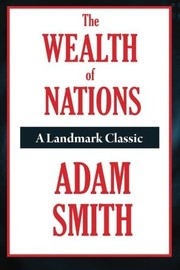
The primary text itself — the founding document of modern economics. With biography, moral philosophy, and Heilbroner's framing in hand, you can now read Smith's own words with full comprehension and critical appreciation.
Scholarly Depth & the 'Adam Smith Problem'
ExpertEngage with serious academic debate: Is there a contradiction between Smith's moral and economic works? Who was the 'real' Smith, and what did he actually found?
▸ Study plan for this stage
Pace: 4–5 weeks, ~40–50 pages/day, with 2–3 days per week dedicated to note-taking and reflection on key arguments
- The 'Adam Smith Problem': the apparent tension between Smith's emphasis on sympathy and moral sentiment in The Theory of Moral Sentiments versus self-interest in The Wealth of Nations
- Otteson's thesis that Smith's works are fundamentally unified through a consistent framework of human motivation and social order
- The impartial spectator as the cornerstone of Smith's entire philosophical system, bridging ethics and economics
- How Smith's concept of 'self-love' differs from narrow selfishness and operates within a broader moral ecology
- The role of markets as mechanisms for channeling individual motivation toward social benefit, grounded in moral foundations
- Smith's historical and philosophical context: how Enlightenment thought shaped his approach to human nature and commerce
- The relationship between individual liberty, moral restraint, and economic flourishing in Smith's integrated vision
- What is the 'Adam Smith Problem,' and what does Otteson argue is the solution to this apparent contradiction?
- How does the concept of the impartial spectator function as a unifying principle across Smith's moral and economic thought?
- In what ways does Otteson demonstrate that Smith's understanding of self-love is compatible with moral sentiment and social concern?
- How does Otteson use Smith's historical context and philosophical influences to support his interpretation of Smith's unified vision?
- What role do markets play in Smith's system, and how are they grounded in moral principles rather than amoral mechanism?
- How would you defend or critique Otteson's reading of Smith against alternative scholarly interpretations of the Adam Smith Problem?
- Create a two-column chart comparing passages from The Theory of Moral Sentiments and The Wealth of Nations on human motivation; annotate how Otteson would reconcile apparent tensions
- Write a 500-word essay: 'Is there really an Adam Smith Problem?' using Otteson's framework to argue for or against the existence of a genuine contradiction
- Map the impartial spectator concept across Otteson's argument: trace how it appears in different contexts and explain its unifying function
- Conduct a close reading of one chapter from Otteson's book; identify his main claim, evidence, and counterarguments, then assess the strength of his reasoning
- Debate exercise: prepare arguments both for and against Otteson's thesis, then present both sides to identify which interpretation is more persuasive and why
- Create an annotated timeline of Smith's intellectual development (drawing from Otteson's historical contextualization) showing how his ideas evolved and remained consistent
Next up: This stage equips you to move beyond the 'Adam Smith Problem' as a puzzle and instead see Smith as a coherent thinker whose insights on human nature, morality, and markets remain relevant to contemporary debates—preparing you to apply Smithian analysis to modern economic and ethical questions.
Otteson argues that Moral Sentiments and Wealth of Nations share a single unified framework — directly addressing the famous 'Adam Smith Problem' of apparent contradiction. This is the key scholarly bridge between the two books.
Legacy, Influence & Modern Economics
ExpertUnderstand how Smith's ideas shaped — and were distorted by — the economics that followed, and evaluate his true place in the history of economic thought.
▸ Study plan for this stage
Pace: 6–7 weeks, ~40 pages/day (accounting for dense economic analysis and cross-referencing between texts)
- How Smith's invisible hand concept was misappropriated by later economists to justify laissez-faire ideology beyond his original intent
- The evolution of economic thought from Smith through classical, neoclassical, and modern schools, and where each distorted or refined his ideas
- Smith's actual views on markets, government intervention, and moral philosophy—versus the caricature of 'pure free-market Adam Smith'
- The role of individual economists (Ricardo, Marshall, Keynes, etc.) in reshaping Smith's legacy and creating competing economic paradigms
- How Nasar's narrative approach reveals the human stakes and intellectual struggles behind economic theory-building
- Chang's framework for evaluating economic schools critically: understanding their assumptions, strengths, and blind spots rather than accepting any single orthodoxy
- The tension between Smith's descriptive observations of capitalism and the prescriptive ideologies built on his work
- How modern economics (behavioral, institutional, heterodox approaches) challenges or resurrects aspects of Smith's original thinking
- What did Adam Smith actually say about the invisible hand, and how did later economists distort this concept to justify pure laissez-faire economics?
- Trace the intellectual lineage from Smith through at least three major economic schools (e.g., classical, neoclassical, Keynesian): what did each preserve, reject, or misinterpret from Smith?
- How does Nasar's biographical approach to economic history (through figures like Malthus, Ricardo, Marshall, Keynes) illuminate the gap between Smith's ideas and their later applications?
- According to Chang, what are the core assumptions and blind spots of mainstream neoclassical economics, and how might Smith's broader moral philosophy offer a corrective?
- What role did Smith's Theory of Moral Sentiments play in his economic thinking, and why have most economists ignored it?
- How do modern heterodox and behavioral economics approaches represent a return to—or a departure from—Smith's original insights about human behavior and markets?
- Create a timeline mapping Smith's key ideas → how each school of thought (classical, neoclassical, Keynesian, etc.) interpreted them → modern critiques. Use Nasar's chapters as primary reference points.
- Read a passage from Smith's Wealth of Nations (the invisible hand section, Book IV, Chapter II) and a passage from Theory of Moral Sentiments. Write a 2-page analysis of how these two works together complicate the 'selfish Adam Smith' myth.
- For each major economist Nasar profiles (Malthus, Ricardo, Marshall, Keynes, etc.), write a one-paragraph summary of: (a) what they took from Smith, (b) what they rejected, (c) how their interpretation shaped later economics.
- Using Chang's framework, select one economic policy debate from the news (e.g., minimum wage, regulation, inequality). Analyze it through the lens of at least three different economic schools; identify the hidden assumptions in each.
- Debate exercise: Prepare arguments for 'Smith would support this policy' and 'Smith would oppose this policy' for a contemporary issue (e.g., universal basic income, antitrust enforcement, carbon taxes). Ground both sides in textual evidence from Nasar and Chang.
- Create a visual comparison chart: Smith's actual views (from Nasar's historical reconstruction) vs. the 'neoclassical Smith' vs. the 'Keynesian critique of Smith' vs. modern heterodox interpretations. Cite specific passages from both books.
Next up: This stage equips you to recognize how economic orthodoxies are constructed, contested, and revised—preparing you to evaluate contemporary economic debates and alternative schools of thought with historical awareness rather than ideological acceptance.
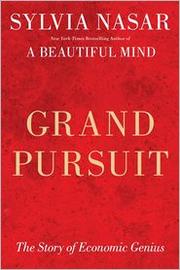
Traces the arc of economic thought from Smith through Marx, Marshall, Keynes, and beyond, showing exactly what Smith founded, what he got right, and where later thinkers departed from or built upon him.

A critically-minded survey of economic schools that explicitly revisits Smith's legacy and challenges the free-market orthodoxy often attributed to him — the perfect capstone for evaluating Smith's real, contested influence.
Discussion
Keep reading
Paths that share books, cover the same subject, or open a related topic.