The History of Capitalism: Best Books, in Order
This curriculum traces capitalism from its mercantile and agrarian origins through industrialization, empire, financial globalization, and the crises of the modern era. Starting at an intermediate level, each stage builds conceptual vocabulary—markets, class, capital accumulation, imperialism—before the next stage demands it, culminating in sophisticated structural and critical analyses of how capitalism shapes the world today.
Origins & Foundations
IntermediateUnderstand how capitalism emerged from feudalism, mercantilism, and early market societies, and grasp the core vocabulary (markets, commodities, capital, labor) needed for everything that follows.
▸ Study plan for this stage
Pace: 8–10 weeks, ~40–50 pages/day. Heilbroner (2–3 weeks), Wood (2–3 weeks), Smith (3–4 weeks). Allocate extra time for Smith given its density and foundational importance.
- The transition from feudalism to capitalism: how property relations, labor systems, and market mechanisms fundamentally changed
- Mercantilism as a bridge system: state-regulated trade that preceded competitive market capitalism
- Capital as accumulated wealth deployed for profit, distinct from mere money or goods
- The commodification of labor: how labor became a bought-and-sold commodity rather than a feudal obligation or artisanal craft
- Markets and price mechanisms: how supply, demand, and competition coordinate economic activity without central planning
- The division of labor and specialization: how breaking production into tasks increases productivity and interdependence
- Self-interest and the 'invisible hand': how individual profit-seeking can generate collective benefit under competitive conditions
- Primitive accumulation: the historical process by which capital was first concentrated (enclosure, colonialism, slavery)
- How did capitalism emerge from feudalism, and what were the key differences in property ownership, labor relations, and market mechanisms between the two systems?
- What role did mercantilism play in the transition to capitalism, and why did mercantilist policies eventually give way to competitive markets?
- How does Heilbroner characterize the worldly philosophers (Mercantilists, Smith, Ricardo, Marx), and what were their central insights about how economies work?
- According to Wood, what material and social conditions in England made it the birthplace of capitalism, and how did this differ from other European societies?
- What is the division of labor, why does Smith argue it increases productivity, and what are its limits and social consequences?
- How does Smith explain the relationship between self-interest, competition, and the 'invisible hand,' and what assumptions must hold for this mechanism to work?
- Create a comparative table: feudalism vs. mercantilism vs. early capitalism. For each system, fill in columns for property relations, labor systems, role of the state, and how prices/value are determined.
- Read Heilbroner's chapters on the Mercantilists and Smith; write a 2–3 page synthesis explaining how mercantilist thinking differs from Smith's vision of competitive markets.
- After Wood, map the historical conditions Wood identifies as necessary for capitalism (enclosure, wage labor, competitive markets, etc.) and find specific examples she cites for each.
- Close-read Smith's famous pin factory passage (Book I, Chapter 1 of Wealth of Nations). Diagram the division of labor, calculate the productivity gain, and write a paragraph on what Smith sees as both the benefit and the danger of extreme specialization.
- Choose one commodity (e.g., cloth, grain, or labor itself). Trace how its production and exchange would differ under feudalism, mercantilism, and Smith's competitive capitalism, using concepts from all three books.
- Debate exercise: Pair up. One person argues for mercantilist protections (using period arguments), the other for Smith's free trade. Use evidence from the texts to support each position.
Next up: This stage establishes the historical origins and theoretical vocabulary of capitalism—the transition from feudal and mercantilist systems, the core mechanisms of markets and labor commodification, and Smith's optimistic vision of self-regulating competition—which prepares you to examine how capitalism actually developed, evolved, and generated internal contradictions and crises in subsequent stag

A lucid, narrative introduction to the great economic thinkers from Smith to Marx to Keynes—builds the intellectual map of capitalism's self-understanding before diving into history proper.
Argues compellingly that capitalism was a specific historical invention rooted in English agrarian property relations, not a natural outgrowth of trade—establishes the analytical distinction between markets and capitalism itself.
The foundational text of capitalist thought; reading key books (I and III) here gives the reader the original framework of division of labor, markets, and growth that all later historians argue with or against.
Merchants, Money & Early Global Trade
IntermediateTrace how long-distance trade, merchant capital, and the first global commodity chains connected Europe, Asia, Africa, and the Americas and laid the material groundwork for industrial capitalism.
▸ Study plan for this stage
Pace: 12–14 weeks. Start with Braudel (~600 pages) at 40–50 pages/week over 12 weeks, then Thomas (~500 pages) at 50–60 pages/week over 8–9 weeks. Overlap final weeks of Braudel with early weeks of Thomas to maintain momentum.
- The Mediterranean as an integrated economic system: how geography, climate, and resources shaped interconnected trade networks across Europe, North Africa, and the Levant
- Merchant capital and the rise of merchant-bankers: how traders accumulated wealth and power through long-distance commerce, credit systems, and speculation
- Commodity chains and bulk trade: the movement of grain, timber, metals, and other staples across vast distances and the infrastructure required to sustain them
- The Atlantic slave trade as a global commodity chain: how enslaved people became a central commodity linking Africa, Europe, and the Americas in a triangular trade system
- Capital accumulation and primitive accumulation: how profits from trade and slavery were reinvested and concentrated, creating the wealth base for industrial capitalism
- The role of violence, state power, and monopoly: how merchants and states used force to control trade routes, eliminate competition, and extract resources
- Demographic and ecological consequences: how global trade reshaped populations, disease patterns, and ecosystems across continents
- How did the Mediterranean's geography, climate, and resource distribution create the conditions for integrated long-distance trade, and what role did merchant capital play in organizing this system?
- What were the main commodity chains described in Braudel's Mediterranean world, and how did the movement of bulk goods like grain and timber differ from luxury trade?
- How did merchant-bankers accumulate capital and power in the Mediterranean world, and what role did credit, speculation, and monopoly practices play in their success?
- According to Thomas, how was the Atlantic slave trade structured as a global commodity chain, and what role did European, African, and American actors play in sustaining it?
- How did the profits and capital accumulated from Mediterranean trade and the slave trade create the material foundation for industrial capitalism?
- What were the major human and ecological consequences of early global trade networks, as described in both Braudel and Thomas?
- Create a detailed map of Mediterranean trade routes in Braudel's period, marking major ports, commodities, and merchant networks. Annotate with examples from the text of how geography constrained or enabled trade.
- Trace a single commodity (grain, timber, or metals) through Braudel's Mediterranean world: identify producers, merchants, routes, prices, and end consumers. Write a 2–3 page narrative of its journey.
- Construct a timeline of major merchant families or trading companies mentioned in Braudel (e.g., Genoese, Venetian, or Spanish traders). Note their capital sources, monopolies, and political connections.
- Build a diagram of the Atlantic slave trade triangle using Thomas: show the routes, goods exchanged at each leg (manufactured goods, enslaved people, sugar/tobacco), and the actors involved (European merchants, African traders, American planters).
- Compare two commodity chains from the readings—one from Braudel's Mediterranean and one from Thomas's Atlantic system. Write a 3–4 page analysis of their similarities, differences, and how they connected.
- Analyze a primary source excerpt (provided or from the texts) describing a merchant's account or a slave trade transaction. Identify the mechanisms of capital accumulation and the role of violence or coercion.
Next up: This stage establishes how merchant capital and global commodity chains created concentrated wealth and the material conditions for industrial capitalism; the next stage will examine how this accumulated capital, combined with technological innovation and labor systems, transformed into industrial production and the factory system.

Braudel's landmark work introduces the concept of long-run structural time and shows how geography, trade networks, and material life underpin economic history—essential methodological grounding.
Documents how the Atlantic slave trade was central to the accumulation of merchant capital and the financing of early industry, making the moral and material costs of capitalism's rise impossible to ignore.
Industrialization & the Making of Modern Capitalism
IntermediateUnderstand the Industrial Revolution as a social and political transformation—not just a technological one—including the creation of the working class, the factory system, and the first global industrial economy.
▸ Study plan for this stage
Pace: 12–14 weeks, ~40–50 pages/day. Hobsbawm (4 weeks), Marx (6 weeks with re-reading), Thompson (3–4 weeks). Build in 1–2 weeks for review and synthesis.
- The Industrial Revolution as a dual revolution: technological AND social/political upheaval that reshaped class relations and global power
- The creation of the working class as a historical process, not a natural category—how factory discipline, wage labor, and urbanization forged new identities and consciousness
- Capital accumulation and the logic of capitalism: how surplus value, competition, and reinvestment drove industrialization and shaped labor exploitation
- The factory system as a new form of social organization: the concentration of workers, machinery, and production under centralized control
- The emergence of a global industrial economy: how Britain's industrial dominance created colonial dependencies and reshaped international trade
- The relationship between economic structures and political/cultural responses: radical movements, trade unions, and working-class self-organization as reactions to industrial capitalism
- Historical contingency vs. inevitability: understanding industrialization as contested and shaped by human agency, not predetermined
- How did the Industrial Revolution function as both a technological and social transformation? What made it revolutionary beyond just new machines?
- According to Marx, how does capital accumulation drive the Industrial Revolution, and what role does surplus value extraction play in this process?
- How did the factory system create the working class as a distinct social group? What were the material conditions and experiences that forged working-class consciousness?
- What evidence does Thompson provide that the English working class was 'made' through struggle and experience rather than simply created by industrialization?
- How did Britain's industrial dominance reshape global economic relationships and colonial structures during this period?
- What were the major forms of working-class resistance and organization during early industrialization, and what do they reveal about workers' agency?
- Timeline exercise: Create a detailed chronology of key industrial, political, and social events (1789–1850s) using Hobsbawm, noting how technological innovations coincide with political upheaval and class formation.
- Marx's theory application: Select one specific industry or factory type from Thompson or Hobsbawm and trace through Marx's concepts of surplus value, constant capital, and variable capital—show how the theory illuminates the concrete historical case.
- Working-class biography: Choose one figure or group from Thompson (e.g., handloom weavers, Luddites, early trade unionists) and write a 2–3 page analysis of how their experience embodies the 'making' of the working class.
- Comparative analysis: Compare Hobsbawm's and Thompson's interpretations of a single event or period (e.g., the 1830s–40s). Where do they agree? Where do they emphasize different causes or meanings?
- Primary source close-reading: Find a primary document (factory regulations, workers' petition, parliamentary testimony, or radical broadside) from the period and analyze it through the lens of all three authors' arguments.
- Concept mapping: Create a visual diagram showing how capital accumulation → factory system → working-class formation → political organization, using specific examples from each book to populate the connections.
Next up: This stage establishes industrialization as the material foundation and social crucible of modern capitalism; the next stage will likely explore how these structures evolved, fractured, or were challenged in the late 19th and 20th centuries—whether through imperialism, socialist revolution, or new forms of capital organization.

Hobsbawm's masterful synthesis covers 1789–1848, showing how the 'dual revolution' (French political + British industrial) created the world capitalism inhabits—essential context before tackling Marx.
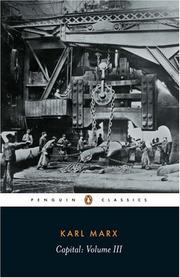
Volume I is the most rigorous structural analysis of how industrial capitalism works—surplus value, exploitation, accumulation—and remains the unavoidable critical reference point for all subsequent history.
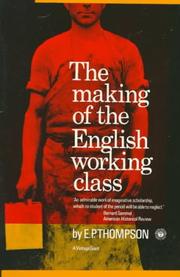
Restores human agency to economic history by showing how workers actively shaped their own class identity; a necessary corrective to purely structural accounts after reading Marx.
Empire, Finance & Global Capitalism
ExpertAnalyze how capitalism expanded globally through imperialism, financial markets, and colonial extraction, and understand the structural tensions—crises, inequality, dependency—that define the 20th-century world economy.
▸ Study plan for this stage
Pace: 12–14 weeks, ~40–50 pages/day. Lenin (4–5 weeks, ~30 pages/day); Polanyi (4–5 weeks, ~40 pages/day); Davis (3–4 weeks, ~50 pages/day). Build in 1–2 weeks for synthesis and review.
- Monopoly capitalism and the concentration of capital: how industrial monopolies, cartels, and financial institutions centralize economic power across borders
- Finance capital as the dominant force: the fusion of industrial and banking capital, and how credit systems and stock markets drive imperial expansion
- Imperialism as economic necessity: how mature capitalist states compete for markets, raw materials, and investment outlets in colonized territories
- The structural integration of colonial economies: how extraction, debt, and unequal trade relationships lock peripheral regions into dependency and underdevelopment
- The double movement and market disembedding: how capitalism's expansion creates social and ecological crises that provoke protective counter-movements
- Ecological and human costs of global integration: how imperial capitalism's pursuit of profit generates famines, environmental destruction, and mass mortality in colonized regions
- Systemic contradictions and crisis: how imperialism, financial speculation, and uneven development create the conditions for wars, depressions, and revolutionary upheaval
- According to Lenin, what is the relationship between monopoly capitalism and imperialism, and how does finance capital differ from industrial capital in driving colonial expansion?
- How does Polanyi's concept of the 'double movement' explain the social and political backlash against market expansion, and what role do protective institutions play in this dynamic?
- What mechanisms of extraction and dependency did Davis identify in Late Victorian Holocausts, and how did colonial integration into global markets intensify vulnerability to ecological crises?
- How do the three texts together explain why capitalism's global expansion generates both unprecedented wealth concentration and systemic instability, inequality, and human suffering?
- What is the relationship between financial markets, colonial resource extraction, and the famines Davis describes—how are they structurally connected?
- How do the tensions between profit-seeking, market integration, and social/ecological sustainability that emerge in these texts foreshadow 20th-century crises?
- Create a detailed diagram mapping the flow of capital, commodities, and debt between imperial centers (Britain, France, Germany) and colonial peripheries (India, Africa, China) using evidence from Lenin and Davis; annotate with specific examples of monopolies, cartels, and financial instruments.
- Write a comparative essay (2,000–2,500 words) analyzing how Lenin's theory of finance capital explains the mechanisms of extraction Davis documents in the Indian and Chinese famines—use specific textual evidence from both.
- Construct a timeline of major financial crises, imperial wars, and social upheavals (1870–1920) and annotate it with Polanyi's concept of the double movement—identify moments where protective counter-movements emerged in response to market disembedding.
- Select one colonial region (India, Egypt, Congo, or another) and trace its integration into global capitalism using all three texts: map the shift from pre-capitalist to capitalist relations, identify the financial instruments and monopolies involved, and analyze the human/ecological consequences.
- Debate exercise: Divide into two groups—one arguing that imperialism was a necessary stage of capitalist development (Lenin's framework), the other that it was a catastrophic extraction system (Davis's evidence). Use textual evidence from all three books to support your position.
- Create an annotated reading guide for one chapter from each book (e.g., Lenin's chapter on finance capital, Polanyi's chapter on the market economy, Davis's chapter on the Bengal famine) that identifies the core argument, key evidence, and connections to the other texts.
Next up: This stage establishes the structural logic of global capitalism—how it expands through imperialism, finance, and extraction—preparing you to examine how these contradictions erupted into 20th-century crises (wars, revolutions, depressions) and shaped the modern world system.

A short, sharp argument that monopoly capital and colonial empire are not aberrations but logical outcomes of capitalist development—sets up the dependency and world-systems debates that follow.

Polanyi's landmark study of how the self-regulating market was constructed—and how society fought back—is indispensable for understanding the political instability of 19th- and 20th-century capitalism.

Shows how free-market imperialism turned El Niño famines into mass death events across Asia, Africa, and Latin America—grounds abstract theories of empire in devastating empirical detail.
The Modern Economy: Crises, Neoliberalism & the Present
ExpertSynthesize the full arc of capitalism's history to understand the post-1970s neoliberal turn, financialization, rising inequality, and the ongoing debates about capitalism's future.
▸ Study plan for this stage
Pace: 8–10 weeks, ~40–50 pages/day (accounting for dense theoretical material and data-heavy sections; slower pace for chapters on capital dynamics and inequality trends)
- Neoliberalism as a class project: Harvey's argument that neoliberalism was a deliberate political-economic strategy to restore capitalist class power after the 1970s crisis, not merely a neutral policy shift
- Spatial fixes and accumulation by dispossession: how capitalism resolves crises through geographic expansion, privatization, and the seizure of public/common assets
- The financialization of capitalism: the explosive growth of financial markets, debt instruments, and speculative activity as a dominant feature of post-1980s economies
- Capital concentration and wealth inequality: Piketty's empirical demonstration that r > g (return on capital exceeds growth rate) drives long-term inequality, reversing mid-20th-century egalitarian trends
- The role of the state in neoliberalism: how governments actively construct and enforce neoliberal markets rather than simply 'stepping back'
- Globalization and labor arbitrage: how neoliberalism enabled capital mobility while constraining labor, reshaping production networks and class structures
- Data-driven inequality analysis: reading historical tax records, wealth surveys, and national accounts to understand distributional patterns across centuries
- Debates on capitalism's future: competing visions (reform vs. revolution, degrowth vs. green growth, stakeholder capitalism vs. socialism) grounded in historical analysis
- What were the economic and political conditions of the 1970s crisis that prompted the neoliberal turn, and how did Harvey characterize neoliberalism as a response?
- Explain the concept of 'accumulation by dispossession' with at least two historical examples from Harvey's work. How does this differ from classical Marxist accounts of primitive accumulation?
- What is Piketty's central argument about the relationship between the rate of return on capital (r) and economic growth (g), and why does he claim this dynamic drives inequality?
- Compare the mid-20th-century 'Great Compression' of inequality with the post-1980s divergence. What structural factors does Piketty identify as responsible for each period?
- How has financialization transformed capitalism since the 1980s, and what role does Harvey assign to financial markets in sustaining neoliberal accumulation?
- What does Piketty propose as policy solutions to rising inequality, and how do these proposals relate to or diverge from Harvey's more radical critique of neoliberalism?
- Create a timeline of neoliberal 'turning points' (1973 Chile coup, 1979 Thatcher, 1980 Reagan, 1989 Fall of Berlin Wall, 1990s globalization, 2008 financial crisis) and annotate each with Harvey's explanation of how neoliberalism was implemented and what crises it addressed
- Select one case of 'accumulation by dispossession' from Harvey (e.g., privatization of water in Bolivia, land grabs in Africa, or post-Soviet asset stripping) and research its details; write a 2–3 page analysis showing how it fits Harvey's framework
- Reconstruct Piketty's inequality data for your own country (or a country of interest) using available tax records or World Inequality Database; create visualizations showing the r > g dynamic and compare to Piketty's global findings
- Debate exercise: Organize a structured discussion where one group argues Piketty's reform proposals (progressive taxation, wealth taxes) can save capitalism, while another argues Harvey's point that neoliberalism's contradictions require systemic change; ground arguments in specific passages from both texts
- Trace the financialization of a specific sector (housing, healthcare, education, or agriculture) from Harvey's neoliberal era to the present; document how financial instruments (securitization, derivatives, private equity) have reshaped it and affected inequality
- Write a comparative policy memo: given Piketty's data on inequality and Harvey's critique of neoliberalism, design a 10-year economic reform program and defend it against both authors' critiques
Next up: This stage equips you with a comprehensive historical and analytical framework for understanding contemporary capitalism's contradictions and competing futures, positioning you to engage with specialized debates on alternatives (socialism, degrowth, stakeholder models) or deeper dives into specific crises (climate, pandemic, debt) in subsequent stages.
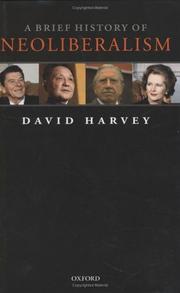
Harvey provides the clearest account of how the post-1970s shift to deregulation, financialization, and austerity was a deliberate political project to restore ruling-class power—bridges history and the present.

A data-rich, long-run analysis of wealth and income inequality across capitalist economies; the ideal capstone because it forces the reader to evaluate the entire historical arc with empirical rigor.
Discussion
Keep reading
Paths that share books, cover the same subject, or open a related topic.