Start with Robert Heilbroner's The worldly philosophers. Its chapter on Smith is the best short account of what he was doing and why it was startling, and the chapters around it — on Malthus, Ricardo, Marx, Keynes — show you the argument Smith started and who took it up. It is the cheapest possible orientation before you open The Wealth of Nations itself.
Then be realistic about the destination. It runs to about a thousand pages across five books, and large stretches are eighteenth-century policy dispute: corn bounties, the herring fishery, a digression on the value of silver over four centuries that defeats nearly everyone. The famous phrase about the invisible hand appears exactly once in the whole work. Most readers should read Book I in full, sample Book II, take the argument against mercantilism in Book IV, and dip into Book V on taxation and public works. Reading it cover to cover is a project, not a prerequisite.
The world before economics existed
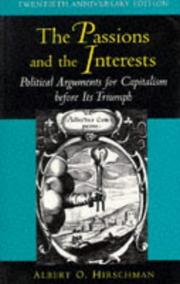
Albert Hirschman's The passions and the interests is short, elegant and does something no other book here does: it reconstructs how commerce came to be seen as a civilising force rather than a vice, in the century before Smith wrote. It explains the intellectual climate that made The Wealth of Nations possible instead of scandalous.
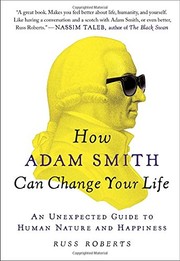
Russ Roberts's How Adam Smith can change your life is the friendly entry point, an attempt to read Smith's moral philosophy as practical advice about living among other people. It is deliberately light and unashamedly a work of advocacy for its author's reading of Smith; take it as an invitation rather than as scholarship.
Smith wrote two books, and the first is not optional
The theory of moral sentiments is the book Smith himself considered his main work, and he revised it until the year he died. It builds morality out of sympathy and the judgement of an imagined impartial spectator, and it is warmer, more psychological and more readable than the economics. Reading it changes what The Wealth of Nations looks like — self-interest in the later book is one motive among many in a mind Smith has already described at length, not a theory of human nature.
Nineteenth-century German scholars made a great deal of the supposed contradiction between the two books, a debate that came to be known as the Adam Smith Problem. Most Smith scholars now regard it as a misreading, though the relationship between the two works is still genuinely argued over.
The lives and the guides
Adam Smith: an enlightened life is Nicholas Phillipson's intellectual biography, strongest on the Scottish Enlightenment and on Smith's friendship with Hume. Adam Smith, by the British politician Jesse Norman, is a shorter life plus an argument for Smith's continuing relevance, written from a conservative vantage point.
On Adam Smith's "Wealth of Nations" is Samuel Fleischacker's philosophical commentary and the most substantial guide here. Fleischacker emphasises Smith's suspicion of merchants, his concern for the condition of labourers and his egalitarian streak — a reading that sits some distance from Norman's. That distance is the point. Smith is claimed by nearly every position in modern politics, and the honest thing is to read two commentators who disagree and then check them against the text.
Reading the book
Use a scholarly edition with the section headings intact and read Book I straight through: the pin factory, the division of labour, the digression on wages, the chapter on the wages of labour that is far more sympathetic to workers than the reputation suggests. Keep a commentary beside you for Book IV. Then, when you want the other half of the two-century argument, the Capital on-ramp picks it up from the opposite side.
Follow the full ordered path here: What to Read Before The Wealth of Nations: How to Read Adam Smith, in Order.
Ready to learn something deeply?
Build a reading path — free