The Industrial Revolution: how the modern world was built
This curriculum takes the reader from vivid narrative introductions through economic and social analysis, and finally into the deeper historiographical and global debates that define cutting-edge scholarship. Each stage builds the vocabulary, context, and conceptual tools needed to tackle the next, so that by the end the reader can think critically about why the Industrial Revolution happened, what it cost, and how it shaped the modern world.
Foundations: The Big Picture
BeginnerGrasp the sweep of the Industrial Revolution — its timeline, key inventions, and why it matters — through accessible, story-driven writing before tackling deeper analysis.
▸ Study plan for this stage
Pace: 10–12 weeks total, reading roughly 25–35 pages per day. Spend ~3 weeks on Colley (broad political/economic context), ~4 weeks on Uglow (the social and intellectual network behind invention), and ~3–4 weeks on Rosen (the steam engine and the idea of progress). Read on weekdays; reserve weekends for r
- The long 18th century as the crucible of industrialization: Colley's Britain (1707–1815) shows how political union, empire, and war created the economic pressures and capital flows that made industrialization possible.
- The role of the nation-state and empire: Colley argues that British identity, Protestantism, and imperial expansion were inseparable from the economic confidence that fueled industrial investment.
- The Lunar Men as a model of collaborative innovation: Uglow's portrait of the Lunar Society — Watt, Boulton, Wedgwood, Priestley, Darwin, and others — demonstrates that the Industrial Revolution was a social and intellectual phenomenon, not just a technical one.
- The friendship network as an engine of progress: Uglow shows how informal clubs, correspondence, and shared curiosity across disciplines (science, commerce, philosophy) accelerated the pace of invention far beyond what any lone genius could achieve.
- The steam engine as the master invention: Rosen centers his narrative on the steam engine — from Newcomen to Watt — as the embodiment of a new, systematic relationship between theoretical science, practical tinkering, and intellectual property law.
- The 'most powerful idea': Rosen's central thesis that the concept of the expansive power of steam, combined with the patent system and a culture of improvement, created a self-reinforcing engine of innovation unique to Britain.
- Why Britain first: Across all three books, a converging answer emerges — geography, coal deposits, property rights, religious nonconformism, imperial markets, and a culture of 'useful knowledge' all intersected in Britain and not elsewhere.
- The human cost and social disruption: Even at this introductory level, Colley and Uglow surface the displacement of rural workers, the emergence of a new laboring class, and the tensions between progress and poverty that will deepen in later stages.
- According to Colley, how did the Act of Union (1707) and Britain's wars with France shape the economic and political conditions that made industrialization possible?
- Who were the core members of the Lunar Society as described by Uglow, and what made their informal network so unusually productive compared to formal institutions of the time?
- What is the 'most powerful idea in the world' as Rosen defines it, and why does he argue it was uniquely able to flourish in 18th-century Britain rather than in France, China, or elsewhere?
- How did the patent system, as explored by Rosen through Watt's career, both accelerate and complicate the spread of steam technology?
- Across all three books, what combination of social, political, intellectual, and geographic factors do the authors collectively identify as explaining why the Industrial Revolution began in Britain?
- How do Uglow's Lunar Men bridge the worlds that Colley (statecraft and empire) and Rosen (invention and engineering) describe — and what does that bridging reveal about the nature of industrial change?
- Timeline wall: As you read each book, build a single running timeline on paper or a whiteboard. Pin key events from Colley (wars, Acts of Parliament, economic shifts), key Lunar Society meetings and inventions from Uglow, and Rosen's milestones in steam development. By the end, you should have one integrated visual showing how political, social, and technological threads ran in parallel.
- Character web for the Lunar Men: After finishing Uglow, draw a network diagram with each Lunar Society member as a node. Draw labeled edges showing their relationships (mentorship, business partnership, correspondence, friendship). Annotate each node with the member's primary field and one key contribution. This makes Uglow's dense cast of characters concrete and memorable.
- The 'Why Britain?' essay: After completing all three books, write a 500–700 word argumentative essay answering: 'Why did the Industrial Revolution begin in Britain?' You must draw at least one piece of evidence from each of the three books and synthesize them into a single coherent argument — not just a list.
- Invention deep-dive: Choose one invention mentioned across the books (e.g., the steam engine, the pottery kiln, the air pump) and trace every mention of it across all three texts. Write a one-page narrative of that invention's development, noting which book gave you political context, which gave you social context, and which gave you technical context.
- Comparative reading journal: Keep a dedicated notebook. After each reading session, write 3–5 sentences answering: (1) What is the author's main argument today? (2) What surprised me? (3) How does this connect to something I read in a previous book in this stage? This habit builds the synthesis skills needed for deeper analytical reading later.
- Map exercise: Using a blank map of Britain, mark the key locations mentioned across the three books — Birmingham (the Lunar Society's home), the coal fields of the Midlands and North, the Scottish Enlightenment cities Colley references, and the sites of early steam installations Rosen describes. Annotate each with a one-line note. Geography makes the 'Why Britain?' question visceral rather than ab
Next up: By finishing these three story-driven, accessible accounts, the reader has internalized the broad sweep, key personalities, and central 'why Britain?' debate well enough to move confidently into more analytically rigorous and economically detailed histories that demand critical engagement with evidence, statistics, and competing scholarly interpretations.

A concise, readable overview of British history that places the Industrial Revolution in its political and social context, giving beginners a solid chronological anchor.
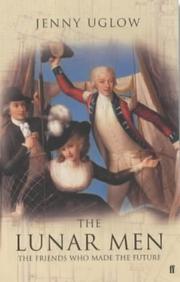
Tells the story of the brilliant Midlands circle — Watt, Boulton, Priestley, Wedgwood — who drove early industrialization. Narrative-driven and character-rich, it makes the era feel alive before the reader encounters drier analysis.
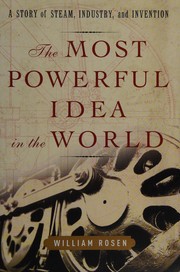
Focuses on the steam engine as the central invention of the age, explaining the science, the patents, and the personalities in plain language — the perfect bridge from story to mechanism.
Work, Class, and Human Cost
BeginnerUnderstand what industrialization actually felt like from the inside — the factory floor, the new working class, child labor, and the social upheaval that accompanied economic growth.
▸ Study plan for this stage
Pace: 8–10 weeks total. Weeks 1–6: E. P. Thompson's "The Making of the English Working Class" (~35–40 pages/day, focusing on Parts 1–3 in sequence; it's dense, so allow extra days for re-reading key chapters). Weeks 7–10: Charles Dickens' "Hard Times" (~25–30 pages/day; it's shorter and novelistic, so aim
- Class as a historical process, not a fixed category — Thompson's central argument that the English working class was not born from industrialization but actively *made itself* through shared experience, culture, and struggle
- The role of agency and consciousness — workers were not passive victims of economic forces; they brought older traditions, customs, and moral frameworks (the 'moral economy') into conflict with industrial capitalism
- The 'moral economy' vs. the market economy — Thompson's concept of pre-industrial communities' expectations of fair dealing, and how industrialization shattered those norms
- Methodological humanism — Thompson's insistence on rescuing 'ordinary' people (weavers, Luddites, Methodists) from 'the enormous condescension of posterity,' and what that means for how we read history
- Utilitarian ideology as social control — Dickens' satirical portrait of Gradgrind's 'Facts' philosophy in Hard Times as a critique of the dehumanizing logic used to justify industrial capitalism
- The factory as a total environment — both books show how industrial work reorganized time, space, family structure, and human identity, not just labor
- Child labor and the exploitation of vulnerability — seen through Thompson's historical documentation and Dickens' fictional embodiment in characters like Sissy Jupe and the Gradgrind children
- The tension between resignation and resistance — from Luddism and early trade unionism (Thompson) to Stephen Blackpool's tragic passivity and Slackbridge's demagoguery (Dickens), both books map the difficult terrain of working-class response to oppression
- According to Thompson, why is it wrong to think of the working class as simply a product of industrial capitalism — and what does he mean when he says class is a 'relationship' rather than a 'thing'?
- What is the 'moral economy,' and how does Thompson use it to explain why early industrial workers experienced their situation as a profound injustice rather than merely an inconvenience?
- How does Dickens use the character of Thomas Gradgrind to embody a specific ideology, and which real intellectual tradition is Dickens targeting through him?
- In Hard Times, why is Coketown described the way it is — and how does Dickens' physical description of the town function as social criticism?
- Both Thompson and Dickens deal with working-class resistance. How do their portrayals differ, and what does each author seem to think about the effectiveness or morality of collective action?
- How do both books treat the theme of imagination, culture, and human wholeness as things that industrialization threatens — and what 'alternatives' do Thompson and Dickens each point toward?
- **Thompson Reading Journal:** After each major section of The Making of the English Working Class, write a 1-paragraph summary in your own words of *who* Thompson is focusing on and *what* form their resistance or consciousness took. By the end, you should have a cast of historical actors (Luddites, weavers, Methodists, etc.) and a sense of how they connect.
- **Gradgrind's Classroom vs. Reality:** After reading Book 1 of Hard Times, write a short scene (1–2 paragraphs) set in a modern context where someone applies pure 'Facts' logic to a human problem. Then write a rebuttal from a Thompson-style perspective that centers lived experience and moral tradition.
- **Side-by-Side Comparison Chart:** Create a two-column chart with Thompson on one side and Dickens on the other. For each of the following themes, note how each book addresses it: (1) the factory/workplace, (2) the family, (3) resistance, (4) the role of culture and imagination, (5) who is blamed for workers' suffering.
- **Primary Source Hunt:** Thompson quotes extensively from pamphlets, songs, and letters of the period. Choose two or three of these embedded primary sources and write a paragraph on each: What does this source reveal that a statistics-based history would miss? This trains the 'humanist history' lens Thompson is teaching you.
- **Coketown Visualization:** Re-read Dickens' description of Coketown (early in Book 1). Draw or describe in writing what the town looks like, smells like, and sounds like — then annotate your sketch/description with the social conditions Thompson documents (long hours, child labor, pollution, displacement). Connect the fictional and the historical.
- **Synthesis Essay (500–700 words):** Answer the following prompt drawing on *both* books: 'Industrialization created material wealth and human poverty simultaneously. How do Thompson and Dickens each make this argument, and whose account do you find more persuasive — and why?'
Next up: By grounding the reader in the lived, human experience of industrialization — through Thompson's rigorous social history and Dickens' moral imagination — this stage builds the empathetic and analytical foundation needed to zoom out and examine the broader economic, political, and global systems that structured those individual lives in the next stage of the curriculum.
The landmark social history that recovers the experience of ordinary workers — artisans, weavers, Luddites — and shows how a class was forged in the heat of industrialization. Read it now while the human stories from Stage 1 are fresh.
Dickens lived through industrialization and this novel is his sharpest critique of it — Coketown's mills, utilitarian philosophy, and broken lives. Reading primary-era fiction alongside history deepens empathy and understanding.
Economic Engines: Why Britain, Why Then?
IntermediateMove from 'what happened' to 'why it happened here and not elsewhere' — mastering the economic, institutional, and geographic arguments that historians debate most fiercely.
▸ Study plan for this stage
Pace: 10–13 weeks total. Weeks 1–5: "The Wealth of Nations" — focus on Books I–III in full and selected chapters of Books IV–V (~25–30 pages/day, skipping the most dated policy digressions after Book III). Weeks 6–13: "The Enlightened Economy" — read straight through at ~20–25 pages/day; Mokyr is dense wi
- Division of labour and the pin-factory logic: how specialisation drives productivity gains (Smith, Book I)
- The role of markets, price signals, and capital accumulation in self-organising economic growth (Smith, Books I–II)
- Smith's stadial theory of history — hunter, pastoral, agricultural, commercial — and why commercial society is the engine of opulence (Smith, Book III)
- Mercantilism as the institutional enemy of growth: Smith's critique of monopoly, colonies, and rent-seeking (Smith, Book IV)
- The concept of 'useful knowledge' (Baconian programme) and how the Enlightenment created an epistemic base for technological change (Mokyr)
- The 'Industrial Enlightenment': the feedback loop between natural philosophy, engineering practice, and economic incentives that was uniquely strong in Britain (Mokyr)
- Institutions as carriers of ideas: property rights, patent law, scientific societies, and the culture of improvement as preconditions for sustained innovation (Mokyr)
- Why Britain and not France, the Dutch Republic, or China — Mokyr's comparative argument about openness, contestability of knowledge, and political fragmentation in Europe
- According to Smith, what is the single most important source of the 'wealth of nations,' and what limits how far that source can be exploited?
- How does Smith's account of capital accumulation in Book II connect to his explanation of why some nations grow faster than others?
- What does Mokyr mean by 'useful knowledge,' and why does he argue that its expansion — not just capital or labour — is the proximate cause of the Industrial Revolution?
- How do Smith and Mokyr differ in what they emphasise as the key driver of British economic exceptionalism? Where do their arguments complement each other, and where do they tension?
- Mokyr argues that the Enlightenment was a necessary condition for industrialisation. What evidence does he marshal, and what counterarguments does he anticipate?
- Using both books, construct an argument for why the Industrial Revolution happened in Britain in the late 18th century rather than in France, China, or the Dutch Republic.
- Concept map: After finishing Smith's Book I, draw a diagram linking division of labour → market size → capital accumulation → productivity. After finishing Mokyr, extend the same diagram to include useful knowledge, institutions, and the culture of improvement — note where the two authors' frameworks overlap and diverge.
- Comparative timeline: Build a two-column timeline (economic events / intellectual/scientific events, 1650–1850) drawn exclusively from evidence cited in both books. Look for clusters where the two columns coincide — these are Mokyr's 'Industrial Enlightenment' moments.
- Devil's advocate essay (500–700 words): Write a rebuttal to Mokyr from Smith's perspective — argue that market incentives and capital accumulation alone are sufficient to explain industrialisation, without invoking the Enlightenment. Then write a one-paragraph counter-rebuttal from Mokyr's point of view.
- Close-reading annotation: Select one chapter from Smith (e.g., Book III, Ch. 4 on towns and country) and one from Mokyr (e.g., the chapter on the culture of improvement) and annotate them side-by-side for the same three questions: What is the causal mechanism? What is the evidence? What is assumed but not proven?
- Geographic counterfactual exercise: Choose one non-British candidate (France, the Dutch Republic, or China) and use specific passages from both books to explain, in bullet-point form, which of Smith's or Mokyr's preconditions it lacked and which it possessed — then judge whose framework better explains the gap.
- Discussion or journal prompt: Smith wrote before the Industrial Revolution was fully visible; Mokyr wrote with 200 years of hindsight. List three things Mokyr can see that Smith could not, and three things Smith's contemporary vantage point lets him observe that Mokyr's retrospective analysis might miss.
Next up: By mastering the economic and institutional 'why Britain' arguments in Smith and Mokyr, the reader is now equipped to interrogate the human and social costs of those same engines — making the transition to labour history, living standards, and the social consequences of industrialisation both intellectually grounded and personally urgent.
Published in 1776, this is the foundational economic text of the industrial age. Reading it at this stage lets the learner see how contemporaries understood markets, the division of labor, and growth — essential intellectual context.

Mokyr's authoritative argument that the Industrial Revolution was driven by the Enlightenment's culture of useful knowledge — a rigorous, evidence-rich book that rewards the intermediate reader who now has enough context to follow its thesis.
Global Consequences and Long Shadows
ExpertSituate the Industrial Revolution in world history — understanding how it created global inequality, colonialism, and the divergence between rich and poor nations that still defines our world today.
▸ Study plan for this stage
Pace: 10–13 weeks total: ~3–4 weeks for Pomeranz (~25–30 pages/day, including appendices and notes — dense economic history requiring re-reading), ~3 weeks for Williams (~20–25 pages/day — tighter argument but demands close reading of each chapter's evidence), ~4–5 weeks for Hobsbawm (~30 pages/day — broa
- The Great Divergence itself: why Western Europe (especially Britain) and China/South Asia diverged economically after 1800, despite rough parity before — Pomeranz's central puzzle
- Ecological constraints and the 'ghost acres' thesis: how coal and New World land relieved Britain's resource bottlenecks in ways unavailable to Qing China or Mughal India
- The counterfactual method in economic history: Pomeranz's use of comparison to challenge Eurocentric 'internal development' narratives
- Eric Williams's thesis: that profits from the Atlantic slave trade and Caribbean plantation slavery were a primary source of capital that financed British industrialization — and that industrial capitalism later turned against slavery once it became economically inconvenient
- The relationship between colonialism and capital accumulation: how imperial extraction, unequal trade, and coerced labor underwrote the 'free market' economy celebrated in liberal historiography
- Hobsbawm's concept of the 'dual revolution' (industrial + French) as the twin engine of the modern bourgeois world order, and how the Age of Capital (1848–1875) consolidated and exported that order globally
- The creation of a global economic hierarchy: how industrialized core nations structured peripheral economies as raw-material suppliers, locking in patterns of dependency that persist today
- The ideology of progress and free trade as imperial instruments: how Victorian liberalism naturalized inequality and justified intervention in non-European economies
- According to Pomeranz, what specific factors — ecological, geographic, and contingent — explain why industrialization happened in Britain rather than in the Yangtze Delta, which had comparable proto-industrial development? How does his argument challenge older 'internal virtue' explanations?
- What is the logical structure of Eric Williams's argument in 'British Capitalism and British Slavery'? Distinguish between his historical claim (slavery funded industrialization) and his political-economic claim (capitalism abolished slavery for its own interests) — and what evidence does he marshal for each?
- How does Hobsbawm's portrayal of the Age of Capital (1848–1875) show the Industrial Revolution becoming a global, not merely British, phenomenon? Which regions were integrated into the capitalist world economy, and on what terms?
- Taken together, how do Pomeranz and Williams between them dismantle the idea that Britain's industrial rise was the result of purely internal, culturally or institutionally superior development?
- How does the global inequality described by Pomeranz (the divergence) connect to the mechanisms of colonial capitalism described by Williams and Hobsbawm? In other words, were these parallel processes or causally linked ones?
- What does Hobsbawm identify as the social and political contradictions generated by the Age of Capital — labor movements, nationalist revolts, colonial resistance — and how do these 'long shadows' anticipate the crises of the 20th century?
- Comparative timeline: Build a three-column annotated timeline (one column per book) mapping key dates, regions, and events. Then draw arrows showing where the books' arguments intersect or contradict — e.g., where Williams's slave-trade capital flows appear in Pomeranz's resource analysis, or where Hobsbawm's global trade networks confirm Pomeranz's 'ghost acres' thesis.
- Williams stress-test: Write a 600-word critical response to the Williams thesis using at least one counter-argument from the historiographical debate (e.g., Seymour Drescher's 'Econocide' critique) and then defend Williams's position. The goal is not to reach a verdict but to understand the evidentiary standards at stake.
- Ghost acres mapping exercise: Using Pomeranz's framework, sketch a rough diagram showing Britain's 'effective land area' when New World colonies and coal fields are included. Then do the same for China circa 1800. Annotate each with the specific constraints Pomeranz identifies — what does the visual reveal about the argument?
- Hobsbawm's world in 1875 — a structured summary: After finishing 'The Age of Capital', write a one-page memo as if you are a Victorian economist in 1875 describing the world economy. Then write a one-page rebuttal from the perspective of an Indian, West African, or Latin American observer using evidence Hobsbawm himself provides. Compare the two voices.
- Synthesis essay (800–1,000 words): Answer the question — 'Was the Industrial Revolution a British achievement or a global extraction?' — drawing on specific arguments and evidence from all three books. Force yourself to cite Pomeranz, Williams, and Hobsbawm in every paragraph to practice integrating multiple scholarly voices.
- Present-day divergence audit: Choose one contemporary economic statistic (e.g., GDP per capita gap between Global North and South, commodity trade imbalances, or debt structures). Write a one-page causal chain tracing that statistic backward through Hobsbawm's Age of Capital, Williams's colonial capital thesis, and Pomeranz's divergence — making explicit which book's framework does the most explan
Next up: By establishing that industrialization was inseparable from global inequality, colonial extraction, and the deliberate underdevelopment of peripheral economies, this stage sets up the natural next question: how did the peoples and nations on the receiving end of that process respond — through labor movements, anti-colonial nationalism, and eventually the political and economic restructuring of the
Pomeranz asks why Europe and not China industrialized first, using a rigorous comparative framework. This book reframes everything the reader has learned by forcing a global perspective.

The classic argument that profits from the Atlantic slave trade helped finance British industrialization — a challenging, essential counterpoint that adds a moral and economic dimension the earlier books leave underexplored.

Hobsbawm's sweeping synthesis covers 1848–1875, showing how industrial capitalism spread across the globe and reshaped politics, culture, and empire. The perfect capstone: it connects everything and points toward the world we inherited.
Discussion
Keep reading
Paths that share books, cover the same subject, or open a related topic.